
Theological term
Perseverance of the Saints
386 sermons · All terms

The Conversion of Paul, Part 4

Philippians 3:10–11 presents sanctification and glorification as necessary and inseparable consequences of justification by faith alone (v.9). The knowledge of Christ described in verse 10 is experiential, practical, theologically correct, and constitutes the very essence of eternal life — but it includes not only the power of Christ's resurrection (newness of life, union with Christ, definitive breach with sin) but also the fellowship of His sufferings and conformity to His death, which are not redemptive but inevitable for all who side with a crucified Savior in a hostile world. Verse 11 then sets forth glorification — the resurrection of the righteous — as the confident hope that sustains perseverance through the difficulties of sanctification. The sermon draws on 1689 LBCF 11.2 and Westminster Larger Catechism 77 to show that faith which justifies is alone as an instrument, yet never alone in the person justified, being ever accompanied by all other saving graces.

2LCF Chapter 11 - Of Justification
Chapter 11 of the Second London Confession of Faith sets forth the biblical doctrine of justification with precision: sinners are accepted before God not by infused or inherent righteousness, nor by the imputation of faith as an act of obedience, but by the imputation of Christ's active obedience to the whole law and His passive obedience in death, received through faith alone as the instrument of justification. The confession navigates the doctrine through careful negative and positive statements, guarding both the sole ground of acceptance in Christ and the inseparable connection between justification and sanctification. Believers are called to rest their assurance entirely on Christ's active and passive obedience — cleansed in His blood and clothed in His righteousness — rather than on any covenantal faithfulness of their own.

The Commendation of His Spirit
Psalm 31 is a prophetic psalm of Christ, providing the scriptural background to the seventh saying of the Savior from the cross: 'Father, into your hands I commit my spirit' (Luke 23:46). The psalm moves through five sections — petition for deliverance, description of suffering, condemnation of enemies, admiration of the Father, and exhortation to the people — each finding its fullest meaning in the crucified and triumphant Messiah. The sermon draws out three contextual observations from the cross: the sovereign control exercised by the Son in laying down his life willingly, the contrast between the hand of God receiving Christ's spirit and the hand of men seeking to destroy him, and the restoration of communion between the Son and the Father after the cry of dereliction. God's people are called to the same trust and courage that marked the Savior — committing their times and their souls to a faithful Creator in the midst of trial, persecution, and adversity.

The Crucifixion of Christ, Part 4
The sixth saying of the Lord Jesus Christ on the cross — 'It is finished' (John 19:30) — is not a cry of defeat but a declaration of completed victory. The single Greek word tetelestai, a perfect tense verb signifying a past completed action with abiding present results, encompasses the fulfillment of all Old Testament Scripture, the completion of Christ's earthly suffering, the full accomplishment of the Father's will, and the definitive salvation of his people. The sermon works through the typological witness of the law (Passover, Day of Atonement, the bronze serpent, the sacrificial system), the prophetic witness of Isaiah and Jeremiah, and the Psalms, showing that Christ's cry from the cross brings every shadow and promise to its intended end. The application presses the finished work as the sole ground of justification, assurance, peace with God, and security against every accusation — calling both believer and unbeliever to look to Christ alone and live.

The Description of Discipleship
Matthew 16:24–27 sets out the terms of Christian discipleship: self-denial, cross-bearing, and the daily following of Christ. The sermon distinguishes a superficial willingness to die for Jesus from the harder, quieter obedience of living for him — reading Scripture, praying, attending the assembly, and ordering family life under the Word. The whole argument is framed by the eschatological contrast between temporal gain and eternal loss, with the coming judgment of the Son of Man serving as the decisive motivation for prioritising Christ over wealth, comfort, and self. Justification by faith alone is never undermined; rather, the life of discipleship is presented as the necessary and inevitable fruit of genuine saving grace.

The Clarity of Apostolic Preaching - Galatians 3:1-4
Paul's rebuke in Galatians 3:1–4 confronts the Galatian churches for being 'bewitched' away from a gospel that had been proclaimed to them with unmistakable clarity. The sermon traces three elements: the pastoral severity of Paul's charge of folly, the transparent sufficiency of apostolic preaching that set Christ crucified visibly before the Galatians, and Paul's measured appeal to their own experience of receiving the Spirit through faith rather than works. The central burden is that any addition to the finished work of Christ — however subtle — is not a lesser error but a bewitching delusion that empties the cross of its glory and replaces the peace of the gospel with bondage.
The Fourth Commandment, Part 3
Hebrews 4:9's use of the word 'Sabbatismos' — Sabbath-keeping as a practice to be observed — anchors the argument that a weekly Sabbath rest remains binding on the New Covenant people of God. The sermon traces the theological rationale for the day-change from Saturday to Sunday through the resurrection of Christ, arguing that the Son's rest from the work of new creation mirrors the Father's rest from the work of creation. Three alleged anti-Sabbatarian texts — Romans 14, Galatians 4, and Colossians 2 — are examined in turn and shown to address Jewish ceremonial calendar observances, not the moral fourth commandment. The burden of proof, the speaker argues, lies with those who would remove one commandment from the Decalogue, not with those who keep all ten intact.

The Trial Before the Jews
John 18:13–27 presents the trial of Jesus before the Jewish authorities alongside Simon Peter's three denials, and John's deliberate interweaving of the two scenes forces the reader to measure Peter's cowardice against his Master's composed, unflinching faithfulness. Jesus, the true high priest, stands before the illegitimate proceedings of Annas and Caiaphas — proceedings marked by false witnesses, unprovoked violence, and a verdict predetermined by envy — and yet he defends his disciples, demands lawful evidence, and maintains his identity without wavering. Peter, by contrast, cannot acknowledge his Lord to a servant girl, illustrating the fickleness that characterises even redeemed sinners. The sermon closes by calling believers to remember both the rooster's rebuke of unfaithfulness and the grace of a Saviour who restores the very disciples who forsook him.

The Preface to the Ten Commandments
Deuteronomy 5:1–6 opens the Ten Commandments not with a command but with a declaration of divine redemption — 'I am the Lord your God, who brought you out of the land of Egypt, out of the house of bondage.' This study works through the summons to covenant obedience, the grace-grounded preface to the Decalogue, and the uniqueness of the moral law as trans-covenantal and abiding. The threefold division of the law — moral, ceremonial, and judicial — is examined through the confession, the prophets, the Gospels, and the epistles, equipping believers to distinguish what abides in the new covenant from what was fulfilled and abrogated in Christ.
CTF 2025 - Session 7 - Pastoral Reflections on Classical Theism
The prologue of John's Gospel (1:1–18) discloses both the divine perfections and the eternal relations of the divine persons — the very realities that classical theism and the Second London Confession articulate in Chapter 2. This address draws that exegetical foundation into pastoral practice, arguing that a robust theology proper is not abstract speculation but the necessary ground for faithful ministerial function and focus. The preacher identifies six areas — the salvation of sinners, the catechesis of children, the perseverance of the saints, assurance of salvation, communion with God, worship, and the knowledge of God — each of which depends inextricably on a well-formed doctrine of God.

The High Priestly Prayer, Part 9
John 17:24–26 records the final petition of Christ's high priestly prayer: that those given to him by the Father would be with him in glory and behold his mediatorial splendor. The sermon traces the theological logic from election and effectual calling through justification to glorification, grounding the certainty of the believer's future glory in the Father's eternal love for the Son and the irreversible decree of God. Along the way, the sermon addresses the relationship between sovereign election and the free offer of the gospel, arguing that the doctrines of sovereign grace are the very foundation of evangelism, not a barrier to it. The practical exhortation is twofold: let the hope of future glory fuel present sanctification, and let the love and presence of God sustain patient endurance through affliction.

Galatians 2:17–21 — Justification by Faith Alone

Galatians 2:17–21 closes Paul's autobiographical defense of justification by faith alone, and these five verses press three weighty questions: Is Christ a minister of sin when believers forsake the Mosaic ceremonies? Who is the true transgressor? And what does Judaizing heresy actually do to the cross of Christ? The sermon argues that to impose any measure of works upon the economy of salvation — whether old-covenant ceremony or its modern legalistic counterpart — is to render the incarnation, the perfect obedience, and the atoning death of the Son of God as vanity. The single ground of the believer's justification, assurance, and perseverance is the Son of God who loved us and gave himself for us, in whom alone everlasting righteousness is found.
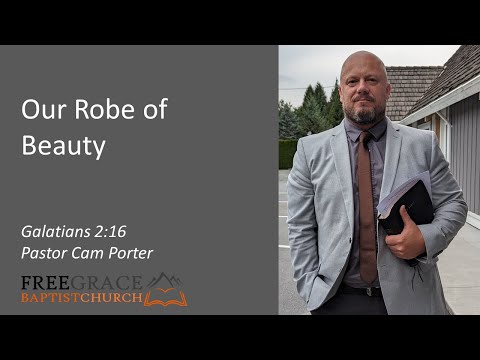
Our Robe of Beauty
Galatians 2:16 presents a five-fold declaration that justification is by faith alone and not by the works of the law — a doctrine that stands at the very heart of the Christian gospel. This sermon works through four categories: a definition of justification as a forensic declaration set in opposition to condemnation, its foundation in the obedience and satisfaction of Christ alone (not infused righteousness, works, the act of faith, or evangelical obedience), the transaction of imputation by which sin is credited to Christ and his righteousness credited to the believer, and faith as the empty instrument that receives rather than earns that righteousness. The pastoral application presses the believer's assurance away from inward evidences toward the finished work of Christ, and calls the unconverted to look to Christ in faith as their only standing before a holy God.

The Priority in the Believer's Life
Jesus commands his disciples not to worry about life, body, or tomorrow in Matthew 6:25–34, grounding the prohibition in three realities: God's providential care demonstrated in birds and lilies, the contrast between Gentile obsession and the believer's knowledge of a knowing Father, and the governing priority of verse 33 — seek first the kingdom of God and his righteousness. The sermon argues that carnal anxiety is theologically inconsistent for the Reformed believer: one who confesses God's comprehensive sovereignty in salvation yet surrenders to worry about temporal provision has applied Calvinism selectively. The antidote is not mere positive thinking but the cultivation of contentment rooted in the imputed righteousness of Christ, which grants entrance into the very kingdom we are commanded to seek first.

The High Priestly Prayer, Part 4
What grounds the prayers Jesus offers for his people, and why does he explicitly exclude the world from his intercession? Working through John 17:9–11a, this sermon examines the focus and rationale of Christ's high priestly intercession: he prays specifically for the elect whom the Father gave him, not for the reprobate world, and he does so as the mediating priest who both sacrifices and intercedes on behalf of his own. The mutual possession declared in verse 10 — 'all mine are yours and yours are mine' — establishes the full equality of the Son with the Father, while 'I am glorified in them' frames the church as a trophy case of divine grace displayed before angels and nations. The sermon closes with an exhortation to treasure the blessedness of election: a Savior who intercedes, a triune God who is known, and a security that nothing can sever.

Ask FGBC #38: Faith vs Trust, Are They the Same?
Faith and trust are examined as near-synonymous terms in the Greek New Testament, with the threefold schema of assent, belief, and trust acknowledged but handled with care lest 'trust' become a works-oriented addition to saving faith. The sermon addresses whether doubt and fear disqualify a person from genuine saving faith, arguing from Matthew and Luke that believers in Scripture feared and doubted while possessing true faith. Perseverance is grounded not in the strength of a believer's grip on Christ but in the immutability of God's electing decree, the intercession of Christ, and the abiding of the Spirit, as articulated in 1689 LBCF 17.2. The practical counsel given is to strengthen weak faith through Scripture memory, doctrine, and the means of grace.

Trinitarian Assurance

Ephesians 1:3–14 presents a Trinitarian doxology in which the Father's election and predestination, the Son's redemption through His blood, and the Spirit's sealing together constitute the full ground of the believer's assurance. The passage resists any reduction of the three persons to isolated roles, insisting on inseparable operations even as Paul shines distinct light on each person's work. The sermon argues that the Christian's assurance must be anchored not in self-examination of fruit-bearing but in the objective, Trinitarian work of God accomplished entirely outside of us in Christ.

The Conversion of Matthew
Matthew 9:9-13 presents the sovereign call of Christ to Matthew, a tax collector despised in first-century Jewish society as a collaborator with Gentile oppressors and a companion of sinners. The sermon traces three movements in the passage: the authoritative call that produced immediate discipleship, the feast Matthew threw to honor Christ and evangelize his former associates, and Christ's threefold response to the Pharisees' complaint — identifying himself as a physician to the sick, appealing to Hosea 6:6 against mere external religion, and declaring his mission to call sinners to repentance. The central application is that no sinner is too notorious to be received by Christ, and Matthew's immediate rising and following is held up as the pattern for genuine repentance and faith.

Ask FGBC - Dec 2024 Podcast with Pastors Butler and Porter, Batch 4
A panel of two pastors works through a batch of listener-submitted questions spanning baptism and the Lord's Supper, the eternity of hell, church membership, faith and fear, the unpardonable sin, images of Christ, dry preaching, and extra-biblical theological vocabulary. Across each topic the answers are grounded in Scripture and the 1689 London Baptist Confession, with particular attention to second-commandment concerns, the nature of saving faith, and the perseverance of the saints. Listeners are urged to anchor their assurance not in the strength of their own grip on Christ but in the immutable decree of election and the intercession of the Triune God.

Divine Protection for Weary Travelers

Psalm 121, a Song of Ascents, is read against the sweep of redemptive history: from Adam's failure to fulfill his mandate in the garden to the Last Adam, Christ, who descends, redeems, and ascends to bring his people into the presence of God. The sermon traces the 'climbing the mountain' motif through Eden, Israel's temple worship, and the new covenant church to show that every believer is presently on a pilgrimage toward glory. Because Yahweh — the self-existent Creator of heaven and earth — is the keeper of his people, they are promised protection from stumbling, shade from the heat of affliction, and preservation from the very judgment their sins deserve. The practical call is to look to Zion rather than to the surrounding mountains of fear, to value the Lord's Day as a weekly foretaste of that final rest, and to press on in the strength God supplies.

Ask FGBC #32: Are there different types of faith? Ie. temporary, historical, saving
Scripture distinguishes several types of faith, and only saving faith — the kind that receives and rests upon Jesus Christ — differs qualitatively, not merely in degree, from historical or temporary faith. Historical faith acknowledges the facts about Christ without personal trust; temporary faith produces an apparent profession that does not endure. Saving faith, even in its weakest form, is united to Christ as its object and is accompanied by all other saving graces, working through love. The 1689 London Baptist Confession of Faith chapter 14 paragraph 3 grounds the distinction: even weak saving faith is different in kind from the faith of temporary believers, and it will ultimately attain full assurance through Christ, the author and finisher of our faith.

The Conduct of the Believer
Philippians 1:27–30 presents a twofold exhortation to the church: that believers conduct themselves in a manner worthy of the gospel, and that they do so with courage in the face of adversaries. The sermon expounds the Greek word for citizenship as the governing concept of verse 27, grounding the call to worthy conduct in the reality of justification by faith — the life of sanctification flows necessarily from what God has graciously accomplished in the believer. Corporate unity in striving together for the faith of the gospel, and undaunted boldness before enemies, are shown to be not optional virtues but demonstrable proofs of sovereign grace at work in God's people.

The Joy Associated with Christ's Departure
John 16:16–24 records Jesus preparing his disciples for the grief of his death and the joy of his resurrection, framing both under the single announcement 'a little while.' This exposition works through two movements: the announcement of Christ's departure and the disciples' confusion (vv. 16–18), and then the benefits of that departure — lasting joy grounded in the resurrection, and direct access to the Father through prayer in Christ's name (vv. 19–24). The sermon argues that the joy promised here is not the absence of suffering or temporal prosperity, but an indestructible joy rooted in Christ's finished work of life, death, resurrection, and ascension, a joy no adversary can strip from the believer.

The Future Prospect of the Apostle, Part 2
Philippians 1:21–26 presents Paul's conviction and anticipation as an apostle facing imprisonment and the real prospect of execution. The sermon works through Paul's declaration 'for to me to live is Christ, and to die is gain,' showing that his union with Christ in life and his glory with Christ in death make it impossible for any earthly power to harm or stop him. The intermediate state — the soul's immediate presence with Christ at death — is set against the benefit of continued gospel ministry, and Paul's others-minded anticipation of release grounds his confidence that the Philippians' progress in faith and joy will abound. The sermon closes by pressing the question whether each hearer can say with honest self-examination that Christ is their all in life and death.

2LCF Chapter 28 - Of Baptism and the Lord's Supper
2LCF Chapter 28 presents baptism and the Lord's Supper as two ordinances of positive and sovereign institution appointed by the Lord Jesus Christ, the only lawgiver, to be continued in His church until the end of the age. This session traces the confessional groundwork laid in 2LCF chapters 8, 14, 17, 22, and 26 before examining Chapter 28's two brief paragraphs in detail. The particular Baptist choice of 'ordinance' over 'sacrament,' the exclusion of 'seal,' and the inclusion of 'positive' are each shown to be polemically deliberate — asserting that baptism and the Lord's Supper are divine commands to be obeyed only by those who can render obedience, that is, regenerate believers. The session closes by grounding lawful administration of the ordinances in Matthew 28 and the commission given to qualified, called ministers of the gospel.

The Baptism of Saul of Tarsus
The baptism of Saul of Tarsus in Acts 9:17–25 demonstrates the proper order of Christian baptism: conversion precedes the ordinance, which then publicly marks the believer as a disciple of Christ. The passage is treated as a direct answer to Stephen's dying prayer in Acts 7:60, with Saul's transformation from chief persecutor to chief preacher serving as a vivid display of sovereign, redeeming grace. The sermon draws out three observations from Saul's early ministry — the immediacy, the effects, and the hostility of his preaching — and closes with the baptism of three new believers, each of whom gives a brief testimony of their own conversion.

Ask FGBC #15: How can I steward my children, and know they are saved?
A parent's fear that their children may not be among the elect raises the question of how to steward children toward faith and how to have confidence in their salvation. Drawing on the doctrine of the means of grace, the answer is plainly stated: bring children consistently to the worship of God, where the Word is faithfully preached, and trust that God ordinarily works conversion through those appointed means. No parental method guarantees salvation, but faithless substitutes — sports on the Lord's Day, churches chasing entertainment — rob children of the very instrument God has appointed. The exhortation is simple: live a credible Christian life before your children, keep them in the assembly, and trust God to work.

The Gratitude of the Apostle
Paul's opening lines to the Philippians (1:3–8) reveal an apostle whose gratitude, commendation, and affection are all grounded not in the merits of his friends but in the sovereign grace of God. The sermon works through three movements: the object and fruit of Paul's gratitude (prayer with joy), his commendation of the Philippians for their fellowship in the gospel and his confidence in God's preserving grace, and his oath-backed declaration of personal affection for them. The assurance of salvation rests not in the believer's perseverance but in the faithfulness of the God who begins and completes every good work, a truth the church is called to receive with gratitude and express through active participation in gospel ministry.

The World's Greater Liability Before God
Jesus declares in John 15:21–25 that the world's hatred of his disciples flows from a deeper hatred of himself and the Father who sent him, making the rejection of Christ not merely a moral failure but a compounding of guilt before God. Increased revelation brings increased liability: those who witnessed Christ's word and works have no excuse for their unbelief, and their rejection of the Messiah is simultaneously a rejection of the triune God. The sermon argues that right Trinitarian theology is therefore not an academic luxury but a matter of eternal life and death, since to deny the Son is to deny the Father. Believers are called to stand fast in the word of God, rejoice in suffering as those united to Christ the master, and proclaim the exclusive claims of Jesus Christ without apology.

The Love of Christ and Love to One Another, Part 2
John 15:12–17 presents Christ's command that His disciples love one another as He has loved them — self-sacrificially, constantly, and toward sinners undeserving of that love. The sermon works through four elements of the passage: the command to love as a summarizing and comprehensive statement of the second table of the law, the pattern of self-sacrificial love set by Christ's laying down His life, the privilege of friendship with Christ rooted not in conditional obedience but in sovereign grace and divine revelation, and the reminder that election humbles pride and equips disciples for fruitful, costly mission in a world that hates Christ. The application presses believers to love one another with a love that does not wait for the beloved to merit it, and points the unconverted to the imputed righteousness of Christ received by faith alone as the only ground of acceptance before God.