
Theological term
Ordo Salutis
206 sermons · All terms

The Psalmist's Contemplation on the Revelation of God, Part 3

Psalm 19:9–14 presses the believer to consider both the benefits of Scripture and the right response to divine revelation. The fear of the Lord, pure and enduring, is the fruit of sovereign grace working through a word that is perfect, sure, right, and pure — a word more valuable than gold and sweeter than honey. David's closing petitions in verses 12–14 trace a graduated reckoning with sin — secret faults, presumptuous sins, and the dominion of sin — answered not by human resolve but by pardoning, preventing, and restraining grace grounded in God as rock and redeemer. The sermon calls believers to prize Scripture above every temporal good, to deal honestly with remaining corruption, and to rest the whole petition for acceptance on Christ, the true David, whose imputed righteousness alone makes the prayer of Psalm 19 fully and finally ours.
2LCF Chapter 29 - Of Baptism

The 1689 London Baptist Confession chapter 29 sets forth a thoroughgoing Baptist doctrine of baptism: its nature as a New Covenant ordinance ordained by the incarnate mediator, its proper recipients as professing believers alone, its proper element and Trinitarian formula, and its proper mode as immersion. The study presses the case for believers-only baptism across five arguments — from covenant theology, federal headship, the doctrine of salvation, New Testament clarity, and the regulative principle of worship — demonstrating that paedo-baptism is not merely a secondary matter but a violation of Christ's express institution. The session closes with extended Q&A engaging questions about baptismal regeneration, the formula 'in the name of Jesus only,' and the standing of paedobaptist believers.

The Gospel's Precious Liberty Part 2
Paul's warning in Galatians 5:2–6 is stark: to submit to circumcision as necessary for salvation is to forfeit Christ entirely and to incur an obligation to keep the whole law perfectly. This sermon expounds the twofold warning (estrangement from Christ; falling from grace understood not as loss of salvation but as abandonment of the gospel's scheme of grace), the perseverance of the saints confirmed by John 6, John 10, Romans 8, and Hebrews 7, and the exercise of Christian liberty in spirit-wrought confidence and a faith that works through love. True confidence rests not in the flesh or in any obedience of our own, but in the person, blood, sacrifice, and righteousness of Christ received by faith alone.

The Importance of Our Knowledge of Christ, Part 2
Philippians 3:8 frames the Apostle Paul's claim that the knowledge of Christ possesses surpassing worth above all things. This sermon completes a seven-point exposition by arguing that Christ is the sum and substance of the Christian gospel (established from 1 Corinthians 15 and the book of Acts), the head and savior of the church (seen in the Great Commission, worship, baptism, and the Lord's Supper), and the ground of both the believer's present hope and future glory (grounded in 1 Timothy 1:1 and 1 Peter 1:3-5). The Christian's knowledge of Christ is not a cold intellectual exercise but the natural expression of a heart that has found in Christ the one who is precious, and that knowledge ought to animate every dimension of calling — preaching, praying, giving, and testifying.

The Conversion of Lydia
Acts 16:6–15 presents the Macedonian call and the conversion of Lydia as twin demonstrations of divine sovereignty in the advance of the gospel. The Holy Spirit's redirection of Paul's itinerary, the night vision, and the sovereign opening of Lydia's heart at the Philippian riverside together show that gospel missions proceeds by God's appointment, not human initiative or chance. Lydia's conversion illustrates the full ordo of grace: effectual calling, forgiveness in Christ's blood, and the imputation of his righteousness received by faith alone — all confirmed outwardly in her immediate baptism and hospitality. The sermon presses the church to embrace both the means of gospel preaching and confidence in God's sovereign grace as the only ground of missionary hope.

The Conversion of Rahab the Harlot
Joshua 2 presents the conversion of Rahab the harlot as a deliberate theological interruption in Israel's conquest narrative — not incidental color, but a magnification of the sovereign, free grace of Yahweh toward a Gentile prostitute. The sermon works through her fear, confession, and covenant with the spies to demonstrate that salvation is by grace alone through faith alone, a faith that inevitably produces works, as James 2 and Hebrews 11 confirm. Rahab's inclusion in the genealogy of Christ in Matthew 1 seals the point: the God of heaven and earth is also the God of sinful Gentile harlots, and His grace toward her is a standing summons for sinners to come immediately to the Lord Jesus Christ.

The Gospel Committed to the Apostle Paul
1 Timothy 1:15–17 contains one of five 'faithful sayings' in the Pastoral Epistles, and Paul deploys it here to contrast the life-giving gospel with the idle speculations of the false teachers troubling the church at Ephesus. The sermon works through three elements: the faithful saying as a standard confession received and guarded by the church; the glorious content of that saying — the incarnation of the Son and his effectual, definite work to save sinners; and the merciful application illustrated in Paul himself, who as the chief of sinners functions as a pattern of Christ's longsuffering for all who will believe. The doxology of verse 17 demonstrates that rightly understood soteriology issues in worship, and believers are called to keep this faithful saying at the centre of their hearts and to press it upon the unconverted.

The Sanctifying Benefit of the Gospel
Romans 6:1–4 confronts the objection that justification by faith alone licenses continued sin, and Paul's answer is grounded not in moral resolve but in the gospel itself. The sermon traces the inextricable link between justification and sanctification: those united to Christ by faith have died, been buried, and been raised with him, and Christian baptism is the appointed sign and symbol of that union. Because the Christ who secured justification gives his Spirit to effect sanctification, the two benefits are inseparable — the same gospel that frees believers from the penalty of sin is the power that breaks sin's dominion. The primary application is that believers fight sin first by reckoning themselves dead to it in Christ, not merely by external restraint.

Being Strengthened

Colossians 1:11 describes one of four characteristics of a life that pleases God: being strengthened — a passive reception of divine power, not a self-generated act of will. The sermon expounds the action, the gift, the measure of the gift, and the goal of the gift, arguing that God infuses his people with all needed power according to the inexhaustible measure of his own glorious might. This strengthening is the mechanism by which believers endure patience and longsuffering under any and all circumstances of life. Sinners who have not yet come to Christ are invited to the only Savior who both grants entrance into the Christian life and sustains his people all the way to glory.

CTF 2026 - Session 1: God's Decree in the Puritan Confessions

The doctrine of God's eternal decree, as confessed in the Westminster Confession of Faith, the Savoy Declaration, and the Second London Baptist Confession of 1677/1689, is not a single isolated chapter but a thread woven through the entire fabric of Reformed confessional theology. Drawing on Isaiah 46:8–11, this study traces the decree from its grounding in the doctrine of divine simplicity through creation, providence, the fall, covenant, redemption, the ordo salutis, perseverance, the spread of the gospel, and final judgment. The three Puritan-era confessions are shown to form a deliberate family — Westminster as parent, Savoy as child, and the Second London as grandchild — sharing common language and structure while registering careful Baptist and Congregationalist revisions. The study calls hearers not to speculative curiosity but to humble worship before the sovereign God whose decree is simply God decreeing.

Ask FGBC #61: Conviction of Sin Before or After Regeneration?
The question of whether conviction of sin precedes or follows faith is examined through the lens of the ordo salutis. Conviction of sin necessarily precedes faith because without it the sinner would see no need for Christ, yet Scripture nowhere prescribes a fixed period of misery as a prerequisite for receiving the gift of faith. Conversion is the divine bestowal of the graces of faith and repentance together, not a staged sequence in which the sinner must accumulate sufficient guilt before God acts. The call of the gospel is not prolonged self-examination but immediate flight to Christ, and the doctrine of presumption that keeps sinners in unnecessary bondage is a Catholic, not Protestant, imposition on the gospel promise.

2LCF Chapter 17 - Of the Perseverance of the Saints
The perseverance of the saints — that those whom God has elected, called, justified, and sanctified will certainly be preserved unto final glorification — is examined through the three paragraphs of 2LCF Chapter 17. The doctrine rests not on the free will or native strength of the believer, but on the immutability of God's decree of election flowing from His free and unchangeable love, the perfect merit and ongoing intercession of Christ, the abiding of the Spirit, the principle of grace implanted within, and the inviolable nature of the covenant of grace. The certainty and infallibility of perseverance is therefore as secure as God Himself. Believers are exhorted not to neglect the means of grace — public worship, the preaching of the Word, the sacraments, prayer, and private and family devotion — for it is within those ordained means that God nourishes His people in faith, repentance, love, joy, and hope.

Who Are the Heirs of the Promise?
Galatians 3:29 and 4:6–7 together answer the question of who truly inherits the promises made to Abraham: not those physically descended from him, nor those who observe Mosaic ceremonies, but those who are united to Christ by saving faith. The sermon traces the covenant-theological distinction between Abraham's physical seed and his spiritual seed, showing that membership in the covenant of grace is coextensive with those who receive the definite atonement of Christ. The Trinitarian shape of redemption — the Father sending the Spirit of the Son into the hearts of adopted sons — seals the argument, and the sermon draws out implications for believer's baptism and the enlarged liberty of the new covenant age.

What Is Faith? When Should I Be Baptized? & more| Ask FGBC Batch 6
This Q&A episode from a confessional Reformed Baptist church addresses twelve questions spanning baptism, faith, church membership, Scripture interpretation, seminary training, and the heresies of Federal Vision and Baxterianism. Particular attention is given to the definition of saving faith — distinguishing the objective content of the faith from the act of believing, warning against loading faith with feelings, faithfulness, or love as its ground, and insisting that faith is the empty instrument through which God-given grace lays hold of Christ alone. The episode closes with treatments of conviction of sin, catechetical instruction of children, and the importance of an educated ministry.
Intro/Teaser - CTF 2026 - Understanding God's Decree
This introductory segment promotes the 2026 Confessing the Faith conference hosted by Free Grace Baptist Church in Chilliwack, BC, which will address 1689 London Baptist Confession Chapter 3 on the decree of God. The conference follows a sequential exposition of the confession, having previously covered the doctrine of Scripture (Chapter 1) and the doctrine of God and the Holy Trinity (Chapter 2). Featured speakers include Dr. Jim Renahan and Dr. Richard Barcelos of the International Reformed Baptist Seminary, alongside Pastor David Charles, who will offer a pastoral reflection on how the doctrine of divine decree is to be taught, embraced, and preached. The segment frames the doctrine of God's decree as foundational to Christian stability, peace, and worship, contending that what believers face in this world is governed by the sovereign God who has ordained whatsoever comes to pass for His glory and the good of His people.

2LCF Chapter 14 - Of Saving Faith
What is saving faith, where does it come from, and what does it rest upon? Working through Chapter 14 of the 1689 London Baptist Confession of Faith, this study examines saving faith under three headings: its nature (divine source, instrumental means, and fortifying ordinances), its object (the consequent acts of believing the Word and the principal acts of accepting, receiving, and resting upon Christ alone), and the variety and degree of faith across believers. The confession's teaching is grounded throughout in Scripture and the broader confessional architecture, demonstrating that saving faith is a purchased grace of the covenant of grace, given and sustained by the Spirit of Christ through the Word and the appointed means of the church.

Who Are the Sons of God?
Galatians 3:26–29 declares that all who believe in Christ are sons of God through faith — not through ethnic descent from Abraham, physical circumcision, or adherence to the Mosaic law. This sermon works through the status, redemptive ground, sign, and unity of that sonship, demonstrating from Matthew 3, John 8, Romans 2 and 9, and Ephesians 2 that children of God are defined by union with Christ rather than by nationality, social condition, or sex. The threefold negation of Galatians 3:28 directly demolishes the Judaizing confidence in Israelite birth, free status, and maleness, and points instead to the covenant of grace in which all believers are equally heirs of the promise. The sermon closes with a call to rest in the alien righteousness of Christ as the sole ground of adopted sonship.

The Citizenship of the Believer
The enemies of the cross of Christ are not merely mistaken but are heading toward eternal destruction — and the Apostle Paul warns of them with tears. Expounding Philippians 3:18–21, this sermon identifies the Judaizers as those enemies: their god is their belly, their glory is in their shame, and their minds are set on earthly things. Against that dark backdrop, the believer's citizenship in heaven is a present legal possession that demands an eager anticipation of Christ's return, a purifying of life in light of that coming, and a deliberate seeking out of godly examples to follow rather than the many who walk the broad road to destruction.

The Mission and Ministry of the Church
What is the mission and ministry of the church, and how does the apostolic pattern in Acts 2 define both? This sermon works through Acts 2:22–42, showing that the church's mission is the proclamation of Christ — his life, atoning death, resurrection, and exaltation — accompanied by the killing work of God's law that convicts sinners of their guilt and drives them to the Savior. The ministry that follows is shaped by the four marks of the early church in verse 42: steadfast continuance in the apostles' doctrine, fellowship, the breaking of bread, and prayer — the simple means by which God feeds his blood-bought people.

2LCF Chapter 13 - Of Sanctification
Sanctification is a work of God's free grace — not of human effort — wrought in the elect by the Word and Spirit through the virtue of Christ's death and resurrection. The 1689 London Baptist Confession, Chapter 13, sets out the nature and cause of sanctification: its undeserving recipients (the effectually called and regenerated), the initial definitive act of sanctifying grace at conversion, the progressive ongoing work of the Spirit, and the instruments God employs (Word and Spirit). The confession guards this doctrine on two fronts simultaneously: against moral-improvement schemes that reduce sanctification to human effort, and against sinless perfectionism that denies remaining corruption in the believer.

The Pattern for the Christian Life
Philippians 3:17 calls believers to join in following the Apostle Paul's example and to identify others in the local church who walk the same way. The sermon argues that faithful Christian examples are not found among social-media influencers but among ordinary, persevering saints whose lives are grounded in justification by faith alone, followed by sanctification, perseverance, and glorification. Paul's example is examined across four dimensions — his conversion, his life as a believer, his ministry, and his suffering — with particular attention to the courage and gospel-centrality displayed throughout Acts. The sermon's application presses the responsibility squarely on individual believers: they must actively seek out faithful examples in the congregation rather than waiting for examples to come to them.

2LCF Chapter 12 - Of Adoption
The twelfth chapter of the 1689 London Baptist Confession treats adoption as a distinct benefit of the gospel, flowing necessarily from justification and grounded solely in God's sovereign grace through the Lord Jesus Christ. This study traces the basis of adoption — its recipients (the justified), its source (God's free vouchsafing), and its ground (the merit of Christ alone) — before working through the four categories of benefit the confession enumerates: inclusion in the family of God, reception of privileges (the divine name, the Spirit of adoption, bold access to the throne of grace), fatherly treatment (pity, protection, provision, and chastening), and the inheritance of everlasting salvation. A sustained contrast between Paul's juridical language of adoption and John's language of new birth demonstrates that both apostles teach the same doctrine from different vantage points, while an extended excursus on Hebrews 9–10 applies the Old Covenant / New Covenant contrast to rebut the paedobaptist argument for an internal-external continuity between the covenants. The children of God are called to live out their adoption by walking in love, light, and wisdom as Ephesians 5 commands.

The Conversion of Paul, Part 4
Philippians 3:10–11 presents sanctification and glorification as necessary and inseparable consequences of justification by faith alone (v.9). The knowledge of Christ described in verse 10 is experiential, practical, theologically correct, and constitutes the very essence of eternal life — but it includes not only the power of Christ's resurrection (newness of life, union with Christ, definitive breach with sin) but also the fellowship of His sufferings and conformity to His death, which are not redemptive but inevitable for all who side with a crucified Savior in a hostile world. Verse 11 then sets forth glorification — the resurrection of the righteous — as the confident hope that sustains perseverance through the difficulties of sanctification. The sermon draws on 1689 LBCF 11.2 and Westminster Larger Catechism 77 to show that faith which justifies is alone as an instrument, yet never alone in the person justified, being ever accompanied by all other saving graces.

2LCF Chapter 11 - Of Justification
Chapter 11 of the Second London Confession of Faith sets forth the biblical doctrine of justification with precision: sinners are accepted before God not by infused or inherent righteousness, nor by the imputation of faith as an act of obedience, but by the imputation of Christ's active obedience to the whole law and His passive obedience in death, received through faith alone as the instrument of justification. The confession navigates the doctrine through careful negative and positive statements, guarding both the sole ground of acceptance in Christ and the inseparable connection between justification and sanctification. Believers are called to rest their assurance entirely on Christ's active and passive obedience — cleansed in His blood and clothed in His righteousness — rather than on any covenantal faithfulness of their own.

2LCF Chapter 8 - Of Christ the Mediator, Part 1
The 2nd London Confession of Faith Chapter 8, 'Of Christ the Mediator,' stands at the structural and theological center of the confession — all that precedes it tends toward it, and all that follows flows from it. This session examines paragraphs 1, 2, 3, 7, and 9, focusing on the identity, deity, and divine relations of the Son of God as the appointed mediator. Drawing on the Nicene and Chalcedonian creeds and the biblical witness, the study argues that the Son is very and eternal God, eternally begotten of the Father, of one substance and equal with him, the creator and sovereign governor of all things — and that this high Christology is the necessary foundation for understanding the incarnation and saving work that follows.
2LCF Chapter 6 - Of the Fall of Man, of Sin, and of the Punishment Thereof
The fall of Adam and Eve was not an unforeseen catastrophe but an event God sovereignly permitted according to his wise and holy counsel to order to his own glory. Working through all five paragraphs of 2LCF Chapter 6, this study traces the anatomy of the fall — from man's original uprightness under the covenant of works, through the willful transgression of the law of their creation, to the imputation of guilt and conveyance of corrupt nature to all of Adam's posterity by ordinary generation. The totality of sin's consequences — total depravity, total inability, spiritual death, and the inheritance of wrath — makes the second and last Adam, Jesus Christ, the only and necessary answer, whose active and passive obedience reverses both the imputation and the inheritance fallen humanity bears in the first Adam.

2LCF Chapter 5 - Of Divine Providence
Divine providence — God's upholding, directing, disposing, and governing of all creatures and all their actions — is the subject of 2LCF Chapter 5. The chapter moves from a general statement of providence in paragraph 1 through the relationship of first and second causes, the use of means, and the hardest pastoral question: how God's sovereign decree relates to sin in general, in believers, and in unbelievers. The session closes by grounding the doctrine in the particular care God exercises over his church, whose history is the key to all human history.

2LCF Chapter 3 - Of God's Decree
God's decree — His eternal, immutable purpose to foreordain whatsoever comes to pass — is the subject of 2 London Baptist Confession of Faith Chapter 3. This study works through paragraphs 1–7, establishing that the decree is absolute and unconditional, covers all events including the free and sinful actions of creatures without making God the author of sin, and that election unto life is grounded solely in God's free grace rather than any foreseen condition in the creature. The session addresses the distinction between preterition and double predestination, the infralapsarian and supralapsarian debate, and closes with the confession's insistence that this high doctrine is to be handled with prudence, producing praise, humility, diligence, and abundant consolation in those who sincerely obey the gospel.

The High Priestly Prayer, Part 9
John 17:24–26 records the final petition of Christ's high priestly prayer: that those given to him by the Father would be with him in glory and behold his mediatorial splendor. The sermon traces the theological logic from election and effectual calling through justification to glorification, grounding the certainty of the believer's future glory in the Father's eternal love for the Son and the irreversible decree of God. Along the way, the sermon addresses the relationship between sovereign election and the free offer of the gospel, arguing that the doctrines of sovereign grace are the very foundation of evangelism, not a barrier to it. The practical exhortation is twofold: let the hope of future glory fuel present sanctification, and let the love and presence of God sustain patient endurance through affliction.
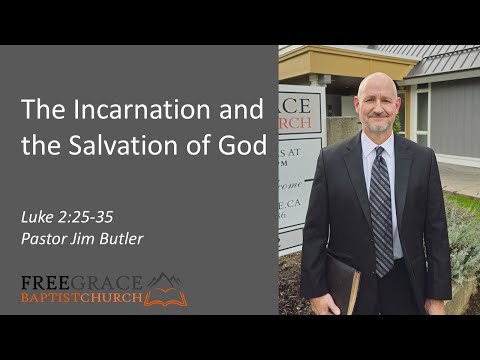
The Incarnation and the Salvation of God
Simeon's encounter with the infant Jesus in Luke 2:25–35 reveals the incarnation as the decisive fulfillment of every Old Testament promise — from Genesis 3:15 through the servant songs of Isaiah — and forces every hearer to declare whose side they stand on. The sermon expounds two movements in the passage: Simeon's confession that the child he holds is the salvation God prepared for all peoples, and Simeon's prophecy that this same child will cause the fall and rising of many, pierce Mary's soul, and expose the hidden allegiance of every heart. The call is direct: look to Christ by faith as Simeon did, die in peace as Simeon could, and do not be numbered among those who fell because they rejected the consolation of Israel.