
Theological term
New Creation
23 sermons · All terms

2LCF Chapter 22 - Of Religious Worship and the Sabbath Day, Part 2

The perpetual moral obligation of the Christian Sabbath is grounded not in Sinai alone but in the creation ordinance of Genesis 2, where God blessed and sanctified the seventh day as a reflection of his own divine perfections. The 1689 London Baptist Confession of Faith chapter 22, paragraphs 7 and 8, frames the Sabbath as a positive-moral commandment — moral in its trans-covenantal, creation-rooted character, and positive in its covenantal form, shifting from seventh-day to first-day observance upon the resurrection of Christ as the inauguration of the new creation. The day belongs to God before it belongs to man: the governing question is not what may be avoided on the Lord's Day, but how near to God the worshipper may draw. Paragraph 8 calls for whole-souled preparation, rest from works, words, and thoughts entangled in worldly concerns, and the filling of the day with public and private worship, works of necessity, and works of mercy.

Christ in the River Jordan
The baptism of the Lord Jesus Christ in Matthew 3:13–17 is not merely a biographical episode but the inaugural step of the incarnate Son of God in His mediatorial mission to fulfill all righteousness for sinners. Tracing a rich theology of water through creation, the flood, the Exodus, and Joshua's crossing of the Jordan, the sermon demonstrates that Christ enters the river as the antitypical fulfillment of every prior act of divine cleansing, conquest, and covenant ratification. The descent of the Spirit like a dove and the Father's voice of approbation publicly inaugurate the new creation and identify Jesus as the obedient second Adam, the suffering servant, and the Davidic king. The sermon closes by drawing the believer's baptism directly from this pattern: only those who are the recipients of Christ's substitutionary righteousness, indwelt by the Spirit, and adopted into sonship are candidates for baptism by full immersion.

The Appearance of Christ to the Disciples

John 20:19–23 presents two interlocking realities: the presence of the risen Christ among His fearful disciples on the first day of the week, and the commission He gives them to carry His gospel into the world. The peace Christ pronounces is not a generic greeting but the fruit of His atoning wounds — the satisfaction of divine justice that reconciles guilty sinners to God. From this the sermon argues that the church's entire mission is delimited by Christ's own sending: not entertainment, social uplift, or political activism, but the proclamation of the forgiveness of sins through the crucified and risen Lord, empowered by the promised Holy Spirit.
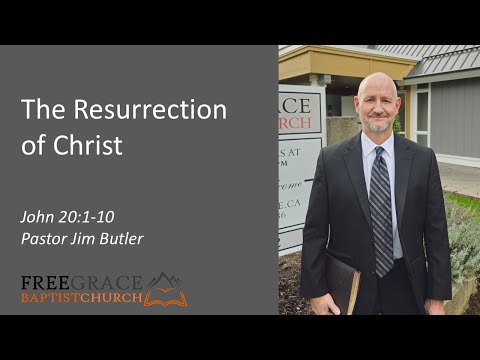
The Resurrection of Christ
The resurrection of Christ is the foundation of Christian hope, the confirmation of Old Testament prophecy, and the grounds of both justification and coming judgment. Working through John 20:1–10, this sermon examines the discovery and investigation of the empty tomb by Mary Magdalene, Peter, and the beloved disciple John, noting the eyewitness character of the narrative and the theological significance of the burial cloths. The shift from the seventh-day Sabbath to the first day of the week is grounded in Hebrews 4 and the pattern of new creation. The empty tomb preaches comfort to the believer and the certainty of judgment to the unbeliever, calling all to repent and believe on the risen Lord Jesus Christ.

The Gospel's Indispensable Glory
What is the gospel? Paul's answer in 1 Corinthians 15:1–4 is not what we do or feel, but the objective, once-for-all work of the Lord Jesus Christ: his death for sins, his burial, and his bodily resurrection on the third day according to the Scriptures. This sermon works through two categories — the necessity of the gospel and its essential content — showing that the gospel is both the lifeblood of Christian existence and the only ground of justification and resurrection hope. The sermon closes with a direct summons: for the Christian, the risen Christ is blessed Savior and interceding High Priest; for the unbeliever, he is the coming Judge.

Ask FGBC #27: Why the shift from Saturday to Sunday worship?
Why did Christian worship shift from the seventh day to the first day of the week? This Q&A response argues that Sunday observance is not an abolition of the fourth commandment but its new-covenant fulfillment, grounded in Christ's resurrection as the inauguration of new creation. The moral principle embedded in the fourth commandment — one day in seven set apart for the worship of God — transcends any particular covenant, while the positive element specifying which day shifts from Saturday to Sunday in light of Christ's finished work and rest. Drawing on Hebrews 4, the eighth-day Sabbath typology of the Old Testament, and the 1689 LBCF's treatment of the Lord's Day, the speaker urges believers to receive Sunday worship not as a burden but as the highest delight and privilege available to the people of God.

The Exceeding Greatness of God's Almighty Power
Paul's prayer in Ephesians 1:19–23 that believers would know the exceeding greatness of God's almighty power raises the question of what that power actually is and what it has accomplished. This sermon works through three interlocking realities: the supremacy of God's omnipotence as a timeless, self-existent, and inexhaustible divine attribute; its decisive demonstration in the resurrection and exaltation of Christ; and the immensity of that exaltation, whereby Christ reigns as head over all creation and over his church. The practical weight falls on believers — the same power that raised Christ from the dead is the power that calls, regenerates, preserves, and will finally resurrect all who are united to him.

The Mystery and God's Eternal Purpose
Ephesians 3:8–13 presents Paul's apostolic ministry and God's eternal purpose as two inseparable realities: Paul's grace-given charge to preach the unsearchable riches of Christ to the Gentiles flows directly from God's comprehensive plan to display His manifold wisdom through the church. The mystery once hidden in ages past — that Jew and Gentile stand as one new man in Christ — is now made known not only to humanity but to the principalities and powers in the heavenly places, as the church serves as a living trophy case of divine wisdom. God's eternal purpose, accomplished in Christ's incarnation, death, and resurrection, secures for believers boldness and access with confidence to the Father. The sermon calls saints to resist despondency, to use the access purchased by Christ's blood, and to find stability in the sovereign God who governs creation, providence, and redemption.

1 Peter 1:3-5

The believer's hope of glory, grounded in 1 Peter 1:3–5, is not a vague aspiration but a certain inheritance secured by God's sovereign mercy and the resurrection of Christ. Peter's doxology unfolds the doctrine of salvation under three headings: God the Father as its author, the nature of that salvation as a living hope pointing to a new creation, and the certainty of preservation by divine power. Because both the inheritance and the heirs are kept — the one reserved in heaven, the other shielded by omnipotence through faith — believers facing trial are called to reorient every earthly sorrow toward the glory that is to come.

The Lukewarm Laodiceans
Revelation 3:14–22 confronts the church in Laodicea with a charge of spiritual lukewarmness — not outright apostasy, but ineffectual, self-satisfied religion that neither heals nor refreshes. Drawing on the city's historical wealth, its piped-in tepid water supply, and the covenantal language of Leviticus 18, this exposition argues that lukewarm Christianity is, in the end, no Christianity at all. Christ's threatened judgment is not arbitrary but covenantal, and his counsel to buy gold, white garments, and eye salve from him is an act of love that calls the church to honest self-assessment, renewed zeal, and genuine repentance.

The LORD is my Shepherd

Psalm 23 is examined as a hymn of trust composed amid difficulty rather than prosperity, arguing that David's confident confession — 'The Lord is my shepherd, I shall not want' — is made precisely in the shadow of danger, not in spite of it. The sermon expounds the psalm under two headings: the covenant Lord as the shepherd who provides daily physical and spiritual provision, and as the gracious host who prepares a table in the presence of enemies. Christians are exhorted to make diligent use of the means of grace — private prayer and Scripture, corporate worship, the preached word, and the Lord's Supper — as the God-ordained way to walk with Christ through the valley of the shadow of death toward their eternal dwelling in the house of the Lord.

Liberty and Law
Galatians 5:1–15 presents the Pauline application of justification by faith alone: those whom Christ has liberated from the law's curse must stand fast in that freedom rather than entangle themselves again in the yoke of legal works-righteousness. The sermon works through two headings — the liberty of Christ (vv. 1–6) and the law of love (vv. 7–15) — showing that true Christian liberty is neither license for sin nor grounds for adding human merit to Christ's finished work. Justified believers are called to a gospel holiness expressed through love of God and neighbor, lived out by the Spirit in dependence on Christ's imputed righteousness alone.

Wisdom from Above

James 3:13–18 presents heavenly wisdom in direct contrast to the earthly, sensual, and devilish wisdom that breeds jealousy, faction, and confusion. This exposition identifies four fundamental features of wisdom from above: it is communicated from the triune God through His Word and Spirit; it is a copy of God's own pure, immutable wisdom suited to finite creatures; it is contemplative, engaging the regenerate mind to perceive all things in relation to God; and it is consequential, bearing the practical fruit of peace, meekness, mercy, and a good life ordered by God. The sermon calls hearers to test whether they possess this wisdom by asking whether they trust Christ alone, love God, and earnestly seek to frame their lives in the order God has established.

The Majestic Name
Psalm 8 frames the majestic name of God as the beginning and end of all true praise, confronting the reader with the infinite distance between Creator and creature while simultaneously revealing the astonishing condescension of God in both creation and redemption. The sermon works through three movements: God's majestic name proclaimed in creation and defended through weakness (vv. 1–2), God's mindfulness of an infinitesimal humanity (vv. 3–5), and God's appointment of man to vice-regential dominion (vv. 6–9). Each movement is shown to find its ultimate fulfilment in the Lord Jesus Christ — the one who, as the last Adam, was made a little lower than the angels to purchase new creation for his people. The sermon closes with a call to study the attributes of God as the antidote to idolatry, and with a direct appeal to unbelievers to look to Christ, in whom Psalm 8 is fully realised.

Of Religious Worship and the Sabbath Day, Part 2 (2LCF 22)
The Christian Sabbath is not a Puritan invention but a moral, perpetual commandment binding all men in all ages, now observed on the first day of the week in light of Christ's resurrection. This session of the 1689 London Baptist Confession study works through the ministry of Christ, the resurrection accounts, the apostolic pattern of first-day gathering, and the typology of Hebrews 4 to establish that a weekly Sabbath rest remains for the people of God in the new covenant era. The change of day from the seventh to the first reflects the inauguration of the new creation by the risen Christ, just as the Father rested on the seventh day of the old creation. Hearers are urged to receive the Lord's Day as a gracious gift — a weekly 'market day of the soul' pointing forward to the consummated rest that has not yet fully come.

The Object of Christian Boasting
Galatians 6:14–15 presents the cross of Christ as the sole legitimate object of Christian boasting, standing in sharp contrast to the Judaizers' self-promoting insistence on circumcision as a supplement to faith. This sermon works through four elements of the text: the contrast between Paul and the Judaizers, the cross as the object of boasting, the effect of the cross in crucifying the world to the believer, and the theological summary of verse 15 that renders circumcision and uncircumcision alike irrelevant in Christ. The central burden is that the gospel is designed so that no flesh may glory before God, and that the only boast available to the justified sinner is in what Christ accomplished at Calvary. Hearers are pressed to examine what they prize most — their religious performance, social standing, or accomplishments — and to flee to Christ as the one in whom alone glory is warranted.

The Parables of Seed and Leaven
The two briefest parables in Matthew 13's kingdom discourse — the mustard seed and the leaven — address a perennial temptation: to judge the kingdom of God by its small and seemingly insignificant beginnings. This exposition argues that both parables teach the same essential truth: the kingdom inaugurated by Christ begins imperceptibly but grows inevitably and pervasively, and its lowly origin in the incarnation, ministry, and crucifixion of Jesus is not a contradiction of royal power but its very pattern. The sermon concludes with a threefold application — the parables explain Christ's ministry, call the church to resist discouragement, and confront the unconverted with the call to believe on the Lord Jesus Christ.
Colossians 1:9-14
Paul's intercessory prayer in Colossians 1:9–14 sets the pattern for how believers ought to pray for one another: not merely for temporal relief, but for a life that walks worthy of the Lord and fully pleases Him. The sermon works through four participles that Paul uses to describe that worthy walk — fruitfulness in good works, growth in the knowledge of God, strength for patient endurance, and thankfulness — showing these as a unified package rather than a menu of options. The closing verses of the passage (vv. 12–14) then ground that thankfulness in three cosmic realities: qualification for the inheritance of the saints, deliverance from the dominion of darkness, and transfer into the kingdom of Christ, all secured by redemption through His blood.
The Son-Tilted Focus of All Things

Colossians 1:16 presents the Son of God as the author, agent, and goal of all creation — not merely its first product, but its sovereign Lord. The sermon argues that 'firstborn of all creation' (Col. 1:15) carries the Old Testament sense of preeminence and rank, not ontological origin, so that the Son is the Creator and not a creature. From this text the preacher traces a 'Son-tilted' architecture running through creation, providence, and redemption, showing that all three are oriented toward the glory of the eternal Son. The sermon closes with the gospel call: the same Son who made all things assumed human nature, suffered, rose, and now brings many sons to glory — a glory in which believers will stand blameless before God with great joy, solely on the ground of Christ's righteousness.
Peace Upon the Israel of God
Galatians 6:16–18 closes Paul's polemical epistle with a benediction of peace and mercy upon 'the Israel of God,' a phrase that has generated significant debate between covenant and dispensational readings of Scripture. This exposition argues that Paul is not reintroducing an ethnic distinction between Jewish and Gentile believers but is rather identifying the entire church — Jew and Gentile united in Christ — as the one Israel of God, in fulfillment of the prophetic promises of Isaiah, Jeremiah, and the other prophets. The marks Paul bears in his body (v. 17) are not a lamentation but an apostolic badge of identification with the crucified and risen Lord who has inaugurated the new creation. The sermon closes by drawing together the epistle's central burden: justification is by faith alone in Christ alone, and the Christian's only boast is the cross of the Lord Jesus Christ.
The Object of Christian Boasting
Galatians 6:14–15 presents Paul's absolute refusal to boast in anything except the cross of Christ, set against the Judaizers who boasted in circumcision and religious accomplishment. This sermon expounds the cross as both the object of Christian boasting and the ground of a comprehensive covenantal transformation — the death of the old world order and the inauguration of new creation in Christ. The sermon moves from the subjective experience of dying to the world's pleasures and religious merits, to the objective reality that God in Christ has ushered in a new age through the finished work at Calvary. Hearers are called to examine what they would say on the day of judgment, for that answer reveals the present object of their boasting.
Corporate Spiritual Poverty
The letter to the church in Laodicea (Revelation 3:14–22) indicts a congregation that had grown complacent, self-sufficient, and spiritually blind — convinced of its own wealth while Christ declares it wretched, poor, and naked. The sermon works through Christ's threefold self-identification as the Amen, the faithful and true witness, and the inaugurator of the new creation, before examining the condemnation of lukewarmness and the remedy Christ offers: gold, white garments, and eye salve purchased from him alone. Revelation 3:20 is rescued from its common misuse as an evangelistic appeal and restored to its proper context as Christ's invitation to a wayward covenant community to open the door of corporate worship to his renewed fellowship. The closing application calls the congregation to honest self-assessment, to repudiate pride, self-sufficiency, and spiritual laziness, and to ground every claim to spiritual wealth in the finished work of Christ alone.
The Letter to Laodicea
Revelation 3:14–22 contains the most severe of the seven letters to the churches of Asia Minor: Laodicea receives no commendation, only a devastating indictment of lukewarmness, self-sufficiency, and spiritual blindness. Christ identifies himself as the Amen, the faithful and true witness, and the inaugurator of the new creation — credentials that expose the Laodiceans' faithlessness, their inaccurate self-assessment, and their complacency born of material prosperity. The threat of being vomited from Christ's mouth is not a final verdict but a conditional warning, issued in love, calling the church to zealous repentance and renewed communion with Christ. The sermon applies five Laodicean sins — pride, self-sufficiency, spiritual ignorance, misplaced trust in material wealth, and worldly compromise — as a mirror for any church prone to confuse outward comfort with genuine spiritual health.