
Theological term
New Covenant
344 sermons · All terms

The Messiah, The Baptist, And The Kingdom

Matthew 11:2–15 presents three interlocking questions: who is Jesus the Messiah, who is John the Baptist, and what is the nature of the kingdom of heaven? The sermon works through John's imprisoned inquiry — not as rank unbelief but as a struggle with the shape of the messianic agenda — and Christ's answer, which grounds assurance in fulfilled Old Testament prophecy rather than in political deliverance. John is then assessed by Christ himself as more than a prophet, the very subject of Malachi's covenant-messenger prophecy, a man of unflinching courage who stands as a model for preachers and all believers. The enigmatic kingdom-violence saying of verse 12 is read as a positive-negative pairing: the kingdom forcefully advances through proclamation and regeneration, but violent men persist in opposing and plundering it until Christ's enemies are made his footstool.

The Manifestation of God's Grace
Titus 2:11–15 presents God's grace not merely as the ground of salvation but as the very teacher of holy living. This exposition traces four aspects of grace in the passage: its appearance in the incarnation and atoning work of Christ, its instruction toward denial of ungodliness and worldly lusts and pursuit of sober, righteous, and godly life, its demonstration in the deity of the returning Christ and the definite redemption he accomplished, and its proclamation through authoritative gospel ministry. The controlling hermeneutical key is the grammatical and theological priority of the indicative over the imperative: believers obey not in order to be saved but because they have been saved, and inverting that order collapses the gospel into moralism.

Genesis 48:1-22
Genesis 48 records Jacob's adoption of Joseph's two sons, Ephraim and Manasseh, as tribal heads within Israel, and his deliberate bestowal of the greater blessing on the younger Ephraim — a pattern running throughout Genesis that the covenant blessings are dispensed not by birth order but by sovereign divine election. The chapter's vocabulary of "firstborn" is examined in light of Colossians 1:15, demonstrating that the term denotes preeminence rather than creaturely origin, directly refuting the Arian Christology of Jehovah's Witnesses. Jacob's deathbed testimony — praising God who fed him all his life and whose Angel redeemed him from all evil — is held up as a model for how the people of God should rehearse divine faithfulness at the close of life.

The Refutation of Heretics
Titus 1:10–16 identifies the threat posed by false teachers within the churches of Crete, describes their character and conduct, and prescribes the elder's task of refuting them. The passage exposes these men as insubordinate, deceptive, motivated by greed, and — paradoxically — more deeply defiled by their very attempts at self-imposed purity. Purity belongs not to those who abstain from foods under defunct old-covenant categories, but to those cleansed by the blood of Christ; any effort to supplement Christ's merit by legal observance strips away that merit entirely. The sermon closes with a call to robust ecclesiology: biblically qualified elders are the God-ordained safeguard against heresy, and the gospel that went to Crete proves that Christ is a real Savior for real sinners.

The Institution of the Lord's Supper
Matthew 26:26–30 records the institution of the Lord's Supper by Christ on the night of Passover, and this sermon works through that text to establish the supper's setting, its elements, and its eschatological horizon. The bread and cup are not transformed in substance — transubstantiation is explicitly repudiated as repugnant to Scripture, reason, and the 1689 confession — but are consecrated from common use to signify Christ's broken body and shed blood. The blood of the new covenant is shed 'for many,' not all without exception, anchoring the supper in the doctrine of particular redemption and the forgiveness of sins as the chief covenantal benefit. Believers are exhorted to receive the supper not as a reward for good behavior but as a means of grace by which God strengthens, fortifies, and confirms the faith of His pilgrim people.

Free Grace Baptist Church - February 19, 2020 Bible Study
Genesis 42 records the first meeting between Joseph and his brothers in Egypt, a narrative dense with divine providence, unresolved guilt, and the hidden hand of God directing events toward an end no human agent could have devised. The brothers' anguished confession — 'we are truly guilty concerning our brother' — illustrates that length of time neither diminishes sin nor lightens the conscience, and that only the blood of Christ can do what twenty years of elapsed time cannot. The chapter is traced through three movements: the brothers sent to Egypt, their two audiences with Joseph, and their return to Canaan — each segment demonstrating that God overrules the choices of sinful men to accomplish his redemptive purposes for his covenant people.

The Superiority of the New Covenant
Hebrews 8 presents Christ as the minister of the true heavenly tabernacle and the mediator of a new covenant that is categorically superior to the Mosaic economy. The old covenant was not defective in its essence but in its inability to justify and renew fallen humanity, and its breakability exposed the fatal flaw of any covenant whose continuance depended on human fidelity. The new covenant, announced in Jeremiah 31 and now realized in Christ, is unbreakable, writes God's law on the heart, grants saving knowledge of God to all its members, and secures the full remission of sins — four blessings that belong essentially, not accidentally, to every member of the covenant. Because membership in the new covenant is defined by these regenerate characteristics, believers' baptism by immersion is the only covenant sign consistent with new covenant theology.

Free Grace Baptist Church - December 29, 2019 PM
Hosea 11:1–11 sets before us the indictment of Israel as a wicked, ungrateful son who responded to the Father's covenant love with relentless idolatry, earning the just sentence of Assyrian exile. Yet the passage turns on the sovereign mercy of God, whose holy love — not Israel's repentance — is the sole ground of restoration. The sermon traces the typological arc from the Exodus through the exile to Matthew 2:15, arguing that Jesus Christ is the true Israel, the obedient Son called out of Egypt, who absorbs the exile his people deserve and so secures their passage through the final judgment. The application is that false worship earns the displeasure of a holy God, while those who cling to Christ alone — justified by his merits, not their own — shall never be handed over.

The Covenant with David
The Davidic Covenant in 2 Samuel 7:1–17 is a sovereign promise by God to David that a seed from his line will establish an eternal kingdom — a promise that cannot be annulled by death, destroyed by sin, or exhausted by time. The sermon traces the historical background of the covenant (the ark's wandering, God's presence with his pilgrim people, David's own rise from the sheepfold), then unfolds the triple meaning of 'house' — physical dwelling, dynastic succession, and temple — showing that God's answer to David's desire to build for him is instead to build a dynasty for David. Covenant theology frames the whole: the Davidic covenant is not a new or separate covenant of grace but a further discovery of the one covenant purpose moving from Genesis 3:15 through Abraham and David to its full realization in the Lord Jesus Christ, the son of David who now reigns over a kingdom without end. The sermon closes with Jeremiah 23:5–6 — the Lord our righteousness — pressing hearers to rest in Christ's imputed righteousness as the ground of their entry into that everlasting kingdom.

Free Grace Baptist Church - October 2, 2019 Bible Study
Genesis 28 records God's sovereign confirmation of the Abrahamic covenant blessing to Jacob at Bethel — a man fleeing for his life after his own deception, yet met by Yahweh in a dream of angels ascending and descending a ladder between heaven and earth. The passage is expounded under three movements: Jacob's relocation to Padanaram, Esau's futile attempt to secure parental blessing through marriage, and Jacob's vow at Bethel. The dream is interpreted on two complementary levels — as a declaration of divine providence over Jacob's solitary journey, and as a messianic anticipation of Christ as the one mediator between heaven and earth, the interpretation Christ himself provides in John 1:51. The chapter marks a turning point in Jacob's life, from grasping deceiver to worshipping covenant-keeper, and sets a paradigm for all Israel of worship, tithing, and trust in Yahweh's faithfulness.

Genesis 25:1-34
Genesis 25 records the closing of Abraham's life and the opening of Isaac's story, setting the stage for the covenant line to advance through election rather than nature or merit. The passage contrasts Ishmael's twelve princes — fulfilling God's promise to Hagar — with Isaac's barren household, where twenty years of earnest prayer precede the miraculous conception of twin sons whose prenatal struggle prefigures the enmity between Israel and Edom. The chapter culminates in the profaneness of Esau, who despises his birthright for a single meal, illustrating the danger of immediate gratification over covenant inheritance — a warning the author of Hebrews applies directly to apostasy. God's sovereignty in election, his faithfulness across generations, and the incremental advance of the covenant promise toward Christ are the governing themes throughout.
The New and Living Way
Hebrews 10:19–25 presents two encouragements and three exhortations for the covenant people of God. The two encouragements — bold access into the holy of holies by the blood of Jesus, and the possession of a great high priest — ground the three commands that follow: draw near with a true heart in full assurance of faith, hold fast the confession of hope without wavering, and consider one another so as to stir up love and good works. Neglect of these exhortations is the path by which professing believers drift toward the apostasy warned against in verses 26–31, making faithful corporate worship, steadfast confession, and mutual encouragement indispensable means of perseverance.
Free Grace Baptist Church - June 9, 2019 AM
The Christological unity of Scripture — the truth that the Old Testament prophets testified to Christ by the Spirit of Christ — grounds the believer's hope under suffering and shapes a properly Christocentric hermeneutic. Drawing from 1 Peter 1:10–12, this sermon argues that the Spirit of Christ was personally present in and through the prophets, disclosing the sufferings of Christ and the glories that follow, so that the Old Testament is not Israel-centric but Christ-centric in its ultimate focus. The sermon calls believers to read Scripture not merely for cognitive information but as a supernatural encounter with Christ himself, whose revealed glory transforms the reader into his likeness and sustains eschatological hope in the face of suffering and persecution.

Saul and the Medium at En Dor
When Saul consults a medium at En Dor on the eve of his final battle with the Philistines, the deepest terror of 1 Samuel 28 is not the Philistine army but the silence of God — the Lord refuses to answer Saul by dreams, Urim, or prophets. The passage exposes the bankruptcy of pragmatic religion: Saul does not want communion with God, only tactical advantage, and so he turns to what God has explicitly forbidden. The sermon examines the three main interpretive positions on the conjured spirit, argues that a demonic entity — not the real Samuel — appeared to the medium, and closes by distinguishing between the hardened reprobate who has been abandoned by God and the struggling believer who is called to renew repentance and press into the ordained means of grace.

Free Grace Baptist Church - April 24, 2019 Bible Study
Genesis 18:1–15 presents the Lord's appearance to Abraham at Mamre, where the promise of Isaac's birth is reiterated — this time directed toward Sarah, who laughs within herself at what she judges a physical impossibility. The study examines the identity of the three visitors (most likely the angel of the Lord and two attendant angels), the exemplary hospitality of Abraham as a model for Christian brotherly love, and the rebuke issued to Sarah's unbelief. The passage pivots on the question of verse 14 — 'Is anything too hard for the Lord?' — and calls believers to ground their confidence not in circumstantial possibility but in the omnipotence of God, whose covenantal promises are not contingent on human capacity.

Free Grace Baptist Church - April 10, 2019 Bible Study
Genesis 17:15–27 is examined within the framework of the Abrahamic covenant, with particular attention to the declaration concerning Isaac, the obedience of Abraham, and the theological relationship between circumcision and baptism. The study draws a careful distinction between the covenant of circumcision — which governed membership in Old Covenant Israel by a works principle (Genesis 17:14) — and the covenant of grace, arguing with Nehemiah Coxe that the two must not be conflated. Colossians 2:11–12 is then opened to demonstrate that spiritual circumcision (regeneration) is the antitype of physical circumcision, and that baptism is the retrospective outward sign of that inward grace already received through faith — a sign that presupposes faith and therefore cannot legitimately be administered to infants.

Free Grace Baptist Church - April 3, 2019 Bible Study
Genesis 17 presents the formal ratification of the covenant of circumcision with Abraham and his descendants, distinguished carefully from the covenant of grace revealed within it. The sermon traces the progressive enhancement of God's promises — seed, fruitfulness, kings, land, and the covenant formula 'I will be their God' — while insisting that the covenant of circumcision operates simultaneously on physical and spiritual levels without the two being conflated. Drawing on Galatians 3–5 and Nehemiah Cox, the exposition argues that to identify the covenant of circumcision with the covenant of grace is an exegetical misstep that yields infant baptism and mingles the law principle with the grace principle in a way the Apostle Paul expressly forbids.
Stephen's Defense, Part 8
Stephen's defense before the Sanhedrin turns on a single argument: the tabernacle and temple were never ends in themselves but types pointing forward to Jesus Christ, so the Sanhedrin's attachment to the temple above the one the temple signified exposes them as the true anti-temple party. Working through Acts 7:46–50 against the background of the Davidic Covenant in 2 Samuel 7, the sermon traces how David's desire to build a house for God is fulfilled typically in Solomon and ultimately in the Lord Jesus Christ, who as the Son of God builds the church as the true dwelling place of God Most High. The testimony of Isaiah 66:1–2 then seals the point: God who fills heaven and earth cannot be confined to any man-made structure, yet this same transcendent God condescends to dwell with the poor and contrite in spirit — a reality now fully realized in new covenant worship through Christ.

Stephen's Defense, Part 7
The tabernacle and temple of Israel were not ends in themselves but types pointing forward to the Lord Jesus Christ as the true dwelling place of God with his people. Expounding Acts 7:44–45, this sermon traces Stephen's defense against the charge of being anti-Temple by surveying the tabernacle in the wilderness (Exodus 25–40), the Levitical sacrificial system as the God-ordained means of approaching a holy God, and the conquest of Canaan under Joshua as the triumph of Yahweh's strength over Israel's enemies. The central application is that sinful men may dwell with God only through the blood of Jesus Christ — the substance to which every tabernacle, temple, sacrifice, and conquest pointed — and that the same sovereign God who drove out the Canaanites is the God who mortifies sin in his people by his Spirit.

The Capture of the Ark
Israel's decision to fetch the Ark of the Covenant as a battlefield talisman in 1 Samuel 4 exposes a perennial human tendency: taking the good gifts of God and treating them as instruments of manipulation rather than means of worship. The chapter's three movements — Israel's defeat, Eli's death, and the naming of Ichabod — together declare that God will not be controlled by technique, and that He would sooner allow the symbol of His presence to fall into pagan hands than permit His people to profane it through superstition. The sermon presses believers to examine whether their own acts of piety — prayer, fasting, corporate worship — are genuine communion with God or covert attempts to secure desired outcomes from Him.

The Christian Mother
Proverbs 31:28–30 sets forth the fear of the Lord as the defining virtue of a godly mother — the root from which her influence, authority, and responsibility toward her children flow. The sermon works through four observations: her condition before God (saved by grace and walking in the fear of Yahweh), her God-given influence over her children, her God-given authority over her children (grounded in the fifth commandment), and her responsibility to instruct, set an example, and discipline them. Fathers are called to honor and encourage their wives, children to express gratitude, and mothers to persevere in a calling that is difficult, often thankless, and of the utmost importance.

Genesis 14:17-24
Genesis 14:17–24 presents two contrasting encounters after Abram's defeat of the eastern coalition: the blessing of Melchizedek, king of Salem and priest of God Most High, and the cold demand of the king of Sodom. The study traces the typological significance of Melchizedek through Psalm 110:4 and Hebrews 6–7, arguing that this enigmatic figure prefigures Christ as the royal priest appointed not by Levitical lineage but by the sworn oath of God. Abram's refusal of Sodom's goods and his tithe to Melchizedek together illustrate faith's dependence on God Most High rather than on human patronage. The sermon closes with an application to persevering faith under trial, drawing on the whole of Genesis 14 as evidence that the life of faith is marked by difficulty, not prosperity.
The Great Commission
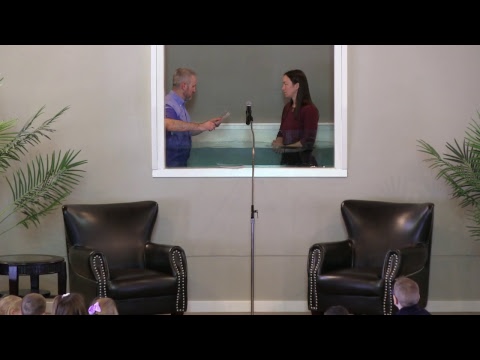
Christ's Great Commission in Matthew 28:18–20 provides the church with her complete marching orders: go, make disciples, baptize those disciples, and teach them to observe all that Christ commanded. The authority behind the commission belongs to the risen and exalted Christ, who possesses all authority in heaven and earth; the assurance sustaining it is His promise of perpetual presence to the end of the age. The sermon treats the specific focus of the commission in sequence, defending believers' baptism by immersion as the pattern demanded by the text and the order it establishes — make disciples first, then baptize — against both baptismal regeneration and paedobaptism. The Trinitarian formula of baptism occasions an extended treatment of theology proper, including divine simplicity, impassibility, and the unity of essence in three persons, with warnings against tritheism, modalism, and subordinationism.

The Dying Thief and the Prince of Life

The crucifixion scene of Luke 23:38–43 presents three voices: the cursed robber who reviles Christ to his last breath, the dying thief who exercises remarkable faith in a bloodied and apparently defeated king, and the Prince of Life who responds with sovereign assurance. This sermon exposition focuses on Christ's words to the thief — 'Assuredly, I say to you, today you will be with me in paradise' — unpacking the divine promise, immutable love, and perfection of Christ's blood and righteousness that undergird that assurance. The confession of faith's teaching on the perseverance and assurance of the saints illuminates why the thief's salvation is certain, and the same certainty belongs to all who believe on the Lord Jesus Christ.

The Divine Provision of Eternal Life
Isaiah 55 presents God's gracious and urgent invitation to sinners to receive the fullness of salvation — the refreshment, gladness, and nourishment of the gospel — entirely without cost, because the suffering servant of Isaiah 53 has already satisfied the purchase price. The sermon expounds the chapter in two movements: the invitation to come (vv. 1–5), grounded in the new covenant and secured by the Davidic king, and the call to faith and repentance (vv. 6–13), sustained by the sovereign power of God's Word. Believers are urged to treasure the abundance of every spiritual blessing already given in Christ, and unbelievers are warned not to squander their lives on what cannot satisfy while the Lord may yet be found.

Our Response to Our Shepherd

Psalm 23 sets before the believer not merely a catalogue of divine blessings but a model of how those blessings ought to shape the believer's whole inner and outer life. Drawing from David's own experiential response to his blessedness, this exposition identifies four corresponding responses the Lord's sheep must cultivate: strong confidence in God amid every trial and dark valley, active praise that declares truth about God with joy and adoration, genuine delight in God's presence expressed in real fellowship with him, and obedient following in the paths of righteousness for his name's sake. The sermon closes with a direct call to the unconverted to come to their senses and trust the Good Shepherd who laid down his life to rescue, forgive, and transform sinners.
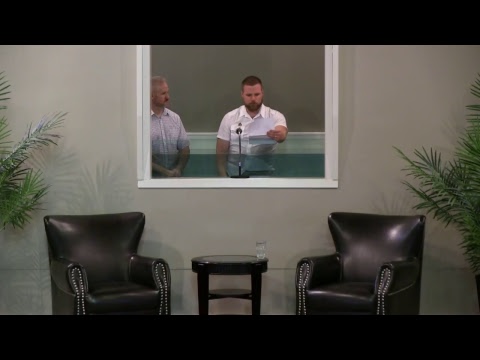
Livestream - Baptism: Wim Kerkhoff
Acts 8:26–40 records the conversion and baptism of the Ethiopian eunuch, and this exposition sets that account against its Old Testament backdrop in Isaiah 53 and Isaiah 56 to show that what is happening is not merely one man's conversion but the fulfillment of covenant promises: the inclusion of those doubly excluded from the assembly of Israel. The sermon works through three movements — the divine appointment of the contact, the gospel communication beginning from Isaiah 53, and the conversion issuing in immediate baptism upon confession of faith. The central application is that God is characteristically and eagerly a saving God, that believers' baptism follows faith as its ordained external sign, and that no sinner — whether powerful or poor, crisis-converted or quietly brought to faith — is beyond the reach of sovereign grace.

A Psalm of the Cross
Psalm 22 is a prophetic psalm of David that transcends David's own experience to describe with precision the suffering, death, and exaltation of the Messiah. The sermon examines the cry of dereliction ('My God, my God, why have you forsaken me?') with theological care, rejecting the notion that the Father abandoned the Son in any way that ruptured the Trinity or dissolved the hypostatic union, and instead grounding the forsakenness in the Son's substitutionary bearing of the wrath due his people. Three features of Messianic confidence sustain Christ through his ordeal — the holiness of God, the past faithfulness of God, and the invoked presence of God — and the congregation is called to meet their own trials with the same theological ballast that sustained the Savior on the cross.
The Precious Blood of Christ
1 Peter 1:18–20 presents the redemption accomplished by Christ as grounded in the infinite value of his sinless sacrifice, the eternal decree of the triune God, and the certainty of its historical occurrence. This sermon expounds three dimensions of the 'precious blood of Christ': its surpassing worth measured against corruptible earthly things; its origin in the determined counsel of God before the foundation of the world; and its singular reality as a manifest historical event attested by eyewitnesses. The Lord's Supper, observed the same evening, provides the pastoral occasion for calling both believers to joyful reflection on the blood that cleanses from all iniquity and unbelievers to repentance and faith in the one Lamb without blemish and without spot.

The Response to Peter's Sermon
Acts 2:41–47 records the immediate fruit of Peter's Pentecost sermon: three thousand souls baptized and a church marked by steadfast doctrine, fellowship, the Lord's Supper, and prayer. This exposition argues that the passage is both descriptive and prescriptive — what the early church did defines what the church in every age must be. Along the way, believers' baptism is defended against paedo-baptist readings of verse 39, and the growth of the church is traced not to programs or techniques but to the sovereign calling of God through the faithful preaching of Christ crucified.