
Theological term
Modalism
23 sermons · All terms

The Testimony Concerning Christ

John 15:26–27 presents the Holy Spirit as both sent by the Son in a temporal mission and as one who eternally proceeds from the Father and the Son — the filioque. This sermon works through the distinction between God's eternal processions (theology proper) and his temporal missions (economy), arguing that the Western church's confession of the Spirit's double procession preserves both the consubstantiality and the personal distinction of the three persons of the Trinity. The apostolic witness of verse 27 is grounded in and empowered by that same Spirit, whose singular purpose in both the sending at Pentecost and the inscripturated Word is to testify of Christ — and that testimony calls sinners to receive eternal life by faith in him alone.

The Nature of the Holy Spirit
How does Jesus comfort his disciples in the upper room by pointing them to the Holy Spirit, and what does that reveal about who God is? Expounding John 14:16–18, this sermon works through four aspects of the Spirit's nature drawn from the text: the distinction of persons in the Godhead, the unity of the Godhead, the world's ignorance of the Spirit, and the believer's knowledge of him. The eternal processions — the Father unbegotten, the Son eternally begotten, the Spirit proceeding from Father and Son — ground the temporal missions in which the Father sends the Son and the Father and Son send the Spirit for the salvation of God's people. The congregation is called to hold fast to the Trinitarian guardrails of the creeds and the 1689 confession, to resist the modalism and Arianism that perennially distort who God is, and to rest in the gospel of free and sovereign grace through faith in the one who declared 'I am.'

The Revelation of the Father
John 14:7–11 presents Christ's claim that knowledge of the Son is knowledge of the Father, and that the Father dwells in the Son and the Son in the Father — a claim no mere creature could make. The sermon works through three confirmations of this unity: the nature of the Son (his consubstantiality with the Father), the words of the Son (which are the Father's words by virtue of shared essence, not mere instrumentality), and the works of the Son (which the Father performs through the Son as one divine operation). The Trinitarian theology at stake is not speculative — it is the doctrinal ground upon which the disciples, and all believers, stand when the world collapses in on them, because the Son who is God of God, light of light, very God of very God, is the one who came down 'for us and for our salvation.'

2LCF Chapter 8 - Of Christ the Mediator, Part 2

The deity of Jesus Christ is not a late ecclesiastical imposition but the irreducible confession of Scripture, the early church, and the Reformed confessional tradition. This lesson, the second in a series through 2LCF Chapter 8, opens by reading paragraphs 1–2 of the confession before working through both what the orthodox doctrine of Christ's deity does NOT mean — rejecting polytheism, social trinitarianism, homoiousian subordinationism, modalism, and kenoticism — and what it positively asserts: that Christ is very and eternal God, of one substance with Father and Spirit, equal to the Father, personally distinct within the Godhead, and unchanging in deity through the incarnation. The biblical witness is then marshalled under five categories — explicit statements, Christ's self-witness, NT application of OT divine texts, divine perfections predicated of Christ, and divine works ascribed to Him — to demonstrate that the deity of Christ is axiomatic rather than argued in Scripture itself.

2LCF Chapter 2 - Of God and of the Holy Trinity, Part 3
The Holy Spirit as the third subsistence of the one divine essence is the subject of this study in Chapter 2, Paragraph 3 of the 1689 London Baptist Confession of Faith. The session traces the Spirit's presence and deity through both Testaments, works through the meaning of eternal procession from the Father and the Son (the filioque), and engages the historical debates at the councils of Nicaea, Constantinople, and Toledo that shaped confessional Trinitarian language. The practical conclusion drawn from the Confession is that the doctrine of the Trinity is not abstract speculation but the foundation of all communion with God and the believer's comfortable dependence upon Him.

The Divinity of the Word
John 1:1–5 opens not in a Bethlehem stable but in eternity, establishing the Word's co-eternality, personal distinction from the Father, and full consubstantiality with the Father before a single creature existed. This sermon works through the first clause of John's prologue under five sub-points drawn from verse 1: the eternity, distinctiveness, and consubstantiality of the Word with the Father, the repetition of that glory in verse 2, and (deferred to the following week) the Word as creator of all things. The doctrine of the Trinity — one in essence, three in subsistence — is shown to be not an academic luxury but the very foundation of all communion with God and the indispensable framework for understanding why the incarnation is the supreme act of grace.

The Great Commission
The Great Commission (Matthew 28:18–20) constitutes Christ's formal mandate to his church for this age: going, making disciples, baptizing believers, and teaching them to observe all that he commanded. The authority behind the commission is Christ's present, universal lordship — not a future investiture but a reigning reality — and the assurance sustaining it is his promised presence to the end of the age. Baptism is treated as believers' baptism by immersion, an initiatory ordinance that publicly identifies the disciple with the triune God and symbolises union with Christ in his death, burial, and resurrection. The sermon calls the church to be comprehensively about this single focused mission — preaching the gospel for justification, then grounding the justified in sanctification through the teaching ministry of the local church.

The Incarnation of the Word
John 1:14 declares that the eternal Word — the second person of the Trinity, who was in the beginning with God and was God — became flesh and dwelt among men. This sermon expounds the incarnation under two heads: first, the identity and reality of the Word taking on true humanity (the hypostatic union of two complete natures in one person), and second, the glory of that Word as the only begotten of the Father, full of grace and truth. The incarnation is shown to be the indispensable ground of redemption — whatever is not assumed is not redeemed — and sinners are urged to flee to a mediator who is full, not miserly, in grace and truth.

The First Commandment
The First Commandment — 'You shall have no other gods before me' (Deuteronomy 5:7) — demands both the rejection of every rival and the cultivation of genuine knowledge of the true and living God. The sermon works through the specific sins condemned by the commandment (atheism, polytheism, syncretism, idolatry, sorcery, heresy, and creature-worship), grounding each in Old and New Testament texts, before turning to the positive obligations the commandment requires: knowing God as Trinity, knowing His divine perfections, and knowing His external works in creation, providence, and redemption. The commandment functions pedagogically to expose humanity's chronic unfaithfulness and drive sinners to repentance, and normatively to call the redeemed to a rigorous, lifelong growth in the knowledge of who Yahweh is.
The Sovereignty of God
Proverbs 3:19–20 grounds God's sovereignty not merely in creation but in every sphere of existence — the world was founded by divine wisdom, and that same sovereign wisdom governs all of history and secures the redemption of His people. Drawing widely from Proverbs alongside Genesis, the Psalms, Daniel, and Romans, this sermon traces three distinct expressions of God's sovereignty: His free, unconstrained creation of all things; His comprehensive providence over human affairs including civil government; and His eternal purpose in redemption, centred in the pre-existent Christ of Proverbs 8. The practical force of the message is that divine sovereignty — rightly understood — produces neither fatalism nor hyper-Calvinist passivity, but rather deep comfort, stable faith, and the use of appointed means, all to the glory of God.
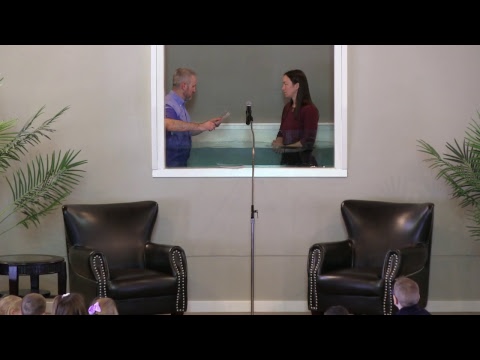
The Great Commission
Christ's Great Commission in Matthew 28:18–20 provides the church with her complete marching orders: go, make disciples, baptize those disciples, and teach them to observe all that Christ commanded. The authority behind the commission belongs to the risen and exalted Christ, who possesses all authority in heaven and earth; the assurance sustaining it is His promise of perpetual presence to the end of the age. The sermon treats the specific focus of the commission in sequence, defending believers' baptism by immersion as the pattern demanded by the text and the order it establishes — make disciples first, then baptize — against both baptismal regeneration and paedobaptism. The Trinitarian formula of baptism occasions an extended treatment of theology proper, including divine simplicity, impassibility, and the unity of essence in three persons, with warnings against tritheism, modalism, and subordinationism.

The Call to Repentance
Acts 2:37–40 records the crowd's response to Peter's Pentecost sermon and his command to repent and be baptized. This exposition examines the nature of genuine conviction of sin, the inseparable relationship between repentance and faith, the proper place of baptism as an outward sign of inward grace rather than a means of salvation, and the comprehensive scope of God's electing call that reaches Jerusalem sinners, their children, and Gentiles afar off. The sermon presses the hearer to embrace conviction of sin as a mercy, to understand that repentance and faith are two sides of the same coin, and to respond by believing the gospel and submitting to baptism without delay.

The Glory of the Lamb of God
John 1:29 — 'Behold, the Lamb of God who takes away the sin of the world' — cannot be rightly understood apart from the Prologue that precedes it. The eternal Word who was with God and was God became flesh, was eternally begotten of the Father, and stands as the covenantal head of the new covenant before he is identified as the Lamb whose violent, substitutionary death takes away the sin of the world. The scope of that sin-bearing is not every individual without exception but persons without distinction — Jews and Gentiles alike — as the consistent use of 'world' in John's Gospel and the song of the redeemed in Revelation 5 make clear. The proper response is to place the cross in its full Trinitarian, Christological, and covenantal context and to worship the one who left the eternal life of God to enter our flesh and save us from our sins.

The Great Commission, Part 3
Matthew 28:19 commands that disciples be baptized into the singular name of the Father, Son, and Holy Spirit — a text that stands as one of Scripture's clearest witnesses to the doctrine of the Trinity. This sermon works through the baptismal formula to establish what the one name and three persons require the Christian to confess: one divine essence, three distinct subsistences, free from the errors of tritheism, modalism, and subordinationism. The active obedience of Christ is exposited as the ground of the righteousness imputed to sinners in justification, showing that the gospel itself is inseparable from a right doctrine of God. The congregation is urged to study the confession's chapters on theology proper and Christology, and to hold the doctrine of the Trinity as a white-knuckle conviction worth dying for.

Free Grace Baptist Church - December 4, 2016 PM
The Trinity is fully active in the death of Christ — Father, Son, and Holy Spirit each play distinct and glorious roles in the one work of redemption. Drawing from 1 Peter 1:1–2 and 1:10–21, this Lord's Supper meditation traces how the Father purposes and orders Christ's death, bruises the Son to secure salvation, and receives his human soul; how the Son bears the punishment due to sinners, actually and fully saves his people, and continues to intercede for them; and how the Spirit testifies beforehand to Christ's sufferings, supports Christ's human nature under those sufferings, and applies redemption's benefits to the elect. The threefold application calls believers to rejoice in Christ, gird up the loins of their minds as obedient children, and rest their faith and hope entirely in the triune God who saves to perfection.
2LCF Chapter 2 - Of God and of the Holy Trinity
The doctrine of God and the Holy Trinity, as confessed in 2LCF Chapter 2, is approached here through three progressive affirmations drawn from Scripture and the Reformed confessional tradition: God is, God is one, and God is one in three persons. The incomprehensibility of God frames the entire study — not that He cannot be known, but that He cannot be exhaustively comprehended by any creaturely mind. Moving from general revelation through the law of nature to the biblical witness of monotheism and finally to the Trinitarian distinctions of unbegottenness, eternal generation, and eternal procession, the sermon demonstrates that the doctrine of the Trinity is not speculative theology but the very foundation of all communion with God and comfortable dependence upon Him.

The First Commandment
The First Commandment — 'You shall have no other gods before me' (Deuteronomy 5:7) — demands the exclusive covenantal allegiance of God's people to Yahweh alone. The sermon works through both the prohibition and the positive demands of the commandment, exposing atheism (doctrinal and practical), polytheism, syncretism, idolatry, sorcery, and heresy as violations of the first word, while showing that the commandment positively requires the knowledge, love, fear, trust, obedience, and worship of the one true God. The pedagogical function of the law is also pressed: the commandment, taken seriously, drives the believer to repentance and to Christ, the only law-keeper, who gave himself for the sins of all those the Father had given him.
Of God and the Holy Trinity (2LCF 2.1-3)
The doctrine of the Trinity — one divine and infinite being in whom there are three subsistences, Father, Son, and Holy Spirit — is not a speculative ivory-tower abstraction but the foundation of all Christian communion with God and comfortable dependence upon him. This session in the study of 2LCF Chapter 2 continues the examination of paragraph three, working through the personal distinctions of generation, filiation, and spiration; the confession's summary statement on unity and personal distinction; and the practical import of Trinitarian theology for prayer, worship, redemption, and assurance. Biblical proofs are drawn from Genesis, the Psalms, Isaiah, and the New Testament, demonstrating the revelatory development of the doctrine from its seed form in the Old Testament to its full flower in the New.
Of God and the Holy Trinity (2LCF 2.3)
What does it mean to confess that God is one being subsisting in three persons — Father, Son, and Holy Spirit? This study of 2nd London Baptist Confession of Faith chapter 2, paragraph 3 works through the classical Trinitarian formulation upheld by the particular Baptists, tracing its foundations in Scripture, its continuity with the ecumenical creeds, and the Baptist Confession's terminological improvement of 'subsistences' over 'persons.' The exposition addresses the unity and equality of the three subsistences, the personal distinctions expressed by eternal generation and procession, and the practical necessity of robust Trinitarian confession in an age of continuing anti-Trinitarian error.
The Lord's Prayer, Part 1
The preface to the Lord's Prayer — 'Our Father in heaven' — calls the believer to ground every act of prayer in sound theology proper before a single petition is offered. Against both the hypocrite's ostentation and the heathen's vain repetition, the Lord Jesus provides a model that is at once personal and majestic: the One addressed is Father by adoption through the redemptive work of Christ, and He is in heaven, sovereign over all creation. This study traces six qualities of 'Our Father' — that He is personal, gracious, hearing, caring, loving, and the exclusive object of prayer — before turning to 'in heaven' as the warrant for approaching God with both filial confidence and reverential awe.
The Word Became Flesh
John 1:14 presents one of the most concentrated statements of Christology in all of Scripture: the eternal Word, who was God and was with God in the beginning, became flesh and tabernacled among men. This sermon expounds the incarnation under two heads — the fact of the Word becoming flesh, and the glory beheld in that incarnate Word — with sustained attention to the doctrine of eternal generation, the Shekinah-tabernacle background of John's prologue, and the covenantal purpose of the incarnation in redemption. The hearer is called to rest in the Christ who perfectly fulfilled the law, bore the wrath due to sinners in their stead, and rose for their justification, and to hold fast to a sound Christology as the very ground of salvation.
The Christian Doctrine of the Trinity
The Christian doctrine of the Trinity — one God eternally subsisting in three distinct persons, Father, Son, and Holy Spirit — is defined, defended against historic and contemporary errors, and displayed across the whole of Scripture. The sermon works through three movements: first defining the doctrine precisely (one in essence, three in person), then defending it against polytheism, Arianism, and modalism, and finally displaying its pervasive witness throughout both Testaments. The doctrine is shown to be not a cold theological abstraction but the very foundation of salvation, worship, and the believer's communion with the triune God.
2LCF Chapter 2 - Of God and of the Holy Trinity
The doctrine of the Trinity — one God eternally existing in three distinct persons, Father, Son, and Holy Spirit, the same in substance and equal in power and glory — is not a peripheral curiosity but the beating heart of Christian confession. This sermon defines the doctrine precisely, distinguishes it from the ancient heresies of Arianism, polytheism, and modalism, and then marshals Old and New Testament evidence to demonstrate that the entire canon is Trinitarian to its core. The deity of the Son and the personality and deity of the Holy Spirit receive particular attention, since these are the contested points, and the sermon closes by showing that a right understanding of the Trinity grounds our communion with God, shapes our worship, and patterns our treatment of one another.