
Theological term
Lex Talionis
68 sermons · All terms
Laws Concerning Homicide and Witnesses

Deuteronomy 19 applies three commandments of the Decalogue to the concrete conditions of civil life in Old Covenant Israel: the sixth commandment through legislation on cities of refuge distinguishing accidental homicide from murder, the eighth commandment through the prohibition on moving property landmarks, and the ninth commandment through the law of witnesses and its penalties for perjury. The sermon examines the distinction between manslaughter and premeditated murder, the role of the avenger of blood, the lex talionis as a limiting and proportional principle, and the blood-guiltiness that falls on a nation that fails to execute justice. The overarching application is that these laws reveal the sanctity of human life, the justice of God in civil society, and the sinfulness that made such detailed legislation necessary — all of which drives the hearer to the new covenant, in which Christ alone kept what Israel could not.

The Maintenance of Justice (Higher Court and Monarchy)
Deuteronomy 17:8–20 establishes two institutions for the maintenance of justice in Old Covenant Israel: a higher court to adjudicate cases too complex for local tribunals, and a monarchy governed by the law of God. The higher court — composed of priests, Levites, and judges at the central sanctuary — held binding authority over difficult cases involving degrees of guilt, civil disputes, and punishments, with criminal contempt of that court carrying a capital sanction. The king was not an absolute sovereign but a servant under God's law, prohibited from multiplying horses, wives, and wealth as a guard against misplaced trust, and required to read the law of God daily so that fear of the Lord, not pride or military power, would govern his reign.

The Psalmist's Cry in an Age of Deceit
Psalm 12 presses the question Psalm 11 leaves open: not what becomes of the wicked in the end, but how the people of God survive and remain faithful in the present evil age. The sermon traces two movements in the psalm — the destruction of foundations (vv. 1–4), marked by idle speech, flattery, and the proud autonomy of godless men, and the preservation of the righteous (vv. 5–8), grounded in God's arising to deliver the oppressed and in the utter purity of his Word. David's prayer is read through a Christological lens: the psalm is supremely the prayer of Christ in his earthly ministry, opposed at every step, yet sustained by the Father's Word and promise. The congregation is urged to respond to cultural and ecclesiastical decay not by retreat or despair but by theology, prayer, and dependent trust in the pure and preserving Word of God.

The Ninth Commandment
The Ninth Commandment — 'You shall not bear false witness against your neighbor' (Deuteronomy 5:20) — addresses first and foremost the crime of perjury in a judicial context, then extends by implication to every form of falsehood: lying, slander, backbiting, gossip, and tailbearing. Working through Deuteronomy 19:15–21, the study examines the biblical lex talionis applied to false witnesses, where the perjurer receives the same penalty he sought to bring upon the accused, and draws out the retributive and deterrent logic of Old Covenant judicial law. The positive requirement of the commandment — the sanctity of truth in all areas of life — is traced through Leviticus 19, Proverbs, Romans 1, and the Westminster Larger Catechism's exhaustive treatment of sins against the ninth commandment. Hearers are called to active and passive faithfulness: neither speaking falsehood nor lending an ear to those who do.
The Sixth Commandment, Part 3
The sixth commandment, 'You shall not murder' (Deuteronomy 5:17), prohibits unlawful killing with premeditation and malice, but the Bible distinguishes murder from lawful taking of life in capital punishment, self-defense, and just war. This study works through the Old Testament legal framework for self-defense, particularly Exodus 22:2–3, alongside several narrative examples, to establish that defensive homicide is not forbidden by Scripture. The teaching of Jesus in Matthew 5:38–42 is examined carefully to show that the Sermon on the Mount addresses personal, interpersonal ethics — not a universal prohibition on self-defense — and that Jesus himself assumes people will protect themselves and others. The study concludes with a call to think with biblical clarity on these matters in an age of muddled Christian ethics.

The Victory of David Over Goliath
David's defeat of Goliath in 1 Samuel 17 is not a moralistic lesson in overcoming personal giants, but a theological declaration that the living and true God vindicates His covenant people against those who defy Him. The narrative turns on two explicit lessons David announces in verses 46–47: that all the earth will know there is a God in Israel, and that Israel will learn the Lord does not save by sword and spear. David functions typologically as the singular seed of the woman, his headshot of Goliath advancing the Genesis 3:15 promise toward its fulfillment at Golgotha, where Christ crushed the serpent's head through His death and resurrection. The sermon calls believers to the same confidence David displayed — trusting the living God rather than human strength, because the same God who delivered David has promised to build His church and defend His people.

The Regulations for Life in Canaan
Numbers 32–36 closes the book with regulations governing Israel's entry into Canaan: the Transjordanian tribal allotments, the itinerary of the wilderness journey, the boundaries of the land, Levitical cities, cities of refuge, and the inheritance rights of female heirs. The legislation on cities of refuge anchors a sustained exposition of the distinction between murder and manslaughter, grounded in the Noahic covenant of Genesis 9:6, and carries forward the biblical case for capital punishment as a perpetual civil obligation. The study closes by tracing Christ through Numbers — as the guiding presence, the compassionate shepherd, the greater Joshua, the great high priest, and the brazen serpent lifted up for the life of the world — and applies the wilderness pattern to the new covenant people who must persevere through present affliction toward an eternal Canaan.

The Commission Given to Joshua
Joshua 1:1–9 records the divine commission given to Joshua upon the death of Moses — a commission built on four pillars: the reminder of God's covenant promise, the blessing of God's presence, the charge to courageous obedience, and the centrality of God's Word. God's appointment of Joshua as Moses' successor demonstrates that sovereign providence works through human instruments, yet is never bound to them; the faithfulness of God outlasts every leader. The sermon draws a direct line from the conquest commission to the Great Commission of Matthew 28, arguing that Christ's promised presence with His church is the only sufficient ground for courage and faithfulness in gospel ministry.

The Sanctity of Life
The sixth commandment's prohibition of murder rests on the foundation that man is made in the image of God — a dignity that attaches to every human being at every stage of life, including the preborn child in the womb. Exodus 21:22–25 addresses the case of a pregnant woman injured during a fight, and the Hebrew text's use of normal birth language rather than miscarriage terminology establishes that the child in the womb is covered by the same lex talionis as any other person. The sermon works through the biblical witness to the imago Dei across the whole of human life — pre-fall, post-fall, in infancy, disability, sickness, old age, and the womb — before turning to the passage in Exodus as concrete civil legislation protecting that dignity. The law condemns the sin of abortion without reservation, yet the sermon closes by directing the guilty to the gospel: the blood of Christ cleanses from all sin, including this one.

The Penalty for Blasphemy
Leviticus 24 addresses both the daily obligations of tabernacle worship and the capital penalty for blasphemy, grounding each in the direct speech of God to Moses. The chapter's narrative pivot — an incident in which a man of mixed Israelite and Egyptian descent blasphemes the name of Yahweh — becomes the occasion for case-law application of the third commandment, surrounded by reminders of the lex talionis and the equal accountability of stranger and native-born alike. The typological furniture of the holy place (lampstand and showbread) points forward to Christ as the true light and bread of life, while the blasphemy legislation, with its witness requirements and retributive principle, reveals a God who guards his own honour and structures justice with both severity and safeguard. The sermon exhorts hearers to put away every profane use of the divine name and to cultivate a reverent, wholehearted employment of it in thought, word, and worship.

Death Penalty, Part 3
Romans 13:1–7 furnishes the New Testament's clearest warrant for civil government bearing the sword, including capital punishment — yet common objections, both biblical and pragmatic, continue to challenge this teaching. This third installment of a study arising from Leviticus 20 addresses the two most significant biblical objections: the pacifist misreading of Matthew 5:38–42 and the attempt to leverage John 8:1–11 against lawful execution. The sermon argues that Jesus in the Sermon on the Mount is correcting the misapplication of the lex talionis to personal relationships, not dismantling civil jurisprudence, and that his handling of the woman caught in adultery actually upholds Mosaic evidentiary law rather than nullifying capital punishment. Five pragmatic objections — that the death penalty is incompatible with Christian forgiveness, lacks mercy, risks executing the innocent, fails to deter, and forecloses salvation — are each answered from Scripture and reason.

Wednesday Night Bible Study - November 8, 2023
Leviticus 20 prescribes specific penal sanctions for covenant violations, and this study surveys those sanctions before turning to the broader biblical teaching on capital punishment. The Noahic Covenant (Genesis 9:6), understood as a universal common grace covenant never abrogated, grounds the death penalty for murder in the imago Dei and assigns its execution to the civil magistrate. Old Covenant Israel adds further distinctions — between accidental homicide and murder, between first-table and second-table offenses — and Numbers 35 establishes that no monetary ransom may substitute for the execution of a murderer. The study closes by noting that blood guilt defiles the land and can only be expiated by the blood of the one who shed it, setting up a subsequent session on the New Testament's treatment of capital punishment.

Love your neighbour
Leviticus 19:9–18 sets out the concrete shape of neighborly love within the covenant community of Israel — not as sentiment, but as law. Working through gleaning regulations, prohibitions against theft, lying, exploitation, and a corrupt judiciary, the passage demonstrates that to love one's neighbor is to refrain from every breach of the second table of the Decalogue. The sermon shows that Jesus in the Sermon on the Mount and Paul in Romans 13 do not improve upon Moses but confirm what the moral law of God has always demanded: that love is the fulfilment of the law, and hatred of a brother is always a sixth-commandment violation.

The Laws Concerning Property, Part III
Exodus 22:5–15 sets out case laws governing negligence, stolen property, and borrowed goods within the Mosaic Book of the Covenant. The passage is examined under the principle of general equity — the 1689 LBCF's standard for applying Israel's judicial law beyond its original theocratic context — showing that negligence carries a cost, and that responsible stewardship of property is a moral obligation in any body politic. The study moves through three subsections: the wandering grazing animal (v. 5), the uncontrolled fire (v. 6), and the cluster of laws governing entrusted and borrowed property (vv. 7–15), with sustained attention to the role of judges as God's vicegerents and the principle that the punishment must fit the provable offense.

A Defense of Self-Defense
Matthew 5:38–42, the fourth antithesis of the Sermon on the Mount, is frequently invoked to condemn self-defense, capital punishment, and military service — yet a careful reading reveals that Jesus is not contradicting the lex talionis of the Mosaic civil code but rather correcting the Pharisaic habit of applying that courtroom principle to personal, day-to-day relationships. The contrast is not Jesus versus Moses but Jesus versus bad hermeneutics: what the civil magistrate is authorized to do with the sword (Romans 13:1–4) stands entirely intact, and Exodus 22:2–3's legitimization of self-defense is nowhere repealed. The sermon works through Jesus' four illustrations — insult, property disputes, conscription, and benevolence — to show that Christ is calling his disciples to a disposition of patience and forbearance in ordinary life, not to a pacifism that would render them incapable of functioning in civil society.
The Laws Concerning Homicide and Bodily Injury, Part 3
Exodus 21:33–22:15 sets out Israel's case laws governing property damage, animal theft, and home defense — laws designed not as an exhaustive legal code but as representative principles equipping judges to adjudicate equitably. Three features of biblical law emerge with force: the pervasive principle of restitution (the offender must make the victim whole, not merely 'pay a debt to society'), the absence of a prison system in the Mosaic economy, and the explicit legitimacy of lethal self-defense when a thief breaks in under cover of darkness. The sermon calls hearers to appreciate the pro-victim orientation of God's law and to think biblically about criminal justice, property rights, and self-defense in the present civil order.

The Laws Concerning Homicide and Bodily Injury, Part 2
Exodus 21:22–32 contains Israel's civil laws governing bodily injury to a pregnant woman, the discipline of servants, and liability for a goring ox — all concrete applications of the sixth commandment. The passage's language for premature birth employs the same Hebrew vocabulary used elsewhere in Genesis for childbirth, establishing that both mother and child (or children) are protected persons under the law, which the sermon applies directly to the ethics of abortion. The lex talionis (life for life, eye for eye) is examined not as a mandate for literal replication of injury but as a principle requiring proportionate punishment — neither too lenient nor excessive — a standard grounded in the dignity of every person as an image bearer of God.

The Laws Concerning Homicide & Bodily Injury (Part I)
Exodus 21:12–21 applies the Sixth and Fifth Commandments through the judicial law of Israel, treating the capital offenses of murder, parental assault, cursing of parents, and kidnapping, then moving to laws governing non-fatal bodily injury and the discipline of servants. The sermon draws on the Noahic Covenant (Genesis 9:6), the abiding authority of civil government to bear the sword (Romans 13), and the general equity principle to argue that these case laws carry enduring moral weight even outside the Mosaic theocracy. Listeners are called to pray for civil governments to discharge their God-ordained duty of punishing criminal offenders, and to take seriously the fifth commandment's demand that parental authority be honored and enforced in the home.
The Oppression of Israel by Pharaoh
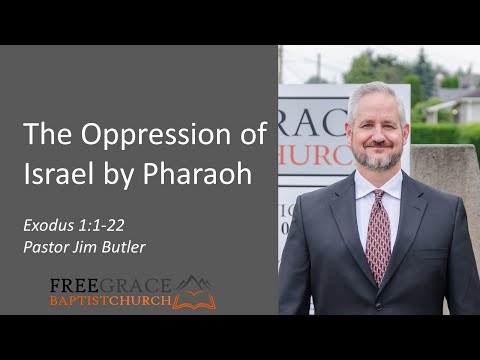
Exodus 1 records the escalating oppression of Israel in Egypt — from the rise of an ignorant pharaoh, through forced labor, to an explicit policy of infanticide targeting Hebrew male infants. This exposition traces the passage in two movements: the connection between Exodus and the Abrahamic promises of Genesis, and the progressive stages of Pharaoh's tyranny, culminating in a national decree of genocide. The Hebrew midwives Shiphrah and Puah are held up as models of God-fearing civil disobedience, and the whole chapter is read typologically, anticipating the greater deliverance wrought through Moses and ultimately through the seed of Abraham, Jesus Christ. The congregation is called to imitate the courage of the faithful — to obey God rather than men in whatever sphere God has placed them.

The 9th Commandment, Part 1
The ninth commandment, 'You shall not bear false witness against your neighbor' (Exodus 20:16), extends far beyond the courtroom to govern all speech — forbidding perjury, lying, slander, gossip, and talebearing. Drawing on the Mosaic law, the Wisdom literature, the Gospels, and the Epistles, this study traces how Scripture consistently condemns every form of false speech as an assault on the image of God, the stability of society, and the character of God himself, who is truth and cannot lie. The passive reception of gossip is indicted alongside its active propagation, and hearers are called to close their ears to talebearers as firmly as they close their mouths to speaking falsehood.

The Feeding of the Five Thousand
John 6:1–15 presents the feeding of the five thousand as a sign — a theological event designed to reveal who Jesus is, not merely a remarkable act of provision. The miracle is set against the backdrop of the Passover and the Mosaic exodus, inviting comparison between the manna in the wilderness and Jesus as the living bread come down from heaven. The crowd's response — declaring him the prophet of Deuteronomy 18 and then attempting to seize him as a political king — exposes the persistent confusion between a physical, temporal messianic expectation and the spiritual, eternal salvation Christ actually came to accomplish. The sermon calls hearers to see in the bread and fish the One who supplies all things abundantly, who has both the compassion and the omnipotence to save every sinner who comes to him in faith.

Sanctity of Life
The Sixth Commandment — 'You shall not murder' (Exodus 20:13) — extends its protection to the pre-born, grounding the prohibition against abortion in the doctrine of man as image-bearer of God. This sermon works through three lines of argument: the precise meaning of the Hebrew word for murder, the consistent biblical testimony to the sanctity of human life at every stage from conception to old age, and the specific case law of Exodus 21:22–23, which affords the pre-born equal legal protection under the lex talionis. The sermon closes with a call to press the law upon a culture that celebrates abortion, while proclaiming that the blood of Christ is sufficient to forgive all who have participated in this sin.

Exodus 18 - Jethro
Exodus 18 presents two interconnected events: the conversion of Jethro, priest of Midian, and his practical counsel to Moses on delegating judicial authority. The conversion of Jethro follows the pattern of one called out of polytheistic darkness into the knowledge of the true and living God — marked by joy, praise, confession of Yahweh's supremacy, and worship through sacrifice. The passage further grounds civil government in the fear of God and the rule of law, teaching that qualified civil rulers must be able, God-fearing, truthful, and free from covetousness — qualities that remain the standard for righteous governance in any age.

Exodus 14
Exodus 14 records the crossing of the Red Sea — a chapter whose driving theme is not merely Israel's deliverance but God's self-glorification over Pharaoh and his army. The exposition works through two main movements: the plan of God (vv. 1–14), in which God sovereignly directs Israel's route and hardens Pharaoh's heart so that He may gain honor, and the power of God (vv. 15–31), in which divine promise, protection, and action result in the salvation of Israel and the destruction of Egypt. Israel's fear and complaint throughout the chapter expose a chronic lack of faith, while Moses' brief but confident exhortation — 'Do not be afraid; stand still and see the salvation of the Lord' — models the response that faith in God's promises produces.
Exodus 13 - The Consecration of the Firstborn
Exodus 13 grounds the consecration of Israel's firstborn in the redemptive logic of the tenth plague: because God spared Israel's firstborn while striking Egypt's, Israel's firstborn belong to him — to be set apart, sacrificed if clean, or redeemed if human or unclean. The chapter's twin emphases on perpetual remembrance through the Feast of Unleavened Bread and the catechetical instruction of children press the same truth across generations: God's people are defined by what God has done for them, not by their own merit or strength. The typological weight of substitutionary redemption — one life in the place of another — finds its terminus in the Lamb of God who takes away the sin of the world, making these ordinances intelligible only in light of Christ. Practically, the sermon calls the congregation to remember the mighty works of God, to sacrifice freely in gratitude for redemption received, and to pass this theological inheritance faithfully to the next generation.

Exodus 11
Exodus 11 announces and describes the tenth plague — the death of the firstborn throughout Egypt — which God executes directly and immediately, without mediation through natural means. The chapter is structured around three movements: the promise of liberty and prosperity to Israel, the announcement of sweeping judgment upon every household in Egypt, and Pharaoh's continued, God-ordained rebellion. The hardening of Pharaoh's heart is treated not as mere divine permission but as a just act of sovereignty, displaying God's power, holiness, and mercy simultaneously — mercy to Israel being inseparable from judgment upon her oppressors.
Wednesday Night Bible Study (Exodus 11:1-10) - June 23, 2021
Exodus 11 presents the announcement of the tenth and decisive plague upon Egypt, the death of the firstborn, through which God simultaneously crushes Egyptian tyranny and liberates his covenant people Israel. The chapter is examined in three movements: the announcement of the plague with its accompanying promises of liberty and prosperity (vv. 1–3), the description of the plague emphasising God's immediate and sovereign action (vv. 4–8), and the rebellion of Pharaoh as the occasion for the multiplication of God's wonders (vv. 9–10). The sermon presses beyond the historical narrative to show how the destruction of God's enemies is inseparable from the blessing of God's people — a pattern running from Exodus through Joshua to Revelation — and grounds both divine sovereignty and human responsibility in the theological framework of the 1689 Second London Confession chapters 3 and 5.

Bible Study - Exodus 7
Exodus 7 presents the reassurance of Israel's deliverance, the opening sign before Pharaoh, and the first plague — the turning of the Nile to blood. The sermon works through God's sovereign purpose in hardening Pharaoh's heart, arguing that this was an act of righteous judgment upon an already-guilty idolater, not arbitrary cruelty, and that the ten plagues constitute a direct assault upon the gods of Egypt to vindicate God's elect and instruct Egypt in who the Lord truly is. The satanic origin of the magicians' counterfeit signs is examined through Deuteronomy 13, Deuteronomy 18, 1 Samuel 28, Matthew 24, and 2 Thessalonians 2. Romans 9:14–18 frames the theological conclusion: God's sovereignty in hardening and in showing mercy is absolutely righteous, and every act of judgment against God's enemies is simultaneously a mercy toward his people.

Sunday School - Biblical view of self-defense, part 2
Matthew 5:38–42 is frequently misread as a blanket prohibition against self-defense, capital punishment, and just war — three instances of justifiable homicide that Scripture plainly upholds. This exposition argues that Jesus is not contradicting the lex talionis (the law of retribution found in Exodus, Leviticus, and Deuteronomy) but is correcting the Pharisaic misapplication of a civil-judicial principle to everyday interpersonal conduct. The passage addresses four specific situations — insult, litigation, conscription, and benevolence — and calls believers to a disposition of forbearance in personal relations, while leaving entirely untouched the legitimacy of lawful self-defense, just war, and capital punishment as administered by the civil magistrate.

The Rejection of Saul by the Lord, Part 2
The rejection of Saul in 1 Samuel 15:24–35 exposes the anatomy of false repentance, the character of a reprobate, and the nature of a God who does not change. The sermon works through Saul's admission of guilt, Samuel's execution of Agag, and the theological tension between God's expressed regret and his immutability, resolving that tension through the doctrines of divine impassibility and anthropopathism. The justice of God in dispatching the wicked is shown to be a cause for righteous rejoicing, not moral discomfort, as texts from Judges 4–5 and Proverbs 11 confirm. Saul's downward trajectory — blame-shifting, false piety, delusion, fake repentance, and apostasy — is held up as a warning that great privilege does not equal saving grace, while Christ's imputed righteousness is offered as the only ground of true standing before God.