
Theological term
Justification
521 sermons · All terms

The Saving Grace of God

Ephesians 2:8–10 presents the saving grace of God as entirely sovereign, with man described in verses 1–3 as dead in trespasses and sins — not merely wounded or hindered — and therefore incapable of initiating his own salvation. Salvation is by grace alone through faith alone, where faith itself is the gift of God and not a human contribution, excluding all boasting and rendering works irrelevant to justification. Verse 10 confirms rather than supplements verses 8–9: the good works believers walk in were prepared beforehand by God, demonstrating that even sanctified living flows from divine grace rather than native human capacity. The sermon concludes with an application to believers' baptism, which testifies outwardly to God's inward work of regeneration and justification, identifies the baptized with the triune God, and marks entry into Christ's church-building project.

The Psalmist's Contemplation on the Revelation of God, Part 3
Psalm 19:9–14 presses the believer to consider both the benefits of Scripture and the right response to divine revelation. The fear of the Lord, pure and enduring, is the fruit of sovereign grace working through a word that is perfect, sure, right, and pure — a word more valuable than gold and sweeter than honey. David's closing petitions in verses 12–14 trace a graduated reckoning with sin — secret faults, presumptuous sins, and the dominion of sin — answered not by human resolve but by pardoning, preventing, and restraining grace grounded in God as rock and redeemer. The sermon calls believers to prize Scripture above every temporal good, to deal honestly with remaining corruption, and to rest the whole petition for acceptance on Christ, the true David, whose imputed righteousness alone makes the prayer of Psalm 19 fully and finally ours.

The Deliverance of the Psalmist, Part 2
Psalm 18:20–30 presents the righteousness of the psalmist not primarily as David's own moral record but as a prophetic description of the Lord Jesus Christ, the last Adam and covenantal representative. David's language of blamelessness and perfect obedience in verses 20–24 transcends anything David himself could claim, pointing forward to the active obedience of Christ, whose spotless life and atoning death constitute the sole ground of justification for all who believe. The sermon argues that the deliverance celebrated in verses 1–19 is grounded in the righteousness declared in verses 20–24 — precisely as Romans 5:18–19 teaches — so that the church reads this psalm not as a moral target to reach but as the righteousness of their surety freely imputed to them by faith. The vivid illustration of Zechariah 3 anchors the application: filthy garments removed, rich robes bestowed — justification by God's grace alone, through faith alone, in Christ alone.

The Sanctifying Benefit of the Gospel
Romans 6:1–4 confronts the objection that justification by faith alone licenses continued sin, and Paul's answer is grounded not in moral resolve but in the gospel itself. The sermon traces the inextricable link between justification and sanctification: those united to Christ by faith have died, been buried, and been raised with him, and Christian baptism is the appointed sign and symbol of that union. Because the Christ who secured justification gives his Spirit to effect sanctification, the two benefits are inseparable — the same gospel that frees believers from the penalty of sin is the power that breaks sin's dominion. The primary application is that believers fight sin first by reckoning themselves dead to it in Christ, not merely by external restraint.

The Active Obedience of the Righteous One
Psalm 15 poses the question of who may dwell in the presence of God, and this exposition argues that the answer is not a moral prescription for the believer but a description of the active obedience of Jesus Christ alone. The psalm's portrait of the righteous man — pure in works, words, company, and commitments — indicts every reader who imagines it describes them, and points instead to the one man in human history who satisfied every demand of God's law with perpetual, exact, entire obedience. Justification is God's act of pardoning all sin and imputing that accomplished righteousness to the believer through faith alone, so that sinners described in Psalm 14 enter the holy hill of God solely on the merits of the Savior described in Psalm 15.

The Goodness of God's Law
The law of God is good — but only when used lawfully. Expounding 1 Timothy 1:8–11, this sermon defends the goodness of the moral law against both antinomian dismissal and legalistic distortion, situating Paul's argument within the classical Reformed framework of the law's three uses: civil, pedagogical, and normative. The false teachers in Ephesus had neither understood the law nor handled it properly, and Paul's corrective is not to demote the law but to demonstrate its proper function — restraining lawlessness in society, exposing the sinner's need for Christ, and directing the justified believer in the path of sanctification.

The Apostle's Charge to Timothy
Paul's charge to Timothy in 1 Timothy 1:3–7 commands the silencing of false teachers in Ephesus who taught other doctrine, devoted themselves to fables and endless genealogies, and generated disputes rather than godly edification. The charge is not motivated by power or animosity but by love flowing from a pure heart, a good conscience, and sincere faith — the fruit of regeneration. The false teachers compounded their error by combining ignorance of the law with arrogant confidence in their own assertions, a combination the apostle deems disqualifying. Churches today must hold the same line: qualifying teachers rigorously, refusing platforms to the heterodox, and measuring all teaching against the truth as it is in Jesus.
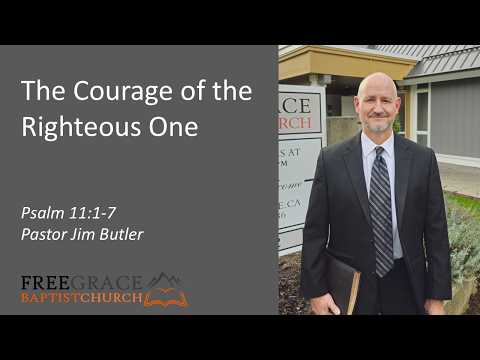
The Courage of the Righteous One
Psalm 11 presents the righteous man — supremely the Lord Jesus Christ — facing the temptation to abdicate his calling when wicked enemies ready their arrows and the foundations of moral order appear destroyed. The sermon expounds two movements: the temptation to flee (vv. 1–3) and the fortification found in contemplating God's sovereignty, omniscience, and justice (vv. 4–7). Because Christ steadfastly set his face toward Jerusalem and drank the cup of divine wrath to its dregs in the place of his people, believers have every reason to resist the same temptation to cowardice and unbelief, and to stand firm in the Lord.
Ask FGBC #63: What is Baxterianism?
Baxterianism, drawn from the teaching of 17th-century minister Richard Baxter, replaces the Reformed doctrine of justification by faith alone with a scheme in which God justifies the believer on the ground of evangelical obedience to a relaxed 'law of the gospel.' This Q&A exposition identifies Baxterianism as a conflation of justification and sanctification, a departure from the imputation of Christ's active and passive obedience, and an implicit relaxation of the moral law — errors addressed directly by 1689 LBCF chapters 11, 13, and 19. The discussion grounds its critique in Galatians 2:16 and the consistent witness of Paul that sinners are justified by faith alone, not by any human obedience, through the sole and finished work of Christ.

Being Strengthened

Colossians 1:11 describes one of four characteristics of a life that pleases God: being strengthened — a passive reception of divine power, not a self-generated act of will. The sermon expounds the action, the gift, the measure of the gift, and the goal of the gift, arguing that God infuses his people with all needed power according to the inexhaustible measure of his own glorious might. This strengthening is the mechanism by which believers endure patience and longsuffering under any and all circumstances of life. Sinners who have not yet come to Christ are invited to the only Savior who both grants entrance into the Christian life and sustains his people all the way to glory.

The Believer's Contentment
Philippians 4:10–13 presents the contentment of the Apostle Paul not as an innate virtue but as a learned conviction forged through diverse and often severe circumstances. Working through Paul's expression of gratitude to the Philippians, his present situation, his learned conviction, his diverse circumstances, and his source of strength, this sermon argues that Christian contentment is utterly independent of circumstances because it is grounded in union with Christ — in justification, sanctification, and promised glorification. The practical exhortation confronts the common error of tying contentment to circumstances ('when I get married, then I will be content') and calls believers instead to submit sweetly to divine providence, rejoice in God's sovereign ownership of all things, and find their settled rest in Christ alone.

The Dominion of the Incarnate Son
Psalm 8 is not merely a meditation on creation but a messianic prophecy concerning the dominion of the incarnate Son of God. The sermon traces the psalm's double register — the glory of God manifest in the created order and the glory of God manifest in the incarnation — grounding that interpretation in the two New Testament passages where Jesus and the Apostle Paul explicitly apply Psalm 8 to Christ: Matthew 21 and Hebrews 2. The exaltation of the God-man at the right hand of the Father, his conquest of the devil through death, and his propitiation for the sins of his people are shown to be the true fulfillment of the dominion language of verses 4–8. Believers are exhorted to silence the enemy's accusations against them by invoking the blood and righteousness of Christ, which is the ground of both justification and assurance.

The Vindication of the Righteous One
Psalm 7 unfolds as a courtroom drama in which the psalmist — and, typologically, the Lord Jesus Christ — appeals to God for vindication against false accusers, refusing personal retaliation and casting the entire matter upon the justice of God. The sermon moves through three phases: the supplication of the righteous one, the assertion of innocence, and the extended vindication that grounds confidence in God's decreed judgment against the wicked. David functions as a type of Christ, whose spotless innocence alone fully satisfies the conditions of verses 3–4, and whose imputed righteousness is the sole ground on which the church may echo his plea. The practical summons is to resist paralysis or retaliation in the face of false accusation and social hostility, and instead to take refuge in the just God who is angry with the wicked every day and who has appointed a day of final judgment.

The Power of the Peace of God
Philippians 4:6–7 contains both a prohibition and a promise: Paul commands believers to be anxious for nothing and promises that the peace of God, which surpasses all understanding, will guard the heart and mind through Christ Jesus. The sermon examines the prohibition against carnal anxiety, the corrective of prayer offered with thanksgiving, and the promise of divine peace — arguing that prayer is not a formula for instant relief but the ordained means by which God's people cast their burdens on God and receive the peace that flows from justification and the indwelling Spirit. The congregation is called to pray with right motivation, godly manner, and kingdom-oriented priorities as modeled in Christ's own teaching on prayer.

The Prayer of the Man of Sorrows
Psalm 6 is read christologically as the prayer of the man of sorrows — not merely a record of David's personal penitence, but a prophetic foreshadowing of Christ's redemptive anguish as the representative of his people. The doctrine of imputation grounds this reading: what Christ bears is not his own sin but the sin of those the Father gave him, laid upon him by divine appointment. The sermon works through two major sections of the psalm — the sorrow of the psalmist in verses 1–7 and the confidence of the psalmist in verses 8–10 — calling hearers to see their sin as atoned for by the Son of God and to live in light of that imputed righteousness, pursuing holiness and resting their prayers upon the same mercies Christ secured.

The Believer's Joy and Moderation
Philippians 4:4–5 contains two imperatives that together define the outward shape of the Christian life: a command to rejoice in the Lord always, and a command to let moderation — or equity — be known to all men. The sermon argues that joy is not a feeling to be waited upon but a non-negotiable duty grounded in the objective realities of justification, sanctification, and glorification. The Greek word rendered 'gentleness' (epieikēs) is examined through Aristotle, Zanchi, and Gill to establish that it denotes reasonableness in judging and willingness to forgo one's rights in interpersonal matters — not a blanket disposition of quietness that would contradict the examples of Joshua, Elijah, Christ driving out the money-changers, and Paul's anathema on false gospels. Both commands are made possible only through the imputed righteousness of Christ received by faith and the indwelling Spirit.

Ask FGBC #54: If My Sins Are Forgiven, What Will I Be Judged For?
If the sins of the justified are cast into the depths of the sea, what remains to be accounted for on the Day of Judgment? This question is answered by distinguishing the forensic declaration of justification by faith alone — grounded in Christ's imputed righteousness — from the logic of an earthly trial. The Day of Judgment for the righteous is not an investigation to determine status, but a public manifestation of the glory of God's mercy, confirming what Christ has already secured. The 1689 LBCF chapter 32 frames the point: that day is appointed for the manifestation of the glory of God's mercy toward the elect, not for a second or final justification.
The Confidence of the Believer
Micah 7 presents the prophet lamenting the moral and covenantal collapse of Israel — corrupt leaders, treacherous neighbors, fractured households — only to pivot on a single word: 'therefore.' Rather than despair, Micah models the posture of the godly remnant: looking to God, waiting on God, and confessing sin without self-defense. The sermon traces the chapter's three movements — lamentation (vv. 1–6), exhortation (vv. 7–13), and doxological prayer (vv. 14–20) — and presses the question of what genuine faith looks like when the church and civil society have both gone far astray. The closing doxology, 'Who is a God like you, pardoning iniquity,' is held up as the ground of the believer's confidence and the fitting frame for the Lord's Supper.

2LCF Chapter 16 - Of Good Works

Good works, as defined in chapter 16 of the 1689 London Baptist Confession of Faith, are only those things God has commanded in his holy word — not deeds devised by men from blind zeal or good intentions. They are not the ground or cause of justification, which is by faith alone through Christ alone; rather, they are the fruits and evidences of a true and lively faith, flowing from hearts purified by that faith and enabled wholly by the Spirit of Christ. The confession targets both the Roman Catholic doctrine of supererogation and any merit-based soteriology, insisting that even the believer's best works, mingled with weakness and imperfection, are acceptable before God only through the mediation of Christ. Believers are therefore called to freely and cheerfully perform good works — including proper worship — not to secure salvation but as the grateful and Spirit-enabled response of those already justified by Christ's perfect obedience imputed to them.

The Peace and Safety of God
Psalm 4 presents the petition, exhortation, and contemplation of David — and, through him, of Christ as the godly man set apart by the Father. The sermon works through each movement of the psalm in sequence: the psalmist's earnest appeal grounded in God's past faithfulness, the rebuke and call to repentance issued to the sons of men, and the declaration that true good — the light of God's countenance, gladness of heart, and the peace and safety of dwelling under his care — belongs to those who trust in the Lord. The congregation is urged to come to Christ in earnest, arguing-prayer, to meditate on his person and work, and to rest in the imputed righteousness he alone provides.

The Darkness of Depression
Proverbs 15:13 identifies the broken spirit as a genuine human affliction, and the broader witness of Scripture — from Elijah under the broom tree to the weeping prophet Jeremiah to the Saviour himself as a man of sorrows — confirms that depression and melancholy are realities in the lives of God's people, not marks of spiritual failure. This sermon works through the reality of depression, its manifold causes (physical, psychological, circumstantial, spiritual, and diabolical), and practical strategies for those who suffer and those who come alongside sufferers. The controlling remedy throughout is the means of grace: rest, diet, exercise, prayer, Scripture, and the gathered worship of God's people — with the warning that singing songs to a heavy heart, after the manner of Job's friends, is a pastoral failure Scripture explicitly condemns.

2LCF Chapter 15 - Of Repentance Unto Life and Salvation
Repentance unto life is not a work that precedes salvation but an evangelical grace sovereignly given by God in the covenant of grace, inseparable from faith as two sides of the same coin. Working through 2LCF Chapter 15, this study examines the nature, necessity, and elements of saving repentance, tracing the confession's teaching that remaining corruption and the prevalency of temptation make ongoing repentance a permanent feature of the Christian life, not merely its entry point. The session also challenges the assumption that a crisis conversion is more credible than a non-crisis one, arguing that the same effectual power of God works in the child catechized from infancy as in the most notorious convert. Hearers are urged to hate sin, apprehend the mercy of God in Christ, and avoid both antinomianism and the error of treating repentance as a meritorious condition for acceptance with God.

The Ninth Commandment: Part 2
The Ninth Commandment forbids not only perjury in a criminal court but all forms of lying, backbiting, slander, and gossip — sins Paul identifies as grieving the Holy Spirit within the church. The positive duty of the commandment requires active preservation of a neighbor's good name, charitable restraint of the tongue, and a settled love of truth grounded in the nature of God himself, who is the Lord God of truth, in contrast to the devil, who is a liar from the beginning. The threefold use of the law applies directly: the civil use restrains society from complete moral collapse, the pedagogical use exposes the sinner's need for Christ, and the normative use directs the redeemed — justified freely by grace through faith — in godly conduct toward one another. Every idle word will be accounted for on the day of judgment, making disciplined speech not optional but integral to the Christian life.

The Holy, Harmless, and Undefiled Man
Psalm 1 describes not merely the character of the generic godly man, but the Lord Jesus Christ himself — the one perfectly holy, harmless, and undefiled man whose obedience alone secures the blessedness the psalm pronounces. The hermeneutic is not moralistic prescription ('do this and live') but christological proclamation: because the blessed man of verse 1 fulfilled what verses 1–2 demand, all who trust in him receive both forgiveness of sins and the imputation of his righteousness. The sermon then moves to application in a gospel-ordered framework, showing that sanctification flows consequent to justification — the redeemed follow the Lamb not in order to obtain blessing, but because they have already received it in Christ.

The Third Appearance of Christ to the Disciples, Part 3
John 21:20–25 closes the fourth gospel with two interlocking concerns: the sovereign headship of Christ over His church and the divine authority of Holy Scripture. Peter's question about John's fate draws a sharp rebuke — 'What is that to you? You follow me' — which exposes the temptation to play the victim of providence rather than the contented subject of Christ's will. The passage then grounds the church's authority in the eyewitness testimony of the beloved disciple, written by the Spirit for one declared purpose: that you may believe that Jesus is the Christ and have life in His name. The sermon closes with John's doxological acknowledgment that the infinite Word made flesh exceeds all possible description, and calls every hearer to follow Christ in their appointed station rather than fixate on the lot of others.

The Eighth Commandment (Part 1)
The Eighth Commandment — 'You shall not steal' (Deuteronomy 5:19) — forbids far more than simple theft. This study works through the range of sins prohibited by the command, including burglary, robbery, kidnapping, fraud in its several forms, extortion, destruction of property, and religious theft. The internal dispositions that generate these external acts — covetousness, discontentment, and the idolatry of wealth — are examined through texts in Proverbs, 1 Timothy 6, and Matthew 6. The study closes by grounding the positive duty of honest labor and cheerful giving in the grace of the gospel, through which believers are freed from the dominion of covetousness and equipped to honor God with what He has entrusted to them.

2LCF Chapter 12 - Of Adoption
The twelfth chapter of the 1689 London Baptist Confession treats adoption as a distinct benefit of the gospel, flowing necessarily from justification and grounded solely in God's sovereign grace through the Lord Jesus Christ. This study traces the basis of adoption — its recipients (the justified), its source (God's free vouchsafing), and its ground (the merit of Christ alone) — before working through the four categories of benefit the confession enumerates: inclusion in the family of God, reception of privileges (the divine name, the Spirit of adoption, bold access to the throne of grace), fatherly treatment (pity, protection, provision, and chastening), and the inheritance of everlasting salvation. A sustained contrast between Paul's juridical language of adoption and John's language of new birth demonstrates that both apostles teach the same doctrine from different vantage points, while an extended excursus on Hebrews 9–10 applies the Old Covenant / New Covenant contrast to rebut the paedobaptist argument for an internal-external continuity between the covenants. The children of God are called to live out their adoption by walking in love, light, and wisdom as Ephesians 5 commands.

The Christian Life of the Apostle Paul
Between justification and glorification lies the life of sanctification, and in Philippians 3:12–16 the Apostle Paul names that interim existence perseverance. Paul's honest self-assessment — 'not that I have already attained or am already perfected' — anchors both the doctrine and the practice: the believer presses on, forgets what is behind, and strains toward glory not to secure justification but as a necessary consequence of having been freely justified by God's grace. The sermon grounds perseverance in the immutability of the divine decree, the intercession of Christ, and the empowering work of the Spirit, before calling the congregation to single-minded use of the ordained means of grace.

A Psalm of Thanksgiving
Psalm 103 is a psalm of David that models the discipline of deliberate thanksgiving — speaking to one's own soul rather than merely listening to its despondency. This exposition works through three movements: the reminder to bless God (vv. 1–2), the reasons to bless God catalogued as gifts, their recipients, and their giver (vv. 3–18), and a reflection on the sovereign kingdom of God (vv. 19–22). The chief benefit heading David's list is the forgiveness of sins — the one blessing that remains constant through every external adversity — and the sermon calls hearers to fight melancholy with the specific, rehearsed goodness of God rather than merely silencing the soul's complaints.

The Conversion of Paul, Part 3
Philippians 3:9 presents two and only two kinds of righteousness before God: an inherent righteousness that inheres in the sinner and is condemned, and an imputed righteousness that comes from God through faith in Christ and justifies. This sermon expounds Paul's own conversion as the decisive illustration that no religious resume — however impressive — can satisfy the law's demand for personal, entire, exact, and perpetual obedience. Justification by faith alone confers twin blessings: the forgiveness of sins and the imputation of Christ's active and passive obedience; and far from licensing sin, a right understanding of that justification is the very foundation of biblical sanctification.