
Theological term
Inseparable Operations
31 sermons · All terms

The Presence of the God of Peace

Philippians 4:8–9 presents two inseparable imperatives — meditate on whatever is true, noble, just, pure, lovely, and of good report, and then do what has been learned, received, heard, and seen in the Apostle Paul — with the promise that the God of peace will be with those who obey. The sermon argues that orthodoxy and orthopraxy are not alternatives but are inextricably bound: the failure to practice truth indicts the practitioner, not the doctrine. The source of right thinking is both the light of nature (general revelation accessible to all men) and the special revelation of Scripture, which governs and clarifies all truth. The hearer is called to fill the mind with God's word, live consistently with it in a pagan society, and trust that the grace which saves also teaches and equips for godly conduct.

The Conversion of Paul, Part 4
Philippians 3:10–11 presents sanctification and glorification as necessary and inseparable consequences of justification by faith alone (v.9). The knowledge of Christ described in verse 10 is experiential, practical, theologically correct, and constitutes the very essence of eternal life — but it includes not only the power of Christ's resurrection (newness of life, union with Christ, definitive breach with sin) but also the fellowship of His sufferings and conformity to His death, which are not redemptive but inevitable for all who side with a crucified Savior in a hostile world. Verse 11 then sets forth glorification — the resurrection of the righteous — as the confident hope that sustains perseverance through the difficulties of sanctification. The sermon draws on 1689 LBCF 11.2 and Westminster Larger Catechism 77 to show that faith which justifies is alone as an instrument, yet never alone in the person justified, being ever accompanied by all other saving graces.

Ask FGBC #42: What Words Aren't In The Bible But Help Protect Its Teachings?
Scripture and theology regularly employ concepts that require precise extra-biblical vocabulary to guard against error and heresy. This Q&A session works through a range of theological terms — Trinity, consubstantiality, partitive exegesis, inseparable operations, and more — explaining why the church has historically coined and defended such language rather than restricting itself to bare biblical words. The discussion traces how heretics from the Arians to the Anomeans exploited the refusal to use extra-biblical terms, and why the apostolic mandate to 'earnestly contend for the faith' requires the full use of theological grammar inherited from the church's confessional tradition.

CLIP: The Trinity in 2 Minutes

The doctrine of the Trinity is not a division of the divine essence into three parts, but one infinite and undivided substance eternally subsisting as Father, Son, and Holy Spirit. The confession's language moves deliberately between the oneness and the threeness of God — the Father unbegotten, the Son eternally begotten, the Holy Spirit proceeding from both — holding the unity and the distinction together without confusion. This doctrine is not speculative theology but the very foundation of the Christian's communion with God and the ground of confident, joyful worship.

The Resurrection and Justification
Romans 4:25 binds the death and resurrection of Christ together as twin pillars of the doctrine of justification by faith alone. Christ was delivered up because of the offenses of his people — bearing the substitutionary curse that divine justice demanded — and was raised because of their justification, the resurrection serving as the Father's public testimony that satisfaction had been rendered and righteousness secured. The sermon works through four reasons why Paul links the resurrection to justification: the resurrection declared Christ to be the Son of God with power, testified that his sacrifice was accepted, confirmed that satisfaction was rendered, and marked the completion of redemption and the inauguration of Christ's present session. Believers are called to rest their entire confidence for standing before God on this finished work, and the unconverted are urged to confess and believe in the risen Lord Jesus.

Live Stream - April 13, 2025
Philippians 2:9–11 sets forth the exaltation of Christ as the direct consequence and divine vindication of his humiliation. The sermon works through three considerations in the nature of that exaltation — the consequences of Christ's humiliation for the sinner (freedom from sin's penalty and power, from Satan's bondage, from the law's curse, and free access to God), the Father's approbation of the Son's finished work, and the manifestation of Christ's divine identity in the name given above every name. The significance of the exaltation presses toward a universal, unavoidable submission: every knee will bow and every tongue confess, whether in saving faith now or in compelled acknowledgment on the last day. The sermon closes by pressing sinners to confess Christ willingly in the present day and by reminding believers that the pattern of Christ's humiliation leading to exaltation both grounds their salvation in his active and passive obedience and shapes their life of humble, others-centered love in the church.

The Example of the Savior, Part 1
Philippians 2:5–6 presents both a profound Christological confession and a direct ethical demand: the church is to pursue unity and love by imitating the mind of Christ. This sermon expounds the divinity of the Son — his eternal existence in the form of God and his equality with the Father — as the theological foundation for Paul's call to selflessness and others-mindedness in the local church. Christ's equality with God was not seized by usurpation, as Adam and Lucifer attempted, but was his by eternal generation and consubstantiality with the Father. Because the superior condescended to serve the inferior, those who are inferior to one another have every reason to renounce selfish ambition and conceit.

Trinitarian Assurance

Ephesians 1:3–14 presents a Trinitarian doxology in which the Father's election and predestination, the Son's redemption through His blood, and the Spirit's sealing together constitute the full ground of the believer's assurance. The passage resists any reduction of the three persons to isolated roles, insisting on inseparable operations even as Paul shines distinct light on each person's work. The sermon argues that the Christian's assurance must be anchored not in self-examination of fruit-bearing but in the objective, Trinitarian work of God accomplished entirely outside of us in Christ.

Ask FGBC - Dec 2024 Podcast with Pastors Butler and Porter, Batch 4
A panel of two pastors works through a batch of listener-submitted questions spanning baptism and the Lord's Supper, the eternity of hell, church membership, faith and fear, the unpardonable sin, images of Christ, dry preaching, and extra-biblical theological vocabulary. Across each topic the answers are grounded in Scripture and the 1689 London Baptist Confession, with particular attention to second-commandment concerns, the nature of saving faith, and the perseverance of the saints. Listeners are urged to anchor their assurance not in the strength of their own grip on Christ but in the immutable decree of election and the intercession of the Triune God.
CTF 2025 - What Are the Modern Day Issues With the Trinity?
This preview conversation addresses two recurring categories of Trinitarian error — subordinationism and social Trinitarianism — that the Classical Theism and the Faith 2025 conference will treat. The speakers ground their discussion in 1689 LBCF Chapter 2, particularly paragraph 3, arguing that the eternal Son is fully equal with the Father (contra eternal subordination of the Son), and that the divine persons share one will and one operation (contra social Trinitarianism and tritheism). The practical stakes are high: errors in Trinitarian theology distort both worship and social ethics, and confessional churches must arm their people with the historic biblical formulation.
CTF 2025 - Key Theological Concepts
This conference preview discussion addresses three interconnected concepts in classical Trinitarian theology: inseparable operations, appropriations, and missions. The speaker argues that a basic grasp of six to ten theological concepts drawn from creedal and confessional tradition — concepts the church developed through careful exegesis, not speculative innovation — is sufficient to give a reasoned defense of Trinitarian doctrine against modern deniers, Jehovah's Witnesses, and Arians. The practical exhortation is that every believer, not only the academically trained, owes a coherent account of the Trinity to anyone who asks.

The Departure of Christ
John 14:28–31 presents Christ's departure not as cause for sorrow but as grounds for rejoicing, because it leads through the cross to his exaltation at the right hand of the Father. The sermon gives sustained attention to the clause 'my Father is greater than I,' defending Trinitarian orthodoxy against Arian misreading by deploying two hermeneutical guardrails: the consubstantiality of the divine persons (each having the whole divine essence undivided) and partitive exegesis (predicating statements of Christ according to whichever nature is in view). The Father is not greater than the Son in respect of the divine nature, but is greater with respect to the Son's assumed humanity and mediatorial office in the covenant of redemption. Believers are called to rejoice in Christ's departure, to stand in awe that the Spirit has been sent so they are not left as orphans, and to receive the peace Christ bequeaths as their stable foundation for mission.

The Gifts Given by Christ
John 14:25–27 presents two gifts Christ gives his disciples on the eve of his departure: the Holy Spirit and his peace. The sermon expounds the procession of the Spirit from the Father and the Son, the Spirit's specific work of teaching and bringing Scripture to remembrance in the apostles, and the distinction between Christ's objective, lasting peace and the transient peace the world offers. The practical weight falls on the call to displace carnal fear — which the sermon argues signals bad theology, lack of kingdom priority, and ultimately endangers the soul — with the peace that flows from knowing the triune God.

The Blessing of Communion with God, Part 2
What does Jesus mean when he promises that the Father and the Son will come and make their home with the one who loves him and keeps his word (John 14:23)? This sermon works through seven observations on that promise, showing that the indwelling of Christ necessarily entails the indwelling of the entire triune God — Father, Son, and Holy Spirit — because the divine persons are inseparable in their operations. The sermon traces the biblical pattern of God dwelling with his people from Eden through the tabernacle and temple to the new covenant, and concludes that union with Christ is union with the triune God, which is both the chief blessing of salvation and the ground of the believer's worship.
May 18 Sanders Holy Spirit and the Father
How does the Holy Spirit relate to God the Father, and what does that relationship mean for Christian worship and prayer? Working through a chapter on the Holy Spirit and the Father, this study traces the biblical pattern of 'from the Father, through the Son, in the Spirit' — and its liturgical reverse, 'in the Spirit, through the Son, to the Father' — as the framework for understanding both Trinitarian processions and the nature of true worship. The discussion addresses the Spirit's work in the old and new covenants, the cessation of the revelatory gifts at the completion of the New Testament canon, and the Spirit's role in empowering prayer, drawing particularly on John Owen's treatment of Ephesians 2:18 and Romans 8:26-27.

The Nature of the Holy Spirit, Part 2
Jesus' promise in John 14:17–18 — that the Spirit of truth cannot be received by the world, yet dwells with and will be in his disciples — grounds the church's dependence on sovereign grace for all gospel ministry. The sermon works through the doctrine of inseparable operations and appropriations to protect both the unity of the Godhead and the distinction of persons, before applying the Spirit's indwelling to the perseverance of the saints and the sufficiency of the gospel. The closing exhortation presses both believers and unbelievers: the Spirit abides forever, justification is by faith alone, and the righteousness of Christ is imputed — not merely forgiveness extended — to all who come to him.

The Mission of the Disciples, Part 1
John 14:12–15 addresses the mission Christ assigns to His disciples and the obedience He requires of them in light of His imminent ascension. The 'greater works' the disciples will perform are not a competition with Christ's own ministry but are the works of the ascended, reigning Christ accomplished through His disciples by the power of the Holy Spirit sent from the Father. Prayer in Christ's name is examined in its tight missional context — the asking that drives the greater works — and is shown to be governed by the will of God rather than functioning as a blank check. The sermon closes by distinguishing loving obedience as the fruit, not the ground, of justification by faith alone, grounding the entire missionary enterprise in the grace that has already been given.

The Resurrection and Justification
Romans 4:25 encapsulates the whole gospel in a single verse: Christ was delivered up because of our offenses and raised because of our justification. This sermon expounds the redemptive purpose behind both the death and the resurrection of Christ, showing that the cross satisfies divine justice through substitutionary atonement while the empty tomb confirms that satisfaction was accepted and justification accomplished. The doctrine of justification by faith alone — the forgiveness of sins and the imputation of Christ's righteousness — rests inseparably on the historical and theological reality of the resurrection. Believers are called to live daily in light of the finished work of the Son, and those without Christ are urged to look to Him in faith for everlasting life.

Livestream - The Basis for Love and Unity
Ephesians 4:4–6 presents seven 'ones' — one body, one Spirit, one hope, one Lord, one faith, one baptism, and one God and Father — as the objective, Spirit-wrought basis for the love and unity to which Paul exhorts believers in verses 1–3. The sermon argues that these seven unities are not aspirational ideals but present realities constituted by the Holy Spirit in the production of the church, and that believers are therefore called to steward, not generate, the unity already given. The practical weight falls on bearing with one another in love, contending for the faith once delivered to the saints, and recognising that the Triune God — not social trinitarianism — is the foundation of all communion and the basis for genuine ecumenism among confessional Christians.
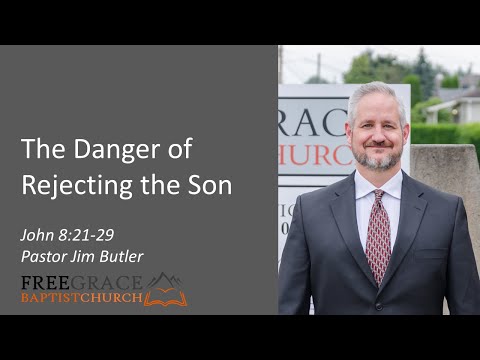
The Danger of Rejecting the Son
John 8:21–29 records Jesus warning a hostile religious leadership that they will die in their sins if they do not believe that He is the great I Am — the divine Son eternally generated from the Father, sent into the world in the economy of redemption. The sermon works through the passage in three movements: the announcement of Christ's departure and the condemnation it implies, the question of His identity and the slander levelled against Him, and the reference to His crucifixion as the moment of disclosure. The central doctrinal burden is that a deficient Christology — whether ancient Arianism, Sabellianism, or modern proposals of eternal functional subordination — amounts to the very unbelief Christ condemns, and that the church's primary calling is to preach the triune God with particular weight on who the Son is and what He has done for sinners.

The Apostle's Prayer for the Ephesians, Part 2
Ephesians 1:19–23 presents the climax of Paul's apostolic prayer: that believers would know the exceeding greatness of God's power. This sermon expounds three demonstrations of that power in Christ — his resurrection from the dead, his current session at the right hand of the Father, and his dominion over all things for the sake of the church. The doctrines of inseparable operations and appropriations ground the Trinitarian account of these events, while the universal and eternal sovereignty of the enthroned Christ is set forth as the foundation for perseverance, praise, and fearlessness in the face of hostile spiritual and civil powers.

The Ministry of the Holy Spirit, Part 2
Ephesians 1:13–14 presents the Holy Spirit as both the seal and the guarantee of the believer's inheritance, grounding the security of salvation not in human performance but in the inseparable operations of the triune God. The sermon traces the instrumentality of the word of truth — showing that sinners must hear the gospel before they can believe — and then expounds the sealing of the Spirit as authentication, ownership, and security. The guarantee of the Spirit is the first installment of a heavenly inheritance that awaits the full redemption of the purchased possession at the consummation of the age. Believers are therefore urged to rest their assurance in the Father who chose, the Son who redeemed, and the Spirit who seals and guarantees.

The Prophecy Concerning the Resurrection
Peter's Pentecost sermon in Acts 2:24–32 anchors the resurrection of Jesus Christ not in apostolic invention but in the prophetic word of Psalm 16, written by David nearly a millennium before the event. Working through Peter's appeal to and interpretation of that psalm, this exposition traces four aspects of the Messiah's disposition before His death — His focus, joy, confidence, and dependence upon the Father — and demonstrates that David, writing as a prophet under the Davidic covenant of 2 Samuel 7, could not have been describing his own resurrection since his tomb remained occupied. The resurrection is therefore the Father's public vindication that divine justice has been fully satisfied by Christ, the ground of the believer's justification, and the fulfillment of the Davidic covenant promise that one from David's line would build an eternal house for God. The sermon closes by calling sinners — however guilty — to call upon the risen Lord Jesus, the one on the middle cross who alone can grant everlasting life.

The Empty Tomb and the Risen Lord
The resurrection of Jesus Christ is the crowning proof that the Father accepted the Son's atoning work as a full satisfaction for sin. Expounding Matthew 28:1–10, this sermon works through the discovery of the empty tomb — the arrival of the women, the descent of the angel, and the commission given to the first witnesses — and then the appearance of the risen Lord to those same women. The resurrection is not myth or fable but attested history, with details such as the folded burial cloth, the terrified guards, and the forthright identification of women as the primary witnesses all serving the integrity of the gospel record. The empty tomb grounds the Christian's confidence in the forgiveness of sins and the imputed righteousness of Christ, and it calls every hearer to seek the risen Lord without fear.

The Consubstantiality of the Son, Part 1
John 5:16–23 records the Jewish charge that Jesus made himself equal with God — and Christ's unequivocal affirmation of that charge. Working through verses 16–23, this sermon demonstrates that Jesus responds not by correcting a misunderstanding but by confirming, through four lines of argument, that he is consubstantial with the Father: sharing the same works, the same love, the same life-giving power, and the same sovereign rule. The stakes are ultimate — to dishonor the Son is to dishonor the Father, and to lack the Son is to lack God entirely.

2LCF Chapter 4 - Of Creation
The 2nd London Confession of Faith Chapter 4 sets forth the biblical doctrine of creation: that the triune God — Father, Son, and Holy Spirit — freely called all things into being ex nihilo in the space of six literal days for the manifestation of His glory. The study examines the Trinitarian authorship of creation, the doctrine of appropriations, the nature of man as a dichotomous image-bearer possessing knowledge, righteousness, and holiness, and the probationary command given to Adam as positive law. A sustained application presses the church to hold the doctrine of six-day creation and the historical integrity of Genesis 1–3, recognizing that capitulation on creation undermines Christian ethics across every domain — marriage, sexuality, human dignity, and ecclesial order.

The Meeting with Nicodemus, Part 2
John 3:4–10 confronts every hearer with the absolute necessity of regeneration before any entrance into the kingdom of God. Working through Nicodemus's proud misunderstanding and Christ's patient explanation, this exposition argues that the new birth is entirely God's sovereign work — initiated by the Holy Spirit, prefigured in Ezekiel 36 and Deuteronomy 30, and entirely prior to saving faith. The sermon also draws out the Trinitarian theology embedded in Christ's wind analogy, showing that the Spirit's sovereign, effectual work in regeneration reveals who God is, not merely what He does.

2LCF Chapter 2 - Of God and of the Holy Trinity, Part 3
The doctrine of the Trinity is not a mathematical formula but a carefully defined confession of one divine being eternally subsisting as three distinct persons — Father, Son, and Holy Spirit. This session works through 1689 London Baptist Confession of Faith chapter 2, paragraph 3, examining the unity and equality of the persons, their distinction by eternal relations of origin, and the contemporary crisis caused by the abandonment of eternal generation. The denial of threeness is as heretical as the denial of oneness, and a recovery of Nicene Trinitarianism is essential not only for theological orthodoxy but for the health of the soul and the vitality of corporate worship.

The Meeting with Nicodemus
John 3:1–10 presents Jesus confronting Nicodemus — a ruler of the Sanhedrin sent by the Jerusalem religious leadership — with the doctrine of regeneration: that a man must be born again, born from above, before he can see or enter the kingdom of God. The sermon argues that the new birth is entirely a sovereign act of God Most High, not a command for the sinner to obey by his own power, and that regeneration logically precedes and produces saving faith rather than following it. Those born of God will evidence that new life through faith in Christ, a practice of righteousness, love for the brethren, and an overcoming of the world.

The Mission of the Word, Part 2
John 1:10–13 presents two contrasting responses to the mission of the incarnate Word: the rejection of the world and of Israel, and the reception of those upon whom Christ confers the right to become children of God. The sermon works through the threefold use of 'world' in verse 10, the parallel between Israel's ancient rebellion and their rejection of the Messiah, and the sovereign grace underlying faith and new birth in verses 12–13. Central to the exposition is the Reformed insistence that regeneration precedes faith — those who receive Christ by believing do so because they have first been born of God — against both Pelagian and Arminian construals of conversion.