
Theological term
Imputation
654 sermons · All terms

The Good Shepherd, Part 2

John 10:7–10 presents Christ as the door of the sheep and the giver of abundant life, set in deliberate contrast to the false shepherds — thieves and robbers who steal, kill, and destroy. The sermon works through three movements: the identification of Christ as the exclusive door of access to God, the condemnation of corrupt religious leadership in Israel, and the commendation of Christ's ministry as one that saves, sustains, and enriches his sheep with life abundantly. Drawing on Jeremiah 23, Ezekiel 34, Isaiah 55, and Psalm 23, the sermon argues that the abundant life Christ promises is rooted in Old Testament prophecy, is grounded in definite atonement and the perseverance of the saints, and calls both unbelievers to come through the door and believers to respond with worship and gratitude.

The Wondrous Love of God
God is love — not merely that love is one attribute among many, but that love is what God is, a statement grounded in the doctrine of divine simplicity: all that is in God is God. John's argument in 1 John 4:7–11 moves from declaration ('God is love', v.8) to demonstration: the sending of the only begotten Son into the world (v.9) and, supremely, the propitiation Christ accomplished on the cross (v.10), by which the wrath of God due to sinners was not deflected but fully absorbed and satisfied. The Son did not come to procure the Father's love; He came as the supreme manifestation of a love that was antecedent to any love or knowledge we have of God. Those who have been born of God and savingly know Him will therefore love the brethren — and the Lord's Supper proclaimed at this service is the corporate, horizontal expression of that same love.

The Joy of Abraham in the Day of Christ
John 8:54–59 presents the most concentrated claim to divine identity in this chapter: Jesus asserts unity with the Father, declares that Abraham rejoiced to see His messianic day, and finally identifies Himself as the eternal 'I Am' of Exodus 3:14. The sermon traces Abraham's anticipatory faith through the protoevangelium of Genesis 3:15, the Abrahamic covenant promises, and their fulfilment in Christ alone, demonstrating that old covenant saints were justified by grace alone through faith alone in Christ alone. The response of the religious leaders — picking up stones for blasphemy — confirms what they rightly understood Jesus to be claiming: equality with the Father. The sermon closes with a direct call to faith, contrasting the animosity of unbelieving Jerusalem with the joy of Abraham, and urging hearers not to harden themselves against the one who promises that whoever keeps His word shall never see death.

The Apostle in Pisidian Antioch
Paul's sermon in the synagogue at Pisidian Antioch (Acts 13:38–43) proclaims two inseparable blessings at the heart of the apostolic gospel: the forgiveness of sins and justification by faith alone in Christ alone. The law of Moses exposes the sinner's total inability to meet God's demand for perfect righteousness, while Christ's life of obedience, substitutionary death, and resurrection supply both the pardon and the imputed righteousness the guilty sinner needs. The sermon concludes with a warning drawn from Habakkuk 1:5 against despising this gospel, and with the Gentiles' eager reception of the word as a pattern for which the church ought to pray in every generation.

The Conversion of the Ethiopian Eunuch
Acts 8:26–40 records the conversion of an Ethiopian eunuch whose exclusion from the assembly of God under the Mosaic order (Deuteronomy 23) is overturned by the new-covenant fulfillment of Isaiah 56, as God sovereignly directs Philip to him on the Gaza road. The sermon traces three movements: the divine initiative behind the contact, the Christ-centered content of the communication from Isaiah 53, and the confession and baptism that mark the conversion itself. Throughout, the preacher insists that the eunuch's deepest problem was not his ethnicity or his condition but his sin, and that the only remedy—then as now—is faith in the Lord Jesus Christ, whose righteousness is received by grace through faith alone and sealed in believers' baptism by immersion.

The Children of the Devil, Part 3
John 8:44–47 records Christ's unflinching indictment of the unbelieving Jewish religious leaders as children of the devil, a verdict he confirms by exposing three marks of their paternity: they reject the truth he speaks precisely because it is truth, they cannot convict him of a single sin, and they do not hear God's words because they are not of God. The sermon draws out the theological weight of each mark — the devil as murderer and father of lies in contrast to Christ as life and truth — and applies these diagnostic tests to the question of assurance: those who are of God love Christ and love the Word. The exposition closes with a call to both the congregation and the unconverted to rest in the imputed righteousness of Christ, received by faith alone, as the only ground of a right relationship with God the Father.
The Astonishment of the Apostle
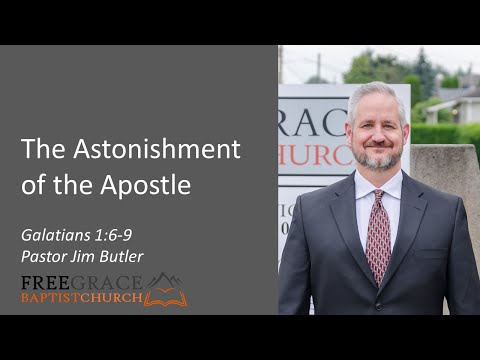
Paul's opening salvo in Galatians 1:6–9 registers apostolic astonishment at the speed with which the Galatian churches were deserting the gospel of free grace for a Judaizing supplement of circumcision and Mosaic law-keeping. The sermon expounds why any addition to the finished work of Christ — however small — is not a variation of the gospel but its outright denial, because a man must choose either perfect law-keeping or the wholly sufficient righteousness of Christ received by faith alone. The anathema Paul pronounces in verses 8–9, drawn out through the Hebrew concept of ḥērem and its New Testament cognate anathema, exposes the perverter of the gospel not merely to church discipline but to the judicial wrath of God. The sermon closes with an urgent call to doctrinal vigilance: to resist indifference, imprecision, compromise, and novelty, and to hold fast to justification by faith alone as the very heart of the Christian religion.

The Preservation of Love and Unity
Ephesians 4:1–3 opens Paul's extended practical section (chapters 4–6) with a call to walk worthy of the effectual calling by which God has saved His people. This sermon expounds the three virtues—lowliness, gentleness, and long-suffering—that must characterize the redeemed, and the two corresponding conducts—bearing with one another in love and zealously keeping the unity of the Spirit in the bond of peace—that follow from those virtues. The theological order is insisted upon throughout: justification precedes sanctification, the indicative grounds the imperative, and none of these commands are the basis of salvation but the fruit of it. The practical burden is that disunity, bitterness, and the failure to pursue reconciliation according to Matthew 18 or to let love cover offenses according to 1 Peter 4 grieves the Holy Spirit and undermines the church's witness as the end-time temple of God.

The Children of the Devil, Part 1
John 8:37–41 records Jesus systematically dismantling the religious establishment's claim that physical descent from Abraham constitutes spiritual standing before God. Working through the Jews' twofold assertion — that Abraham is their father and, in verse 41, that God is their father — Jesus marshals three evidences that expose the claim as groundless: their murderous intent toward him, their refusal to receive his word, and their rejection of the one he came from. The sermon drives toward the conclusion that membership in the family of God is secured not by race but by grace through faith in Jesus Christ, the promised seed of Genesis 3:15, and calls every hearer to examine whether they have received or rejected that word.

November 19, 2022 - Wedding Stream
A wedding homily grounding the institution of marriage in the creation account of Genesis 2 and the redemptive promise of Genesis 3:15. The sermon traces God's good gift of companionship in creation, the disruption of the fall, and the protoevangelium as the first announcement of the gospel — that Christ, born of a woman, would crush the serpent's head through substitutionary suffering and resurrection. The couple is charged to embody in their Christian marriage the relationship between Christ and his church as depicted in Ephesians 5, and all hearers are called to trust in Christ's righteousness received by faith alone.

The Emphasis on Justice for All
Exodus 23:1–9 sets out the judicial law's demand for impartial, honest justice within the covenant community — a demand binding not merely on courts but on every member of the body politic. The passage divides into three subsections: general principles of justice for the people (vv. 1–3), the requirement of common decency even toward enemies (vv. 4–5), and specific warnings to judges against partiality, false accusation, bribery, and oppression of strangers (vv. 6–9). The confession's principle that the judicial law has expired as a binding institution yet retains general moral equity frames the exposition throughout. The sermon closes with two applications: the necessity of personal courage and grace-enabled obedience, and the dependence of any stable civil order on individual integrity, honest testimony, righteous judges, due process, and equal protection under the law.

The Freedom in Receiving the Son, Part 2
John 8:33–36 sets two irreconcilable conditions before every person: slavery to sin or freedom in the Son. Working through Jesus' response to the objecting Jews — His declaration of spiritual slavery in verse 34, His illustration from the household in verse 35, and His promise of true liberty in verse 36 — this sermon argues that sin's bondage is total, that the sinner is constitutionally blind to his own condition, and that freedom comes exclusively through the only-begotten Son who abides in the Father's house forever. The law of God must be pressed upon the conscience so that sinners know their malady before they can receive the remedy: the Son who makes men free indeed.

The Command to Remember the Prisoners
Hebrews 13:3 commands believers to 'remember the prisoners as if chained with them' — not as a vague awareness, but as an active, continual concern that issues in prayer, correspondence, advocacy, and tangible aid. The sermon traces the biblical pattern of righteous suffering from Joseph and Jeremiah through the apostolic era, demonstrating that enmity against the people of God is not an anomaly but an expectation rooted in Genesis 3:15. The command is grounded in the solidarity of the one body: those who enjoy liberty share membership with those who suffer chains, and to forget the persecuted church is a failure of brotherly love. Believers are called to cultivate a global, intercessory prayer-life that refuses to confine concern to the local congregation, and to find in Christ's worth the courage to rejoice if they themselves are called to suffer.

The Freedom in Receiving the Son
John 8:30–36 sets before the reader a sharp contrast between the blessedness of spiritual liberty and the wretchedness of spiritual slavery. This sermon expounds the theological order of salvation — justification by grace alone through faith alone precedes and produces the disciple's abiding in Christ's word, not the reverse — and then traces what that freedom means: deliverance from the curse of the law, the condemnation of sin, the wrath of God, and the tyranny of the devil. The church's calling to be the pillar and ground of the truth (1 Timothy 3:15) demands that she identify, propagate, contend for, and protect that truth in every generation.

A Psalm of Thanksgiving
Psalm 103 calls the redeemed to bless God with the totality of their being — not passively, but by deliberately rehearsing his mercies against the ever-present tendency to forgetfulness. The psalm moves from the forgiveness of sins as the chief and foundational benefit, through temporal preservation and physical provision, to the perfections of God himself — his mercy, his patience, his covenant faithfulness — as the inexhaustible ground of praise. The sermon presses the congregation to fight spiritual amnesia privately in prayer and publicly in corporate worship, and to understand that gratitude is not an optional ornament but a defining mark of those who walk worthily before God.

The Truthful Testimony of the Lord
John 8:13–20 records the Pharisees' flat rejection of Christ's self-testimony — 'your witness is not true' — and his threefold response: the intrinsic truthfulness of his witness grounded in his divine origin and destination, the confirming unity he shares with the Father, and the law of two witnesses satisfied by Father and Son together. The passage closes with the Pharisees demanding to see the Father, only to be told that their ignorance of the Son proves their ignorance of the God they claim to worship. The sermon presses upon the hearer that to receive or reject Christ is to receive or reject the Father, and calls unbelievers to look in faith to the one mediator between God and men.

2LCF Chapter 19 - Of the Law of God, Part II
The moral law of God — given to Adam at creation, codified at Sinai in the Ten Commandments, and written on the hearts of New Covenant believers — perpetually binds all people everywhere, justified and unjustified alike, by virtue of God's authority as Creator. This study of 2LCF Chapter 19, paragraphs 5–7, works through 1 Timothy 1:8–10 to distinguish the three uses of the law (civil, pedagogical, and normative) and expounds Jeremiah 31, Matthew 5, Romans 3, Romans 6, Galatians 3, Romans 13, and Ephesians 6 to demonstrate that Christ and the gospel do not dissolve but rather strengthen the law's obligation. The session exposes the errors of dispensationalism and antinomianism, showing that the Spirit of Christ enables believers to obey freely and cheerfully the very law that condemns the unbeliever. The application presses Christians to declare God's law publicly — to believers for sanctification and to unbelievers for conviction — never separating law from gospel in proclamation.

The Light of the World
In John 8:12, Jesus declares 'I am the light of the world,' a claim that situates him within the great 'I Am' tradition of Exodus 3:14 and the Isaianic servant songs, asserting both his full deity as the eternal Son and the universal scope of his messianic mission to Jew and Gentile alike. The sermon traces the 'I Am' statements across John's Gospel, showing that Jesus consciously identifies himself with Yahweh and that the light-imagery of the Old Testament finds its fulfillment in his person and work. Darkness in John is not physical but ethical — the guilt, depravity, and rebellion of a world that hates the light — and the follower of Christ, by grace through faith, passes from that darkness into the light of life. The church is therefore called to hold forth the word of the gospel as light in a morally darkened age, trusting that God is able to transfer sinners from the kingdom of darkness into the kingdom of his Son.

The Woman Caught in Adultery
John 8:1–11 presents the Pharisees placing Christ on the horns of a dilemma: uphold the law of Moses and condemn the woman caught in adultery, or show compassion and be exposed as an antinomian. This sermon works through the passage in two movements — the woman brought to Christ (vv. 1–6) and the woman forgiven by Christ (vv. 7–11) — demonstrating that Jesus resolves the dilemma not by choosing one horn but by upholding both simultaneously. He appeals to the Mosaic witness laws of Deuteronomy 17 and 19 to silence the hypocritical accusers, then pronounces forgiveness, illustrating that the gospel pattern is 'get and do' rather than 'do and get.' The passage stands as a vivid display of Christ as both the holy lawgiver who writes with his finger and the friend of sinners who bids the thirsty come and drink.

The Saving Grace of God, Part 3
Ephesians 2:8–10 demolishes every notion that the sinner contributes to his own salvation, whether by supplying the faith or by bringing meritorious works. This sermon works through the passage in two movements: the application of redemptive grace in verses 8–9, where salvation is shown to be by grace alone through a faith that is itself God's gift and not the sinner's offering, and the consequence of redemptive grace in verse 10, where the good works of the justified are presented not as the cause or condition of salvation but as its God-prepared effect. The controlling purpose is doxological — that in every age where sinners are saved, the exceeding riches of God's grace in Christ Jesus are displayed, and God alone receives the glory.

Epilogue to the Decalogue
Deuteronomy 5:22 supplies a concise epilogue to the Decalogue, highlighting the divine origin, absolute authority, comprehensive character, and finality of God's moral law — a law that is trans-covenantal and binding on all men everywhere. Working through Exodus 20:18–26, this exposition examines Israel's terrified response to Sinai's theophany, Moses's distinction between slavish fear and filial fear of God, and the protocols for the altar that bridge the giving of the law to the detailed judicial legislation of chapters 21–23. The threefold division of the law — moral, ceremonial, and judicial — is defended against dispensationalist revision, with the 1689 LBCF chapter 19 paragraph 5 cited as the correct Reformed statement of the moral law's perpetuity. The sermon closes by calling believers to a filial fear of God as the most fundamental restraint against sin, and to gratitude that Christ, as the true Israel, perfectly kept the law his people swore and failed to keep.

The Feast of Tabernacles, Part 4
On the last and greatest day of the Feast of Tabernacles, Jesus stood and cried out two declarations that divide all of humanity: 'Where I am, you cannot come,' addressed to those who persist in unbelief, and 'If anyone thirsts, let him come to me and drink,' addressed to all who would believe. This sermon expounds John 7:32–39, tracing the murderous intentions of the Pharisees and chief priests, the sovereign rejection of the reprobate by Christ himself, and the astonishing mercy that leads him to offer living water to the very crowd seeking his arrest. The evangelist's commentary in verse 39 is shown to be a post-resurrection theological statement linking the abundant giving of the Holy Spirit to the glorification of Christ, drawing on the Old Testament water-and-Spirit passages and fulfilled at Pentecost according to Joel's prophecy.

The Saving Grace of God, Part 1
Ephesians 2:1–3 confronts the reader with a precise diagnosis of humanity's condition apart from saving grace: spiritual death in Adam, slavery to the world-system, subjection to Satan, and liability to the wrath of God. The sermon grounds this diagnosis in the covenant of works, the doctrine of original sin, and the federal headship of Adam, drawing on Romans 5 and 1 Corinthians 15 to show that all humanity stands condemned either in Adam or justified in Christ. Total depravity is shown to be comprehensive — corrupting not only outward conduct but the mind and heart — making sovereign grace the only remedy for sinners who are, apart from Christ, lifeless, helpless, and hopeless.

The Thief on the Cross
Luke 23:39–43 presents the conversion of the thief on the cross as a concentrated exhibition of sovereign, effectual grace applied to a notorious criminal and insurrectionist in his final hour. The sermon examines the evidences of genuine conversion in the believing thief — fear of God, concern for the honor of Christ, confession of personal guilt, and faith in the Savior's kingdom — then turns to the graciousness and power of Christ's response: 'Today you will be with me in paradise.' The central pastoral burden is twofold: no sinner is beyond the reach of sovereign grace, and no sinner should presume upon a deathbed opportunity for repentance that may never come.

2LCF Chapter 16 - Of Good Works, Part 2

The 1689 London Baptist Confession of Faith, chapter 16, teaches that good works neither merit pardon of sin nor eternal life, yet are genuinely accepted by God — not on the ground of their own quality, but solely through the believer's union with Christ the Mediator. This session completes the chapter by examining first why good works are accepted in Christ (the Mediator's priestly office presenting both persons and works acceptable to God), and then the sixfold purpose of good works: expressing gratitude, strengthening assurance, edifying the brethren, adorning the doctrine of Christ, stopping the mouths of adversaries, and glorifying the triune God. The controlling application is that a right understanding of good works drives the believer away from every meritorious scheme and toward Christ alone, in whom both persons and performances are accepted.

The Judgment Seat of Christ
Matthew 7:21–23 confronts the reader with Christ's own words at the final judgment: 'I never knew you. Depart from me, you who practice lawlessness.' The sermon argues that this passage is not a call to more good works but a stark exposition of the doctrine of justification by faith alone — the false professors are condemned not for lack of works but for resting upon their works as the ground of their acceptance with God. Self-righteousness is identified as a species of lawlessness, as damning as any gross immorality. The believer's only refuge is the doing, dying, and rising of Christ, received by faith alone, and it is to Christ — not to personal performance — that all assurance must be anchored.

The Problem of Israel's Apostasy
Israel's apostasy in Judges 2:7–3:6 follows a pattern rooted not in ignorance but in a failure to know the Lord experientially — a failure that produced syncretism, Baal worship, and divine chastisement. The sermon traces the root, description, and divine response to Israel's apostasy, showing that God's repeated raising up of judges was not provoked by Israel's repentance but by his own covenant faithfulness and mercy. Samson is presented as a type of Christ, each of the twelve judges pointing typologically to the Savior who would definitively deliver his people from their sins. The church is exhorted to keep herself unspotted from the world, resisting the toleration that leads by degrees to full apostasy.
2LCF Chapter 16 - Of Good Works, Part 1
Good works in the Christian life must be carefully defined, grounded, and distinguished from every meritorious scheme if the glory of Christ is to be preserved. This study of 2nd London Baptist Confession chapter 16 works through the definition of good works (their substance, manner, and definitive character as fruits and evidences of a lively faith), the necessary foundation of good works in the enabling power of the Holy Spirit, and the non-meritorious nature of good works as plainly asserted in Romans 3 and Galatians 2. The central burden is that no work of the creature — however sincere, however commanded — can merit pardon of sin or eternal life before God, because the only works that avail with divine justice are the active and passive obedience of Christ alone imputed to the believer by faith.

The Believer's Race
Hebrews 12:1 commands the believer to run with endurance the race set before him, stripping away every weight and ensnaring sin. This exposition of that verse examines what the race requires and then opens Hebrews 11 to demonstrate that the 'great cloud of witnesses' are not spectators cheering the runner on, but testimonies given on the runner's behalf — each one declaring, from Abel to Polycarp, that God is faithful to his people whatever their circumstances. The sermon closes with a clear distinction between the ground and the motive of running: salvation is received by grace through faith in Christ alone, and it is from that standing that the believer is called to press forward with resolute endurance.

The Arrest of Peter and John
Acts 4:1–12 presents the arrest of Peter and John by the Sanhedrin and Peter's Spirit-filled defense before the council, in which he declares Jesus of Nazareth — crucified and risen — as the sole name under heaven by which men must be saved. The sermon traces two movements: the sovereign advance of God's word despite the imprisonment of its preachers (the number of believers growing to five thousand), and the christological and soteriological content of Peter's address, which grounds salvation exclusively in Christ's active obedience, atoning death, and resurrection. The stone rejected by the builders has become the chief cornerstone, and those who refuse him will ultimately be crushed by him. The sermon applies these realities to the perpetual persecution of the church, the exclusivity of the gospel, and the urgent call to believe on Christ alone for salvation.