
Theological term
Imputation
654 sermons · All terms

Genesis 3:17-24

Genesis 3:17–24 confronts the reader with the full weight of the curse upon Adam and the ground, but the passage is finally a text of hope. The consequences imposed upon Adam — the ground cursed, toil unrelenting, and death certain — do not obliterate God's redemptive purpose announced in verse 15; they preserve the race through which the promised seed will come. Adam's faith-filled naming of Eve, God's provision of animal-skin tunics foreshadowing blood atonement, and the merciful expulsion from the tree of life are all acts of divine grace that anticipate the whole subsequent history of redemption, culminating in the Lord Jesus Christ's decisive conquest of the devil.
The Precious Blood of Christ

1 Peter 1:18–20 presents the redemption accomplished by Christ as grounded in the infinite value of his sinless sacrifice, the eternal decree of the triune God, and the certainty of its historical occurrence. This sermon expounds three dimensions of the 'precious blood of Christ': its surpassing worth measured against corruptible earthly things; its origin in the determined counsel of God before the foundation of the world; and its singular reality as a manifest historical event attested by eyewitnesses. The Lord's Supper, observed the same evening, provides the pastoral occasion for calling both believers to joyful reflection on the blood that cleanses from all iniquity and unbelievers to repentance and faith in the one Lamb without blemish and without spot.

The Response to Peter's Sermon
Acts 2:41–47 records the immediate fruit of Peter's Pentecost sermon: three thousand souls baptized and a church marked by steadfast doctrine, fellowship, the Lord's Supper, and prayer. This exposition argues that the passage is both descriptive and prescriptive — what the early church did defines what the church in every age must be. Along the way, believers' baptism is defended against paedo-baptist readings of verse 39, and the growth of the church is traced not to programs or techniques but to the sovereign calling of God through the faithful preaching of Christ crucified.

Genesis 3:14-24
Genesis 3:14–24 records the consequences of the fall, and the heart of this study is the protoevangelium of Genesis 3:15 — the first gospel promise in Scripture. God's curse upon the serpent contains within it an announcement of the Messiah: the seed of the woman who would crush the serpent's head, accomplishing total victory through suffering and death. The sermon traces this skull-crushing seed through the biblical narrative — from the typological head-wounds of Judges and David's defeat of Goliath, to New Testament fulfillment in Colossians, Hebrews, 1 John, and Revelation 12 — demonstrating that the cross of Christ is the decisive blow against the devil foreshadowed in Eden. The study closes by examining the consequences for the woman and the man in verses 16–19, situating the tensions of marriage and labor in a post-lapsarian world that Christ's redemptive work is already beginning to address.

The Call to Repentance
Acts 2:37–40 records the crowd's response to Peter's Pentecost sermon and his command to repent and be baptized. This exposition examines the nature of genuine conviction of sin, the inseparable relationship between repentance and faith, the proper place of baptism as an outward sign of inward grace rather than a means of salvation, and the comprehensive scope of God's electing call that reaches Jerusalem sinners, their children, and Gentiles afar off. The sermon presses the hearer to embrace conviction of sin as a mercy, to understand that repentance and faith are two sides of the same coin, and to respond by believing the gospel and submitting to baptism without delay.

Free Grace Baptist Church - June 13, 2018 Bible Study
Genesis 3:1–13 records the temptation and fall of Adam and Eve, events that form the theological foundation for the whole of redemptive history. The sermon traces three movements: the serpent's subtle assault on the veracity, goodness, and security of God in verses 1–5; the fall itself and its immediate consequences in verses 6–7; and God's gracious interrogation of the guilty pair in verses 8–13. The anatomy of temptation displayed in Eden — doubt cast on God's word, denial of divine sanctions, and the lure of autonomous wisdom — is the same pattern by which sin operates in every generation, making a firm grip on Scripture the believer's only sufficient defense.

The Purpose of the Proverbs
Proverbs 1:2–7 sets out both the purpose and the prerequisite of the entire book of Proverbs. The purpose is comprehensive — to impart wisdom, instruction, and just judgment to the simple, the young, the wise, and every condition of man — while the prerequisite is singular: the fear of the Lord, which is not a natural attainment but a gracious work of God in the soul. The fear of God is shown to be the epistemological foundation of all true knowledge, the animator of righteous conduct, and the preserver of the soul — available only through repentance and faith in the Lord Jesus Christ, the one greater than Solomon in whom all the treasures of wisdom and knowledge are hidden.

Genesis 2:15-17
Genesis 2:15–17 presents Adam not merely as a gardener but as a priest-guardian of a garden-temple, placed under a divine probation that Reformed theology identifies as the Covenant of Works. The study defends the presence of a genuine covenant in this passage despite the absence of the word 'covenant,' marshalling the elements of covenant structure, the covenantal name Yahweh Elohim, and later biblical commentary in Hosea 6:7, Isaiah 24, and Romans 5. The argument presses to a pointed soteriological conclusion: a deficient understanding of the Covenant of Works predictably produces a deficient understanding of the Covenant of Grace, opening the door to the error of faith plus works in justification. The remedy is to see the Covenant of Grace as the Covenant of Works kept for sinners by the Lord Jesus Christ, whose active and passive obedience is imputed to all who believe.

The Ascension of Christ
The ascension of Christ in Acts 1:9–11 is no mere epilogue to the resurrection but a theologically freighted event with direct consequences for how believers understand Christ's present reign, the Lord's Supper, intercession, and final glorification. Working through the passage, the sermon establishes that the ascension was visible, local, bodily, and glorious — witnessed by the apostles and interpreted by angelic messengers who announce Christ's return in like manner. The ascension completes Christ's earthly mediatorial work, secures the gift of the Spirit, and grounds the believer's assurance in a high priest who always lives to make intercession — the pledge that those whom He justified He will also glorify.

The Exhortation to Pray, Part 2
James 5:16–18 calls every believer — not a spiritual elite — to confess sins to one another, to intercede for one another, and to pray with the confidence that the effective, fervent prayer of a righteous man avails much. The 'righteous man' of verse 16 is not a super-saint but any person justified by faith alone in Christ alone, whose imputed righteousness gives boldness at the throne of grace. Elijah is set before the church not as a larger-than-life wonder-worker but as a man of like passions — weak, despondent, yet prevailing in prayer — precisely so that ordinary believers will not despair of their own access to God. The sermon closes with a searching examination: are God's people truly prayerful as individuals, as families, as elders, and as a congregation?

Free Grace Baptist Church - March 25, 2018 PM
Acts 4:23-31 records the early church's corporate prayer in the face of threats from the Jewish authorities, and this sermon expounds four dimensions of that prayer: its occasion, its character, its content, and God's answer to it. The congregation's prayer is marked by a deliberate unity of purpose — a one-accord rooted not in uniformity of voice but in a shared commitment to the faith of the gospel. The content of the prayer moves through invocation and recognition of God as sovereign Creator, rehearsal of his works in creation and revelation, and confidence in his decree and providence — culminating not in a petition for deliverance from danger but for boldness to continue proclaiming Christ in the midst of it. Christians are called to pattern their own prayers on this model: knowing their God, drawing confidence from that knowledge, and asking not for the removal of trials but for the strength and resolution to endure through them.

The Defense of the Faith
Jude 3 issues a universal call—addressed not to clergy alone but to every believer, the 'beloved'—to contend earnestly for the faith once for all delivered to the saints. The sermon works through three movements: the exhortation itself and its five implications, the reason for that exhortation in the apostates of verse 4, and the practical preparedness of the contender outlined in verses 20 and 21. Doctrinal fidelity is not optional maintenance for specialists; it is the privilege and duty of every member of the covenant community, sustained by Scripture reading, prayer, and a constant looking to Christ. The sermon closes with a direct call to the unconverted to flee to the Lord Jesus Christ, in whom alone forgiveness of sins and the imputation of his righteousness are received by faith alone.

The Great Commission, Part 3
Matthew 28:19 commands that disciples be baptized into the singular name of the Father, Son, and Holy Spirit — a text that stands as one of Scripture's clearest witnesses to the doctrine of the Trinity. This sermon works through the baptismal formula to establish what the one name and three persons require the Christian to confess: one divine essence, three distinct subsistences, free from the errors of tritheism, modalism, and subordinationism. The active obedience of Christ is exposited as the ground of the righteousness imputed to sinners in justification, showing that the gospel itself is inseparable from a right doctrine of God. The congregation is urged to study the confession's chapters on theology proper and Christology, and to hold the doctrine of the Trinity as a white-knuckle conviction worth dying for.

The Resurrection and Justification by Faith
Romans 4:25 presents what the commentators Matthew Poole and Charles Hodge each called an abridgment or comprehensive statement of the whole gospel: Christ was delivered up because of our offenses and raised because of our justification. The sermon works through both halves of this verse to show that the death of Christ was a substitutionary, propitiatory sacrifice satisfying divine justice on behalf of the elect, and that his bodily resurrection is the Father's public declaration that the sacrifice was accepted and justification secured. Four theological connections between resurrection and justification are drawn out: the resurrection declares Christ to be the Son of God with power, testifies that his sacrifice was accepted, confirms that satisfaction was rendered, and demonstrates that redemption was fully accomplished. The sermon closes at Romans 5:1 with the fruit of the whole discussion — peace with God through our Lord Jesus Christ — applied to those who once stood condemned as ungodly offenders.
OF Christ the Mediator (2LCF 8)
The doctrine of the Incarnation — that the eternal Son of God took to himself a full human nature, body and soul, yet without sin — is one of the two great mysteries of the Christian faith alongside the Trinity. This confession study works through 1689 London Baptist Confession of Faith Chapter 8, Paragraph 2, establishing first what the Incarnation does not mean (mutation of the divine nature, mere appearance, assumption of body only, full humanity without exception, addition to divine being) before drawing out five positive theological entailments: it is the Son alone who became incarnate through the undivided work of the triune God; it is the divine Son who assumed flesh; the assumed humanity is full and complete; Christ is sinless in that humanity; and the two natures are united in one person without conversion, composition, or confusion. The whole doctrine is shown to be the necessary foundation of the Christian gospel, since only a mediator who is truly and fully God, truly and fully man, and wholly without sin can accomplish the redemption of fallen humanity.
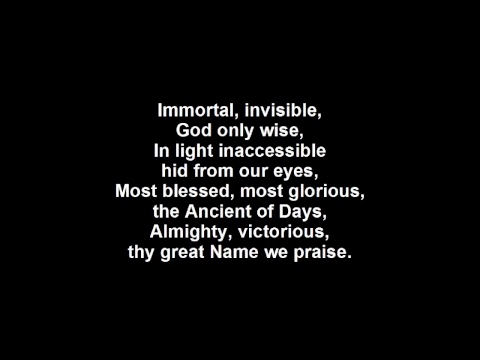
Free Grace Baptist Church - November 26, 2017 PM
Titus 3:3–7 expounds the full arc of sovereign grace: the grave former state of all believers in foolishness, disobedience, and depravity; the divine condescension by which God's kindness and love appeared in Christ; and the sovereign power of the Holy Spirit in washing and regenerating dead sinners to new life. Salvation is not by works of righteousness which we have done but entirely according to divine mercy, secured through Jesus Christ alone and applied by the Holy Spirit — a triunely accomplished redemption that eliminates all boasting in self and grounds the believer's perseverance in the immutability of God's electing love.

Free Grace Baptist Church - November 26, 2017 AM
Acts 3:11–15 presents the Apostle Peter's proclamation of Jesus Christ to a crowd of Israelites gathered at Solomon's Porch, astonished at the healing of a man lame from birth. The sermon examines three movements in Peter's address: the occasion for preaching Christ (the healing and the crowd's amazement), the correcting prologue (Peter redirecting attention from the miracle and its instruments to the God of the miracle), and the preaching of Christ itself, which identifies the God of Abraham, Isaac, and Jacob as the one who glorified his servant Jesus — the fulfillment of Isaiah's servant prophecies — and incriminates the audience for crucifying the Holy One and the Just in favor of a murderer. The vindication of Christ in his bodily resurrection is the cornerstone of apostolic proclamation: 'whom God raised from the dead, of which we are witnesses' grounds the veracity of the gospel and the confidence of every believer.

The Crucifixion of Jesus, Part 4
Matthew 27:47–50 records the final moments before Christ's death on the cross — the mockery of bystanders who misheard his cry of dereliction as a call for Elijah, the offering of sour wine, and his loud, voluntary yielding of his spirit. The sermon examines what the cry of dereliction does and does not teach: it does not indicate a division within the Trinity, a dissolution of the hypostatic union, or patripassianism, but it does express the qualified, temporary withholding of the Father's favour from the Son as he bore the punishment due to his people. Christ's loud cry at the moment of death demonstrates that he laid down his life sovereignly and willingly, not as a victim overcome by suffering but as a priest offering himself as substitute. The only fitting response to this substitutionary sacrifice is not moral self-improvement but worship, gratitude, and faith in the one who was forsaken so that his people would never be forsaken.

The Crucifixion of Jesus, Part 3
Matthew 27:45–46 records the darkest three hours of history and the lone saying of Christ that Matthew preserves from the cross: 'My God, my God, why have you forsaken me?' This sermon works through the cry of dereliction with careful attention to what the text does and does not teach, ruling out any ontological division within the Trinity, any dissolution of the hypostatic union, and any notion that all three persons suffered at Calvary. The forsakenness Christ voiced was real — a qualified withdrawal of the Father's consolatory smile and favour, not an abandonment of love — because Christ stood as the covenant surety of his people, bearing the punishment of loss that sinners deserve. The gospel comfort that follows is decisive: because Christ cried 'Why have you forsaken me?' those united to him by faith will never have to.

Free Grace Baptist Church - October 22, 2017 PM
First John 2:3–6 confronts a perennial problem: people who claim to know Christ while living in blatant disregard of his law. The sermon works through two tests John gives for genuine knowledge of God — keeping Christ's commandments as an evidence of salvation (not its ground), and walking as Christ walked as a fruit of union with him. Obedience is not the condition for knowing God but the necessary mark and assurance of it, grounded not in human effort but in the imputed righteousness of Christ and the sanctifying work of the Holy Spirit.
The Crucifixion of Jesus, Part 2
Matthew 27:39–44 records three distinct groups — passing bystanders, the chief priests and elders, and the two crucified robbers — each heaping mockery and blasphemy upon the Son of God while he hangs on the cross. The preacher demonstrates that in every taunt, the mockers unwittingly speak truth: he is the temple builder, the Savior of others, the King of Israel, and the Son of God — and it is precisely because he is all of these things that he must stay on the cross to satisfy divine justice for his people's sins. The irony Matthew constructs reaches its apex in the dying thief, who looks past the gore of the crucifixion and confesses Christ as Lord, while the religious leaders who possessed the very scriptures that prophesied this scene remain utterly blind to it. The sermon calls both unbelievers and believers to look to the crucified Christ by faith, to receive salvation as a gift rather than bargaining with God, and to find in this scene the unsurpassed measure of the Savior's love.

Free Grace Baptist Church - October 22, 2017 AM
Matthew 27:32–54 records the crucifixion of Christ amid layered mockery from three distinct groups — passers-by, the religious establishment, and the two robbers. This exposition argues that each taunt ironically confirms what it intends to deny: that Jesus is the Son of God, the true temple-builder, and the Saviour of Israel. The sermon draws out the substitutionary logic of the cross — that Christ remained on it not despite his divine sonship but because of it, bearing the wrath owed to his people so that divine justice might be satisfied in him rather than in the sinner.

Free Grace Baptist Church - October 15, 2017 AM
Matthew 27:32–38 presents the crucifixion of Jesus Christ as the central event in redemptive history, the long-anticipated fulfillment of Old Testament promise from Genesis 3:15 through Isaiah 53. The sermon traces two movements: the way to the cross — bearing, location, and the bitter drink — and the act of crucifixion itself, attending to the division of garments, the watching guards, the charge above his head, and the company of criminals. Throughout, the visible shame of the Son of God is shown to be the appointed means by which he crushes the serpent's head, satisfies divine justice, and secures justification for all whom the Father gave him. Hearers are called to abandon every notion of contributing to their own salvation and to look in faith to the crucified Christ alone.

Free Grace Baptist Church - October 8, 2017 AM
The mock enthronement of Jesus recorded in Matthew 27:27–31 simultaneously exposes the comprehensive guilt of every human participant — Pilate, the soldiers, the Jewish leaders, and the elect whose sins were heaped upon the Savior — and reveals the ironic glory of the King who would actually bear every emblem the soldiers placed on him in jest. The sermon argues that what the soldiers devised as dishonor — the robe, the crown of thorns, the reed — were unwitting foreshadowings of Christ's true royal majesty as depicted in the book of Revelation, where he reigns with golden crown, glorious robe, and iron scepter. The exposition closes with three applications under the gravity, the glory, and the gratitude of the scene, pressing both unbelievers to flee to the Savior from the coming wrath and believers to exceed the soldiers' inventiveness in devising honor for their King.
The Trial before Pontius Pilate, Part 2
Matthew 27:15–23 presents Pontius Pilate's attempt to grant amnesty to Jesus through the Passover custom of releasing a prisoner — an attempt that collapses under the pressure of crowd manipulation and Pilate's own moral cowardice. The passage exposes the envy driving the religious leaders, the warning of Pilate's wife confessing Christ's righteousness, and the moral depravity of a multitude persuaded to choose a violent insurrectionist over the sinless Son of God. The repeated declarations of Christ's innocence — by Judas, Pilate's wife, and Pilate himself — are Matthew's design: the just stands for the unjust, and every voice proclaiming 'he has done no evil' opens the door to the gospel of substitutionary atonement. Hearers are called to see their own capacity for the crowd's guilt, to recognize total depravity in themselves, and to flee to the holy, harmless, undefiled Christ for forgiveness and righteousness.
The Use of the Blood Money
Matthew 27:6–10 records the chief priests' disposal of the thirty pieces of silver used to betray Jesus — and Matthew's citation of this event as the fulfillment of prophecy attributed to Jeremiah. This sermon examines the rank hypocrisy of the religious leaders who scrupled over depositing blood money into the treasury while simultaneously orchestrating the judicial murder of an innocent man, exposing the self-condemning logic of ceremonial fastidiousness divorced from the weightier demands of the law. The sermon then defends the inerrancy of Matthew's composite citation of Zechariah 11 and Jeremiah 18–19, 32, showing how Matthew functions as a biblical theologian weaving together prophetic themes of rejection, judgment, exile, and restoration to demonstrate that the passion of Christ was the fulfillment of the entire prophetic witness. The application calls hearers to recognize their own guilt before a holy God and to flee to the imputed righteousness and atoning blood of the Lord Jesus Christ.

The Righteousness of David
Romans 4:5–8 announces that God justifies the ungodly, and the Apostle Paul calls David as a witness to that doctrine. This sermon works through the theology of David in 2 Samuel 22, Psalms 2, 18, 32, 51, 110, and 130 to show that David's celebrated righteousness is not his own moral achievement but the imputed righteousness of Christ, received by faith. David's recognition of his own sin, his understanding of atonement, his grasp of the doctrine of imputation, and his personal faith in the coming Messiah together resolve the apparent tension between his notorious moral failures and his claim to cleanness of hands. The sermon calls hearers to approach the Lord's Supper not in mere introspection over sin but in joyful confidence in the righteousness of David's greater Son.

The Unsurpassed Value of the Gospel
Paul's exhortation to Timothy not to be ashamed of the gospel in 2 Timothy 1:8–10 rests on the unsurpassed worth of the salvation it announces. The sermon works through the divine authorship of salvation, the basis of election in God's eternal purpose and grace rather than human works, and the pre-temporal covenant of redemption executed in the incarnation and atoning work of Christ. Because Christ has abolished death and brought life and immortality to light through the gospel, believers have every reason to suffer for it without shame, and unbelievers are called to look to Christ alone for justification by faith apart from works.
2LCF Chapter 16 - Of Good Works
1689 London Baptist Confession chapter 16, 'Of Good Works,' teaches that good works are defined exclusively by God's revealed word, flow necessarily from justification and sanctification, and are enabled entirely by Christ as the believer's vine. The chapter distinguishes scriptural good works — requiring the right matter, root, manner, and end — from both the meritorious works Rome supposes possible and the common-grace works of the unregenerate, which, lacking a heart purified by faith and the goal of God's glory, cannot please God. Believers are exhorted to pursue good works not as the ground of their acceptance before God, but as the fruit of a living faith, performed in Christ's strength and received by God through Christ despite their imperfection.

Free Grace Baptist Church - July 9, 2017 PM
Humility is not merely an outward posture of social deference but an inward disposition that every believer must cultivate, grounded in a right knowledge of self, of God, and of the gospel of Christ. Expounding 1 Peter 5:5–7, this sermon traces three movements: the command to humble ourselves toward one another and toward God, the means of doing so by casting all anxiety upon him in prayer and through the means of grace, and the reason to do so — namely that the God of heaven and earth, who proved his care at the cross and sustains his people through trial, will exalt the humble in due time. Pride is shown to be not merely loudness or arrogance but any self-trust that withholds dependence on God, and the remedy is the gospel itself: the one who humbled himself to the death of the cross is the ground and pattern of true humility.