
Theological term
Impassibility
52 sermons · All terms

The Gospel Committed to the Apostle Paul

1 Timothy 1:15–17 contains one of five 'faithful sayings' in the Pastoral Epistles, and Paul deploys it here to contrast the life-giving gospel with the idle speculations of the false teachers troubling the church at Ephesus. The sermon works through three elements: the faithful saying as a standard confession received and guarded by the church; the glorious content of that saying — the incarnation of the Son and his effectual, definite work to save sinners; and the merciful application illustrated in Paul himself, who as the chief of sinners functions as a pattern of Christ's longsuffering for all who will believe. The doxology of verse 17 demonstrates that rightly understood soteriology issues in worship, and believers are called to keep this faithful saying at the centre of their hearts and to press it upon the unconverted.

The Lament of the Psalmist
Psalm 13 is a lament psalm of David that moves through raw grief — the perceived forgetfulness of God, the daily sorrow of the soul, and the threat of encroaching enemies — to a resolved trust in the covenant mercy of God. The sermon traces this trajectory through the true humanity of Christ, who himself prayed lamentingly in Gethsemane and on the cross, establishing lament as a legitimate and God-given vehicle of prayer for his people. Lament is distinguished sharply from whining: whining refuses to petition God and ends in despair, while biblical lament drives the soul toward God and terminates in doxology. The congregation is called to bring their distress boldly to the throne of grace, resting in the hesed of God covenanted to all who are found in Christ.
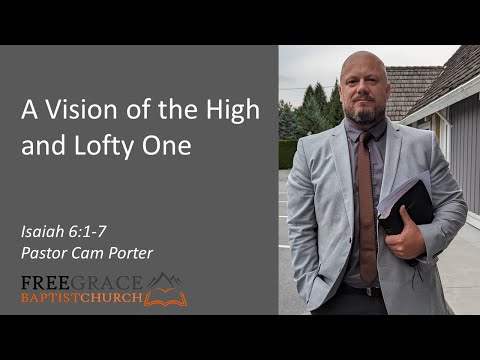
A Vision of the High and Lofty One

Isaiah 6:1–7 presents the prophet's visionary encounter with the enthroned Lord — holy, holy, holy — and his subsequent cleansing by a coal from the altar. This sermon works through five movements in the passage: the introductory contrast between dying earthly kings and the eternal High King of Heaven; the exemplary posture of the seraphim before the divine majesty; the superlative holiness, glorious titles, and unbounded presence of the Lord of hosts; Isaiah's fitting confession of his own uncleanness; and the gracious divine initiative in purification, which anticipates the definite atoning work of Christ. The congregation is called to approach the living God with the humility of Isaiah and the seraphim, confident that the same sovereign who commissioned his prophet will fill the whole earth with his glory through the proclamation of the gospel.

The Prodigal Son
Luke 15:11–32, the parable of the prodigal son, confronts two kinds of lostness: the deliberate rebellion of a son who demands his inheritance while his father still lives, and the self-righteous resentment of an elder son who cannot rejoice at his brother's return. The sermon traces the younger son's descent, his coming to himself in godly sorrow and repentance, and the father's extravagant, undeserved welcome as a picture of God's readiness to receive returning sinners. The older son's unresolved anger is pressed upon those whose confidence rests in their own moral performance rather than in grace. The sermon closes by pointing to Christ as the true older brother who, unlike his counterpart in the parable, laid down his life to make repentant sinners co-heirs with himself.

Live Stream - April 13, 2025
Philippians 2:9–11 sets forth the exaltation of Christ as the direct consequence and divine vindication of his humiliation. The sermon works through three considerations in the nature of that exaltation — the consequences of Christ's humiliation for the sinner (freedom from sin's penalty and power, from Satan's bondage, from the law's curse, and free access to God), the Father's approbation of the Son's finished work, and the manifestation of Christ's divine identity in the name given above every name. The significance of the exaltation presses toward a universal, unavoidable submission: every knee will bow and every tongue confess, whether in saving faith now or in compelled acknowledgment on the last day. The sermon closes by pressing sinners to confess Christ willingly in the present day and by reminding believers that the pattern of Christ's humiliation leading to exaltation both grounds their salvation in his active and passive obedience and shapes their life of humble, others-centered love in the church.

Introduction to Deuteronomy
Deuteronomy is introduced as the second giving of the law — not a new law, but a restatement of the Sinai covenant addressed to the second generation of Israel standing on the plains of Moab, poised to enter the land of promise. The session surveys Mosaic authorship, the book's place in the Pentateuch, its historical context, its broad outline (God's activity, law, covenant, and servants), and its major theological emphases: reminder, transition, exhortation, and instruction in theology proper, the promise of land, and the worship of God. The study concludes with the typological significance of Deuteronomy for the New Testament, tracing how the book prefigures Christ as prophet, priest, king, and true Israel, and how its promise of new covenant in chapter 30 points forward to what Jeremiah 31 and the gospel make explicit.

The Example of the Savior, Part 2
Philippians 2:7 sets forth Christ's incarnation as the supreme argument against selfish ambition and conceit. This expository sermon works through four statements in the verse — Christ made himself of no reputation, took the form of a bondservant, came in the likeness of men, and was found in appearance as a man — with careful attention to the kenotic controversy, the hypostatic union, and the patristic formulations at Nicaea and Chalcedon. The heresy of kenotic Christology (that Christ emptied himself of his divine attributes) is refuted from 2 Corinthians 8:9, John 1:14, and Hebrews 2, while docetism is equally rejected in favor of Christ's true and complete humanity. The doctrinal weight is carried in service of Paul's pastoral concern: the one who was in the form of God and equal with God voluntarily humbled himself, and that reality demolishes every claim to selfish priority among his people.
May 18 Sanders Holy Spirit and the Father
How does the Holy Spirit relate to God the Father, and what does that relationship mean for Christian worship and prayer? Working through a chapter on the Holy Spirit and the Father, this study traces the biblical pattern of 'from the Father, through the Son, in the Spirit' — and its liturgical reverse, 'in the Spirit, through the Son, to the Father' — as the framework for understanding both Trinitarian processions and the nature of true worship. The discussion addresses the Spirit's work in the old and new covenants, the cessation of the revelatory gifts at the completion of the New Testament canon, and the Spirit's role in empowering prayer, drawing particularly on John Owen's treatment of Ephesians 2:18 and Romans 8:26-27.

2LCF Chapter 17 - Of the Perseverance of the Saints, Part 1
The 1689 London Baptist Confession chapter 17 on the perseverance of the saints is examined through its first two paragraphs, grounding the doctrine in the preserving power of the triune God rather than in the free will of the believer. The Confession is shown to be both rigorously doctrinal and remarkably practical, acknowledging the storms, unbelief, and apparent withdrawal of God that saints genuinely experience while insisting that these cannot sever the elect from grace. The foundation of perseverance is traced through the immutability of the decree of election, the merit and intercession of Christ, the abiding of the Spirit, and the nature of the covenant of grace — directly opposing both Roman Catholic and Arminian accounts that make final salvation contingent on human cooperation. Believers are exhorted to feed their souls on the promises of the covenant of grace precisely because perseverance is secured by God's unchangeable love, not by their performance.

Sunday School Confession Study - 2LCF 2.2
God's external relations to the created order — his independence, omniscience, holiness, and the creature's obligation to him — are the subject of 2LCF Chapter 2, Paragraph 2. The confession's insistence that God is entirely self-sufficient and derives no glory from creatures corrects any notion that God created the world out of need or incompleteness. The omniscience of God is infinite, infallible, and independent of the creature, so that nothing is contingent or uncertain to him. The study closes by grounding the creature's obligation of worship, service, and obedience in what God is — holy in all his counsels, works, and commands.

2LCF Chapter 2 - Of God and of the Holy Trinity, Part 1
Eternal life consists in knowing the only true God and Jesus Christ whom he has sent (John 17:3), which means the knowledge of God is not optional for Christians but is the very substance of their salvation. This session opens a multi-week confession study of 2LCF Chapter 2 (Of God and of the Holy Trinity) by establishing what theology proper is — the study of the being, attributes, and works of the triune God — and why it is primary: it is grounded in God's creative purpose, commanded in Scripture, promised in the New Covenant (Jeremiah 31:31-34), and urgently needed in the face of false religion and bad theology. Six preliminary interpretive helps are then introduced to prepare the mind for rigorous and reverent engagement with the doctrine of God, including the necessity of recognising the ontological chasm between Creator and creature, God's revelatory condescension, and the joint propriety of affirmations and denials.

The Resurrection and the Life, Part 3
John 11:28–37 confronts the reader with the full weight of Christ's hypostatic union: the same person who will momentarily command a dead man to walk is here groaning in anger and weeping at the graveside. This passage presses the question of the Savior's true humanity — that he assumed human nature with all its essential properties and common infirmities, yet without sin — as the indispensable ground of redemption. The sermon traces Mary's complaint, the Lord's outrage at the ravages of sin and death, and his tears as expressions of genuine human emotion consistent with immutability in the divine nature, drawing on the Westminster Larger Catechism's answers on why the Mediator must be both God and man. The hearer is finally confronted with the same question Jesus put to Martha: 'Do you believe this?'

The Idolatry of Israel, Part 1
Exodus 32:1–14 records the catastrophic breach of Israel's covenant oath, sworn only weeks earlier in Exodus 24, as the people demand a visible god and Aaron fashions the golden calf. The passage exposes the persistent human tendency toward idolatry — rooted in total depravity and inflamed by impatience, carnality, and the craving for a manageable deity — and demonstrates that their sin was not a denial of Yahweh but a second-commandment violation: representing the true God by a forbidden image. The sermon then turns to Moses' masterful intercession, grounded in appeals to God's power, his glory before the nations, and his covenant oath to the patriarchs, and concludes with extended treatment of divine immutability and anthropopathism to explain why Exodus 32:14 ('the Lord relented') cannot be made to teach flux or change in God.

The Command to Remember the Prisoners
Hebrews 13:3 commands believers to 'remember the prisoners as if chained with them' — not as a vague awareness, but as an active, continual concern that issues in prayer, correspondence, advocacy, and tangible aid. The sermon traces the biblical pattern of righteous suffering from Joseph and Jeremiah through the apostolic era, demonstrating that enmity against the people of God is not an anomaly but an expectation rooted in Genesis 3:15. The command is grounded in the solidarity of the one body: those who enjoy liberty share membership with those who suffer chains, and to forget the persecuted church is a failure of brotherly love. Believers are called to cultivate a global, intercessory prayer-life that refuses to confine concern to the local congregation, and to find in Christ's worth the courage to rejoice if they themselves are called to suffer.

The Need for Gospel Ministers
Matthew 9:35–38 presents Christ surveying the multitudes of Galilee and responding not primarily to their political oppression but to their spiritual destitution — harassed and scattered like sheep without a shepherd because Israel's religious leaders had failed and become predators of the very flock they were charged to keep. The sermon traces the shepherd-and-harvest imagery through Numbers 27, 1 Kings 22, Jeremiah 23, and Micah 5 to demonstrate that God's remedy for faithless shepherds has always been the raising up of faithful men under the Messiah's authority. Christ's compassion, exercised according to his human nature, issues not in mere sympathy but in effective action: commanding his disciples to pray the Lord of the harvest to send out laborers, then immediately appointing and commissioning the Twelve. The congregation is called to share Christ's own compassion for the spiritually destitute, to believe that the harvest is genuinely plentiful across every tribe and nation, and to pray, give, identify, train, and send qualified men into gospel ministry.
The 7th Commandment, Part 1
The Seventh Commandment — 'You shall not commit adultery' (Exodus 20:14) — prohibits not only the specific act of adultery but subsumes all sexual sins under its scope, while positively requiring chastity and the promotion of righteous sexual ethics. This exposition establishes the basis of the commandment in the creational purpose of marriage (Genesis 2), the function of God's law as a revelation of his character, and the severe sanctions — capital punishment in Israel, present social consequences, and the final judgment of God — attached to its violation. The sermon then works through the prohibited acts: adultery, fornication, incest, rape (with careful exegesis of the contested cases in Deuteronomy 22), homosexuality, bestiality, unlawful divorce (tracing the lawful grounds of porneia and desertion through Deuteronomy 24, Matthew 19, and 1 Corinthians 7), and immodesty. Throughout, the law's severity is balanced by the gospel: 'such were some of you, but you were washed, but you were sanctified, but you were justified in the name of the Lord Jesus.'

The Great Commission
Christ's Great Commission in Matthew 28:18–20 provides the church with her complete marching orders: go, make disciples, baptize those disciples, and teach them to observe all that Christ commanded. The authority behind the commission belongs to the risen and exalted Christ, who possesses all authority in heaven and earth; the assurance sustaining it is His promise of perpetual presence to the end of the age. The sermon treats the specific focus of the commission in sequence, defending believers' baptism by immersion as the pattern demanded by the text and the order it establishes — make disciples first, then baptize — against both baptismal regeneration and paedobaptism. The Trinitarian formula of baptism occasions an extended treatment of theology proper, including divine simplicity, impassibility, and the unity of essence in three persons, with warnings against tritheism, modalism, and subordinationism.

Genesis 6:1-8
Genesis 6:1–8 presents some of the most contested verses in the Pentateuch alongside some of the clearest. The identity of the 'sons of God' in verses 1–4 has generated three major interpretive traditions — angelic beings, tyrannical rulers, and the godly line of Seth intermarrying with the ungodly line of Cain — and the sermon surveys each view while favouring the Sethite interpretation without demanding confessional certainty on it. Verses 5–8 then deliver an unambiguous portrait of universal human depravity and the righteous judgment of God, interpreted through the theological categories of anthropomorphism and anthropopathism to guard the immutability and impassibility of God against misreading. The sermon closes by showing that grace precedes conduct in Noah's case, establishing the pattern that runs through all of Scripture: God's sovereign grace produces the righteousness it requires.

Genesis 1:1-2
Genesis 1:1–2 demands that the people of God hold tenaciously to the doctrine of creation, because what is affirmed or denied there reverberates through the whole of Scripture and Christian ethics. This study surveys the doctrine of creation through the lens of 1689 LBCF chapter 4, paragraph 1, examining the time, author, purpose, and scope of God's creative act, before turning to the precise structure of Genesis 1:1–2 and the arguments for six-day creation. The session closes with two applications: maintaining the aseity and immutability of God, and preserving the Creator-creature distinction against any notion that God is merely the most excellent member of a chain of being.

The Defense of the Faith
Jude 3 issues a universal call—addressed not to clergy alone but to every believer, the 'beloved'—to contend earnestly for the faith once for all delivered to the saints. The sermon works through three movements: the exhortation itself and its five implications, the reason for that exhortation in the apostates of verse 4, and the practical preparedness of the contender outlined in verses 20 and 21. Doctrinal fidelity is not optional maintenance for specialists; it is the privilege and duty of every member of the covenant community, sustained by Scripture reading, prayer, and a constant looking to Christ. The sermon closes with a direct call to the unconverted to flee to the Lord Jesus Christ, in whom alone forgiveness of sins and the imputation of his righteousness are received by faith alone.

The Great Commission, Part 3
Matthew 28:19 commands that disciples be baptized into the singular name of the Father, Son, and Holy Spirit — a text that stands as one of Scripture's clearest witnesses to the doctrine of the Trinity. This sermon works through the baptismal formula to establish what the one name and three persons require the Christian to confess: one divine essence, three distinct subsistences, free from the errors of tritheism, modalism, and subordinationism. The active obedience of Christ is exposited as the ground of the righteousness imputed to sinners in justification, showing that the gospel itself is inseparable from a right doctrine of God. The congregation is urged to study the confession's chapters on theology proper and Christology, and to hold the doctrine of the Trinity as a white-knuckle conviction worth dying for.

2 Kings 19:1-37
Second Kings 19 narrates the Assyrian crisis under Sennacherib and Hezekiah's response — a pattern of seeking God through the prophet Isaiah, spreading the enemy's letter before the Lord, and praying with conspicuously theological concern for God's honor rather than merely for personal safety. The sermon moves through three sections: the prophet's word of encouragement, Hezekiah's model prayer, and the divine defeat of 185,000 Assyrian troops by the angel of the Lord. Hezekiah's David-like rationale — that all the kingdoms of the earth may know that the Lord alone is God — illustrates why theology matters in trial, and why the best pleas in prayer are those taken from God's honor.

2 Kings 13
2 Kings 13 records the reigns of two northern kings, Jehoahaz and Jehoash, against the backdrop of Syrian oppression and the death of the prophet Elisha. The chapter exposes a recurring pattern: Israel's idolatry provokes divine judgment, yet God's covenant faithfulness to Abraham, Isaac, and Jacob moves him to hear even the prayer of an apostatizing king and send deliverance. Elisha's death, the miraculous revival at his tomb, and the fulfillment of his prophetic word against Syria together press a single point upon the reader: the word of the living God is not extinguished by the death of its instruments. The study calls hearers to reject base ingratitude for God's mercies, to bring every burden boldly to the throne of grace, and to see in Elisha a typological anticipation of Christ's victory over the grave.

The Crucifixion of Jesus, Part 3
Matthew 27:45–46 records the darkest three hours of history and the lone saying of Christ that Matthew preserves from the cross: 'My God, my God, why have you forsaken me?' This sermon works through the cry of dereliction with careful attention to what the text does and does not teach, ruling out any ontological division within the Trinity, any dissolution of the hypostatic union, and any notion that all three persons suffered at Calvary. The forsakenness Christ voiced was real — a qualified withdrawal of the Father's consolatory smile and favour, not an abandonment of love — because Christ stood as the covenant surety of his people, bearing the punishment of loss that sinners deserve. The gospel comfort that follows is decisive: because Christ cried 'Why have you forsaken me?' those united to him by faith will never have to.
2LCF Chapter 16 - Of Good Works
1689 London Baptist Confession chapter 16, 'Of Good Works,' teaches that good works are defined exclusively by God's revealed word, flow necessarily from justification and sanctification, and are enabled entirely by Christ as the believer's vine. The chapter distinguishes scriptural good works — requiring the right matter, root, manner, and end — from both the meritorious works Rome supposes possible and the common-grace works of the unregenerate, which, lacking a heart purified by faith and the goal of God's glory, cannot please God. Believers are exhorted to pursue good works not as the ground of their acceptance before God, but as the fruit of a living faith, performed in Christ's strength and received by God through Christ despite their imperfection.
1 Kings 17
1 Kings 17 introduces Elijah the Tishbite as God's appointed answer to the apostasy of Ahab's Israel, where Baalism had displaced the worship of Yahweh. The chapter unfolds in three movements: the drought announced as covenantal judgment, the miraculous provision of the prophet through unclean ravens and a Gentile widow in the very heartland of Baal worship, and the resurrection of the widow's son as the definitive demonstration of Yahweh's sovereignty over life and death. Throughout, the chapter functions as theological preparation for the confrontation at Carmel in chapter 18, while pointing typologically forward to the ministry of Christ, who similarly extended grace to Gentiles and preached sovereign election to a generation that rejected him.

Free Grace Baptist Church - November 20, 2016 PM
Micah 5:2–5a announces the coming Christ in the midst of righteous covenantal judgment, and this sermon traces four features of that messianic promise: the royalty that emerges from obscurity, the eternality of the ruler who is God Most High, the divinely ordered timing of his advent, and the character of his reign as shepherd-king, universal sovereign, and bringer of true peace. The sermon sets these themes against the backdrop of Micah's announcements of doom upon disobedient Israel and Judah, demonstrating that promise and judgment are never separated in the biblical witness. Hearers are called to marvel at the wisdom of God, to exercise patience under his providential timing, and — if outside of Christ — to reckon honestly that enmity with God can only be resolved through the one who is himself peace.
2 Samuel 24:1-25
Second Samuel 24 closes David's reign with a sobering account of a sinful census, divine judgment, and the necessity of atonement — raising difficult questions about divine sovereignty, second causes, and human culpability. The chapter sets David's genuine repentance in sharp contrast to Saul's hardness, and traces the themes of propitiation and substitution that run through all of redemptive history. The threshing floor of Araunah is identified as Mount Moriah — the future site of Solomon's temple — so that the sacrifice David offers becomes a typological pointer to the atoning work of Christ. The sermon calls hearers to maintain short accounts with God through prompt confession, to receive the Spirit's conviction as a mercy rather than an offense, and to offer worship that costs something.

The Lament Over Jerusalem
Matthew 23:37–39 records Christ's lament over Jerusalem — a cry of sorrow that follows directly upon the severest condemnations he has pronounced against the scribes and Pharisees. The sermon traces Jesus' prophetic lament through its Old Testament antecedents in Jeremiah, Ezekiel, and the Psalms, arguing that Christ speaks here according to his human nature, expressing genuine grief over a city that has killed the prophets and now rejects the Messiah himself. The declaration 'your house is left to you desolate' marks a decisive redemptive-historical shift: as in Ezekiel 8–11, the withdrawal of God's glory precedes the destruction of the temple, and that withdrawal is enacted when Christ departs to the Mount of Olives. The sermon closes by refuting the Arminian use of 'you were not willing' as a proof text for free will, showing instead that the text confirms total depravity and that the free and genuine offer of Christ to sinners is fully consistent with the Reformed doctrine of sovereign grace.

The Greatness of God
David's prayer in 2 Samuel 7:22–24 structures a twofold ascription of greatness to God: first for who God is in Himself (His unity, triunity, immutability, impassibility, and incomparability), and then for what God has done for His people in redemption, preservation, and positional covenant blessing. The sermon applies David's method directly to the New Covenant, arguing that the greater privileges of the New Covenant demand a correspondingly greater response of worshipful prayer and adoration. The closing movement presses the congregation toward the Lord's Supper as a concrete occasion to extol God's greatness in the very pattern David modeled at the throne of grace.