
Theological term
High Priestly Prayer
5 sermons · All terms

The High Priestly Prayer, Part 6

John 17:17–19 records Christ's priestly petition that the Father sanctify the apostles by the truth — consecrating them, as the Old Testament priests were consecrated, for the specific mission of preaching and writing to which He was sending them. The instrument of that sanctification is the truth: the incarnate Word who is truth, the Spirit of truth, and the written Word breathed out by that Spirit. Christ's own sanctification in verse 19 is not a prayer for personal holiness but His self-consecration as the high priest who offers Himself as sacrifice, and that priestly self-offering is the very foundation on which the apostles — and all believers — are set apart. The practical summons is plain: growth in grace and conformity to Christ come through the ordinary means of God's truth, not through experience, emotion, or entertainment, and the church's fidelity to that pattern depends on elders who are devoted to teaching it.

The High Priestly Prayer, Part 1
John 17:1–5 records the opening of Christ's high priestly prayer, in which the Lord Jesus — praying according to His humanity as the Mediator of the New Covenant — petitions the Father for glory, because glory given to the Son redounds to the glory of the Father. The sermon works through the occasion of the prayer, the derived and delegated authority granted to Christ over all flesh, and the particular redemptive purpose for which that authority was given: that He should grant eternal life to all whom the Father has given Him. Particular redemption is grounded in the text itself, and the sermon closes by pressing the definition of eternal life in verse 3 — the knowledge of God and of Jesus Christ — as a summons to pursue theology, Scripture reading, and corporate worship with renewed seriousness.
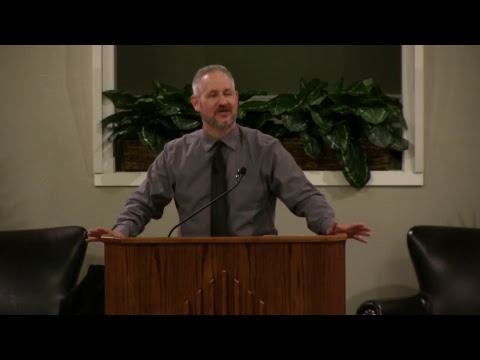
The Glory of the Father and the Son
John 17:1–5 opens Christ's high priestly prayer with a petition that the Father glorify the Son so that the Son may glorify the Father — a reciprocal glorification whose goal is the glory of God Most High. The sermon works through three grounds for this petition: the salvation of the elect given to the Son in the covenant of redemption, the accomplishment of Christ's active and passive obedience as the basis of justification, and the restoration of the Son's pre-incarnate glory. The full deity of Christ is defended against subordinationist readings by surveying New Testament texts where the title theos is applied directly to Jesus, and the sermon closes with the call to pursue the knowledge of God and Christ as the very essence of eternal life — through Scripture reading, prayer, and faithful attendance upon the means of grace.

Free Grace Baptist Church - March 25, 2018 PM
Acts 4:23-31 records the early church's corporate prayer in the face of threats from the Jewish authorities, and this sermon expounds four dimensions of that prayer: its occasion, its character, its content, and God's answer to it. The congregation's prayer is marked by a deliberate unity of purpose — a one-accord rooted not in uniformity of voice but in a shared commitment to the faith of the gospel. The content of the prayer moves through invocation and recognition of God as sovereign Creator, rehearsal of his works in creation and revelation, and confidence in his decree and providence — culminating not in a petition for deliverance from danger but for boldness to continue proclaiming Christ in the midst of it. Christians are called to pattern their own prayers on this model: knowing their God, drawing confidence from that knowledge, and asking not for the removal of trials but for the strength and resolution to endure through them.

The Glory of the Father
John 17:1–5 records the opening of Christ's High Priestly Prayer, in which the incarnate Son petitions the Father to glorify Him in and through His approaching death, resurrection, and exaltation. The sermon expounds three grounds for that petition: the salvation of the elect, the accomplishment of redemption through Christ's active and passive obedience, and the restoration of the pre-incarnate glory to the God-Man. Central to the exposition is verse 3, where Christ defines eternal life as the knowledge of the only true God and Jesus Christ — a knowledge that necessarily issues in glorifying God, sustaining believers through trial, and grounding assurance not in personal performance but in the character and covenant of the triune God. Hearers are pressed to pursue that knowledge through the ordinary means of grace: the reading of Scripture, prayer, and faithful attendance upon the Word.