
Theological term
High Priesthood of Christ
4 sermons · All terms

The Priestly Blessing of the Ascending King

Luke 24:50–53 closes the Gospel with the ascending Christ lifting His nail-pierced hands to bless His disciples at Bethany — a gesture laden with Old Testament typology, most immediately the Aaronic priestly blessing of Leviticus 9. The sermon argues that this blessing is not a mere farewell gesture but an authoritative, ongoing priestly act: Christ ascended while still blessing, signifying that His intercession and the bestowal of divine favor upon His people never cease. Preached in the context of a Lord's Supper service, the exposition calls believers to receive the sacrament as participants in the everlasting blessing of the great High Priest, and to respond with the pattern of the early disciples — continuous, corporate, joyful worship of the Triune God.
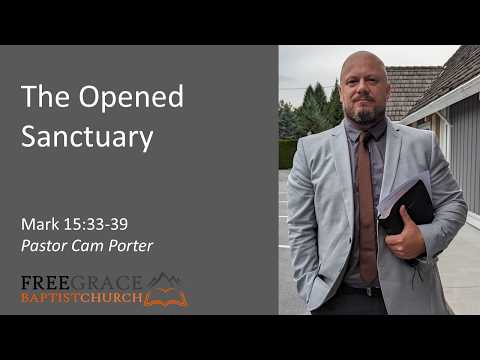
The Opened Sanctuary
Mark 15:33–39 presents three interlocking realities at the crucifixion: the forsaken Son bearing divine wrath, the torn veil opening the sanctuary to God's presence, and a Roman centurion's confession inaugurating the gospel's reach to the nations. The noontide darkness fulfills Old Testament types — the Egyptian plague of darkness and Amos 8:9 — while Christ's cry of dereliction, drawn from Psalm 22, expresses not a severing of the Trinity but the full weight of divine justice borne substitutionarily by the Son as mediator. The tearing of the veil declares that the shadowy Old Covenant order is fulfilled, the true high priest has acted, and access to the holy presence of God is secured through the veil of Christ's flesh. Those who gather at the Lord's Supper are exhorted to glory in the Savior who bore the wrath His people deserved so that they need never cry out in God-forsakenness themselves.
The Massacre at Nob

First Samuel 22:6–23 records one of the darkest episodes in Saul's reign: the massacre of 85 priests at Nob and the destruction of the entire city at the hand of Doeg the Edomite. This exposition traces Saul's paranoid pity party in Gibeah, his contempt for due process and the law of God, and the bloody consequences of political tyranny unchecked by the fear of Yahweh. Yet even in this ghastly scene the sovereignty of God is on display — the carnage at Nob fulfills the word of judgment pronounced on the house of Eli a generation earlier, Abiathar escapes to David, and the kingdom of God advances. The sermon closes by setting David's shelter of the fleeing priest against Christ's eternal high priesthood, urging sinners to flee to the one priest who ever lives to make intercession.
The Vision of One Like the Son of Man
Revelation 1:9–19 presents John's vision of the ascended and glorified Christ, identifying him as the Danielic Son of Man who has received dominion, glory, and an everlasting kingdom. The sermon works through three movements: the content of the vision itself (Christ's high priesthood, sovereign rule, all-seeing knowledge, inexorable judgment, conquering word, and restored pre-incarnate glory), John's prostrate response as the only fitting posture before such majesty, and the threefold comfort Christ speaks over the fallen apostle — his eternality, his resurrection victory, and his sovereign ownership of the keys of Hades and death. The exhortation is to wake and sleep with this exalted Christ consciously held before the heart, and to flee the passing pleasures of sin by bending the knee to the King of Kings.