
Theological term
General Revelation
124 sermons · All terms

Peace with God Through Justification

Romans 5:1 declares that justification by faith produces peace with God through the Lord Jesus Christ — a peace that assumes a prior condition of enmity, guilt, and divine wrath. This sermon traces that peace through the whole of Scripture, from its Old Testament promise in Isaiah and Micah, through its announcement at the nativity, to its accomplishment in Christ's active and passive obedience. The principal pastoral application is that Christian assurance rests not on the ebb and flow of one's walk but on the immutability of the divine decree, the intercession of the ascended Christ, and the covenant of grace.
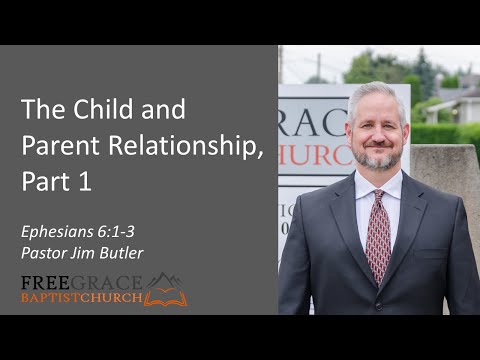
The Child and Parent Relationship, Part 1

Ephesians 6:1–3 addresses children directly within the gathered congregation, a detail that itself carries ecclesiological weight: Paul assumes children are present under the preaching of the Word, not segregated from it. The sermon works through two movements — the rightness of obedience grounded in the light of nature and created order, and the requirement of God's law grounded in the fifth commandment (Exodus 20:12; Deuteronomy 5:16), which Paul universalizes from Old Covenant Israel to Gentile children in Ephesus and, by extension, to every generation. The three uses of the law are carefully distinguished: the law cannot justify, but it restrains, reveals sin and the need for Christ, and then normatively patterns the sanctified life of the believer. Children are urged to search their hearts, see their failure to honor and obey, and flee to Christ for the righteousness they lack.

The Husband and Wife Relationship
Ephesians 5:28–33 presents what Paul calls the 'one-flesh argument' — the creation-rooted logic that a husband who fails to love his wife acts against both Scripture and nature, since the wife is, in the deepest sense, his own flesh. The sermon works through four movements: the explanation, implication, affirmation, and application of that argument, grounding each in the harmony between general and special revelation. The affirmation from Genesis 2 is shown to be authoritative, accurate, and paradigmatic — the same text to which Christ and His apostles return whenever they address role distinction in marriage. Husbands are called to lead with love, nourish and cherish their wives as Christ does the church, and to repent of every form of negligence, coldness, or abuse that contradicts both the natural order and the gospel.

The Psalmist's Prophetic Anticipation of the Apostolic Proclamation of Christ
Psalm 19 is read not merely as a declaration of general and special revelation but as a prophetic anticipation, interpreted by the Apostle Paul in Romans 10, of the apostolic proclamation of the gospel of Jesus Christ. Working through seven points across the psalm's three movements, the sermon traces the symbol, referent, and message of each image: heavens and firmament pointing to the apostles, the sun pointing to Christ the Bridegroom and Son of Righteousness, and the law, testimony, statutes, and judgments pointing to the gospel itself. The Word of God is shown to be perfect, sure, right, pure, clean, true, and righteous — qualities that belong to the gospel, not the Mosaic law — and its effects of conversion, wisdom, rejoicing, and enlightenment call both believer and unbeliever to rest in Christ, the Son of Righteousness, whose glory has gone out to the ends of the earth.

A Psalm of Thanksgiving
Psalm 103 calls God's people to bless the Lord with the whole soul and to forget none of His benefits — a command that presupposes the constant human tendency toward spiritual amnesia and ingratitude. The sermon works through David's threefold structure: a reminder to bless God (vv. 1–2), the reasons to bless God (vv. 3–18), and a reflection on God's universal kingdom (vv. 19–22). The reasons are organized around the gifts God gives (spiritual and physical), the recipients of those gifts (the oppressed and covenant people), and the character of the giver Himself — merciful, gracious, slow to anger, and abounding in steadfast love. Thanksgiving is not a seasonal sentiment but the daily reflex of those who know their guilt before a holy God and have received forgiveness through the blood of Christ.

The Judicial Decision to Murder Jesus
The Sanhedrin's formal decree to execute Jesus, recorded in John 11:47–57, is the most extreme miscarriage of justice in human history — a body constituted to administer God's law plotting the murder of the only innocent man who ever lived. The sermon expounds the irony that Caiaphas, driven entirely by political self-preservation, nevertheless prophesied accurately: one man would die for the nation, and not for that nation only, but to gather the scattered children of God from every tribe, tongue, people, and nation. John's theological commentary on the high priest's words (vv. 51–52) unpacks the doctrinal heart of penal substitutionary atonement — the just for the unjust, the holy and harmless for the thoroughly defiled. The passage calls believers to stand in awe that Christ willingly walked into this kangaroo court, refused self-defense, and bore the wrath of godless men so that sinners might be freed from the wrath of God.

2LCF Chapter 2 - Of God and of the Holy Trinity, Part 1
Eternal life consists in knowing the only true God and Jesus Christ whom he has sent (John 17:3), which means the knowledge of God is not optional for Christians but is the very substance of their salvation. This session opens a multi-week confession study of 2LCF Chapter 2 (Of God and of the Holy Trinity) by establishing what theology proper is — the study of the being, attributes, and works of the triune God — and why it is primary: it is grounded in God's creative purpose, commanded in Scripture, promised in the New Covenant (Jeremiah 31:31-34), and urgently needed in the face of false religion and bad theology. Six preliminary interpretive helps are then introduced to prepare the mind for rigorous and reverent engagement with the doctrine of God, including the necessity of recognising the ontological chasm between Creator and creature, God's revelatory condescension, and the joint propriety of affirmations and denials.

The Transition from Darkness to Light, Part 1
Ephesians 5:3–7 calls believers to a radical break from the sexual sins that characterised their former life in darkness. Working through the three prohibited actions (fornication, uncleanness, and covetousness) and three prohibited forms of speech (filthiness, foolish talking, and coarse jesting), the sermon demonstrates that these sins are not merely behavioural failures but expressions of idolatry—putting creaturely gratification above God. The consequences are grave: those who unrepentantly practice such things have no inheritance in the kingdom of Christ, a warning grounded in both general revelation and the consistent testimony of the apostolic letters. Believers are called to resist deception through the word of God, to replace vile speech with thanksgiving, and to ground their ethical obedience not in moral effort alone but in the imputed righteousness of Christ.

2LCF Chapter 1 - Of the Holy Scriptures, Part 1
The necessity of Holy Scripture, as confessed in 2LCF Chapter 1, paragraph 1, arises from the insufficiency of general revelation to communicate saving knowledge. While creation and providence manifestly display God's goodness, wisdom, and power — leaving all men without excuse — they do not and cannot reveal blood atonement, the incarnation, or justification by faith alone. It therefore pleased God to commit His will to writing, producing a Scripture that is the only sufficient, certain, and infallible rule of all saving knowledge, faith, and obedience. The session closes with extended discussion of cessationism, the distinction between inerrancy and infallibility, and the hermeneutical principle that Scripture interprets Scripture.
The Idolatry of Israel, Part III
Exodus 32:30–35 presents Moses interceding for Israel after the golden calf debacle, confessing their great sin and offering himself to be blotted out of God's book on their behalf. The sermon works through Moses's rebuke, his request, and God's response, giving particular attention to the theological question of whether God blots names from the Book of Life — resolving the tension by distinguishing the conditional Old Covenant (a covenant of works securing physical blessings) from the unconditional New Covenant, in which the elect are eternally secure in Christ. The Mosaic intercession is read typologically as pointing to Christ, who was, in effect, blotted out on behalf of his people. The sermon closes with application to the gravity of idolatry drawn from Romans 1 and a quote from John Stott.

The Healing of a Blind Man, Part 2
John 9:13–34 records the formal interrogation of a man born blind by the Pharisees following his healing by Jesus. The passage exposes the willful unbelief of Israel's religious leadership — men who suppress plain evidence, commit perjury, and wield coercion against a helpless witness — while simultaneously tracing the healed man's growing confession of Christ, from 'he is a prophet' to 'if this man were not from God, he could do nothing.' The sermon argues that opposition to the Son of God is always opposition to the Father who sent him, and that the courage to confess Christ in the face of exclusion and shame is the mark of genuine discipleship.

2LCF Chapter 23 - Of Lawful Oaths and Vows
Second London Confession of Faith chapter 23 treats the doctrine of lawful oaths and vows, distinguishing Reformed Baptist practice from the Anabaptist rejection of oath-taking and from Roman Catholic monastical vows. The sermon argues that swearing by God's name is itself an act of religious worship — acknowledging his omniscience, omnipresence, and vindictive justice — and that Scripture warrants oaths in matters of weight and moment while condemning their careless everyday use. Matthew 5:33–37 is shown to address the abuse of casual, trivial oath-making rather than solemn oaths before lawful authority, as confirmed by Christ's own oath before the Sanhedrin, God's oath to Abraham, and Paul's repeated appeals to God as witness. The sermon closes by exposing popish monastical vows of celibacy, poverty, and obedience as superstitious devices of men that contradict Scripture's positive assessment of marriage, honest labor, and just remuneration.

2LCF Chapter 22 - Of Religious Worship and the Sabbath Day
The 1689 London Baptist Confession chapter 22 grounds all religious worship in the regulative principle: God alone determines the acceptable manner of his own worship, and nothing not warranted by Scripture may be introduced. This session surveys the chapter's four movements — the regulative principle (paragraphs 1–2), the specific elements of worship (paragraphs 3–5), the appropriate location for worship (paragraph 6), and the Christian Sabbath as the appointed day (paragraphs 7–8). General revelation establishes the duty to worship; special revelation alone prescribes the way. The practical application is that Christians are bound neither to ecclesiastical tyranny (Rome, Anglicanism, independent pastoralism) nor to the inventions of men in God's house, but only to what God has commanded in his Word.

The Martyrdom of Stephen
The martyrdom of Stephen in Acts 7:54–60 displays the triune God sustaining, comforting, and ultimately receiving His servant in the moment of violent death. The sermon works through three movements: the blessedness of Stephen as he receives a vision of the glorified Christ standing at the right hand of the Father; the murderous rage of the Sanhedrin who stone him outside the city in lawless contempt of Roman authority; and Stephen's dying words — echoing the Savior's own cross-utterances — as he commends his spirit to Christ and intercedes for his killers. The conversion of Saul of Tarsus is set before the congregation as the answer to that dying prayer, a monument to sovereign grace, and the entire passage is pressed home with the comfort of Heidelberg Catechism Question 1: Christ alone is the believer's comfort in life and in death.

The Danger of Rejecting the Son, Part 2
John 8:25–29 confronts the persistent Jewish rejection of Jesus by pressing two questions: who is he, and what does his coming death mean? The sermon expounds Christ's identity as the eternal Son sent by the Father — God from God, light from light, true God from true God — and shows that his crucifixion and resurrection will vindicate that identity before the very men who condemned him. The active obedience of Christ, summarized in his declaration that he always does what pleases the Father, grounds the imputed righteousness sinners need for justification. Hearers are called to rest in the only true God and Jesus Christ whom he has sent, the knowledge of whom is itself the substance of eternal life.
2LCF Chapter 20 - Of the Gospel and of the Extent of the Grace Thereof
2 London Baptist Confession of Faith Chapter 20, 'Of the Gospel and of the Extent of the Grace Thereof,' addresses a chapter absent from the Westminster Confession but added by the Congregationalists in the Savoy Declaration and retained by the Particular Baptists to combat incipient deism and the General Baptist doctrine that sinners may be saved through general revelation alone. The sermon traces the chapter's four paragraphs through Romans 10, Luke 24, John 5, and Psalm 19 to demonstrate that the gospel of Christ has been the sole substance of special revelation since the protevangelium of Genesis 3:15, that general revelation is categorically insufficient to make Christ known, that God distributes gospel light with absolute sovereignty, and that effectual grace is indispensable alongside that revelation for the conversion of dead sinners. The double theme of the chapter — the necessity of special gospel revelation and the necessity of the Spirit's insuperable work — magnifies divine grace, grounds the missionary enterprise, and exposes the doctrine-of-sin deficiencies latent in every scheme that allows salvation apart from hearing Christ proclaimed.

The Ministry of the Holy Spirit, Part 2
Ephesians 1:13–14 presents the Holy Spirit as both the seal and the guarantee of the believer's inheritance, grounding the security of salvation not in human performance but in the inseparable operations of the triune God. The sermon traces the instrumentality of the word of truth — showing that sinners must hear the gospel before they can believe — and then expounds the sealing of the Spirit as authentication, ownership, and security. The guarantee of the Spirit is the first installment of a heavenly inheritance that awaits the full redemption of the purchased possession at the consummation of the age. Believers are therefore urged to rest their assurance in the Father who chose, the Son who redeemed, and the Spirit who seals and guarantees.
Clip: Theology is crucial for every church and believer
Theology proper — the knowledge of who God is as Father, Son, and Holy Spirit — is not an academic luxury but the essential foundation of Christian life, worship, and witness. This sermon clip from an exposition of Ephesians 1:3–14 argues that the church's tendency to rush past doxological passages to practical ethics has left believers spiritually thin, prone to a mercenary relationship with God rather than one grounded in the infinite riches of his grace. The preacher calls the congregation to disciplined study of the Trinity, warning that without it believers become vulnerable to ancient heresies and lose the impetus to proclaim Christ to a lost world.

The Depravity of Man
Romans 1:18–32 presents the universal human condition as one of willful suppression of God's self-disclosure in creation, resulting in inexcusability before a holy God. The sermon traces three movements in the passage: the revelation of divine wrath, the reason for that wrath in humanity's idolatrous exchange of the Creator for the creature, and the nature of God's judgment as a punitive giving-over of sinners to the very sins they pursued. The sermon argues that the preaching of the law — including the full weight of human depravity — is indispensable to the proclamation of the gospel, because sinners must understand their ruin before they will look to the remedy of blood atonement in Christ alone.

December 1, 2021 - Wednesday Night Bible Study - Exodus 20:1-3 (1st Commandment)
Exodus 20:3 — 'You shall have no other gods before me' — is expounded through both its prohibitions and its positive demands. The first commandment condemns atheism, polytheism, syncretism, idolatry, sorcery, and heresy, while positively requiring the knowledge, love, fear, obedience, trust, and worship of the one true and living God alone. The sermon draws on Romans 1:18-32 to show that ungodliness — disordered thinking about God — is the root from which all societal unrighteousness springs. The sermon closes with a call to repentance, to flee to Christ as the remedy for every violation of this commandment, and to cultivate the knowledge of God as the chief guard against idolatry in its ancient and modern forms.

Exodus 18 - Jethro
Exodus 18 presents two interconnected events: the conversion of Jethro, priest of Midian, and his practical counsel to Moses on delegating judicial authority. The conversion of Jethro follows the pattern of one called out of polytheistic darkness into the knowledge of the true and living God — marked by joy, praise, confession of Yahweh's supremacy, and worship through sacrifice. The passage further grounds civil government in the fear of God and the rule of law, teaching that qualified civil rulers must be able, God-fearing, truthful, and free from covetousness — qualities that remain the standard for righteous governance in any age.

The Ministry of the Word
What is the basis and method of God's ordained means for saving sinners? This sermon on 2 Timothy 4:2 argues that the preaching of the Word stands as the primary instrument through which God saves the lost and builds his church, grounding that claim in the logical chain of Romans 10, the divine pleasure announced in 1 Corinthians 1, and the final apostolic charge of Paul to Timothy. The sermon challenges the contemporary drift toward audience-driven church strategies, calling both preachers and hearers to fidelity to the proclaimed Word as the irreplaceable means of grace.

2nd London Baptist Confession (Chapter 1) - June 20th
What makes Christian faith in the Bible something more than a blind leap? Working through the first five paragraphs of Chapter 1 of the 1689 London Baptist Confession of Faith, this exposition unpacks Sola Scriptura under three headings drawn from the Confession's opening line: the certainty, sufficiency, and infallibility of Holy Scripture as 'the only sufficient, certain, and infallible rule of all saving knowledge, faith, and obedience.' The sermon establishes that the Bible's authority rests on God himself as its author — not on church tradition, human reason, or self-referential claim — and that full persuasion of its divine origin comes through the inward testimony of the Holy Spirit (2LCF 1.5). Rational evidences — manuscript attestation, historical reliability, eyewitness testimony to the resurrection, and the fulfillment of prophecy — are presented not as the ground of faith but as means to bolster the believer's confidence and equip him to give a reasoned defense of the hope within him.
The Second Missionary Journey, Part 3
Acts 16:16–34 traces two episodes in Philippi: the exorcism of a slave girl's python spirit and the midnight conversion of the Philippian jailer. The passage confronts the reader with the hostility that faithful gospel ministry provokes — illegal imprisonment, beating without due process, and the solidarity of civil and commercial interests against the missionaries — while demonstrating that neither chains nor stocks can suppress the prayer and praise of those conquered by grace. The climax turns on the jailer's question, 'What must I do to be saved?', and the apostolic answer cuts through every form of salvation-by-works or salvation-by-experience: believe on the Lord Jesus Christ, and you will be saved. The sermon presses hearers to distinguish justification from sanctification, to receive the gospel offer without complicating it, and to rejoice as those delivered from sin, damnation, and the righteous wrath of God.

The Golden Rule
Matthew 7:12, the Golden Rule, functions as the capstone of the Sermon on the Mount's legal teaching: whatever you wish men to do to you, do also to them, for this is the law and the prophets. The sermon distinguishes the positive form of the rule from its weaker negative counterpart, showing that Christ's command demands active, unconditional love toward others — not a quid pro quo conditioned on how others treat us. The Golden Rule is examined as a summary of the Decalogue's second table and the love command of Leviticus 19:18, applied concretely to family, church, and society. Yet because the Sermon on the Mount is law, not gospel, its primary effect is to expose sin and drive the hearer to the cross, where justification by faith alone provides the only ground of hope for those who fall short of its demands.
The First Missionary Journey, Part 10
Acts 14:8–18 presents Paul and Barnabas in Lystra, where a miraculous healing of a congenitally lame man provokes the crowd to mistake the apostles for Zeus and Hermes. The sermon moves through three movements: the healing and its spiritual significance, the apostles' repudiation of pagan worship, and Paul's proclamation of the living God to a purely pagan audience. Particular attention is given to the doctrine of divine impassibility — the classical confession that God is without passions — as the necessary corollary of divine immutability, with pastoral argument that this doctrine secures rather than undermines the believer's confidence in God's unchanging love and justice. The sermon closes with an appeal to repent of all idolatry and trust in the Lord Jesus Christ as the only Savior for sinners.

The Darkness of Depression
Proverbs 15:13 declares that sorrow of heart breaks the spirit, and Scripture is neither silent nor superficial on the darkness of depression. This sermon surveys the presence of depression among the people of God across the canon — from Elijah under the broom tree, to David's lament in the Psalms, to the Man of Sorrows himself — establishing that the condition is real, that it afflicts genuine believers, and that in itself it is not sinful. Practical counsel drawn from both special and general revelation is offered: the physical ABCs of rest, diet, and exercise; the spiritual ABCs of prayer, Scripture, and corporate worship; and careful instruction for those seeking to help the suffering, closing with the reminder that the ground of hope is not gladness of feeling but the imputed righteousness of Christ received by faith alone.

The Conversion of Rahab the Harlot
Joshua 2 presents the conversion of Rahab the harlot as a sovereign display of divine grace toward an unlikely recipient — a Canaanite prostitute who heard of Yahweh's mighty acts, confessed His majesty, and cast herself upon His mercy. The sermon traces the contact, confession, and contract with Rahab, arguing that her faith — evidenced by works — is a paradigm case of salvation by grace alone through faith alone, consistent with both Paul and James. The closing application calls believers to ground their relationship with God not in their pursuit of holiness but in the righteousness of Christ alone, lest gospel-forgetfulness corrupt their devotion into self-congratulation.

The Church at Antioch
Acts 11:19–30 presents the founding and early life of the church at Antioch as a model for faithful ecclesiology. The sermon traces three features of that church's first days: the gospel preaching that gathered a diverse congregation, the apostolic oversight exercised through Barnabas, and the year-long teaching ministry of Barnabas and Saul that catechised those converts in Christian doctrine. The passage is read through the lens of divine sovereignty — it was the hand of Yahweh that produced the conversions, working through the ordinary means of preaching — and closes with an application of six characteristics that every church should emulate: evangelism, converted membership, doctrinal instruction, Christ-centredness, charity, and dependence on the grace of God alone.
The Conversion of Cornelius, Part 4
Acts 10:44–11:18 records the outpouring of the Holy Spirit upon Cornelius and his Gentile household and the controversy that erupted among Jewish believers in Jerusalem when Peter reported what had happened. The sermon examines the divine initiative behind Gentile inclusion in the covenant of grace, the cessationist significance of the tongue-speaking at this 'Gentile Pentecost,' the apostolic command of water baptism following credible conversion, and the collapse of Jewish objections before Peter's ordered defense. The passage's closing doxology — 'God has also granted to the Gentiles repentance to life' — presses home that faith, repentance, and the Spirit himself are gifts of sovereign grace, received through the preaching of Christ crucified and risen, apart from any work of the law.