
Theological term
Forensic Justification
16 sermons · All terms
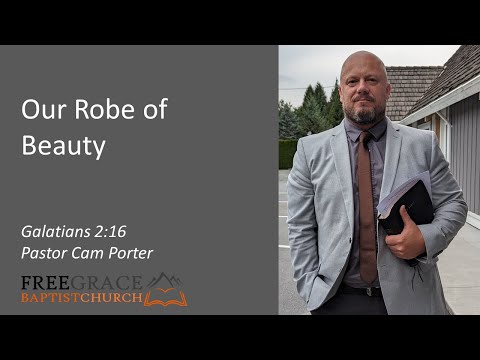
Our Robe of Beauty

Galatians 2:16 presents a five-fold declaration that justification is by faith alone and not by the works of the law — a doctrine that stands at the very heart of the Christian gospel. This sermon works through four categories: a definition of justification as a forensic declaration set in opposition to condemnation, its foundation in the obedience and satisfaction of Christ alone (not infused righteousness, works, the act of faith, or evangelical obedience), the transaction of imputation by which sin is credited to Christ and his righteousness credited to the believer, and faith as the empty instrument that receives rather than earns that righteousness. The pastoral application presses the believer's assurance away from inward evidences toward the finished work of Christ, and calls the unconverted to look to Christ in faith as their only standing before a holy God.

The Glorious Gospel of Jesus Christ

How can a perfectly just God forgive guilty sinners without compromising his justice? Romans 3:21–28 answers that question by tracing the righteousness God provides in the gospel: revealed in Christ, received through faith, and grounded in a propitiatory sacrifice that fully satisfies divine justice. The sermon expounds the forensic declaration of justification, the redemption accomplished by Christ's blood, and the vindication of God's righteousness at the cross — showing that boasting is excluded entirely because the righteousness that avails before God is supplied by Christ alone and received freely by grace through faith. Hearers are called to trust in Christ's finished work as the sole ground of their standing before God, and to come to the Lord's Supper remembering that in our place condemned he stood.
The Resurrection and Justification

Romans 4:25 declares that Christ 'was delivered up because of our offenses and was raised because of our justification' — a verse Charles Hodge called a comprehensive statement of the gospel and Matthew Poole called an abridgment of the whole. The sermon works through two inseparable redemptive realities: the substitutionary, particular atonement accomplished in Christ's death, and the five-fold testimony of the resurrection to the validity of that work. The central application is that a robust grasp of justification by faith alone — the imputation of Christ's righteousness received through faith — is the irreplaceable foundation for Christian stability, comfort, and peace with God.

The Justice of God and the Gospel
Proverbs 17:15 declares that justifying the wicked and condemning the just are alike an abomination to God — yet the gospel does precisely both: God condemned the sinless Christ and justifies ungodly sinners. This sermon works through the theological architecture that vindicates God from any charge of self-contradiction in the gospel, tracing the doctrines of covenant representation and imputation from Genesis through the Prophets and into Paul's argument in Romans 3–5. The three acts of imputation — Adam's sin to all mankind, the elect's sin to Christ, and Christ's righteousness to the elect — are shown to be the biblical answer to the problem Proverbs 17:15 raises, grounding assurance in an alien righteousness received by faith alone.
The Baptisms of Jesus Christ
Christ's two baptisms in Matthew 3 and Matthew 20 illuminate the two pillars of the gospel: His active obedience, by which He fulfilled all righteousness on behalf of His people, and His passive obedience, by which He endured the cross as a substitutionary ransom for many. The water baptism in Matthew 3 marks the public inauguration of Christ's life of perfect law-keeping, while the 'baptism' He anticipates in Matthew 20 refers to His immersion in suffering and divine wrath at Calvary. Together these two baptisms demonstrate that sinners need not only the forgiveness of sins secured by Christ's death, but also an alien righteousness — His own perfect obedience imputed to them by faith alone. The sermon calls both unbelievers and the baptized congregation to rest in the full sufficiency of what Christ accomplished, rejecting any gospel that offers the crown without the cross.
Free Grace Baptist Church - September 25, 2016 PM
Second Samuel 22 records David's song of deliverance, but verses 21–25, in which David appeals to his own righteousness before God, present a theological problem: David was an adulterer, a murderer, and a negligent father, yet he claims the Lord rewarded him according to his righteousness. This sermon argues that David's righteousness is not intrinsic or earned by law-keeping but is the alien righteousness of Christ imputed to him by faith — the same doctrine Paul expounds in Romans 4 and Psalm 32, which David himself composed. The resolution lies in David's own theology: he understood his total depravity, the necessity of atonement, the doctrine of imputation, and the appropriation of Christ's righteousness through faith alone, demonstrating that Old Testament saints were saved in precisely the same way as New Testament believers.

The Pharisee and the Publican
Luke 18:9–14 presents two men at prayer whose contrasting postures before God expose the heart of the doctrine of justification. The Pharisee's self-congratulatory prayer — cataloguing what he is not and what he does — illustrates the fatal error of self-righteousness: banking one's standing with God upon personal merit, which inevitably produces contempt for others. The tax collector's wordless self-renunciation — 'God be propitious to me, the sinner' — is the only posture that receives the verdict 'justified,' because justification is an act of God's free grace wherein the righteousness of Christ alone, received by faith, is the ground of the sinner's acceptance. The parable calls every hearer to kill pride, renounce all self-congratulatory religion, and cast himself entirely upon the mercy of God in Christ.

The Suffering Servant
Christ's suffering in 1 Peter 2:21–25 is first and foremost substitutionary atonement, not merely moral example — yet because he bore the sins of his people in his own body on the tree, his conduct under unjust suffering becomes a pattern for servants and all who endure hardship for conscience toward God. Drawing extensively on Isaiah 53, the sermon expounds the sinlessness of Christ as the ground of his perfect sacrifice, the imputation of sin to the sin-bearer, and the definitive freedom from sin's penalty and power that his death secures. The recovery of straying sheep by the chief Shepherd and Overseer is traced to sovereign, efficacious grace — not to any act of the will — calling believers to meditate on these realities as they come to the Lord's Supper.

The Role of the Law in Justification
Romans 3:20 stands at the hinge of Paul's argument in Romans 1–3: the universal condemnation of Jew and Gentile is summarized and confirmed, and the ground is cleared for the proclamation of a righteousness that comes apart from the law. This sermon examines both the unlawful use of the law — seeking justification before God through law-keeping, which Paul categorically condemns — and the lawful pedagogical use, by which the law defines sin, demonstrates the gravity of human guilt, and drives the sinner to Christ. The central burden is that no amount of moral effort can secure acceptance with God, because the problem lies not in the law but in the sinner; the law's only saving function is to press men toward the law-keeper, Christ, whose obedience and sacrifice are the sole ground of justification.
2LCF Chapter 11 - Of Justification, Part 2
The forensic doctrine of justification — God's one-time legal declaration that the sinner is righteous on the sole ground of Christ's imputed righteousness — faces persistent assault in every era. This session surveys three modern deviations: Arminian evangelicalism (which collapses faith into a meritorious work or relocates righteousness within the believer), the New Perspective on Paul (which reframes Paul's argument as a corrective for ethnic exclusivity rather than a remedy for the condemnation of sin), and the Federal Vision (which renders righteousness relational, conflates Christ's faithfulness with the believer's, and anticipates a future eschatological justification grounded in covenantal obedience). Against all three, Scripture and the confession insist that justification is a completed legal verdict, not a process, and that its ground is exclusively the active and passive obedience of Christ credited to the elect.
The Superstructure of Grace
Romans 8:32 sets forth what Thomas Manton called 'the superstructure of grace': because the Father did not spare his own Son but delivered him up as substitutionary, propitiatory, sin-bearing, and curse-bearing sacrifice for all the elect, it necessarily follows that he will freely give them all things besides. The argument moves from the greater to the lesser — if God has done the immeasurably costly thing, he will certainly not withhold the lesser mercies of guidance, strength, and ultimate glory. The sermon closes by calling believers to rest the full weight of their security, sanctification, and glorification on this one redemptive foundation, and to come to the Lord's Table in that confidence.
2LCF Chapter 11 - Of Justification, Part 1
Justification is the cardinal article of the Christian faith — the doctrine on which the church stands or falls. This first of two sessions on 1689 London Baptist Confession Chapter 11 (paragraphs 1–6) surveys the definition of justification through the Confession, the Westminster Shorter Catechism, the Belgic Confession, and the 39 Articles, then examines five reasons why departure from the biblical doctrine is catastrophic: it is a damnable error, it diminishes the holiness and justice of God, it contradicts God's eternal decree, it lessens the severity of sin and robs Christ of his exclusivity as Savior, and it destroys the believer's peace. The session closes by tracing the three historical errors the Confession's negations target — Roman Catholicism, Anabaptism, and Arminianism — and calls the hearer to treasure the precise forensic definition of justification as a bulwark against every corruption of the gospel.
The Defense of Justification by Faith Alone
Galatians 2:17–21 presents one of Paul's sharpest defenses of justification by faith alone, and this exposition works through three movements in the text: the proper and improper uses of the law (vv. 17–19), the personal experience of crucifixion with Christ as the ground of the justified life (v. 20), and the exclusivity of grace that renders any supplementation of the gospel a nullification of Christ's death (v. 21). The sermon exposes the logic of the objection that justification by faith makes Christ a 'minister of sin,' refutes it from the text, and shows that legalism — not antinomianism — is the true transgression of God's law. The central application is that any 'Christ-plus' system, whether formal theology or informal churchly shibboleths, empties Calvary of its meaning and must be resisted.
The Passion, the Resurrection, and Justification by Faith Alone
Romans 4:25 sets the death and resurrection of Jesus Christ as the inseparable ground of the believer's justification before God. This sermon expounds that single verse within the broader context of Romans 3:21–4:25, where Paul establishes that justification is by faith alone — not by circumcision, moral refinement, or works — and demonstrates from Abraham and David that God imputes righteousness to the ungodly who believe. The necessity of Christ's atoning death and bodily resurrection are treated as twin non-negotiables: without blood shed there is no remission, and without a risen Savior justification remains unconfirmed and faith is vain. Believers are called to rest in the finished work of Christ alone — delivered up for their offenses, raised for their justification — and to resist the accuser by returning to these objective gospel realities.
Christ's Circumcision
Colossians 2:11–12 is frequently marshalled by paedobaptists to argue that baptism has replaced circumcision as the covenant sign and therefore ought to be administered to infants, but the passage cannot bear that weight. This sermon works through three preliminary observations — the structure of covenant theology, the relationship between circumcision and baptism, and the actual point of the passage — before exegeting verses 11–12 directly. The circumcision Paul describes is spiritual regeneration performed by Christ without hands, and baptism is its retrospective public sign, not a parallel to the prospective sign of physical circumcision given to Abraham's infant sons. The sermon closes with a sharp warning against any gospel that supplements Christ's finished work, insisting that justification is an alien, forensic righteousness imputed to the believer by grace alone through faith alone in Christ alone.
From Alienation to Reconciliation
Colossians 1:21–23 sets before the reader a stark before-and-after portrait of what redemption accomplishes: sinners who were actively alienated from God and enemies in their minds, now reconciled through the physical death of Christ and destined to stand holy, blameless, and above reproach before the judgment seat. The passage distinguishes sharply between the reason for reconciliation and its purpose — God does not reconcile because we are holy, but in order to present us holy, grounding justification entirely in imputed righteousness rather than moral attainment. The sermon works through four movements in the text — the previous state of alienation, the present condition of reconciliation, the future destiny of vindication at judgment, and the present duty of grounded, steadfast perseverance in the faith — with the doctrine of the perseverance of the saints serving as the practical crown of the exposition.