
Theological term
Expiation
52 sermons · All terms

The Mission of the Son of God

John 1:29 presents the whole mission of the incarnate Son of God in a single declaration: 'Behold the Lamb of God who takes away the sin of the world.' This sermon expounds the Baptist's announcement as a statement loaded with Old Covenant freight — the sacrificial system, the Day of Atonement, and the Servant Songs of Isaiah — all converging on the one unblemished Lamb who bears sin to the cross and removes it through substitutionary atonement. The scope of 'the world' is shown to exclude universalism while affirming that Christ's atoning work reaches every tribe, tongue, people, and nation. The sermon closes with a theological account of believers' baptism as the external sign of the internal grace received through union with Christ in his death and resurrection.

The High Priestly Prayer, Part 4
What grounds the prayers Jesus offers for his people, and why does he explicitly exclude the world from his intercession? Working through John 17:9–11a, this sermon examines the focus and rationale of Christ's high priestly intercession: he prays specifically for the elect whom the Father gave him, not for the reprobate world, and he does so as the mediating priest who both sacrifices and intercedes on behalf of his own. The mutual possession declared in verse 10 — 'all mine are yours and yours are mine' — establishes the full equality of the Son with the Father, while 'I am glorified in them' frames the church as a trophy case of divine grace displayed before angels and nations. The sermon closes with an exhortation to treasure the blessedness of election: a Savior who intercedes, a triune God who is known, and a security that nothing can sever.
The Law Concerning Offerings and Vows
Numbers 28–30 presents the divinely regulated calendar of offerings and the law governing vows in Old Covenant Israel, both of which underscore that Israel was not merely a migrating people but a covenant community ordered by the worship of God. The offerings — daily, Sabbath, monthly, and the seven yearly feasts — served to remind Israel of their redemptive history, promote joy and community, resist idolatry, and ensure rest in God's presence, all of which find their fulfillment in Christ. The law of vows in chapter 30 teaches the sanctity of truth, the binding nature of solemn commitments made before God, and the complementarian order in which a woman's vow was subject to the authority of her father or husband. Together these chapters call the New Covenant believer to faithful, regulated worship, truthful speech, and lives of sanctification that flow from justification by grace alone through faith alone in Christ alone.

The Glory of Christ's Departure, Part 2
John 16:29–33 closes the Upper Room Discourse with two movements: the disciples' partial yet progressing confession of Christ's omniscience, authority, and divine origin, and Christ's triumphant declaration that he has overcome the world. The disciples' imperfect understanding — soon to be perfected on the day of Pentecost through the Spirit's coming — is met not with rebuke but with Christ's desire for their peace, even as he foreknows their abandonment of him at the cross. The sermon grounds Christian courage in the face of tribulation not in human resolve but in the objective, accomplished victory of the enthroned Christ, whose current session at the Father's right hand is the only sufficient foundation for the church's advance through suffering.

Introduction to the Book of Numbers
The book of Numbers records Israel's wilderness sojourn from Sinai to the plains of Moab, functioning as the narrative of a covenant community learning to live under Yahweh's sovereign guidance. This introductory study surveys the title, authorship, structure, and major themes of Numbers within the framework of the whole Pentateuch, tracing how the glory cloud of Exodus 40 provides the predicate for both Leviticus and Numbers. The overarching argument is that every element of the book — census, legislation, failure, and restoration — testifies not to Israel's faithfulness but to God's faithfulness to his covenant promise to the patriarchs, a promise that finds its ultimate fulfillment in the Lord Jesus Christ.

The Atonement at Gibeah
The atonement made at Gibeah — where seven descendants of Saul were executed to satisfy the blood-guilt incurred by Saul's slaughter of the Gibeonites — is expounded as a typological anticipation of penal substitutionary atonement. David's inquiry of God, the Gibeonites' insistence that no silver or gold could ransom a murderer (Numbers 35:33), and the hanging of the seven men before the Lord all illustrate that atonement is the satisfaction of divine justice through blood. The sermon argues that Rizpah's grief beside the bodies of her sons is a solemn, sin-cursed scene designed to strip away abstraction and force the reader to feel the horror of what atonement costs. Only when the gore of Gibeah is taken seriously does Golgotha regain its proper weight: Christ, the greater Son of David, stood in the place of his people to quench the wrath of God and secure the covenant safety of all whom the Father gave him.

The Feasts of the Lord
Leviticus 23 sets before Israel a calendar of holy convocations — the weekly Sabbath, the spring feasts of Passover, Unleavened Bread, and Weeks, and the fall feasts of Trumpets, Atonement, and Tabernacles — all commanded by God as the covenant head of his people. These feasts served to remind Israel of their redemptive history, promote joy and community, encourage charity, deter idolatry, and provide rest. As ceremonial law, they were typological ordinances pointing forward to Christ, and their perpetuity was covenantally conditioned: with the inauguration of the New Covenant, Christ abrogated them. The weekly Sabbath, however, rests on moral law grounded in creation and redemption and remains binding on the New Covenant people of God, who are called to observe the Lord's Day — not the Old Covenant feasts — as the appointed time for corporate worship.

The Psalmist's Prophetic Anticipation of the Apostolic Proclamation of Christ

Psalm 19 is read not merely as a declaration of general and special revelation but as a prophetic anticipation, interpreted by the Apostle Paul in Romans 10, of the apostolic proclamation of the gospel of Jesus Christ. Working through seven points across the psalm's three movements, the sermon traces the symbol, referent, and message of each image: heavens and firmament pointing to the apostles, the sun pointing to Christ the Bridegroom and Son of Righteousness, and the law, testimony, statutes, and judgments pointing to the gospel itself. The Word of God is shown to be perfect, sure, right, pure, clean, true, and righteous — qualities that belong to the gospel, not the Mosaic law — and its effects of conversion, wisdom, rejoicing, and enlightenment call both believer and unbeliever to rest in Christ, the Son of Righteousness, whose glory has gone out to the ends of the earth.
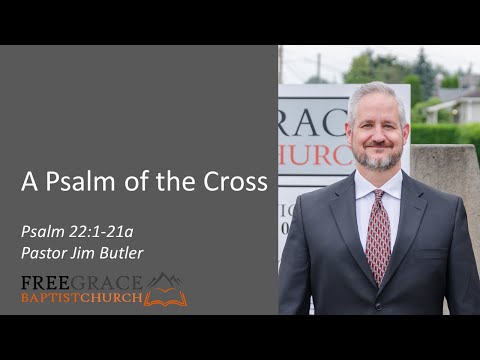
A Psalm of the Cross
Psalm 22 is a psalm of David written under prophetic inspiration, its true subject not David himself but his greater Son, the Lord Jesus Christ — who took its opening words upon his lips from the cross. The sermon works through verses 1–21a under three headings: the distress of the Messiah (the cry of dereliction rightly understood), the suffering of the Messiah at the hands of beastly men, and the confidence of the Messiah who never ceases to affirm the holiness, faithfulness, and presence of God even under the weight of divine wrath. The cry 'My God, my God, why have you forsaken me?' signifies not a rupture within the Trinity nor a dissolution of the hypostatic union, but the withdrawal of the Father's favor from the Son as our penal substitute — the Son receiving in himself the punishment due to sinners while continuing to petition the Father who heard him. Believers are exhorted to read the Old Testament through New Covenant eyes, singing the Psalms as words that belong to Christ and reveal dimensions of his suffering that even the Gospel narratives do not supply.

The Blessings of the Ascended Christ
The ascended and glorified Christ actively dispenses blessings to his church from the right hand of the Father. Expounding Acts 2:22–47, this sermon traces three categories of those benefactions: his proclamational gifts (the gift of preachers, the preaching of the Word, and the Spirit's empowering of that preaching), his salvific gifts (effectual calling and the forgiveness of sins), and his ecclesiastical gifts (the creed of the church, the building and unity of the church, the gathering around apostolic doctrine, and the new covenant ordinances of baptism and the Lord's Supper). Believers are exhorted to pray for Spirit-empowered preaching, to attend diligently upon all the appointed means of grace, and to find their unity in the objective content of Christian confession rather than in secondary things.

Wednesday Night Bible Study - Leviticus 1-16
Leviticus 16, the Day of Atonement, stands at the theological center of both the book and the Pentateuch, answering the question Exodus leaves unresolved: how may sinful man enter the presence of a holy God. This session reviews the whole of Leviticus 1–16, tracing the book's structure from the sacrificial system and the institution of the priesthood through the laws of cleanness, showing that every element of the ceremonial apparatus — offering, priest, atonement — was divinely instituted, not humanly devised. The Nadab and Abihu incident demonstrates that unauthorized worship is mortal transgression, while the two-goat ritual of chapter 16 pictures both propitiation and expiation, all pointing forward to the once-for-all sacrifice of the Lord Jesus Christ.

The Glorious Exchange
Zechariah 3 presents a courtroom scene in which the high priest Joshua stands before the angel of the Lord clothed in filth while Satan waits to bring his accusation — and God silences the devil not by appealing to Israel's performance but by sovereignly removing the filthy garments and clothing Joshua in rich robes. This fourth night vision of Zechariah illustrates what Luther called the glorious exchange: the sinner's guilt imputed to Christ and Christ's righteousness imputed to the believer, received by faith alone. The sermon traces this double imputation through Romans 5, 1 Corinthians 1, 2 Corinthians 5, Galatians 2, and Philippians 3, and refutes the New Perspective on Paul's rejection of forensic imputation. The exhortation is plain: when the adversary accuses, the Christian's only answer is not performance but the gospel of sovereign grace in Christ the Branch.

The Judicial Decision to Murder Jesus
The Sanhedrin's formal decree to execute Jesus, recorded in John 11:47–57, is the most extreme miscarriage of justice in human history — a body constituted to administer God's law plotting the murder of the only innocent man who ever lived. The sermon expounds the irony that Caiaphas, driven entirely by political self-preservation, nevertheless prophesied accurately: one man would die for the nation, and not for that nation only, but to gather the scattered children of God from every tribe, tongue, people, and nation. John's theological commentary on the high priest's words (vv. 51–52) unpacks the doctrinal heart of penal substitutionary atonement — the just for the unjust, the holy and harmless for the thoroughly defiled. The passage calls believers to stand in awe that Christ willingly walked into this kangaroo court, refused self-defense, and bore the wrath of godless men so that sinners might be freed from the wrath of God.
The Day of Atonement
Leviticus 16 stands at the structural center of the Pentateuch, and its legislation governing the Day of Atonement reveals both the absolute holiness of God and the total sinfulness of man. The two goats — one slaughtered as a sin offering and one driven into the wilderness as the scapegoat — together signify substitutionary atonement and the definite removal of guilt from a specific covenant people. The high priest's own need for sacrifice before he could minister for Israel exposes the inadequacy of the Levitical priesthood and anticipates the once-for-all, self-sufficient sacrifice of Christ, whose blood retroactively atoned for Old Covenant believers and finally accomplished what the annual rite could only shadow. Believers in the New Covenant era need no further Day of Atonement ceremony; every observance of the Lord's Supper recalls the same removal of guilt that the scapegoat ceremony made visible to Israel.

The Conduct of the New Man, Part 3
Ephesians 5:1–2 concludes Paul's extended exhortation on the conduct of the new man (Ephesians 4:17–5:2), calling believers to be imitators of God as dear children and to walk in love. The basis for this imitation is theological: God is definitionally love (1 John 4:8, 16), believers have been adopted into his family by sovereign election and effectual grace, and family membership carries both privilege and responsibility. The motivation for walking in love is the penal substitutionary atonement of Christ, whose self-offering was an acceptable sacrifice to the Father — the antitype of the Old Testament burnt offering — and whose love supplies both the standard and the ground for all Christian love toward God and neighbour.

The Burnt Offering
Leviticus 1 presents the burnt offering as the paradigmatic Old Covenant sacrifice, establishing the pattern of how sinful man may approach a holy God. The chapter addresses the costliness of sacrifice, the worshiper's heart disposition, the laying on of hands as substitutionary transference, and the meaning of atonement as the satisfaction of divine justice. The New Testament interprets this system typologically: the male without blemish, the substitutionary slaughter, and the sweet aroma of acceptance all prefigure the penal substitutionary atonement of the Lord Jesus Christ. Believers are called to read the Old Testament as a Christ-centered book and to worship God only in the manner He has prescribed.

Introduction to the Book of Leviticus
The book of Leviticus resolves a theological tension created at the close of Exodus: the tabernacle has become God's dwelling place, but no Israelite — not even Moses — can enter it. This introductory exposition surveys Leviticus 1:1 and the book as a whole, tracing three dominant theological themes: the holiness of God, the sacrificial system as God's own provision for sinful man's access to His presence, and the purity required of His covenant people. The Levitical types find their antitypes in the Lord Jesus Christ, who is simultaneously the high priest and the sacrificial victim, and whose atoning work is the substance toward which the entire ceremonial law pointed.

The Sanctuary and Ark of the Testimony
Exodus 25:1–22 opens the third major division of Exodus — the dwelling of God among his redeemed people — which the sermon argues is the climax of the entire book. Working through the offerings for the tabernacle, the purpose of the sanctuary, and the construction and function of the ark, the exposition traces how God's intent to dwell with Israel typologically anticipates the new covenant reality secured by Christ, the great high priest and true mercy seat. The regulative principle of worship is grounded exegetically in God's precise prescriptions for the tabernacle and applied to New Covenant church practice. Hearers are called to count corporate worship a privilege and to approach God only in the manner he has commanded in Holy Scripture.

Better Things in Christ
Hebrews 1:1–4 presents Jesus Christ as the apex of divine revelation, the eternal Son who bears the undiminished nature of the Father, and the perfect High Priest whose finished work secures salvation for all His people. The sermon moves through three considerations: the singular greatness of Christ's revelation over all prior prophetic speech, the infinite excellency of His person as the brightness of the Father's glory and the exact imprint of His nature, and the perfection of His redemptive regency demonstrated in His expiatory sacrifice and His session at the right hand of the Majesty on high. Against any drift toward lesser things — whether Old Covenant shadows, Roman Catholic purgatory, or the kenotic diminishment of Christ's deity — the congregation is called to hold fast their Christ, rejoice in the revelation God has given, and fear the consequences of neglecting so great a salvation.

2LCF Chapter 8 - Of Christ the Mediator, Part 2
Christ the Mediator, as confessed in chapter 8 of the 1689 London Baptist Confession of Faith, is examined through Hebrews 10 and supporting Scripture, tracing the pre-temporal appointment of the Son in the covenant of redemption, his hypostatic union, his anointing for the mediatorial office, and the execution of his saving work. The confession's account of Christ's perfect obedience, sacrificial death, and resurrection is shown to satisfy divine justice, procure reconciliation, and secure an everlasting inheritance for all the Father has given him. Particular attention is given to the retrospective communication of Christ's redemptive benefit to elect saints under the old covenant, demonstrating that salvation has always been by grace through faith in Christ alone. The study exhorts believers to find stability, comfort, and assurance in a precise knowledge of who Christ is and what he has accomplished.

The Testimony of John the Baptist, Part 2
John 1:29 records the Baptist's singular declaration — 'Behold the Lamb of God who takes away the sin of the world' — a phrase saturated with the weight of Old Testament redemptive history. This sermon works through the theological freight of that title, tracing the Lamb through Genesis 22, Leviticus 16, and Isaiah 53 to show that Christ's mission is substitutionary blood atonement: he takes up the sin of his people in order to take it away entirely. The 'world' from which sin is removed is not every individual without exception but men and women without ethnic or national distinction, saved by grace alone through faith in Christ alone.

The New and Living Way
Hebrews 10:19–25 presents two grounds of confidence for the people of God — boldness of access to the Holy of Holies through Christ's blood and flesh, and the possession of a great high priest over the house of God — and then presses three exhortations upon that foundation: draw near, hold fast the confession of hope, and consider one another to stir up love and good works. The sermon traces the problem of sinful man's exclusion from God's presence from Exodus 40 through the Levitical sacrificial system to its resolution in the incarnation and definite atonement of Christ, who consecrated a new and living way. Particular attention is given to the prohibition against forsaking the assembly, argued to be grammatically tied to the third exhortation and theologically governing all three, so that corporate Lord's Day worship is the ordained context in which God's people draw near, are educated in hope, and mutually provoke one another to love and good works. The sermon closes by calling the unconverted to look to Christ and the converted to embrace their shared responsibility for one another's souls through faithful churchmanship.
The Resurrection and Justification
Romans 4:25 declares that Christ 'was delivered up because of our offenses and was raised because of our justification' — a verse Charles Hodge called a comprehensive statement of the gospel and Matthew Poole called an abridgment of the whole. The sermon works through two inseparable redemptive realities: the substitutionary, particular atonement accomplished in Christ's death, and the five-fold testimony of the resurrection to the validity of that work. The central application is that a robust grasp of justification by faith alone — the imputation of Christ's righteousness received through faith — is the irreplaceable foundation for Christian stability, comfort, and peace with God.

The Nature of the Gospel
Galatians 1:1–5 is not merely a conventional greeting but a compressed summary of the gospel itself. Working through each clause of verses 4–5, this exposition identifies five defining features of Christ's death: it was voluntary, it consisted in penal substitution, it secured deliverance from this present evil age, it was determined by the Father according to His eternal will, and it promotes the glory of God alone. The sermon presses toward the Lord's Supper, calling each hearer to examine whether they can say with Paul in Galatians 2:20, 'He loved me and gave Himself for me,' and to receive the bread and cup only on that ground.

The Justice of God and the Gospel
Proverbs 17:15 declares that justifying the wicked and condemning the just are alike an abomination to God — yet the gospel does precisely both: God condemned the sinless Christ and justifies ungodly sinners. This sermon works through the theological architecture that vindicates God from any charge of self-contradiction in the gospel, tracing the doctrines of covenant representation and imputation from Genesis through the Prophets and into Paul's argument in Romans 3–5. The three acts of imputation — Adam's sin to all mankind, the elect's sin to Christ, and Christ's righteousness to the elect — are shown to be the biblical answer to the problem Proverbs 17:15 raises, grounding assurance in an alien righteousness received by faith alone.

The Martyrdom of Stephen
Acts 7:54–60 records the martyrdom of Stephen, the first Christian martyr, whose death exhibits divine sustaining grace amid murderous opposition. This exposition traces three movements in the passage: the blessedness of Stephen as the triune God fills, illumines, and comforts him; the murderous rage of the Sanhedrin, whose violent reaction to his vision of the exalted Christ exposes their guilt and apostasy; and the death of Stephen, whose dying prayers — for Christ to receive his spirit and to forgive his murderers — mirror the death of the Lord Jesus and further corroborate his entire defense. The sermon closes with the conversion of Saul of Tarsus in Acts 9 as God's answer to Stephen's intercessory prayer, and with a call to trust Christ as the one who hears prayer, forgives sin, and grants access to God.

Stephen's Defense, Part 7
The tabernacle and temple of Israel were not ends in themselves but types pointing forward to the Lord Jesus Christ as the true dwelling place of God with his people. Expounding Acts 7:44–45, this sermon traces Stephen's defense against the charge of being anti-Temple by surveying the tabernacle in the wilderness (Exodus 25–40), the Levitical sacrificial system as the God-ordained means of approaching a holy God, and the conquest of Canaan under Joshua as the triumph of Yahweh's strength over Israel's enemies. The central application is that sinful men may dwell with God only through the blood of Jesus Christ — the substance to which every tabernacle, temple, sacrifice, and conquest pointed — and that the same sovereign God who drove out the Canaanites is the God who mortifies sin in his people by his Spirit.
The Death, Burial, and Resurrection of Christ
What is the gospel, and why does its content matter for the Lord's Supper? Expounding 1 Corinthians 15:1–20 with focused attention on verses 3–4, this sermon argues that the gospel is defined by three inseparable historical and theological events: the death, burial, and resurrection of Christ. Each event carries precise atoning weight — the death is substitutionary, propitiatory, and expiatory; the burial confirms the reality of that death and sets the stage for resurrection; the resurrection vindicates Christ's saving work, bears witness to the justification of his people, and establishes him as judge of the living and the dead. Delivered in the context of the Lord's Supper, the sermon calls believers to a wonder-filled, theologically informed observance of the ordinance, and warns unbelievers that the risen Christ who died for sinners will also be their judge.

The Glory of the Lamb of God
John 1:29 — 'Behold, the Lamb of God who takes away the sin of the world' — cannot be rightly understood apart from the Prologue that precedes it. The eternal Word who was with God and was God became flesh, was eternally begotten of the Father, and stands as the covenantal head of the new covenant before he is identified as the Lamb whose violent, substitutionary death takes away the sin of the world. The scope of that sin-bearing is not every individual without exception but persons without distinction — Jews and Gentiles alike — as the consistent use of 'world' in John's Gospel and the song of the redeemed in Revelation 5 make clear. The proper response is to place the cross in its full Trinitarian, Christological, and covenantal context and to worship the one who left the eternal life of God to enter our flesh and save us from our sins.

Free Grace Baptist Church - October 8, 2017 PM
What happens when a believer sins against a holy God? Expounding 1 John 2:1–2 within the broader context of 1 John 1:5–10, this sermon answers that question under two headings: Christ as advocate and Christ as propitiation. The advocate language draws on the high-priestly intercession of Christ at the Father's right hand — distinct from, yet complementary to, the Spirit's advocacy on earth — while the doctrine of propitiation is traced through the Old Testament sacrificial vocabulary of kippur to show that Christ both turns away divine wrath and removes guilt. The sermon closes with a direct call to unbelievers to flee to Christ, the only one under whose blood the wrath of God is turned away and peace with God secured.