
Theological term
Divine Sovereignty
71 sermons · All terms
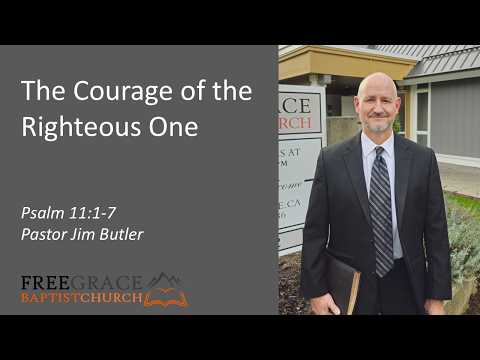
The Courage of the Righteous One

Psalm 11 presents the righteous man — supremely the Lord Jesus Christ — facing the temptation to abdicate his calling when wicked enemies ready their arrows and the foundations of moral order appear destroyed. The sermon expounds two movements: the temptation to flee (vv. 1–3) and the fortification found in contemplating God's sovereignty, omniscience, and justice (vv. 4–7). Because Christ steadfastly set his face toward Jerusalem and drank the cup of divine wrath to its dregs in the place of his people, believers have every reason to resist the same temptation to cowardice and unbelief, and to stand firm in the Lord.

The Trial Before Pilate, Part 1
John 18:28–32 records the delivery of Jesus to Pontius Pilate, an event framed by both human wickedness and divine sovereignty. The sermon surveys the prior trial before the Sanhedrin in Matthew 26, exposing the false charges, the deliberate misquotation of Jesus's words about the temple, and the formal charge of blasphemy — then turns to John's account of the hypocrisy, lawlessness, and impotence of the Jewish authorities before Pilate. Against that backdrop of gross injustice, verse 32 grounds the entire episode in divine decree: the very words Jesus had spoken concerning his death were being fulfilled, and the wrath of men was being overruled by the providence of God for the salvation of the elect. The chief application is adoration — the redeemed sinner is called to see how far the Savior went to secure redemption, and the unbeliever is called to come to the one who will not cast out any who come to him in faith.

Ask FGBC #25: How do I handle family members, friends, etc, not believing?
A questioner is grieved by family members and friends who refuse to believe the gospel, citing a theology that demands a prolonged crisis of sin and misery before conversion is credible. The response addresses both the pastoral burden of watching loved ones reject Christ and the theological confusion that treats immediate repentance and faith with suspicion. Practical counsel includes persisting in prayer, reading Scripture together rather than arguing theology, and pointing to the diverse conversion experiences in the New Testament and in works such as Pilgrim's Progress to show that Scripture nowhere requires a prescribed experiential cycle before a sinner may come to Christ.
The Apostle Paul, Part 4: His Doctrinal Legacy

The doctrinal legacy of the Apostle Paul is surveyed across seven theological themes: the comprehensive nature of sin and depravity, the incarnation of the divine Son of God, the sovereignty of the triune God in salvation, amazing grace, justification by faith alone, sanctification in union with Christ, and a simple and glorious eschatology. Paul's writings are shown to move consistently from the gravity of man's ruin to the glory of God's redeeming grace in Christ. The sermon closes with a direct call to believers to be built up in the knowledge of the gospel, and to those outside of Christ to believe on the Lord Jesus Christ and be saved.

The Refuge for God's People
Psalm 46 sets the doctrine of God's sovereign presence as the only sufficient ground for courage in affliction. The psalm's threefold refrain — 'The Lord of hosts is with us; the God of Jacob is our refuge' — anchors the people of God against both natural catastrophe and the rage of hostile nations. Drawing on Job, the upper room discourse, Acts 14, and the letters to the seven churches in Revelation, this exposition argues that suffering is the normative texture of the Christian life, not an anomaly to be explained away. The command of verse 10 — 'Be still and know that I am God' — is not passive fatalism but a call to steady, covenant confidence in the God whose justice, power, and faithfulness guarantee the final exaltation of Christ among the nations.

2LCF Chapter 3 - Of God's Decree
God's eternal decree—that He has foreordained whatsoever comes to pass, freely and unchangeably, from the counsel of His own most wise and holy will—is the subject of 2LCF Chapter 3. This study works through all seven paragraphs of the confession, grounding the doctrine first in divine sovereignty (God is most absolute, most free, and all-sufficient), then examining the decree's scope over all things, its special application to the predestination of the elect through Jesus Christ, and the reprobation of the wicked to the praise of His glorious justice. The decree is shown to be identical with the divine essence itself—eternal and unchangeable—and the means ordained by God (the redemptive work of Christ, the preaching of the Word, and the effectual work of the Spirit) are likewise foreordained. The proper posture before this doctrine is not boasting but humility, reverence, and abundant consolation in the God who saves sinners by His sovereign grace alone.

The Vainglorious Quest, The Virtuous Path, and The Veracious Contemplation
Jeremiah 9:23–24 issues a threefold structure: a prohibitive warning against glorying in wisdom, might, or riches; a prescriptive call to glory in the understanding and knowledge of God; and a veracious contemplation of who God is and what He does. The sermon situates these commands within their covenantal context — the inevitable Babylonian judgment upon covenant-breaking Israel under the curses of Deuteronomy 28 — demonstrating that wisdom, strength, and riches will not avail in the face of irreversible divine justice. True glorying is exclusively God's due, and the knowledge of the one living and true God — Father, Son, and Holy Spirit — is the only wisdom, strength, and riches that profit eternally. Hearers are called to cast off vainglory, grow earnestly in the knowledge of God, and trust in Christ alone, in whom are found all true wisdom, strength, and riches.

The Attempted Murder of the Good Shepherd
John 10:31–42 presents the religious leadership of Jerusalem responding to Christ's declaration 'I and my Father are one' not with worship but with stones. This exposition traces three movements: the revelation of Christ's divine glory in verse 30, the attempted murder by the Jewish leaders in verses 31–39, and the fruitful reception of Christ in the Transjordan in verses 40–42. Central to the passage is Christ's appeal to Psalm 82 and the argument from lesser to greater — if God calls earthly magistrates 'Elohim,' on what grounds do they stone the One whom the Father sanctified and sent? The sermon closes with an encouragement to the people of God: where Jerusalem rejects, the Transjordan receives, and the Good Shepherd will gather His sheep from every tribe and nation.

The Feast of Tabernacles, Part 1
John 7:1–13 presents the Feast of Tabernacles as the backdrop for intensifying hostility toward Jesus, whose unbelieving half-brothers urge Him to seek public exposure — a suggestion rooted in a man-centered, politically distorted messianic expectation. Christ refuses to act on their counsel, insisting instead on the divine timetable that governs every movement of His redemptive mission. The passage confronts two errors simultaneously: the assumption that physical proximity to Jesus produces saving faith, and the temptation to shrink from confessing Christ under social pressure — both of which the text answers by pointing to sovereign grace and the covenant community as God's appointed means of steadying His people.

The Redemptive Work of the Son, Part 2
Ephesians 1:8–12 grounds the individual believer's redemption within a cosmic divine purpose: God's wisdom in the plan of salvation maintains all his holy perfections without compromise, the mystery of his will now openly revealed in the gospel calls sinners from every tribe and nation, and all things will be recapitulated — gathered up and set in order — under the lordship of Christ at his return. The inheritance of the elect is secured by predestination, not by human performance, so that the redeemed exist 'to the praise of his glory' — as a trophy case of grace before angels and the entire created order.

Clip: God isn't crippled, hindered, silent, or absent
The sovereignty of God over creation and providence is the proper ground of confident, bold prayer. Drawing on Acts 4 and Psalm 2, this excerpt shows how the apostolic church prayed not to a God diminished by circumstance but to the God who made and governs all things — including the threats of the Sanhedrin against the early church. The vantage point of God's absolute sovereignty is what makes petition coherent and emboldening rather than desperate.
Clip: How to Pray for Civil Government During Persecution
How should the church pray for civil government, especially under persecution? Drawing from Acts 4:29, 1 Timothy 2:1-7, Proverbs 21:1, Psalm 74:11, and 1 Corinthians 13, this sermon clip presents three biblically grounded petitions — redemption, restraint, and removal — as legitimate and distinct prayers the people of God may bring before the Lord concerning their civil rulers. The clip closes by returning to the early church's example in Acts 4, where the believers, rather than invoking judgment on the Sanhedrin, turned their petition inward, asking God to make them faithful witnesses in the midst of opposition.
Clip: God isn't crippled, hindered, silent, or absent
The early church in Acts 4:23–31 prayed not as though God had been caught off guard by persecution, but as though the God who created and governs all things remained sovereignly in control of even the threats of the Sanhedrin. This clip draws out the church's invocation of divine sovereignty as the theological ground of confident petition: to pray is to address the one with absolute ability to fulfill what he has promised and purposed. The application is direct — believers do not come to a God who is crippled, hindered, or absent, but to the sovereign Lord who holds the hearts of all men in his hand.
The Prayer of the Persecuted Church
When the early church faced arrest and official prohibition of gospel preaching, its first instinct was corporate prayer — not political agitation or fearful compliance. This exposition of Acts 4:23–31 traces the structure of that prayer: an invocation of God as sovereign Creator, an exposition of Psalm 2 applied to the conspiracy against Christ and his people, and a pointed supplication not for safety or comfort but for boldness to declare the word. The sermon calls the contemporary church to the same God-centred prayer, understanding persecution as something always beneath the sovereign hand of God, and faithfulness in proclamation as the unchanging vocation of every Christian steward.

2LCF Chapter 3 - Of God's Decree
God's decree — his eternal, comprehensive, and unchangeable purpose over all things — is the subject of 1689 London Baptist Confession Chapter 3. The confession affirms that God has foreordained whatsoever comes to pass, including the free and sinful actions of men, without becoming the author of sin or violating the will of the creature. Paragraph 2 refutes the Molinist and Arminian claim that God's decree is grounded in his foreknowledge of human choices, insisting instead that election puts sinners in Christ rather than finding them there. The doctrine is shown to be practically consoling, doxologically oriented, and inseparable from the character of God as defined in Chapter 2.

Exodus 14
Exodus 14 records the crossing of the Red Sea — a chapter whose driving theme is not merely Israel's deliverance but God's self-glorification over Pharaoh and his army. The exposition works through two main movements: the plan of God (vv. 1–14), in which God sovereignly directs Israel's route and hardens Pharaoh's heart so that He may gain honor, and the power of God (vv. 15–31), in which divine promise, protection, and action result in the salvation of Israel and the destruction of Egypt. Israel's fear and complaint throughout the chapter expose a chronic lack of faith, while Moses' brief but confident exhortation — 'Do not be afraid; stand still and see the salvation of the Lord' — models the response that faith in God's promises produces.

The Crucifixion of Jesus, Part 2
Matthew 27:39–44 records the threefold mockery of Christ on the cross — by passing bystanders, by the chief priests and scribes, and by the robbers crucified alongside him. Each taunt — that he could not save himself, that his kingship was fraudulent, that his claim to divine sonship was false — is shown to be an ironic confirmation of the very things the mockers deny: Christ's identity as temple builder, King of Israel, and Son of God. His refusal to descend from the cross is not weakness but the perfect obedience of the covenant of redemption, the very means by which he saves his people from their sins. The sermon closes with the conversion of the penitent thief as a trophy of sovereign grace and an argument for faith in a willing Savior.

Exodus 10
Exodus 10 records the eighth plague of locusts and the ninth plague of darkness, both of which expose Pharaoh's hardened pride and vindicate the sovereignty of God over Egypt, its rulers, and its gods. The hardening of Pharaoh's heart is examined not as a capricious act but as a judicial act of divine justice against a man and a dynasty already guilty of enslaving and murdering God's people. The passage carries forward two covenantal purposes: the public declaration of God's supremacy and the transmission of that knowledge to successive generations within the covenant community. Believers are called to pray for God's glory above all earthly concerns, to refuse embarrassment over God's justice, and to trust his sovereignty even in prolonged seasons of affliction.

The Trial Before Pilate, Part 3
Matthew 27:24–26 records the sentencing of Jesus by Pontius Pilate — the culmination of a trial in which the governor thrice declared the accused innocent yet delivered him to crucifixion anyway. The sermon examines Pilate's hypocritical self-absolution by the washing of hands, the crowd's willing acceptance of blood-guilt and its ominous extension to their children, and the formal scourging and condemnation of Christ. Throughout, the exposition presses the double benefit of the gospel: the forgiveness of sins and the imputation of Christ's righteousness received by faith alone, both grounded in the penal substitutionary atonement symbolised by Barabbas going free while the just one goes to the cross.

The Cross Predicted and Rejected

Mark 8:31-33 records Jesus' first explicit prediction of His suffering, death, and resurrection — a proclamation that shattered every nationalist expectation of a triumphant Messiah. The sermon works through two movements: the cross predicted (vv. 31-32a), where Jesus identifies Himself as the suffering Son of Man whose death and resurrection were decreed by God from eternity, and the cross rejected (vv. 32b-33), where Peter's rebuke earns the reply 'Get behind me, Satan' because man's thoughts about the Messiah stand in direct opposition to God's. Rooted in Isaiah 53, Daniel 7, Hosea 6, and Psalm 118, the exposition argues that penal substitutionary atonement — the Son of Man bearing the wrath sinners deserve — is the only ground of eternal life, and that the same Christ who prepared His disciples for His own suffering now calls His people to take up their crosses in this present evil age.
Exodus 9
Exodus 9 records the fifth, sixth, and seventh plagues against Egypt — the death of livestock, the plague of boils, and the devastating hailstorm — each demonstrating that the Lord alone is the living and true God over all forces of nature. The plagues are not natural phenomena but direct sovereign acts of God, exposed as such by their precise timing, their discriminating effect on Egypt but not Israel, and the collapse of Egypt's magicians before their own affliction. God's hardening of Pharaoh's heart is treated not as injustice but as a righteous judicial act against a persistently rebellious sinner, a point Paul draws on in Romans 9 by quoting Exodus 9:16. The distinction between those Egyptians in verse 20 who feared the word of the Lord and those in verse 21 who did not becomes a pointed call to heed the gospel: Christ is the believer's Goshen, the place of safe refuge under the new covenant.

Bible Study - Exodus 8
Exodus 8 records the second, third, and fourth plagues against Egypt — frogs, lice, and flies — each following a recurring pattern: divine command, Pharaoh's refusal, the plague's execution, a show of compliance, and a return to hardness of heart. The plagues are not merely natural disasters but a direct assault upon the gods of Egypt, demonstrating that Yahweh alone is the true and living God in the midst of the land. The hardening of Pharaoh's heart is an act of divine justice against an already guilty sinner, not arbitrary cruelty, and the distinction God draws between Goshen and Egypt anticipates the covenant blessing that separates his people from those under his wrath. The repeated failure of miracles to produce repentance in Pharaoh — even when his own magicians confess 'this is the finger of God' — establishes that new birth, not spectacle, is what makes a believer.

Bible Study - Exodus 7
Exodus 7 presents the reassurance of Israel's deliverance, the opening sign before Pharaoh, and the first plague — the turning of the Nile to blood. The sermon works through God's sovereign purpose in hardening Pharaoh's heart, arguing that this was an act of righteous judgment upon an already-guilty idolater, not arbitrary cruelty, and that the ten plagues constitute a direct assault upon the gods of Egypt to vindicate God's elect and instruct Egypt in who the Lord truly is. The satanic origin of the magicians' counterfeit signs is examined through Deuteronomy 13, Deuteronomy 18, 1 Samuel 28, Matthew 24, and 2 Thessalonians 2. Romans 9:14–18 frames the theological conclusion: God's sovereignty in hardening and in showing mercy is absolutely righteous, and every act of judgment against God's enemies is simultaneously a mercy toward his people.

Bible Study - Exodus 4
Exodus 4 continues the call narrative begun in chapter 3, tracing Moses' repeated reluctance to accept the commission to deliver Israel from Egypt and God's patient, sovereign response to each objection. God confirms Moses' authority through three authenticating signs — the rod becoming a serpent, the leprous hand, and water turned to blood — not as ends in themselves but as instruments to authenticate Moses as God's spokesman, consistent with the function of signs throughout Scripture. The chapter's second half traces Moses' return to Egypt, including the judicial hardening of Pharaoh's heart as an act of divine justice rather than injustice, Israel's identification as God's firstborn, and the concluding scene of Israel's elders bowing in worship upon receiving Moses and Aaron's testimony. The sermon calls hearers to find comfort in the absolute sovereignty of God over nature, disease, human speech, and pagan rulers, and to let that knowledge shape reverent, joyful corporate and private worship.
Nations Rage, God Mocks
Psalm 2 confronts the rage of earthly rulers against God and His anointed with a sober theological question: why do the nations engage in so futile an endeavor? The sermon expounds the psalm under three headings — the rebellion of earthly kings, the reign of the heavenly king, and the recognition of the true king — tracing the Davidic covenant through its fulfillment in the resurrection and exaltation of Christ. The Covenant of Redemption grounds the certainty of Christ's present reign at the right hand of the Father, and that certainty is the sole comfort available to God's people as nations continue to rage and the history of the church runs red with the blood of martyrs. Hearers are called either to kiss the Son in filial fear and find blessing, or to perish in the way of the ungodly.
Psalm 46
Psalm 46 presents God as the impenetrable refuge and omnipotent strength of His people in the midst of natural catastrophe, national upheaval, and personal affliction. The study works through four heads: the assurance of God's presence (vv. 1, 7, 11), the demonstration of God's power (vv. 2–6), the invitation to behold God's works (vv. 8–9), and the command to rest in God's sovereignty (v. 10). Covenant theology is not merely a theoretical construct but the very ground of the believer's comfort — the God of Jacob is a covenant-keeping God whose purposes cannot be frustrated by any earthly power. The congregation is called to the practical discipline of theology proper: to know God deeply so that the soul is stabilized, not paralyzed, in times of trouble.

Man's Responsibility and Rejection of Christ
Human responsibility before God stands alongside divine sovereignty — neither cancels the other. Drawing on Ezekiel 33, Psalm 2, Isaiah 45 and 55, and the gospel invitations of Christ, this address confronts the perennial tendency of sinners to evade accountability by deflecting blame onto circumstances, other people, or divine predestination itself. The hearer is called to abandon every such evasion, acknowledge personal guilt before the moral Governor of the universe, and flee to King Jesus Christ for mercy, grace, and peace with God.

The Second Missionary Journey, Part 8
Acts 18:1–11 records Paul's arrival and eighteen-month ministry in Corinth, one of the most morally degenerate cities of the ancient world. The sermon traces Paul's gospel strategy — reasoning in the synagogue, enduring Jewish opposition, and turning to the Gentiles — before dwelling on Christ's night vision to Paul: 'Do not be afraid, for I have many people in this city.' The doctrine of election explains how Christ could speak with certainty of many yet-unconverted people awaiting the call; the gospel, not moral reform or civil intervention, is the sole instrument for transforming a corrupt culture. The sermon closes with a call to pray for and to be men who preach Christ and Him crucified, stand under opposition, persevere in weakness, and believe the promise that Christ is present with His church in the great commission.
Man's Responsibility and Rejection of Christ
Human responsibility before God does not disappear behind divine sovereignty. Drawing from Acts 18, Ezekiel 33, and Psalm 2, this clip exposes the error of using God's sovereign election as a shield against personal accountability for rejecting Christ. The call is direct: sinners must own their rebellion, lay down their weapons against God, and come to Christ who freely offers rest, water, milk, and wine to all who are weary and thirsty.

Genesis 50
Genesis 50 closes the book of Genesis with the deaths of Jacob and Joseph, and with Joseph's brothers at last seeking the forgiveness they had long withheld. The sermon traces three movements in the chapter — Jacob's burial in Canaan, the reassurance Joseph gives his fearful brothers, and Joseph's dying charge to carry his bones out of Egypt — and shows how each movement is anchored in the covenant faithfulness of God. Central to the exposition is Genesis 50:20, treated as the Old Testament counterpart to Romans 8:28: God overrules the wickedness of men not despite His goodness and omnipotence but because of them, working all things toward His glory and the good of His people. Hearers are called to confess sin honestly, forgive as they have been forgiven, and rest in the God whose promises — from Genesis 3:15 to the exodus and beyond — never fail.