
Theological term
Divine Initiative
12 sermons · All terms
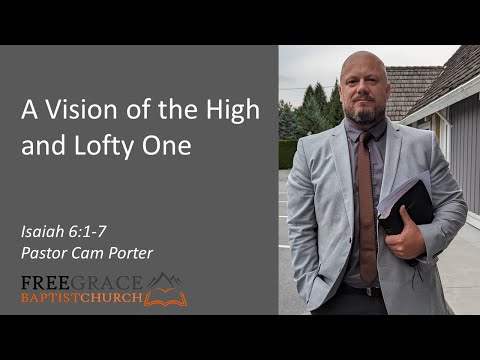
A Vision of the High and Lofty One

Isaiah 6:1–7 presents the prophet's visionary encounter with the enthroned Lord — holy, holy, holy — and his subsequent cleansing by a coal from the altar. This sermon works through five movements in the passage: the introductory contrast between dying earthly kings and the eternal High King of Heaven; the exemplary posture of the seraphim before the divine majesty; the superlative holiness, glorious titles, and unbounded presence of the Lord of hosts; Isaiah's fitting confession of his own uncleanness; and the gracious divine initiative in purification, which anticipates the definite atoning work of Christ. The congregation is called to approach the living God with the humility of Isaiah and the seraphim, confident that the same sovereign who commissioned his prophet will fill the whole earth with his glory through the proclamation of the gospel.

The Wars of the LORD

Numbers 21 traces Israel's journey through military victory over the Canaanites, the punishment and grace of the bronze serpent, and the conquest of the Amorite kings Sihon and Og. The bronze serpent — condemned people bitten by fiery serpents, healed only by looking in faith to the remedy God prescribed — is taken up by Jesus in John 3:14 as a type of his own crucifixion, teaching that salvation comes by divine initiative alone, received through faith, not works. The same recurring sins of complaint, lack of faith in providence, and idolatry that marked the first generation persist in the second, warning the church that these corruptions follow the sin nature across every generation. The chapter closes with God's sovereign hardening of Sihon and the defeat of the giant Og, both down payments on the promised conquest and demonstrations of God's faithfulness, sovereignty, and goodness to his people.

The Conversion of the Ethiopian Eunuch
Acts 8:26–40 records the conversion of an Ethiopian eunuch whose exclusion from the assembly of God under the Mosaic order (Deuteronomy 23) is overturned by the new-covenant fulfillment of Isaiah 56, as God sovereignly directs Philip to him on the Gaza road. The sermon traces three movements: the divine initiative behind the contact, the Christ-centered content of the communication from Isaiah 53, and the confession and baptism that mark the conversion itself. Throughout, the preacher insists that the eunuch's deepest problem was not his ethnicity or his condition but his sin, and that the only remedy—then as now—is faith in the Lord Jesus Christ, whose righteousness is received by grace through faith alone and sealed in believers' baptism by immersion.

The Camel and the Needle
Luke 19:1–10 presents Zacchaeus — chief tax collector, rich man, notorious sinner — as a living demonstration of what Jesus declared in Luke 18:27: 'the things which are impossible with men are possible with God.' The sermon works through two movements: first, the person of Zacchaeus as the object of sovereign mercy, and second, the mission of Christ who seeks and saves the lost by divine initiative, not human worthiness. The effectual call of the Son of God upon Zacchaeus — who climbed the tree in curiosity but descended in love — illustrates that God's saving grace makes its object worthy rather than waiting to find one worthy.
The Resurrection and Justification
Romans 4:25 declares that Christ 'was delivered up because of our offenses and was raised because of our justification' — a verse Charles Hodge called a comprehensive statement of the gospel and Matthew Poole called an abridgment of the whole. The sermon works through two inseparable redemptive realities: the substitutionary, particular atonement accomplished in Christ's death, and the five-fold testimony of the resurrection to the validity of that work. The central application is that a robust grasp of justification by faith alone — the imputation of Christ's righteousness received through faith — is the irreplaceable foundation for Christian stability, comfort, and peace with God.
The Conversion of Cornelius, Part 4
Acts 10:44–11:18 records the outpouring of the Holy Spirit upon Cornelius and his Gentile household and the controversy that erupted among Jewish believers in Jerusalem when Peter reported what had happened. The sermon examines the divine initiative behind Gentile inclusion in the covenant of grace, the cessationist significance of the tongue-speaking at this 'Gentile Pentecost,' the apostolic command of water baptism following credible conversion, and the collapse of Jewish objections before Peter's ordered defense. The passage's closing doxology — 'God has also granted to the Gentiles repentance to life' — presses home that faith, repentance, and the Spirit himself are gifts of sovereign grace, received through the preaching of Christ crucified and risen, apart from any work of the law.

From Alienation to Reconciliation
Colossians 1:21–23 sets the condition of fallen humanity — alienated from God, hostile in mind, and characterised by wicked works — against the sovereign act of divine reconciliation accomplished through the incarnation and substitutionary death of Christ. This sermon works through Paul's three-part description of man's former state before turning to the means and goal of reconciliation: the bodily death of Christ to present his people holy, blameless, and above reproach. The exposition closes with a call to perseverance grounded not in the believer's resolve but in the completed work of the one who reconciles, redeems, and saves to the uttermost.

Genesis 11:27 - 12:20

Genesis 11:27–12:20 introduces the call of Abram from pagan Ur of the Chaldeans, setting in motion the Abrahamic covenant through which God promises to bless all the families of the earth. The passage is structured around two covenant themes — seed and land — with every circumstance (a barren wife, nomadic displacement, Canaanites in the promised land, famine, and Abram's own faithlessness in Egypt) designed to magnify divine initiative over human possibility. God's sovereign grace overcomes Abram's unbelief, protecting the holy seed even when Abram endangers Sarai through deception, demonstrating that the covenant rests entirely on God's faithfulness rather than the believer's. The sermon calls God's people to a lifelong posture of trust in Christ, Abram's promised seed, through whom all spiritual descendants of Abraham receive the blessings of the covenant of grace.

The Salvation of Zacchaeus
Luke 19:1–10 presents Zacchaeus — a wealthy, corrupt chief tax collector — as a demonstration of the divine power described just verses earlier in Luke 18, where Christ declared it easier for a camel to pass through the eye of a needle than for a rich man to enter the kingdom of God. The salvation of Zacchaeus is therefore not merely a warm story of hospitality but a proof of omnipotent, sovereign grace: the effectual call goes forth, the dead sinner descends from the tree, confesses Christ as Lord, and manifests genuine repentance in the only currency that could prove a rich man's heart-change. The sermon closes with the mission statement of Luke 19:10 — 'the Son of Man came to seek and to save that which was lost' — as the ground for evangelical confidence, joyful worship, and hope for any who have not yet come down from their own sycamore tree.
From Alienation to Reconciliation
Colossians 1:21–23 sets before the believer a movement from total alienation to gracious reconciliation, and Paul's logic demands that the Lord's Supper be received as a celebration of divine achievement rather than human performance. The sermon examines three realities in the text: the previous state of the Colossians as alienated enemies engaged in wicked works, their present status as those whom God has reconciled through the physical death of Christ, and the future blessedness to which God is bringing them — holy, blameless, and above reproach in his sight. Because reconciliation flows from sovereign election and not from foreseen faith, all glory belongs to God, and the table is rightly approached with awe and worship rather than self-congratulation.
The Incarnation and Our Salvation
Galatians 4:4–7 sets before the reader three privileges secured for sinners through the incarnation of the Son of God: redemption from the curse of the law, adoption into the family of God, and the indwelling of the Holy Spirit who enables the cry 'Abba, Father.' The sermon argues that the incarnation was no divine afterthought but the execution of an eternal covenant of redemption between the Father and the Son, initiated entirely by divine grace and not by any human merit or seeking. The triune God acts in perfect unity — the Father sending the Son to secure the rights of sonship, and the Father sending the Spirit to give the power of using them. Hearers are called to meditate on these three blessings, to grow in knowledge of the triune God, and to resist discouragement by taking an active hold of these gospel truths.
From Alienation to Reconciliation
Colossians 1:21–23 sets before the reader a stark before-and-after portrait of what redemption accomplishes: sinners who were actively alienated from God and enemies in their minds, now reconciled through the physical death of Christ and destined to stand holy, blameless, and above reproach before the judgment seat. The passage distinguishes sharply between the reason for reconciliation and its purpose — God does not reconcile because we are holy, but in order to present us holy, grounding justification entirely in imputed righteousness rather than moral attainment. The sermon works through four movements in the text — the previous state of alienation, the present condition of reconciliation, the future destiny of vindication at judgment, and the present duty of grounded, steadfast perseverance in the faith — with the doctrine of the perseverance of the saints serving as the practical crown of the exposition.