
Theological term
Divine Immutability
36 sermons · All terms
The Third Commandment

The Third Commandment—'You shall not take the name of the LORD your God in vain' (Deuteronomy 5:11)—encompasses far more than profane speech: it governs every use of God's titles, attributes, and works, whether in word, oath, prayer, or conduct. The sermon works through the richness of the divine name (Yahweh, Elohim, El Shaddai, and the Triune persons) before examining the prohibition's reach across blasphemy, unlawful oaths, magic and manipulation, misapplication of providence, and misinterpretation of Scripture. The positive demand of the commandment calls believers to reverent use of God's name in worship, to integrity in oaths and vows, and to a holy profession of faith whose conduct matches its confession. The law's pedagogical use is pressed upon the hearer: all stand guilty before this commandment and are thereby driven to Christ, who alone kept it perfectly and bore the penalty for those who did not.

The Vainglory, the Virtue, and the Verity (Part 1)

Jeremiah 9:23–24 is frequently torn from its covenantal context and reduced to a generic self-improvement maxim, but the prophet issues this warning in the shadow of irreversible divine judgment upon apostate Israel. The passage divides into three movements — the vainglory of misplaced boasting, the virtue of knowing God, and the verities of his character — and this first installment works through the vainglory of glorying in wisdom, might, and riches. The sermon argues that such boasting is doubly condemned: these gifts originate with God alone and therefore belong to his glory, and they are powerless before the whirlwind of infinite divine justice that no political, military, or economic resource can deflect. The application presses both the unconverted and the indifferent to abandon every refuge in creaturely confidence and flee to Christ, the only one in whom boasting is lawful.
Divine Impassibility (2LCF 2.1)
Divine impassibility — the classical Christian teaching that God does not undergo inner emotional changes of state, whether from without by his creatures or from within by himself — is the subject of this exposition of 2nd London Baptist Confession chapter 2, paragraph 1. The confession's phrase 'without passions' is shown to be an entailment of divine immutability, simplicity, and aseity: a God who could be moved, excited, or disturbed would be neither most absolute nor self-sufficient. Biblical texts establishing divine immutability ground the argument, while the phenomenon of anthropopathism in Scripture (God 'grieved in his heart,' God 'crying out like a woman in labor') is explained through the category of revelatory condescension — God lisping, as it were, to finite creatures — not as evidence of genuine emotional change in the divine being. The doctrine is shown to yield concrete pastoral fruit: it protects the uniqueness of the incarnation, grounds the believer's comfort in a God who is most loving without ebb or flow, and fuels doxology.
Divine Simplicity 2 - Of God and the Holy Trinity (2LCF 2.1-3)
What does it mean to say God is 'without parts,' and why does it matter for every other divine attribute? This second session on divine simplicity (2LCF 2.1–3) continues an expository study of the Second London Baptist Confession's opening chapter on God, working through the classical doctrine that God is not composed of physical, metaphysical, or logical parts — a doctrine historically attested from the church fathers through the Reformation and represented in every major Reformed confession. The session focuses especially on God's pure actuality (the denial of act-and-potency composition), the inseparability of God as knower, knowing, and things known, and the impossibility of God being both agent and patient — showing that divine simplicity is the ontological foundation for God's immutability, independence, absoluteness, unity, and infinite love.
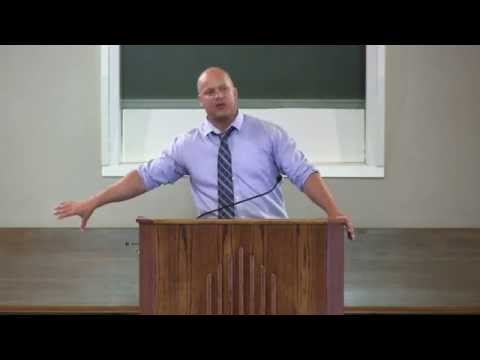
The Prayer of the Early Church, Part 1
Acts 4:24–28 records the early church's response to persecution: a corporate prayer that grounds confidence not in circumstances but in the character of God. The sermon traces three foundations of the congregation's confidence — God as sovereign creator, God as sovereign revelator (particularly through Psalm 2), and God as sovereign predeterminer and governor of all things — showing that the church's unity is a gospel-defined unity, not a generic sociological bond. The exposition presses these truths against fleshly anxiety, open theism, and the therapeutic impulse to find comfort in a God who co-suffers, calling the congregation to bring their petitions to the immutable, impassible God who has decreed all things and governs them for the good of his people.
The Prophet's Lament and the Lord's Answer
Habakkuk's two laments to God — one ethical, one theological — expose the perennial tension between a believer's knowledge of God's holiness and sovereignty and the apparent triumph of wickedness. The first complaint concerns lawlessness rampant in Judah under Jehoiakim; God's answer, that He is raising up the Chaldeans as His instrument of judgment, only deepens the crisis: how can a God of pure eyes employ a nation more wicked than the one He is chastising? The sermon situates these laments historically, traces their covenant-theological logic through Deuteronomy's curse-sanctions, and draws out four applications: godly concern for societal evil, prayer as the primary outlet for that concern, confidence in God's sovereign control, and the doctrinal anchor that the covenant remnant shall not perish.