
Theological term
Depravity
29 sermons · All terms

The Authority of Christ Over the Demons

Matthew 8:28–34 records Christ's encounter with two demon-possessed men whose condition — violence, self-destruction, nakedness, and ceaseless torment among the tombs — exposes the wretchedness of Satan's kingdom and the glamorization of the occult as godless deception. The passage stands within Matthew's sustained demonstration in chapters 8–9 that the same authority with which Christ taught is confirmed in His works: one word, 'Go,' expels a legion. The city's request that Jesus depart reveals that the fear of God drives men either toward Him or away from Him, never to indifference. The sermon closes with the application of 1 Timothy 1:15 — that these two men are exhibit A that Christ Jesus came into the world to save even the chiefest of sinners — and an exhortation to parents to raise children who flee to the cross rather than to self-righteousness or the occult.

The Children of the Devil, Part 1
John 8:37–41 records Jesus systematically dismantling the religious establishment's claim that physical descent from Abraham constitutes spiritual standing before God. Working through the Jews' twofold assertion — that Abraham is their father and, in verse 41, that God is their father — Jesus marshals three evidences that expose the claim as groundless: their murderous intent toward him, their refusal to receive his word, and their rejection of the one he came from. The sermon drives toward the conclusion that membership in the family of God is secured not by race but by grace through faith in Jesus Christ, the promised seed of Genesis 3:15, and calls every hearer to examine whether they have received or rejected that word.

When The Rooster Crows

Peter's three denials of Christ in Mark 14:66–72 expose the depth of the fear of man lodged in every human heart — a fear so strong that one of the Lord's closest disciples crumbled before a servant girl's accusation. The sermon traces the two stages of Peter's denial against the backdrop of Christ's own bold confession before the Sanhedrin, pressing the contrast between the Lord's fidelity and the disciple's cowardice. Yet the controlling note is not condemnation but grace: the risen Christ's two-word restoration in Mark 16:7 — 'and Peter' — demonstrates that denial is not the unforgivable sin, and that God forgives the tears of his people as readily as their formal confessions. Believers are urged to pray now, while things are well, for the strength to stand under pressure, and to marvel at the sovereign mercy that forgives what no man would.

The Judgment Seat of Christ
Matthew 7:21–23 confronts the reader with Christ's own words at the final judgment: 'I never knew you. Depart from me, you who practice lawlessness.' The sermon argues that this passage is not a call to more good works but a stark exposition of the doctrine of justification by faith alone — the false professors are condemned not for lack of works but for resting upon their works as the ground of their acceptance with God. Self-righteousness is identified as a species of lawlessness, as damning as any gross immorality. The believer's only refuge is the doing, dying, and rising of Christ, received by faith alone, and it is to Christ — not to personal performance — that all assurance must be anchored.
Brotherly Love - 1 Peter 1:22-25

What does it mean to love the brethren, and what is the source of that love? Expounding 1 Peter 1:22–25, this sermon works through three interlocking realities: the common Christian experience of soul-purification through Spirit-wrought faith alone, the command to love one another with a fervent, self-sacrificial agape love, and the regenerate new birth through the incorruptible word of God that grounds and generates that love. The exhortation is concrete: foster genuine fellowship, receive as well as give, and resist the tendency to confine brotherly love within the narrow boundaries of denomination, theological system, or Christian liberty — for our identity is in Christ, not in any confessional tradition.

Brotherly Love
What grounds the command to love fellow believers, and what does that love look like in practice? Expounding 1 Peter 1:22–25, this sermon argues that brotherly love among believers is not merely a moral duty but flows necessarily from regeneration — the purification of the soul through faith worked by the Holy Spirit. The sermon carefully distinguishes passive, receiving faith from any works-based or neonomian construal of 'obeying the gospel,' grounding the command to love in the incorruptible seed of the new birth. Application presses toward sincere, unhypocritical, self-sacrificial love that crosses denominational and theological-liberty lines, because the bond of the brethren is founded on the eternal word of God, not on natural or doctrinal affinity.
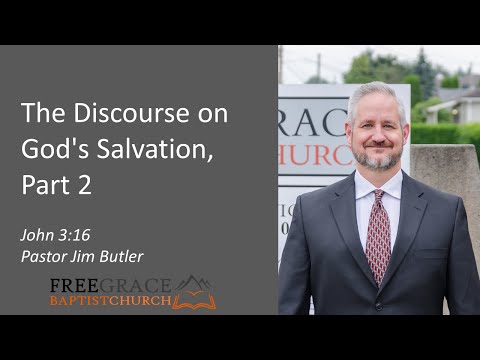
The Discourse on God's Salvation, Part 2
John 3:16 — Luther called it 'the Bible in miniature,' and this exposition treats it as precisely that: a compressed statement of the whole Christian gospel. The sermon moves through three divisions of the verse — the declaration of God's love, the demonstration of that love in the gift of the only begotten Son, and the description of those who receive God's redemptive love through faith. Central to the argument is the insistence that God's love is the source, not the consequence, of the atonement, and that 'the world' in John's vocabulary denotes persons from every tribe and tongue without ethnic distinction, not every individual without exception — a conclusion that grounds particular redemption in the wider theology of John's writings. The sermon closes with a direct appeal to unbelievers: the one way of salvation is to believe on Jesus Christ alone, whose active obedience supplies the righteousness that sinners need and whose substitutionary death removes the condemnation they deserve.

The Ark of God in Philistia
When the Philistines captured the Ark of the Covenant and placed it beside Dagon in his temple, they intended to display Yahweh's subservience to their god — but twice Dagon fell prostrate before the Ark, and on the second occasion his head and hands broke off. This sermon expounds 1 Samuel 5 in two movements: the humiliation of Dagon in his own house (vv. 1–5), and the heavy hand of Yahweh striking Ashdod, Gath, and Ekron with devastating judgment (vv. 6–12). The text teaches both the self-sufficiency and supremacy of God, who needs no one to prop him up, and the inexcusable folly of every form of idolatry — including the subtler, coercive idolatry of seeking to manipulate God for personal comfort that threatens the professing church today.

Genesis 14:1-16
Genesis 14:1–16 presents Abram's military deliverance of his nephew Lot as a showcase of divine providence operating through human means. Though God is not named until Melchizedek's blessing, his sovereign hand is visible in every detail: the abduction that draws Abram onto the world stage, the survival of the messenger, and the victory of 318 servants over a coalition that had crushed five kings. The sermon traces four qualities of Abram's response — immediacy, armament, strategy, and victory — and draws from them the lesson that the sovereignty of God is not a warrant for passivity but the very foundation for the faithful use of means. Lot's progressive entanglement with Sodom warns against decisions that privilege outward advantage over the soul's good, while Abram's refusal of the king of Sodom's goods illustrates dependence on God Most High rather than human patronage.

Livestream - Baptism: Wim Kerkhoff
Acts 8:26–40 records the conversion and baptism of the Ethiopian eunuch, and this exposition sets that account against its Old Testament backdrop in Isaiah 53 and Isaiah 56 to show that what is happening is not merely one man's conversion but the fulfillment of covenant promises: the inclusion of those doubly excluded from the assembly of Israel. The sermon works through three movements — the divine appointment of the contact, the gospel communication beginning from Isaiah 53, and the conversion issuing in immediate baptism upon confession of faith. The central application is that God is characteristically and eagerly a saving God, that believers' baptism follows faith as its ordained external sign, and that no sinner — whether powerful or poor, crisis-converted or quietly brought to faith — is beyond the reach of sovereign grace.

The Denial of the Resurrection
Matthew 28:11–15 records not only the resurrection of Christ but the immediate counter-offensive mounted by the chief priests and elders to suppress the fact of the empty tomb. Against the backdrop of the Great Commission in verses 16–20, these verses expose a counter-mission: a bribed, fabricated narrative designed to replace the truth of the resurrection with the stolen-body theory. The sermon examines the soldiers' report to the chief priests, the wickedness and implausibility of the lie they were paid to spread, and the theological reasons — including divine judicial hardening — that such a falsehood gained traction in first-century Judea. The application presses every believer to be armed to defend the resurrection and to rest the whole of their justification on faith in the risen Christ alone.

The Righteousness of David
Romans 4:5–8 announces that God justifies the ungodly, and the Apostle Paul calls David as a witness to that doctrine. This sermon works through the theology of David in 2 Samuel 22, Psalms 2, 18, 32, 51, 110, and 130 to show that David's celebrated righteousness is not his own moral achievement but the imputed righteousness of Christ, received by faith. David's recognition of his own sin, his understanding of atonement, his grasp of the doctrine of imputation, and his personal faith in the coming Messiah together resolve the apparent tension between his notorious moral failures and his claim to cleanness of hands. The sermon calls hearers to approach the Lord's Supper not in mere introspection over sin but in joyful confidence in the righteousness of David's greater Son.
1 Kings 14:21 - 15:24
The books of Kings and Chronicles present the reigns of Rehoboam, Abijam, and Asa in the southern kingdom not as mere political history but as theological testimony to the universal depravity of the covenant people and the sovereign faithfulness of God to the Davidic covenant. Both north and south are shown to have plunged into idolatry and its attendant wickedness, echoing the progression Paul traces in Romans 1 from the exchange of God's glory for idols to moral collapse and divine judgment. Asa stands as a partial exception — a reformer compared favorably to David — yet his reliance on Syrian military alliance rather than on Yahweh exposes the persistent weakness of even the best of David's sons. The passage ultimately directs the reader to David's greater Son, in whom the lamp promised to Jerusalem is eternally secured.
2 Samuel 13:1-22
The rape of Tamar by her half-brother Amnon (2 Samuel 13:1–22) is examined as the beginning of God's covenantal judgment on David's house, fulfilling the word of Nathan the prophet in 2 Samuel 12. Before entering the narrative, the study clears apparent contradictions in the Mosaic legislation on rape and incest (Deuteronomy 22; Leviticus 18; 20), demonstrating that the Pentateuch treats rape as equivalent in gravity to murder and that the disputed passage in Deuteronomy 28–29 describes consensual seduction, not rape. The passage is then worked through under four headings — Amnon's lust, Jonadab's counsel, the act itself, and its aftermath — with sustained attention to what each character reveals about the nature of sin, the failure of justice, and the sovereignty of God even in sordid judgment.

The Practice of Family Worship
God commands parents to instruct their children in His Word — not occasionally, but diligently, formally and informally, in every setting of daily life. This sermon surveys the biblical warrant for family worship across both Testaments, from God's covenantal purpose for Abraham in Genesis 18 through Paul's charge to fathers in Ephesians 6, establishing that the propagation of biblical religion through the home is not optional but normative for the covenant community. The elements of family worship are then treated in order: commitment to public worship as the irreducible foundation, the sanctification of the Lord's Day, the use of the family altar (including psalm-singing, prayer, Scripture reading, and catechism), and the usefulness of historic creeds and confessions. The sermon closes with a direct charge to recognize the importance of family worship, implement it without delay, and persevere in it as a primary means of evangelism toward one's own children.

"The Instruction on Riches and Rewards" - July 12, 2015 AM
Matthew 19:23–30 presents Christ's instruction on the spiritual dangers of wealth, the impossibility of self-salvation, and the gracious recompense awaiting those who follow him. Working through three movements — the commentary on riches, the question of salvation, and the instruction concerning rewards — the sermon argues that riches (and by extension every besetting sin) render men spiritually helpless apart from sovereign, effectual grace. The sermon closes with both a gospel call to the unconverted and a sober exhortation to believers: no one who follows Christ will ever be a loser for it, because eternal life and the hundredfold recompense of the messianic community are the portion of all who believe.

The Book of Ruth and the Incarnation, Part 2
Ruth 3 presents the plan of redemption as Naomi instructs Ruth to appeal to the kinsman-redeemer Boaz, prefiguring the willingness of Christ to secure the salvation of His people at any cost. The institution of the goel — the near kinsman responsible for redeeming distressed relatives — illuminates both the legal and covenantal framework within which Boaz acts and within which the incarnate Son of God acts on behalf of guilty sinners. God's sovereign providence, not circumstance or human ingenuity, orchestrates every detail in the story of Ruth toward the birth of the Messiah in Bethlehem. Sinners who recognize their need of redemption are called to look to Christ — the willing Redeemer — who came in the fullness of time to save His people from their sins.
Judges 1:1-2:6
Israel's incomplete conquest of Canaan in Judges 1:1–2:6 is not merely a military record but a theological indictment: tribe after tribe's failure to dispossess the Canaanites constitutes deliberate covenant disobedience, setting the stage for the religious apostasy that dominates the rest of the book. The passage moves from the early promise of Judah's Spirit-directed campaigns to the progressive pessimism of the northern tribes, culminating in the angel of the Lord's covenant lawsuit at Bokim. What the people needed was not emotional remorse — they wept and sacrificed — but genuine repentance that destroyed the altars and drove out the corrupting presence. The application presses upon New Covenant believers that unresolved indwelling sin — the Puritans' 'remaining Canaanites' — is never a minor matter, and that partial obedience to God's commands inevitably opens the door to spiritual ruin.
The Parable of the Sower Stated
Matthew 13:1–17 presents the parable of the sower and Christ's explanation of why he teaches in parables. The sermon works through two sections: the parable itself (vv. 1–9), exposing four types of hearers — hardened, shallow, crowded, and fruitful — and the purpose of parabolic teaching (vv. 10–17), which is both to reveal kingdom mysteries to the converted and to conceal them from the unconverted by divine design. The two-fold purpose of parables is grounded in sovereign election, drawing on Isaiah 6:9–10 and the language of Matthew 11:25–27, pressing hearers to examine whether they are genuinely receptive soil and to submit to the Godhood of God rather than resist his sovereign purposes in grace.
The Manger's Heavenly Guest

Luke 2:1–14 presents the incarnation of the Lord Jesus Christ not as myth or allegory but as verifiable, prophecy-fulfilling history. The sermon works through four headings: the fact of the incarnation (its straightforward, openly disclosed, prophetically saturated character), the humility of the incarnation (God taking on humanity in an inglorious condition, pointing toward the cross), the message of the incarnation (good tidings of a Savior delivered to unpolished shepherds by divine kindness), and the hymn of the incarnation (the angelic doxology ascribing all glory to God and proclaiming peace to those who receive Christ). Hearers are pressed to follow the trajectory of Christmas not to a sentimental infant but to a crucified, risen, and ascended Savior, and those who reject Him are warned of judgment to come.
The Compassion of Christ
Matthew 9:35–38 forms a transitional bridge between Christ's authoritative words and deeds in chapters 5–9 and the commissioning of the Twelve in chapter 10. The sermon traces three elements: a summary of Christ's threefold ministry of teaching, preaching, and healing; the compassion Christ feels toward multitudes who are harassed and scattered like sheep without a shepherd — a compassion rooted not primarily in their physical distress but in their doctrinal deprivation; and Christ's instruction to pray the Lord of the harvest to raise up gospel laborers. Sovereign grace does not extinguish compassion for the lost but rather grounds it, and the church's first response to a harvest that is plentiful and laborers that are few is prayer aligned with the God-ward petitions of the Lord's Prayer.
The Prevention of Judgmentalism
Matthew 7:1–5 forbids not all judicial discernment but the petty, fault-finding, hypocritical spirit that condemns the speck in a brother's eye while ignoring the plank in one's own. This sermon, the evening complement to a morning exposition of the same passage, turns from diagnosis to remedy, working through seven biblical means by which Christians may actively resist a censorious spirit. The prevention runs from the internal (Spirit-filling, humility, a sober doctrine of sin) to the relational (charity, esteem for the brethren, continual recourse to Christ and his gospel), and the whole is anchored in the recognition that perfection in this duty awaits glory.
The Parent/Child Relationship
Colossians 3:20–21 addresses both children and fathers as morally responsible members of the household of faith, calling each to a distinct duty within the domestic sphere. Children are commanded to obey their parents in all things — a command grounded in the moral law written at creation, codified in the Fifth Commandment, and motivated by the pleasure of Christ. Fathers are warned against provoking their children to discouragement, and are exhorted positively — drawing on Ephesians 6:4 — to nourish, instruct, and discipline with love, consistency, and dependence upon God. The sermon presses both charges as inseparable from the new life described throughout Colossians 3: orthodoxy must issue in orthopraxy, beginning in the home.
The Baptisms of Jesus Christ
The baptism of Jesus in Matthew 3 and his self-description of an impending 'baptism' in Matthew 20 are not merely biographical episodes — together they map directly onto the two elements every sinner requires for justification before God. Christ's water baptism inaugurates his active obedience, his public commitment to fulfill all righteousness in the place of his people; his baptism unto death at Calvary discharges the passive obedience that satisfies the wrath of God due to sinners. The sermon shows that the believer's baptism is therefore a means of grace that proclaims both the imputed righteousness of Christ and his substitutionary curse-bearing, and concludes with a direct call to trust the only Savior who is sufficient for real sinners.
The Historical Veracity of the Resurrection
The bodily resurrection of Jesus Christ is not a peripheral doctrine but the vital, non-negotiable centre of Christian faith and proclamation. This exposition of Matthew 28 examines the historical veracity of the resurrection through three general arguments — the character of Scripture as inspired and inerrant, the straightforward historical precision of the Gospel accounts, and the authors' own stated commitment to eyewitness certainty — followed by two specific evidences: the empty tomb and the post-crucifixion appearances of Christ. The sermon applies these evidences to call believers to find their chief comfort not in self-examination or works but in the crucified and risen Savior, and to call unbelievers to bow the knee to the risen King who alone saves sinners from their sins.
Biblical Womanhood in the Book of Proverbs, Part 2
Proverbs 31:10–31 presents the biblical mother not merely as a domestic figure but as a person of God-given influence, authority, and weighty responsibility. This expository treatment draws on the wider Proverbs corpus, the fifth commandment, and the Pauline household codes to argue that a Christian mother shapes her children through instruction, example, discipline, and love — all four of which are expressions of biblical obedience rather than sentiment. The sermon closes with a gospel-grounded application: the mother's standing before God rests on the finished work of Christ, which is precisely what frees her to pursue this calling faithfully and to repent when she falls short.
The Cleansing of Joshua
Zechariah 3 presents a fourth night vision in which Joshua the high priest stands before God clothed in filth — a vivid picture of human depravity and covenantal guilt — while Satan stands ready to accuse. God rebukes the accuser on the grounds of sovereign election and acts unilaterally to remove the filthy garments and clothe Joshua in festal robes, a scene the Westminster Shorter Catechism's definition of justification precisely captures: God pardons all sin and accepts the sinner as righteous solely for the righteousness of Christ imputed and received by faith alone. The vision then points forward to 'the Branch,' God's servant who would remove the iniquity of the land in a single day — a reference ultimately fulfilled in the death and resurrection of Christ. The passage calls both the unconverted to look to Christ for the removal of their filth and the believer to rest in the intercession of their advocate before the Father.
A Spiritual Inventory
First Corinthians 1:30–31 presents Christ as the believer's wisdom, righteousness, sanctification, and redemption — a fourfold treasure that Paul sets against the competing philosophies and worldviews of his day. The source of every gospel blessing is God alone: 'of him you are in Christ Jesus,' which excludes every ground of human boasting and demands a radical humility before the triune God. Justification is not a moral improvement but a legal imputation of Christ's perfect righteousness to the believer's account, and sanctification is equally a work of Christ's power, not the believer's unaided effort. The goal of this entire arrangement is the glory of God, so that all boasting is directed to the Lord alone.
Of Pigheadedness, Babylonians, and Covenant Enforcement
Jeremiah 6 presents Yahweh's announcement of the Babylonian invasion of Judah as an act of righteous covenant enforcement — not political misfortune, but the outworking of the curses sworn in Leviticus 26 and Deuteronomy 28 against a people who had broken covenant. The sermon traces Judah's obstinate refusal to be instructed: their ears were uncircumcised, they suppressed the truth in unrighteousness, and their false prophets declared peace where there was none. Against this backdrop of divine justice and human pigheadedness, the sermon points to the necessity of sovereign grace and the new covenant promise of a Lord of righteousness who would come to accomplish what Judah could not — the redemption of guilty sinners through substitutionary sacrifice.