
Theological term
Decalogue
115 sermons · All terms
Laws Concerning Homicide and Witnesses

Deuteronomy 19 applies three commandments of the Decalogue to the concrete conditions of civil life in Old Covenant Israel: the sixth commandment through legislation on cities of refuge distinguishing accidental homicide from murder, the eighth commandment through the prohibition on moving property landmarks, and the ninth commandment through the law of witnesses and its penalties for perjury. The sermon examines the distinction between manslaughter and premeditated murder, the role of the avenger of blood, the lex talionis as a limiting and proportional principle, and the blood-guiltiness that falls on a nation that fails to execute justice. The overarching application is that these laws reveal the sanctity of human life, the justice of God in civil society, and the sinfulness that made such detailed legislation necessary — all of which drives the hearer to the new covenant, in which Christ alone kept what Israel could not.

The Goodness of God's Law
The law of God is good — but only when used lawfully. Expounding 1 Timothy 1:8–11, this sermon defends the goodness of the moral law against both antinomian dismissal and legalistic distortion, situating Paul's argument within the classical Reformed framework of the law's three uses: civil, pedagogical, and normative. The false teachers in Ephesus had neither understood the law nor handled it properly, and Paul's corrective is not to demote the law but to demonstrate its proper function — restraining lawlessness in society, exposing the sinner's need for Christ, and directing the justified believer in the path of sanctification.

CTF 2026 - Dr Richard Barcellos Book Presentation - A Faithful Steward
At a seminary conference, colleagues and friends present Dr. Richard Barcellos with a festschrift titled 'A Faithful Steward,' compiled in his honor. The presentation draws on 1 Corinthians 4:2 — 'it is required of stewards that they be found faithful' — as the governing theme of his decades of ministry in preaching, writing, and theological education. John Gill's exposition of that verse is read as a description of Barcellos's own ministry: preaching the pure gospel without human mixture, declaring the whole counsel of God, seeking the honor of Christ rather than the applause of men.

Life in the Wilderness and Canaan
Deuteronomy 8 sets the wilderness generation of Israel before the land of Canaan with a threefold movement: a reminder of God's providential humbling in the wilderness (vv. 1–5), a promise of abundant blessing in the land (vv. 6–10), and a solemn warning against the pride and forgetfulness that prosperity tends to generate (vv. 11–20). The wilderness was not divine cruelty but divine chastening — designed to produce dependence on God rather than self-sufficiency — a pattern the New Testament applies both to the believer's ongoing trials and to the person of Christ, who as the true Israel recapitulates the exodus, wilderness, and restoration that old covenant Israel failed to embody faithfully. The sermon closes by calling hearers to combat forgetfulness of God through regular remembrance of his word, his covenant, and his redemptive acts, recognising that the danger is never prosperity itself but the pride that severs gratitude from grace.

The Ratification of the Old Covenant
Exodus 24:1–8 records the ratification of the Old Covenant at Sinai through blood sacrifice, a mediator, and the sworn fidelity of the people — all of which anticipate and are surpassed by the New Covenant inaugurated in the blood of the Lord Jesus Christ. The Old Covenant is identified not as an administration of the covenant of grace but as a covenant of works, in which Israel's standing depended upon their own obedience: 'all that the Lord has commanded we will do.' The New Covenant contrasts sharply: Christ, the true Israel of God, fulfills every covenantal obligation in the place of his people, so that the ground of the believer's standing before God is not their performance but his finished work. The sermon closes with a practical call to live at the foot of Calvary rather than at the foot of Sinai, resisting the legal temptation to ground either justification or sanctification in personal obedience.

The Conclusion of the Decalogue
Deuteronomy 5:22–33 records Moses rehearsing the original giving of the law at Sinai, and this exposition draws out the divine origin, authority, comprehensiveness, finality, and permanence of the Decalogue as the trans-covenantal moral law of God binding on all men in every age. The threefold use of the law — civil, pedagogical, and normative — is traced through the New Covenant, with the imputed righteousness of Christ received by faith as the only ground of justification. The people's terror at the theophany on Sinai is commended as the proper response to God's majesty, and the sermon presses the distinction between slavish fear that flees from God and filial fear that flees to Him, urging the congregation to recover a robust doctrine of divine transcendence in their worship.

The Tenth Commandment
The Tenth Commandment's prohibition against coveting addresses not the external act but the internal disposition of the heart, making it the capstone over all the other commandments. Covetousness — the inordinate desire for anything belonging to one's neighbor — is at root an act of discontentedness with God's sovereign allotment and a form of idolatry, placing the creature above the Creator. The sermon works through the threefold use of the moral law: its civil function, its pedagogical role in driving sinners to the cross, and its normative function in calling the redeemed to diligent watchfulness over heart and soul.

The Ninth Commandment
The Ninth Commandment — 'You shall not bear false witness against your neighbor' (Deuteronomy 5:20) — addresses first and foremost the crime of perjury in a judicial context, then extends by implication to every form of falsehood: lying, slander, backbiting, gossip, and tailbearing. Working through Deuteronomy 19:15–21, the study examines the biblical lex talionis applied to false witnesses, where the perjurer receives the same penalty he sought to bring upon the accused, and draws out the retributive and deterrent logic of Old Covenant judicial law. The positive requirement of the commandment — the sanctity of truth in all areas of life — is traced through Leviticus 19, Proverbs, Romans 1, and the Westminster Larger Catechism's exhaustive treatment of sins against the ninth commandment. Hearers are called to active and passive faithfulness: neither speaking falsehood nor lending an ear to those who do.

8th Commandment: Part 2; Deuteronomy 5:19
The eighth commandment — 'You shall not steal' — carries not only a prohibition but a positive demand: diligent labor, charitable love toward others, and biblical contentment. Drawing from Deuteronomy, Proverbs, and the New Testament epistles, this exposition moves from the reasons grounding the command (God's sovereignty, man's image-bearing dignity, and the indirect assault on human life that theft represents) to its constructive obligations. The sermon closes with an application of the law's three uses — civil, pedagogical, and normative — including a pointed treatment of government taxation in light of 1 Samuel 8, where God warned that unchecked rulers will 'take, take, take.'

The Eighth Commandment (Part 1)
The Eighth Commandment — 'You shall not steal' (Deuteronomy 5:19) — forbids far more than simple theft. This study works through the range of sins prohibited by the command, including burglary, robbery, kidnapping, fraud in its several forms, extortion, destruction of property, and religious theft. The internal dispositions that generate these external acts — covetousness, discontentment, and the idolatry of wealth — are examined through texts in Proverbs, 1 Timothy 6, and Matthew 6. The study closes by grounding the positive duty of honest labor and cheerful giving in the grace of the gospel, through which believers are freed from the dominion of covetousness and equipped to honor God with what He has entrusted to them.

The Seventh Commandment, Part 3
Deuteronomy 5:18 forbids adultery, but the scope of the Seventh Commandment extends to every form of sexual disorder — from fornication and homosexuality to the surging contemporary phenomenon of transgenderism. Drawing on the Westminster Larger Catechism questions 138 and 139, this study moves from the commandment's prohibitions to its positive duties: the preservation of chastity, watchfulness over the senses, the practice of temperance, the pursuit of biblical marriage, diligence in one's calling, and the rejection of all occasions of uncleanness. The three uses of the law — civil, pedagogical, and normative — frame the closing application: the law exposes the corruption of the heart, drives the sinner to the imputed righteousness of Christ, and then regulates the redeemed life.

The Seventh Commandment, Part 2
The seventh commandment's prohibition against adultery extends, by the interpretive principle of the Decalogue, to every form of sexual sin Scripture addresses. This study works through homosexuality, bestiality, unlawful divorce, immodesty, polygamy, prostitution, and lust — demonstrating from the Old and New Testaments that each represents a violation of God's creation ordinance for marriage. The study closes with the recognition that the law's exposure of sexual sin drives the believer back to the cross, where the imputed righteousness of Christ and free and sovereign grace provide both forgiveness and the motive for sanctification.

The Seventh Commandment, Part 1
The seventh commandment — 'You shall not commit adultery' (Deuteronomy 5:18) — presupposes and protects the divinely ordained institution of marriage, which Scripture grounds in three purposes: the mutual help of husband and wife, the increase of mankind through procreation, and the prevention of uncleanness. This study examines the basis of the commandment in the creation ordinance of Genesis 2, the law of God in the Decalogue and apostolic teaching, and the sanctions attached to its violation in Leviticus and Proverbs. The prohibition extends beyond adultery to fornication, incest, rape, and related sexual sins, with particular attention given to the difficult case legislation of Deuteronomy 22 and the critical difference between seduction and rape in that text.
The Sixth Commandment, Part 3
The sixth commandment, 'You shall not murder' (Deuteronomy 5:17), prohibits unlawful killing with premeditation and malice, but the Bible distinguishes murder from lawful taking of life in capital punishment, self-defense, and just war. This study works through the Old Testament legal framework for self-defense, particularly Exodus 22:2–3, alongside several narrative examples, to establish that defensive homicide is not forbidden by Scripture. The teaching of Jesus in Matthew 5:38–42 is examined carefully to show that the Sermon on the Mount addresses personal, interpersonal ethics — not a universal prohibition on self-defense — and that Jesus himself assumes people will protect themselves and others. The study concludes with a call to think with biblical clarity on these matters in an age of muddled Christian ethics.

The 5th Commandment
The fifth commandment — 'Honor your father and your mother' (Deuteronomy 5:16) — demands far more than a recipe for happy families; it is a covenantal obligation rooted in God's own authority and binding on every generation. This study examines the command under three heads: its explanation (the Hebrew word for 'honor' connoting weightiness and reverence), its scope (extending beyond the family to all superior-inferior relationships in church, workplace, and commonwealth), and its sanction (from the rod of correction in Proverbs to the capital sentence of Deuteronomy 21). The promise appended to the command — long life and general wellbeing — is understood as a principle of divine providence, not an absolute guarantee, and the study closes with the duty of superiors to govern those beneath them in a godly and nurturing way.
The Fourth Commandment, Part 3
Hebrews 4:9's use of the word 'Sabbatismos' — Sabbath-keeping as a practice to be observed — anchors the argument that a weekly Sabbath rest remains binding on the New Covenant people of God. The sermon traces the theological rationale for the day-change from Saturday to Sunday through the resurrection of Christ, arguing that the Son's rest from the work of new creation mirrors the Father's rest from the work of creation. Three alleged anti-Sabbatarian texts — Romans 14, Galatians 4, and Colossians 2 — are examined in turn and shown to address Jewish ceremonial calendar observances, not the moral fourth commandment. The burden of proof, the speaker argues, lies with those who would remove one commandment from the Decalogue, not with those who keep all ten intact.

2LCF Chapter 22 - Of Religious Worship and the Sabbath Day, Part 1
The abiding validity of the Fourth Commandment is defended through a biblical theology of the Sabbath that traces the institution from creation through the old covenant. The sermon argues that Sabbath rest is grounded not in the Mosaic economy alone but in the creation ordinance of Genesis 2 and the redemption of Exodus, making it binding upon all humanity — not Jews only — as Christ himself teaches in Mark 2:27. The positive and moral character of the commandment is distinguished from its ceremonial and positive elements, with the day change to the Lord's Day deferred to the following session. Hearers are called to receive the Sabbath as the gift it is declared to be in Isaiah 58, not as a Judaizing imposition.

The First Commandment
Deuteronomy 5:7 — 'You shall have no other gods before me' — is the foundation of covenant loyalty, defining not only who the one true God is but what response He demands from His people. This study works through the prohibition against other gods (atheism, polytheism, syncretism, sorcery, heresy, and creature-worship) before turning to the positive duties the commandment requires: knowing God, loving Him, fearing Him, obeying Him, trusting Him, and worshipping Him on His own terms. The first commandment is not merely theological orthodoxy but a call to total, exclusive, and practical devotion to Yahweh — a devotion made possible only by the grace that plants His fear in the heart.

The Introduction to the Ten Commandments
The Ten Commandments stand apart from all other Mosaic legislation as the moral law of God — written by God himself on two tablets of stone, binding on all humanity in every age, and distinct from the ceremonial and judicial laws that have either been fulfilled in Christ or expired with the Old Covenant commonwealth. This study works through the introduction to the Decalogue in Deuteronomy 5, establishes the threefold division of the law, and then traces the threefold use of the moral law: its civil function as a restraint on sin in society, its pedagogical function in driving sinners to Christ, and its normative function as the pattern for the believer's sanctification. Four classical principles for interpreting the commandments are introduced to guide the series ahead, drawn from the Westminster Larger Catechism and Reformed exegetical tradition.

The Preface to the Ten Commandments
Deuteronomy 5:1–6 opens the Ten Commandments not with a command but with a declaration of divine redemption — 'I am the Lord your God, who brought you out of the land of Egypt, out of the house of bondage.' This study works through the summons to covenant obedience, the grace-grounded preface to the Decalogue, and the uniqueness of the moral law as trans-covenantal and abiding. The threefold division of the law — moral, ceremonial, and judicial — is examined through the confession, the prophets, the Gospels, and the epistles, equipping believers to distinguish what abides in the new covenant from what was fulfilled and abrogated in Christ.

The Necessity of Faithful Obedience
Deuteronomy 4 closes Moses' historical prologue with an urgent exhortation to the second generation of Israel on the necessity of faithful covenant obedience before crossing the Jordan. The chapter's three movements — the necessity of obedience (vv. 1–8), the dangers of idolatry (vv. 9–31), and the incomparability of Israel's God (vv. 32–40) — are treated as an impassioned speech by a man who lived the history he recounts. Scripture's sufficiency is defended against every form of addition or subtraction, and the regulative principle of worship is grounded in God's self-revelation at Sinai as a consuming fire who receives no image.

Ask FGBC #12: Can I apply Old Testament promises to my life?
The question of whether Old Testament promises — such as Jeremiah 29:11 — can be applied by Christians today requires careful attention to covenantal epochs, the progress of revelation, and the organic unity of Scripture. The discussion distinguishes between positive laws tied to Israel's tenure in the land, moral principles embedded within those laws that endure, and the climactic focus of all Scripture on the incarnation, sufferings, and glory of Christ (Galatians 4:4). The Old Testament is affirmed as the Christian's book, but application must reckon with the difference between Old Covenant and New Covenant rather than collapsing that distinction into a flat one-for-one transference. Faithful reading looks first for something larger than the reader — the mediator of salvation — and from that vantage point finds genuine ground for hope and doxology.

The Love of Christ and Love to One Another, Part 2
John 15:12–17 presents Christ's command that His disciples love one another as He has loved them — self-sacrificially, constantly, and toward sinners undeserving of that love. The sermon works through four elements of the passage: the command to love as a summarizing and comprehensive statement of the second table of the law, the pattern of self-sacrificial love set by Christ's laying down His life, the privilege of friendship with Christ rooted not in conditional obedience but in sovereign grace and divine revelation, and the reminder that election humbles pride and equips disciples for fruitful, costly mission in a world that hates Christ. The application presses believers to love one another with a love that does not wait for the beloved to merit it, and points the unconverted to the imputed righteousness of Christ received by faith alone as the only ground of acceptance before God.

Paul in Athens
Paul's encounter with the philosophers and council of Athens in Acts 17:16–34 exposes the persistent and universal nature of idolatry, the sufficiency of general revelation to render all men without excuse, and the necessity of special revelation for salvation. The sermon traces Paul's Mars Hill address to show how the apostle grounds his proclamation in the doctrines of creation, providence, and divine aseity before pressing the call to repentance and warning of coming judgment. Where idolatry blurs the Creator-creature distinction, the gospel restores it — and the varied responses of the Athenians (mockery, curiosity, and saving faith) remind the church that conversion belongs to the Spirit of God, not to the eloquence of the preacher.

The Regulation of the Church's Worship, Part 2
What right does a congregation have to alter, add to, or subtract from the worship God has ordained for His house? Expounding 1 Timothy 3:14–16, this sermon establishes that Paul's instructions carry divine necessity — the church is the house of God, the pillar and ground of the truth, governed by Christ its head — and that the church's common confession centres on the person and work of the Lord Jesus Christ: His incarnation, vindication, proclamation, and the faith He sovereignly produces in the world. The regulative principle of worship follows directly: only what God commands in Holy Scripture is acceptable worship, a principle demonstrated from the Decalogue, Deuteronomy 12:32, Leviticus 10, 1 Samuel 13, and Hebrews 12, and confessionally formulated in chapter 22 of the 1689 London Baptist Confession of Faith.
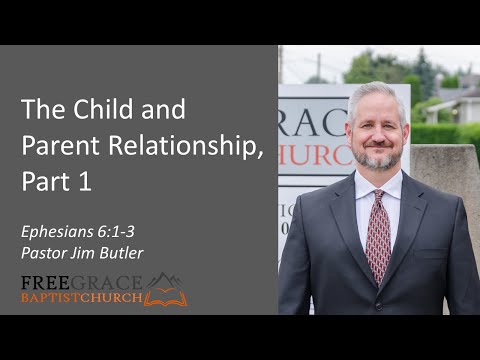
The Child and Parent Relationship, Part 1
Ephesians 6:1–3 addresses children directly within the gathered congregation, a detail that itself carries ecclesiological weight: Paul assumes children are present under the preaching of the Word, not segregated from it. The sermon works through two movements — the rightness of obedience grounded in the light of nature and created order, and the requirement of God's law grounded in the fifth commandment (Exodus 20:12; Deuteronomy 5:16), which Paul universalizes from Old Covenant Israel to Gentile children in Ephesus and, by extension, to every generation. The three uses of the law are carefully distinguished: the law cannot justify, but it restrains, reveals sin and the need for Christ, and then normatively patterns the sanctified life of the believer. Children are urged to search their hearts, see their failure to honor and obey, and flee to Christ for the righteousness they lack.

The Transition from Darkness to Life, Part 2
Ephesians 5:8–14 calls blood-bought believers to walk as children of light because they have been transferred out of darkness, not merely instructed to avoid it. The sermon traces the Pauline pattern of indicative preceding imperative: the cross does not follow obedience as its reward but precedes and enables it as its ground. The fruit of the light — goodness, righteousness, and truth — is the positive obligation of the justified, while the unfruitful works of darkness are to be actively exposed through the proclamation of God's law and gospel, with the certain confidence that Christ himself guarantees the triumph of that light.

The Conduct of the New Man, Part 1
Ephesians 4:25–28 grounds the Christian's ethical conduct not in legal compulsion but in the indicative of redemption: the old man has been put off, the mind is being renewed, and the new man has been put on. This sermon works through three prohibited actions — lying, sinful anger, and theft — each examined under its corresponding commandment from the Decalogue (the Ninth, Sixth, and Eighth), with a prohibition, an exhortation, and a motivation for each. The ethical demands of the New Covenant are not a new law but the restoration of the creational law now internalized by the Spirit according to Jeremiah 31:31–34. The hearer is called to put off deceit, guard against nursed anger that gives opportunity to the devil, and replace theft with diligent labor aimed at charitable surplus.

Renewal of the Covenant, Part II
Exodus 34:10–35 records God's renewal of the Mosaic covenant with Israel following the golden calf apostasy of chapter 32. The passage demonstrates that the divine attributes proclaimed in verses 6–7 — mercy, grace, long-suffering, and abounding goodness — are not merely stated but actively exhibited in God's willingness to restore a covenant his people had shattered. The sermon works through three sections: the covenant renewed (vv. 10–28), with its prohibitions against religious, social, and political alliances with Canaanite nations; and the reflection of God's glory on Moses' face (vv. 29–35), which Paul's argument in 2 Corinthians 3 sets within the larger framework of old covenant and new covenant glory. The central application is that the same perfections God displayed toward covenant-breaking Israel are the perfections believers now experience in the gospel of the Lord Jesus Christ, whose new covenant ministry of righteousness far exceeds the fading glory of Moses.

The Renewal of God's Covenant, Part 1
Exodus 34:1–9 records the renewal of the Mosaic covenant following Israel's catastrophic idolatry with the golden calf, and the chapter's theological heart is God's self-proclamation of His own glory to Moses on Sinai. The sermon works through three movements in verses 1–9: the command to cut new tablets as a covenant-renewal symbol, the descent of God in the cloud, and God's proclamation of His own name — a compendium of divine perfections stretching from mercy and grace through long-suffering, goodness, truth, and covenant faithfulness to justice and righteousness. These attributes are traced across the canon from the Psalms and the prophets to their fulfillment in the high-priestly work of Christ, who makes definite propitiation for the sins of His people. Moses' response — immediate worship followed by intercessory prayer grounded in the very perfections God had just declared — is held out as the model for the believer's own approach to God.