
Theological term
Covenant of Grace
848 sermons · All terms

2LCF Chapter 2 - Of God and of the Holy Trinity, Part 1

Eternal life consists in knowing the only true God and Jesus Christ whom he has sent (John 17:3), which means the knowledge of God is not optional for Christians but is the very substance of their salvation. This session opens a multi-week confession study of 2LCF Chapter 2 (Of God and of the Holy Trinity) by establishing what theology proper is — the study of the being, attributes, and works of the triune God — and why it is primary: it is grounded in God's creative purpose, commanded in Scripture, promised in the New Covenant (Jeremiah 31:31-34), and urgently needed in the face of false religion and bad theology. Six preliminary interpretive helps are then introduced to prepare the mind for rigorous and reverent engagement with the doctrine of God, including the necessity of recognising the ontological chasm between Creator and creature, God's revelatory condescension, and the joint propriety of affirmations and denials.

The Installation of the Priesthood

Leviticus 8–10 records the ordination, ministry, and judgment of Israel's priesthood, tracing the way sinful man may approach a thrice-holy God through divinely prescribed sacrifice. The death of Nadab and Abihu for offering that which the Lord had not commanded warns that worship is regulated by God alone, not by the worshiper's innovation. Christ fulfills every type embedded in this system — as the holy, harmless, and undefiled High Priest who satisfies divine justice once for all. The sermon calls new-covenant worshipers to approach the Lord's Supper with the same reverence and eager joy that the priestly fire of Leviticus 9 ought to have kindled.

Jesus is Glad When Sinners Believe
John 11:15 records Jesus saying 'I am glad' — a statement that could sound troubling without understanding his purpose. This clip from a sermon on John 11 presses the question: what makes Jesus glad? The answer confronts hyper-Calvinist distortions of the gospel and affirms that Christ's gladness is bound up in sinners believing on him, a thread running from Genesis to Revelation across every tribe, tongue, people, and nation.

The Burnt Offering
Leviticus 1 presents the burnt offering as the paradigmatic Old Covenant sacrifice, establishing the pattern of how sinful man may approach a holy God. The chapter addresses the costliness of sacrifice, the worshiper's heart disposition, the laying on of hands as substitutionary transference, and the meaning of atonement as the satisfaction of divine justice. The New Testament interprets this system typologically: the male without blemish, the substitutionary slaughter, and the sweet aroma of acceptance all prefigure the penal substitutionary atonement of the Lord Jesus Christ. Believers are called to read the Old Testament as a Christ-centered book and to worship God only in the manner He has prescribed.

The Royal Wedding
Psalm 45 presents a royal wedding between the divine King and his bride, the church, composed centuries before the incarnation as a song of love pointing directly to the Lord Jesus Christ. The sermon moves through four sections: the psalmist's overflowing intention, the perfections and divine-human person of the King, the instruction to the bride concerning faith and repentance, and the declaration of the King's eternal glory. Christ is shown to be fairer than all the sons of men, advancing his kingdom through truth, humility, and righteousness rather than deception, while his priestly office — not only his kingly conquest — is pressed upon the hearer as the only ground of hope for sinners. The bride is clothed not in her own righteousness but in the imputed righteousness of Christ, received by faith alone, to be brought with gladness into the King's palace.

Introduction to the Book of Leviticus
The book of Leviticus resolves a theological tension created at the close of Exodus: the tabernacle has become God's dwelling place, but no Israelite — not even Moses — can enter it. This introductory exposition surveys Leviticus 1:1 and the book as a whole, tracing three dominant theological themes: the holiness of God, the sacrificial system as God's own provision for sinful man's access to His presence, and the purity required of His covenant people. The Levitical types find their antitypes in the Lord Jesus Christ, who is simultaneously the high priest and the sacrificial victim, and whose atoning work is the substance toward which the entire ceremonial law pointed.

The Righteous Reign of the Son of God
Psalm 2 presents the righteous reign of the Son of God against the backdrop of universal human rebellion. The nations rage, the kings conspire, and the political class unites in mutiny against Yahweh and His anointed — yet God laughs from the heavens, installs His Son on Zion, and promises Him the nations as His inheritance. The decree announced in verses 7–9 is rooted in the covenant of redemption: the Father gives a great multitude to the Son, who accomplishes their salvation through substitutionary obedience, death, and resurrection, and is then exalted to universal messianic kingship. The psalm closes with an evangelistic summons: be wise, serve the Lord with fear, and kiss the Son — for blessed are all those who put their trust in Him.

The Conduct of the New Man, Part 1
Ephesians 4:25–28 grounds the Christian's ethical conduct not in legal compulsion but in the indicative of redemption: the old man has been put off, the mind is being renewed, and the new man has been put on. This sermon works through three prohibited actions — lying, sinful anger, and theft — each examined under its corresponding commandment from the Decalogue (the Ninth, Sixth, and Eighth), with a prohibition, an exhortation, and a motivation for each. The ethical demands of the New Covenant are not a new law but the restoration of the creational law now internalized by the Spirit according to Jeremiah 31:31–34. The hearer is called to put off deceit, guard against nursed anger that gives opportunity to the devil, and replace theft with diligent labor aimed at charitable surplus.

2LCF Chapter 32 - Of the Last Judgment
The Last Judgment is not a peripheral doctrine but the telos toward which all of Scripture drives — appointed by God, executed by Christ, and comprehensive in scope over angels and all humanity alike. This study of 2 London Baptist Confession of Faith chapter 32 moves through three divisions: the concept of the Last Judgment (paragraph 1), the goal of the Day of Judgment as the manifestation of God's mercy in the salvation of the elect and His justice in the damnation of the reprobate (paragraph 2), and the practical relevance of that day for deterring sin, consoling the godly in adversity, and maintaining watchful expectation (paragraph 3). Romans 9 anchors the argument that God's sovereign purposes in election and reprobation are the foundation for understanding why the judgment will unfold as it does. The doctrine calls the people of God not to despair but to look forward with expectation to the coming of Christ, the righteous Judge, who rules and reigns at the Father's right hand even now.

The Characteristics of the New Man
Ephesians 4:17–24 sets before believers a stark contrast between the darkened, alienated mind of the spiritual Gentile and the renewed mind of the new man in Christ. The sermon argues that verses 22–24 are not imperatives commanding believers to transform themselves, but indicatives declaring what God has already accomplished in regeneration: the old man has been put off, the mind is being renewed, and the new man has been put on. These realities — rooted in the second Adam reversing what the first Adam forfeited — form the doctrinal foundation upon which the ethical commands of Ephesians 4:25–6:24 rest. Believers are therefore called to walk in a manner consistent with what they already are in Christ, using the ordained means of gospel preaching, Scripture, and prayer to pursue sanctification.

The Good Shepherd, Part 3
John 10:11–21 presents Jesus as the Good Shepherd — a title laden with Old Testament expectation from Psalm 23, Jeremiah 23, and Ezekiel 34 — set in sharp contrast to the hireling religious leaders who fled from every threat to the sheep. The sermon works through three movements: the declaration of Christ's role (v. 11), the condemnation of his opponents as hirelings (vv. 12–13), and the explanation of his mission (vv. 14–18), showing how the abundant life of verse 10b flows specifically from Christ's voluntary, authoritative, and efficacious death and resurrection. Particular attention is given to the intimacy between the shepherd and his sheep — a knowledge analogous to the Father's knowledge of the Son — and to the definite scope of Christ's saving work, which brings not only Jewish but Gentile sheep into one flock under one shepherd. The closing exhortation calls those still outside this fold to look to Christ in faith, since the shepherd's love is secure and nothing shall separate his own from it.

The Good Shepherd, Part 2
John 10:7–10 presents Christ as the door of the sheep and the giver of abundant life, set in deliberate contrast to the false shepherds — thieves and robbers who steal, kill, and destroy. The sermon works through three movements: the identification of Christ as the exclusive door of access to God, the condemnation of corrupt religious leadership in Israel, and the commendation of Christ's ministry as one that saves, sustains, and enriches his sheep with life abundantly. Drawing on Jeremiah 23, Ezekiel 34, Isaiah 55, and Psalm 23, the sermon argues that the abundant life Christ promises is rooted in Old Testament prophecy, is grounded in definite atonement and the perseverance of the saints, and calls both unbelievers to come through the door and believers to respond with worship and gratitude.

The Gifts Given by the Ascended Christ, Part 4
Ephesians 4:15–16 concludes Paul's treatment of the gifts given by the ascended Christ by setting out the positive influence those gifts are designed to produce in the church: spiritual maturity through truth spoken in love, and corporate edification flowing from union with Christ the head. The sermon argues that the Christian ministry is not a free-for-all of entertainment or emotional stimulation but is governed by Christ himself, who gave pastor-teachers to equip the body for growth into the fullness of Christ. Against the twin dangers of internal spiritual complacency and external false teachers, the church is called to the use, consistent use, and persevering use of the ordinary means of grace — preaching, prayer, and the gathered assembly — as the God-ordained path to maturity.

2LCF Chapter 30 - Of the Lord's Supper
The Lord's Supper is a divinely instituted ordinance of the New Covenant, not a repeated sacrifice but a perpetual memorial of Christ's once-for-all offering upon the cross. This confession study works through 2LCF Chapter 30 paragraph by paragraph, exposing the errors of Roman Catholic transubstantiation and Lutheran consubstantiation on Christological grounds — to predicate ubiquity of Christ's humanity is to deny true humanity — while recovering the Calvinian understanding of Christ's real spiritual presence by the Holy Spirit. The chapter is shown to be comprehensive: institution, nature, celebration, elements, and recipients of the supper are each addressed. Worthy receivers feed spiritually upon Christ crucified and all the benefits of his death; the supper functions as a means of grace confirming faith, nourishing the soul, and promoting obedience.
The Promise of God's Presence
Exodus 33 confronts Israel with the consequences of the golden calf: God threatens to withhold His special presence, lest He consume a stiff-necked people in the wilderness. Moses responds not with passive acceptance but with escalating, bold intercession — arguing from grace received, from Israel's covenant identity, and finally from a desire to see God's glory itself. The sermon traces God's anthropomorphic self-disclosure, His accommodation of Moses' three petitions, and His self-proclamation as the God of sovereign grace and compassion. The controlling application is that it is the Giver, not the gift, that the people of God must desire above all things — and that access to His presence now comes through the mediation of Christ alone.

The Healing of a Blind Man, Part 3
John 9:35–41 records the climax of the healing of the man born blind: not the restoration of his physical sight, but his salvation through faith in the Son of God. This sermon argues that providence and miracles do not save — only grace through faith in Christ does — and that Christ's coming pronounces both salvation on the spiritually blind who see their need and judgment on the self-righteous who claim to see but remain in their sin. The exposition closes with a direct appeal: the self-righteous require both the law, to expose the bankruptcy of their works-confidence, and the gospel, to offer the righteousness of Christ received by faith alone.

The Wondrous Love of God
God is love — not merely that love is one attribute among many, but that love is what God is, a statement grounded in the doctrine of divine simplicity: all that is in God is God. John's argument in 1 John 4:7–11 moves from declaration ('God is love', v.8) to demonstration: the sending of the only begotten Son into the world (v.9) and, supremely, the propitiation Christ accomplished on the cross (v.10), by which the wrath of God due to sinners was not deflected but fully absorbed and satisfied. The Son did not come to procure the Father's love; He came as the supreme manifestation of a love that was antecedent to any love or knowledge we have of God. Those who have been born of God and savingly know Him will therefore love the brethren — and the Lord's Supper proclaimed at this service is the corporate, horizontal expression of that same love.

The Gifts Given by the Ascended Christ, Part 1
Ephesians 4:7–11 presents Christ the ascended Lord as the giver of gifts to His church. This sermon expounds the provision of God's grace in verse 7, the Christological argument drawn from Psalm 68 in verses 8–10, and the specific gifted men named in verse 11 — apostles, prophets, evangelists, and pastor-teachers. The preacher argues that Paul's appeal to Psalm 68 is typological: as Yahweh conquered Israel's enemies, received tribute, and distributed it to his people, so Christ conquered sin and death, ascended to the right hand of the Father, and now distributes gifts to His church through the Spirit. The practical weight of the sermon falls on killing pride, praying for elders and deacons, and recognising that the teaching ministry — not celebrity — is the bond that produces the love and unity Paul commands in verses 2–3.

Livestream - The Basis for Love and Unity
Ephesians 4:4–6 presents seven 'ones' — one body, one Spirit, one hope, one Lord, one faith, one baptism, and one God and Father — as the objective, Spirit-wrought basis for the love and unity to which Paul exhorts believers in verses 1–3. The sermon argues that these seven unities are not aspirational ideals but present realities constituted by the Holy Spirit in the production of the church, and that believers are therefore called to steward, not generate, the unity already given. The practical weight falls on bearing with one another in love, contending for the faith once delivered to the saints, and recognising that the Triune God — not social trinitarianism — is the foundation of all communion and the basis for genuine ecumenism among confessional Christians.

The Joy of Abraham in the Day of Christ
John 8:54–59 presents the most concentrated claim to divine identity in this chapter: Jesus asserts unity with the Father, declares that Abraham rejoiced to see His messianic day, and finally identifies Himself as the eternal 'I Am' of Exodus 3:14. The sermon traces Abraham's anticipatory faith through the protoevangelium of Genesis 3:15, the Abrahamic covenant promises, and their fulfilment in Christ alone, demonstrating that old covenant saints were justified by grace alone through faith alone in Christ alone. The response of the religious leaders — picking up stones for blasphemy — confirms what they rightly understood Jesus to be claiming: equality with the Father. The sermon closes with a direct call to faith, contrasting the animosity of unbelieving Jerusalem with the joy of Abraham, and urging hearers not to harden themselves against the one who promises that whoever keeps His word shall never see death.

Instructions Concerning Tabernacle, Part II
The tabernacle legislation of Exodus 25–31 is not merely an ancient architectural blueprint but a revelation of God's covenantal purpose to dwell among his redeemed people — a theme that runs from Eden through Ephesians to the new Jerusalem. This overview of the tabernacle's structure, furnishings, priesthood, and Sabbath legislation draws out three lessons: the importance of the legislation, the necessity of compliance with it, and the blessing it conveys in showing God's nearness to sinners. The sermon closes by grounding the regulative principle of worship in the continuity of God's character across both covenants, while acknowledging the ceremonial law's fulfillment in Christ.

The Apostle in Pisidian Antioch
Paul's sermon in the synagogue at Pisidian Antioch (Acts 13:38–43) proclaims two inseparable blessings at the heart of the apostolic gospel: the forgiveness of sins and justification by faith alone in Christ alone. The law of Moses exposes the sinner's total inability to meet God's demand for perfect righteousness, while Christ's life of obedience, substitutionary death, and resurrection supply both the pardon and the imputed righteousness the guilty sinner needs. The sermon concludes with a warning drawn from Habakkuk 1:5 against despising this gospel, and with the Gentiles' eager reception of the word as a pattern for which the church ought to pray in every generation.

The Sanctuary and Ark of the Testimony
Exodus 25:1–22 opens the third major division of Exodus — the dwelling of God among his redeemed people — which the sermon argues is the climax of the entire book. Working through the offerings for the tabernacle, the purpose of the sanctuary, and the construction and function of the ark, the exposition traces how God's intent to dwell with Israel typologically anticipates the new covenant reality secured by Christ, the great high priest and true mercy seat. The regulative principle of worship is grounded exegetically in God's precise prescriptions for the tabernacle and applied to New Covenant church practice. Hearers are called to count corporate worship a privilege and to approach God only in the manner he has commanded in Holy Scripture.
The Two Builders
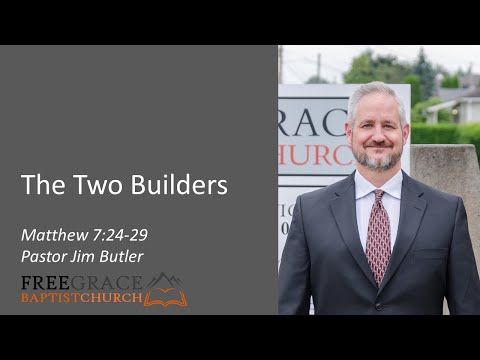
Matthew 7:24–29 concludes the Sermon on the Mount with a parable of two builders whose contrasting foundations — rock and sand — expose the decisive difference between saving faith and mere hearing. The sermon argues that true faith, sovereignly granted and resting on Christ alone, produces a life of obedience to his word, while the mere hearer — however impressed by the teaching — builds on shifting ground and faces a great and final ruin. The devil, the world, and remaining indwelling corruption all beat against both houses, but only the house founded on Christ stands. Hearers are urged to close with Christ now, trusting not in works or false religion but in his righteousness alone.

The Conversion of the Ethiopian Eunuch
Acts 8:26–40 records the conversion of an Ethiopian eunuch whose exclusion from the assembly of God under the Mosaic order (Deuteronomy 23) is overturned by the new-covenant fulfillment of Isaiah 56, as God sovereignly directs Philip to him on the Gaza road. The sermon traces three movements: the divine initiative behind the contact, the Christ-centered content of the communication from Isaiah 53, and the confession and baptism that mark the conversion itself. Throughout, the preacher insists that the eunuch's deepest problem was not his ethnicity or his condition but his sin, and that the only remedy—then as now—is faith in the Lord Jesus Christ, whose righteousness is received by grace through faith alone and sealed in believers' baptism by immersion.

The Triumph of the Lamb
Revelation 12 presents a cosmic drama in three acts — the incarnation of the Son, the defeat of the dragon in heaven, and the persecution of the woman — that together constitute a behind-the-scenes theological account of what Christ accomplished at His first advent. The serpent of old, identified as the devil and Satan of Genesis 3:15, suffers four successive and total failures: he cannot stop the birth of the male child, he is cast from heaven, he cannot destroy the woman in the wilderness, and his rage against the rest of her offspring only confirms that the decisive battle has already been lost. Christ's ascension to God's throne, not His second coming, marks the moment Satan is ejected from heaven and universal kingship is secured. The church, still militant on earth, overcomes not by health, wealth, or worldly ease but by the blood of the Lamb and the word of its testimony, persevering under persecution as the sign of Satan's defeat rather than his victory.

2LCF Chapter 25 - Of Marriage
The confession's chapter on marriage (2LCF 25) rests on the foundation of Genesis 2 and Matthew 19, defining marriage as an exclusive covenant between one man and one woman, ordained by God before the fall and therefore neither a social construct nor a second-rate reality beneath celibacy. The chapter serves four structural functions: establishing the monogamous design of marriage, grounding its divine origin and pre-fall holiness, articulating its threefold providential purpose (companionship, procreation toward the inhabitation of creation, and a hedge against sexual immorality), and setting its regulative bounds with respect to both consanguinity and the Christian obligation to marry in the Lord. The placement of this chapter immediately before the chapter on the church (2LCF 26) is deliberate: God's use of marriage to populate the earth is the providential means by which He gathers the elect from every tribe, tongue, people, and nation unto Christ.

The Promise of God's Provision
Genesis 22:1–19 presents the binding of Isaac as far more than a biographical account of Abraham's obedience — it is a typological promise of God's provision of the Messiah. The sermon works through the test presented to Abraham, his obedience in the three-day journey to Moriah, and God's approval through the substitutionary ram, showing how Abraham, Isaac, and the ram each function as types of the Father, the Son, and the Lamb of God respectively. Abraham's declaration in verse 8 — 'God will provide for himself the lamb for a burnt offering' — is read as genuine messianic anticipation, confirmed by Christ's own words in John 8:56. The passage calls believers to the kind of covenant-anchored faith that perseveres under affliction, catechizes their children in the great truths of God, and rests on the substitutionary atonement accomplished at Calvary.

The Promise of God's Son
The Davidic covenant of 2 Samuel 7 stands at the center of redemptive history, advancing the promise of the seed from Genesis 3:15 through Abraham to David and ultimately to the Lord Jesus Christ. The word 'house' in the passage carries triple meaning — David's palace, the dynasty God promises to establish, and the temple God will build through David's line — and each meaning finds its terminus in Christ, who reigns on David's throne forever and builds a spiritual temple from living stones. God's covenantal fidelity is the sole reason the Davidic dynasty survived the persistent sin of its kings, and that same fidelity secures the church today as citizens of Christ's everlasting kingdom. The sermon calls believers to come to the public worship of God on the Lord's Day with the joyful expectation of those who know they live in the age of fulfillment.

The Ratification of the Covenant, Part I
Exodus 24:1–8 records the formal ratification of the old covenant at Sinai, and this expository study examines three elements the text presents: God's instructions structuring nearness and distance on the mountain, Moses' compliance in writing the covenant words and erecting the altar and twelve pillars, and the blood-sprinkling ceremony that sealed the covenant between Yahweh and Israel. The sermon argues that the old covenant, far from being a mere administration of the covenant of grace, is a republication of the covenant of works — a position the 1689 LBCF reflects in distinction from the Westminster Confession. The blood of the ratification ceremony finds its antitype in the blood of Christ, whose once-for-all sacrifice inaugurates the new covenant in which believers stand accepted not by their own obedience but by that of their covenant head.