
Theological term
Covenant of Grace
848 sermons · All terms
CTF 2025 - Session 7 - Pastoral Reflections on Classical Theism

The prologue of John's Gospel (1:1–18) discloses both the divine perfections and the eternal relations of the divine persons — the very realities that classical theism and the Second London Confession articulate in Chapter 2. This address draws that exegetical foundation into pastoral practice, arguing that a robust theology proper is not abstract speculation but the necessary ground for faithful ministerial function and focus. The preacher identifies six areas — the salvation of sinners, the catechesis of children, the perseverance of the saints, assurance of salvation, communion with God, worship, and the knowledge of God — each of which depends inextricably on a well-formed doctrine of God.

The Necessity of Faithful Obedience
Deuteronomy 4 closes Moses' historical prologue with an urgent exhortation to the second generation of Israel on the necessity of faithful covenant obedience before crossing the Jordan. The chapter's three movements — the necessity of obedience (vv. 1–8), the dangers of idolatry (vv. 9–31), and the incomparability of Israel's God (vv. 32–40) — are treated as an impassioned speech by a man who lived the history he recounts. Scripture's sufficiency is defended against every form of addition or subtraction, and the regulative principle of worship is grounded in God's self-revelation at Sinai as a consuming fire who receives no image.

The High Priestly Prayer, Part 8
John 17:21–23 records Christ's high priestly petition for the unity of all believers across every age — a unity patterned on the mutual indwelling of the Father and the Son. The sermon works through the petition ('that they all may be one'), the divine paradigm (the perichoretic union of the Father and Son as the exemplar for creaturely unity), and the missional purpose (a unified church publishes to the world the reality of the Incarnation and the love of the Father). Believers are called to pursue a common faith, a common orientation, and a common goal — the glory of God — knowing that their corporate life is itself a testimony to the mission of the sent Son.

Galatians 2:17–21 — Justification by Faith Alone

Galatians 2:17–21 closes Paul's autobiographical defense of justification by faith alone, and these five verses press three weighty questions: Is Christ a minister of sin when believers forsake the Mosaic ceremonies? Who is the true transgressor? And what does Judaizing heresy actually do to the cross of Christ? The sermon argues that to impose any measure of works upon the economy of salvation — whether old-covenant ceremony or its modern legalistic counterpart — is to render the incarnation, the perfect obedience, and the atoning death of the Son of God as vanity. The single ground of the believer's justification, assurance, and perseverance is the Son of God who loved us and gave himself for us, in whom alone everlasting righteousness is found.

Unpacking Covenant Theology: Tensions in Reformed Tradition
The relationship between the Mosaic Covenant and the Covenant of Works has generated significant tension within Westminster confessional theology, particularly around Meredith Kline's view of republication. While the broader Reformed tradition has historically accommodated a range of positions — including treating the Mosaic Covenant as a subservient covenant of works — the Westminster Confession narrows that range by specifying the Mosaic Covenant as an administration of the Covenant of Grace, creating a confessional problem for those who hold Kline's position. This exchange examines how confessional Presbyterians (including paedobaptists) navigate the resulting tension, with reference to OPC reports on republication.

Introduction to Deuteronomy
Deuteronomy is introduced as the second giving of the law — not a new law, but a restatement of the Sinai covenant addressed to the second generation of Israel standing on the plains of Moab, poised to enter the land of promise. The session surveys Mosaic authorship, the book's place in the Pentateuch, its historical context, its broad outline (God's activity, law, covenant, and servants), and its major theological emphases: reminder, transition, exhortation, and instruction in theology proper, the promise of land, and the worship of God. The study concludes with the typological significance of Deuteronomy for the New Testament, tracing how the book prefigures Christ as prophet, priest, king, and true Israel, and how its promise of new covenant in chapter 30 points forward to what Jeremiah 31 and the gospel make explicit.
Our Robe of Beauty
Galatians 2:16 presents a five-fold declaration that justification is by faith alone and not by the works of the law — a doctrine that stands at the very heart of the Christian gospel. This sermon works through four categories: a definition of justification as a forensic declaration set in opposition to condemnation, its foundation in the obedience and satisfaction of Christ alone (not infused righteousness, works, the act of faith, or evangelical obedience), the transaction of imputation by which sin is credited to Christ and his righteousness credited to the believer, and faith as the empty instrument that receives rather than earns that righteousness. The pastoral application presses the believer's assurance away from inward evidences toward the finished work of Christ, and calls the unconverted to look to Christ in faith as their only standing before a holy God.

The Example of the Savior, Part 1
Philippians 2:5–6 presents both a profound Christological confession and a direct ethical demand: the church is to pursue unity and love by imitating the mind of Christ. This sermon expounds the divinity of the Son — his eternal existence in the form of God and his equality with the Father — as the theological foundation for Paul's call to selflessness and others-mindedness in the local church. Christ's equality with God was not seized by usurpation, as Adam and Lucifer attempted, but was his by eternal generation and consubstantiality with the Father. Because the superior condescended to serve the inferior, those who are inferior to one another have every reason to renounce selfish ambition and conceit.

The High Priestly Prayer, Part 4
What grounds the prayers Jesus offers for his people, and why does he explicitly exclude the world from his intercession? Working through John 17:9–11a, this sermon examines the focus and rationale of Christ's high priestly intercession: he prays specifically for the elect whom the Father gave him, not for the reprobate world, and he does so as the mediating priest who both sacrifices and intercedes on behalf of his own. The mutual possession declared in verse 10 — 'all mine are yours and yours are mine' — establishes the full equality of the Son with the Father, while 'I am glorified in them' frames the church as a trophy case of divine grace displayed before angels and nations. The sermon closes with an exhortation to treasure the blessedness of election: a Savior who intercedes, a triune God who is known, and a security that nothing can sever.

2LCF Introduction and Preface to the 1689 Second London Baptist Confession
The Second London Baptist Confession of Faith (1689) did not arise in a vacuum — it was forged under persecution, shaped by theological antiquity, and published to correct misrepresentations of Particular Baptist doctrine. This study introduces the Confession through its original preface, examining the necessity and utility of creeds and confessions, the historical context of 17th-century England, and the specific additions, changes, and deletions the Particular Baptists made to the Westminster Confession and Savoy Declaration. The Confession stands as a faithful summary of biblical doctrine and a demonstration that Particular Baptists stood firmly within the stream of historic Protestant orthodoxy, differing from their Presbyterian and Congregationalist brethren only on baptism, church polity, and certain covenant theology distinctions.
The High Priestly Prayer, Part 3
Jesus intercedes for his apostles in John 17:6–11a, and this sermon examines who those men are, what qualifies them as objects of his high priestly prayer, and why he prays for them rather than for the world. The exposition grounds the disciples' identity in the Father's sovereign, electing gift of them to the Son within the eternal covenant of redemption, their reception of the words the Father gave to the Son, and their growing recognition that the Son is one in being with the Father. The preacher draws out the implication that faithful gospel ministry, like the ministry of Christ himself, must declare only what has been received from God, without accommodation to cultural pressure or the demand for entertainment.

Ask FGBC #38: Faith vs Trust, Are They the Same?
Faith and trust are examined as near-synonymous terms in the Greek New Testament, with the threefold schema of assent, belief, and trust acknowledged but handled with care lest 'trust' become a works-oriented addition to saving faith. The sermon addresses whether doubt and fear disqualify a person from genuine saving faith, arguing from Matthew and Luke that believers in Scripture feared and doubted while possessing true faith. Perseverance is grounded not in the strength of a believer's grip on Christ but in the immutability of God's electing decree, the intercession of Christ, and the abiding of the Spirit, as articulated in 1689 LBCF 17.2. The practical counsel given is to strengthen weak faith through Scripture memory, doctrine, and the means of grace.

Trinitarian Assurance

Ephesians 1:3–14 presents a Trinitarian doxology in which the Father's election and predestination, the Son's redemption through His blood, and the Spirit's sealing together constitute the full ground of the believer's assurance. The passage resists any reduction of the three persons to isolated roles, insisting on inseparable operations even as Paul shines distinct light on each person's work. The sermon argues that the Christian's assurance must be anchored not in self-examination of fruit-bearing but in the objective, Trinitarian work of God accomplished entirely outside of us in Christ.

The Apostolic Magnitude of Justification
Paul's confrontation of Peter at Antioch in Galatians 2:11–16 is not merely a biographical episode but a defence of the doctrine of justification by faith alone. Peter's hypocritical withdrawal from table fellowship with Gentile believers, driven by fear of the circumcision party, was not an open denial of the gospel but a compromise of it — and Paul's rebuke exposes how even the appearance of impropriety can bring the truth of the gospel into disrepute. The sermon then turns to the apostolic doctrine set forth in verses 15–16, tracing the five-fold reiterative negation and affirmation of justification by faith and not by the works of the law, grounding Christian peace in the imputation of Christ's active and passive obedience. Hearers are exhorted to carry the doctrine of justification beyond the service itself, resting their peace not on any measure of personal performance but on the sole and complete work of the Lord Jesus Christ.

The High Priestly Prayer, Part 1
John 17:1–5 records the opening of Christ's high priestly prayer, in which the Lord Jesus — praying according to His humanity as the Mediator of the New Covenant — petitions the Father for glory, because glory given to the Son redounds to the glory of the Father. The sermon works through the occasion of the prayer, the derived and delegated authority granted to Christ over all flesh, and the particular redemptive purpose for which that authority was given: that He should grant eternal life to all whom the Father has given Him. Particular redemption is grounded in the text itself, and the sermon closes by pressing the definition of eternal life in verse 3 — the knowledge of God and of Jesus Christ — as a summons to pursue theology, Scripture reading, and corporate worship with renewed seriousness.

Ask FGBC - Dec 2024 Podcast with Pastors Butler and Porter, Batch 4
A panel of two pastors works through a batch of listener-submitted questions spanning baptism and the Lord's Supper, the eternity of hell, church membership, faith and fear, the unpardonable sin, images of Christ, dry preaching, and extra-biblical theological vocabulary. Across each topic the answers are grounded in Scripture and the 1689 London Baptist Confession, with particular attention to second-commandment concerns, the nature of saving faith, and the perseverance of the saints. Listeners are urged to anchor their assurance not in the strength of their own grip on Christ but in the immutable decree of election and the intercession of the Triune God.

The Authenticity of Paul's Gospel, Part 2
Galatians 1:18–2:10 records Paul's autobiographical defense of justification by faith alone against Judaizers who insisted that circumcision and adherence to Mosaic precepts were necessary for salvation. The sermon traces Paul's independence from the Jerusalem apostles, the uncompromising refusal to circumcise Titus, and the apostolic unity between Paul and the Jerusalem pillars — all marshaled to prove that Paul's gospel came by divine revelation, not human tradition, and that it stands as the only true gospel. The application presses both the vital importance of the doctrine of justification and the necessity of an uncompromising ministry: Christian peace rests solely in Christ's perfect obedience and atoning death, not in the ebbing and flowing of personal works or church attendance.

The Oracles of Balaam, Part 2
Numbers 24 records the third and fourth oracles of Balaam, an unconverted soothsayer compelled by the Spirit of God to bless Israel rather than curse her at Balak's command. The sermon traces the messianic trajectory of these oracles — the star out of Jacob, the scepter rising from Israel, the dominion of one from Judah — arguing that Balaam is ultimately preaching Christ and the triumph of his kingdom, which finds its New Covenant terminus in the church as the Israel of God. The text becomes a call to faithful gospel ministry: if a reprobate soothsayer could handle the Word of God accurately, the church has every right to demand that her ordained ministers do likewise.

2LCF Chapter 30 - Of the Lord's Supper
The Lord's Supper is a perpetual ordinance instituted by Christ on the night of his betrayal, appointed for the corporate observance of the church until his return. This confession study works through all eight paragraphs of 1689 LBCF Chapter 30, surveying the historical positions on Christ's presence in the Supper — transubstantiation, consubstantiation, Eastern Orthodox epiclesis, Anglican via media, exclusive memorialism, and the Reformed spiritual presence held by the Particular Baptists — before examining what the confession affirms and opposes. The Supper is shown to be simultaneously a memorial, a proclamation of the gospel, a means of grace conferring spiritual nourishment, and a bond of communion both with the ascended Christ and with fellow believers. The Roman Catholic Mass is rejected as abominable, injurious to Christ's finished and unrepeatable sacrifice, and productive of gross idolatry and manifold superstitions that flow inevitably from the doctrine of transubstantiation.

The Oracles of Balaam, Part 1
Numbers 23 records the first two oracles of Balaam, in which God sovereignly overturns Balak's hired curse and compels a pagan seer to pronounce blessing upon Israel instead. The first oracle establishes the singularity of the covenant people — a nation dwelling apart, not reckoned among the nations — and the impossibility of cursing those whom God has not cursed. The second oracle grounds that protection in the immutability of God: because God is not a man that he should lie or repent of his word, no sorcery or divination can prevail against Jacob. The passage ultimately anticipates Romans 8:31 — if God is for his people, no Balak, no Balaam, and no adversary can stand against them.

Ask FGBC - July 2024 Podcast with Pastors Butler and Kirkpatrick
Two pastors work through a wide-ranging set of questions submitted by listeners, covering the Reformed doctrine of the will, repentance and faith, holy days, Christian political engagement, believers' baptism, the New Covenant, forgiveness of unrepentant offenders, ongoing confession of sin, witnessing to homosexual neighbors, the Sabbath shift from Saturday to Sunday, the day of the Lord, the beatific vision, common grace, saving versus temporary faith, and the holy walk. Throughout, the answers are grounded in the 1689 London Baptist Confession and exposit the relevant biblical texts, consistently distinguishing the Reformed Baptist position from Arminian, dispensationalist, and paedobaptist alternatives. The session serves as accessible catechetical instruction for believers at all stages while modeling how confessional Reformed Baptist theology addresses both doctrinal and practical questions.

The Suffering and Glory of Christ
Psalm 22 presents the suffering and glory of Christ with a precision and detail that exceeds even the Passion narratives of the four Gospels. The psalm's first half expounds the dereliction Christ endured on the cross — not as a breach of the Trinity or a dissolution of the hypostatic union, but as the penal withdrawal of the Father's sensible favor while the Son bore the curse due to his people's lawbreaking. The second half moves from that suffering to the exaltation of the Redeemer, the adoption of his brethren, the extension of his kingdom to all nations, and the generational advance of his church — all grounded in the finished work of the cross. The sermon calls believers to make much of the Psalms in both private devotion and corporate worship, hearing in them the very voice of Christ.
The Riches of God's Grace
Ephesians 1:7 declares that believers possess redemption through Christ's blood and the forgiveness of sins according to the riches of God's grace. This sermon works through the triune shape of salvation in Ephesians 1:3–14, arguing that the redeemed are not a class of morally capable people who needed modest assistance, but guilty sinners who required blood atonement, divine election, and the sealing of the Holy Spirit. The cross is shown to satisfy divine justice as well as display divine love — God is both just and the justifier of the one who has faith in Jesus, as Paul argues in Romans 3:21–26. The sermon closes with a direct application to baptism, presenting the ordinance as an outward declaration of the inward forgiveness and righteousness received through union with Christ.

2LCF Chapter 29 - Of Baptism, Part 3 - Paedobaptist Arguments
Believers' baptism rests on the covenant distinction between Israel after the flesh and the spiritual seed of Abraham, and no paedobaptist argument survives the scrutiny of those covenantal boundaries. This third study in the confession's chapter on baptism works through six major paedobaptist arguments — from the Abrahamic covenant, household baptisms, federal holiness, and more — and answers each from Scripture, the 1689 confession, and Nehemiah Cox's seventeenth-century Baptist covenant theology. A question-and-answer period then addresses practical matters: rebaptism after sprinkling or infant immersion, communicating credo-baptist convictions to paedobaptist family and elders, prerequisites for baptism, minimum age, and the necessity of immersion as the sign that answers the thing signified.

The Enthronement of the King-Priest
Psalm 110 is the most frequently quoted Old Testament text in the New Testament, and for good reason: it presents the Lord Jesus Christ in his twofold office as enthroned King and eternal Priest. This exposition works through all seven verses under three headings — the enthronement of Christ at the Father's right hand (vv. 1–3), the Melchizedekan priesthood sworn by God's oath (v. 4), and the triumph of Christ over all his enemies (vv. 5–7). The sermon calls believers entering a new year to fix their minds on the reigning King-Priest rather than on the hostility of the present evil age, and urges the unconverted to come to Christ in faith on the grounds that God's saving purpose is irreversible.

The Authenticity of Paul's Gospel
Paul's vigorous autobiographical defense in Galatians 1:11–24 establishes that his gospel did not originate from any human source but came by direct revelation of Jesus Christ — a claim with profound implications for the doctrine of justification. The sermon works through three arguments for gospel authenticity: the nature of the gospel itself as something no man would invent, Paul's pre-conversion conduct as a violent persecutor of the church, and his post-conversion movements that deliberately bypassed human instruction. The application presses the congregation to hold with confidence to a gospel that rests on the triune God's sovereign grace alone, not on human tradition or legal observance, and to hope for the conversion of even the most hardened opponents of the truth.

2LCF Chapter 29 - Of Baptism, Part 2
Credobaptism rests on five mutually reinforcing theological arguments: covenant theology, federal headship, the doctrine of salvation, the clarity of New Testament revelation, and the regulative principle of worship. This session (Part 2 of a study on 2LCF Chapter 29) works through the final three arguments, demonstrating from Romans 6, Acts 2, Acts 8–9, Galatians 3, and 1 Corinthians 10 that baptism signifies union with Christ in his death, burial, and resurrection, and therefore belongs only to those who actually possess that union. The session closes by showing that infant sprinkling not only lacks any express divine command but positively contradicts the explicit command to baptize believers only — an inconsistency that even notable paedo-baptist writers (Owen, Calvin, Matthew Henry) expose in their own defenses of the regulative principle of worship.
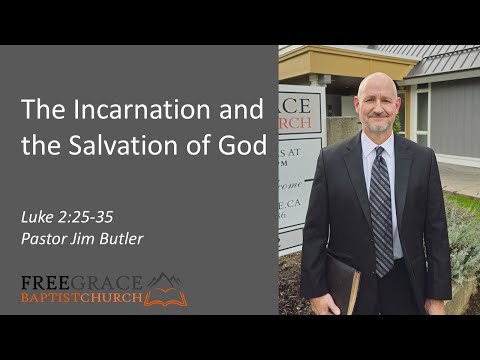
The Incarnation and the Salvation of God
Simeon's encounter with the infant Jesus in Luke 2:25–35 reveals the incarnation as the decisive fulfillment of every Old Testament promise — from Genesis 3:15 through the servant songs of Isaiah — and forces every hearer to declare whose side they stand on. The sermon expounds two movements in the passage: Simeon's confession that the child he holds is the salvation God prepared for all peoples, and Simeon's prophecy that this same child will cause the fall and rising of many, pierce Mary's soul, and expose the hidden allegiance of every heart. The call is direct: look to Christ by faith as Simeon did, die in peace as Simeon could, and do not be numbered among those who fell because they rejected the consolation of Israel.

The Glory of Christ's Departure, Part 1
John 16:25–28 records the climactic doctrinal statement of the Upper Room Discourse, in which Christ declares His eternal generation from the Father, His incarnation into the world, and His impending ascension back to the Father. The sermon works through three heads: the manner of Christ's instruction in figurative language and the Spirit's coming role in illuminating the disciples; the access believers have to the Father through the Son in prayer; and the doctrinal creed embedded in verse 28, treating eternal generation, incarnation, and ascension in sequence. The unchanging love of the Father for those who are in Christ by grace through faith is held out both as the chief encouragement for disciples going into a world of tribulation and as the ground of the gospel call to sinners to look to Christ for blood and righteousness.

The Conduct of the Believer
Philippians 1:27–30 presents a twofold exhortation to the church: that believers conduct themselves in a manner worthy of the gospel, and that they do so with courage in the face of adversaries. The sermon expounds the Greek word for citizenship as the governing concept of verse 27, grounding the call to worthy conduct in the reality of justification by faith — the life of sanctification flows necessarily from what God has graciously accomplished in the believer. Corporate unity in striving together for the faith of the gospel, and undaunted boldness before enemies, are shown to be not optional virtues but demonstrable proofs of sovereign grace at work in God's people.