
Theological term
Covenant of Grace
848 sermons · All terms
The Propagation of Israel's Faith

Deuteronomy 6:6–9 commands Israel not merely to profess allegiance to the one true God but to propagate that truth — first by internalizing it personally, then by transmitting it diligently to children and grandchildren in both formal and informal settings. The passage is read against the wider covenantal structure of Deuteronomy and set in parallel with Ezra 7:10, Psalm 119, and Ephesians 6:4 to show that receiving, doing, and teaching God's word are inseparable obligations running across both covenants. The sermon presses home that teaching children the law and the gospel is not a specialist calling for the especially devout but a natural reflex of redemptive grace, as ordinary and non-negotiable as providing food and shelter. Parents are urged to establish modest, consistent patterns of family worship — Scripture reading, catechism, prayer, and informal covenantal conversation — as the primary means of inoculating children against the idolatry of the surrounding world.

The Ratification of the Old Covenant
Exodus 24:1–8 records the ratification of the Old Covenant at Sinai through blood sacrifice, a mediator, and the sworn fidelity of the people — all of which anticipate and are surpassed by the New Covenant inaugurated in the blood of the Lord Jesus Christ. The Old Covenant is identified not as an administration of the covenant of grace but as a covenant of works, in which Israel's standing depended upon their own obedience: 'all that the Lord has commanded we will do.' The New Covenant contrasts sharply: Christ, the true Israel of God, fulfills every covenantal obligation in the place of his people, so that the ground of the believer's standing before God is not their performance but his finished work. The sermon closes with a practical call to live at the foot of Calvary rather than at the foot of Sinai, resisting the legal temptation to ground either justification or sanctification in personal obedience.
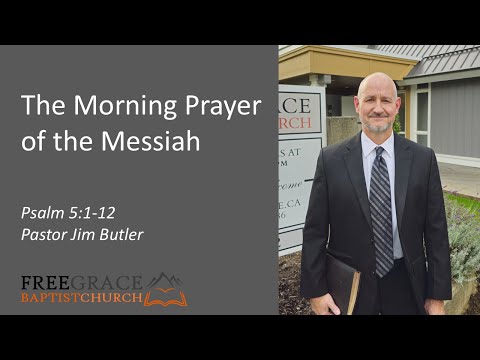
The Morning Prayer of the Messiah
Psalm 5 is the morning prayer of the Messiah — not merely a psalm David wrote, but a prophetic window into the prayer life of the incarnate Son of God as he faced bloodthirsty and deceitful enemies throughout his earthly ministry. The sermon works through four movements: Christ's appeal to the hearing God, his comfort in the divine perfections of holiness, justice, and mercy, his petitions for the guidance of the godly and the condemnation of the godless, and his confidence in the protecting God. Because the righteousness that qualifies the pray-er is Christ's own imputed righteousness received by faith alone, Psalm 5 becomes the possession of every believer in the new covenant, a daily call to pray dependently, joyfully, and with full confidence in the God who hears.

2LCF Chapter 18 - Of the Assurance of Grace and Salvation

What does it mean to be assured of salvation, and is such assurance available to ordinary believers or only to a spiritual elite? Working through 2LCF Chapter 18, this lesson distinguishes true Christian assurance — an infallible certainty grounded in the blood and righteousness of Christ and the testimony of the Holy Spirit — from the carnal presumption of the unregenerate who rest on false hopes. The four paragraphs of the chapter are treated in turn: the doctrine stated, its pillars declared, the means by which it is attained, and the trials that may shake but never ultimately destroy it. Believers are urged to seek assurance through the ordinary means of grace, resting not on inward experience or extraordinary revelation but on the unchanging gospel of Christ crucified and risen.

The Mission of the Son of God
John 1:29 presents the whole mission of the incarnate Son of God in a single declaration: 'Behold the Lamb of God who takes away the sin of the world.' This sermon expounds the Baptist's announcement as a statement loaded with Old Covenant freight — the sacrificial system, the Day of Atonement, and the Servant Songs of Isaiah — all converging on the one unblemished Lamb who bears sin to the cross and removes it through substitutionary atonement. The scope of 'the world' is shown to exclude universalism while affirming that Christ's atoning work reaches every tribe, tongue, people, and nation. The sermon closes with a theological account of believers' baptism as the external sign of the internal grace received through union with Christ in his death and resurrection.

The Conclusion of the Decalogue
Deuteronomy 5:22–33 records Moses rehearsing the original giving of the law at Sinai, and this exposition draws out the divine origin, authority, comprehensiveness, finality, and permanence of the Decalogue as the trans-covenantal moral law of God binding on all men in every age. The threefold use of the law — civil, pedagogical, and normative — is traced through the New Covenant, with the imputed righteousness of Christ received by faith as the only ground of justification. The people's terror at the theophany on Sinai is commended as the proper response to God's majesty, and the sermon presses the distinction between slavish fear that flees from God and filial fear that flees to Him, urging the congregation to recover a robust doctrine of divine transcendence in their worship.

2LCF Chapter 17 - Of the Perseverance of the Saints
The perseverance of the saints — that those whom God has elected, called, justified, and sanctified will certainly be preserved unto final glorification — is examined through the three paragraphs of 2LCF Chapter 17. The doctrine rests not on the free will or native strength of the believer, but on the immutability of God's decree of election flowing from His free and unchangeable love, the perfect merit and ongoing intercession of Christ, the abiding of the Spirit, the principle of grace implanted within, and the inviolable nature of the covenant of grace. The certainty and infallibility of perseverance is therefore as secure as God Himself. Believers are exhorted not to neglect the means of grace — public worship, the preaching of the Word, the sacraments, prayer, and private and family devotion — for it is within those ordained means that God nourishes His people in faith, repentance, love, joy, and hope.

Christ in the River Jordan
The baptism of the Lord Jesus Christ in Matthew 3:13–17 is not merely a biographical episode but the inaugural step of the incarnate Son of God in His mediatorial mission to fulfill all righteousness for sinners. Tracing a rich theology of water through creation, the flood, the Exodus, and Joshua's crossing of the Jordan, the sermon demonstrates that Christ enters the river as the antitypical fulfillment of every prior act of divine cleansing, conquest, and covenant ratification. The descent of the Spirit like a dove and the Father's voice of approbation publicly inaugurate the new creation and identify Jesus as the obedient second Adam, the suffering servant, and the Davidic king. The sermon closes by drawing the believer's baptism directly from this pattern: only those who are the recipients of Christ's substitutionary righteousness, indwelt by the Spirit, and adopted into sonship are candidates for baptism by full immersion.

Paul's Apostolic Concern
Paul's letter to the Galatians confronts churches tempted to abandon the sufficiency of Christ's work in favour of Judaizing observances, and in Galatians 4:8–20 the apostle makes the startling theological move of equating Jewish law-keeping after Christ's advent with pagan idolatry — both are bondage to 'weak and beggarly elements.' The sermon traces three movements in the passage: the regression of backsliding into that bondage, the broken fellowship Paul calls to remembrance, and the false zeal of the agitators set against Paul's own burdened, birth-labour concern for Christ to be formed in his hearers. The application presses believers to guard against the perennial love of novelty and to hold with unwavering constancy to the old paths of justification by faith alone in Christ alone.
The Confidence of the Believer
Micah 7 presents the prophet lamenting the moral and covenantal collapse of Israel — corrupt leaders, treacherous neighbors, fractured households — only to pivot on a single word: 'therefore.' Rather than despair, Micah models the posture of the godly remnant: looking to God, waiting on God, and confessing sin without self-defense. The sermon traces the chapter's three movements — lamentation (vv. 1–6), exhortation (vv. 7–13), and doxological prayer (vv. 14–20) — and presses the question of what genuine faith looks like when the church and civil society have both gone far astray. The closing doxology, 'Who is a God like you, pardoning iniquity,' is held up as the ground of the believer's confidence and the fitting frame for the Lord's Supper.

Who Are the Heirs of the Promise?
Galatians 3:29 and 4:6–7 together answer the question of who truly inherits the promises made to Abraham: not those physically descended from him, nor those who observe Mosaic ceremonies, but those who are united to Christ by saving faith. The sermon traces the covenant-theological distinction between Abraham's physical seed and his spiritual seed, showing that membership in the covenant of grace is coextensive with those who receive the definite atonement of Christ. The Trinitarian shape of redemption — the Father sending the Spirit of the Son into the hearts of adopted sons — seals the argument, and the sermon draws out implications for believer's baptism and the enlarged liberty of the new covenant age.

What Is Faith? When Should I Be Baptized? & more| Ask FGBC Batch 6
This Q&A episode from a confessional Reformed Baptist church addresses twelve questions spanning baptism, faith, church membership, Scripture interpretation, seminary training, and the heresies of Federal Vision and Baxterianism. Particular attention is given to the definition of saving faith — distinguishing the objective content of the faith from the act of believing, warning against loading faith with feelings, faithfulness, or love as its ground, and insisting that faith is the empty instrument through which God-given grace lays hold of Christ alone. The episode closes with treatments of conviction of sin, catechetical instruction of children, and the importance of an educated ministry.

The Triumph of the Son of God
Revelation 12 provides a behind-the-scenes look at the cosmic conflict between the dragon and the seed of the woman, tracing the incarnation, ascension, and enthronement of Christ as the decisive defeat of Satan. The chapter identifies three parties — the woman (the covenant people of God), the dragon (Satan), and the male child (the Lord Jesus Christ) — and traces Satan's repeated, comprehensive failures to destroy Messiah and then to destroy the church. Christ's triumph at his first advent does not remove suffering from the church; rather, the defeated devil turns his fury upon Christ's people, who overcome by the blood of the Lamb, the word of their testimony, and a courage rooted in justification by faith alone. The sermon calls believers to resist Satan's tactics of deceit, accusation, and heresy by knowing the truth, and calls the unconverted to look in faith to the ascended Christ who promises rest to the weary.

Late in Time Behold Him Come
The incarnation of the Son of God is not one event among many in redemptive history but the appointed climax toward which every Old Covenant type, ceremony, and providence was directing the people of God. Expounding Galatians 4:1–5, this sermon argues that the Old Covenant was temporary, preparatory, and anticipatory — never designed to convey everlasting covenantal blessing — and that Paul deploys the incarnation as a decisive argument against the Judaizing error of faith plus works. The 'but when' of verse 4 marks the arrival of the fullness of the times: the Father's eternally decreed appointment, the fulfillment of prophetic announcement, the termination of types and shadows, and the perfection of all providences. The sermon closes with a call to set the confidence of the soul entirely on the Son of God who descended from glory to redeem lawbreakers and bring many sons and daughters to everlasting glory.

The Peace and Safety of God
Psalm 4 presents the petition, exhortation, and contemplation of David — and, through him, of Christ as the godly man set apart by the Father. The sermon works through each movement of the psalm in sequence: the psalmist's earnest appeal grounded in God's past faithfulness, the rebuke and call to repentance issued to the sons of men, and the declaration that true good — the light of God's countenance, gladness of heart, and the peace and safety of dwelling under his care — belongs to those who trust in the Lord. The congregation is urged to come to Christ in earnest, arguing-prayer, to meditate on his person and work, and to rest in the imputed righteousness he alone provides.

2LCF Chapter 15 - Of Repentance Unto Life and Salvation
Repentance unto life is not a work that precedes salvation but an evangelical grace sovereignly given by God in the covenant of grace, inseparable from faith as two sides of the same coin. Working through 2LCF Chapter 15, this study examines the nature, necessity, and elements of saving repentance, tracing the confession's teaching that remaining corruption and the prevalency of temptation make ongoing repentance a permanent feature of the Christian life, not merely its entry point. The session also challenges the assumption that a crisis conversion is more credible than a non-crisis one, arguing that the same effectual power of God works in the child catechized from infancy as in the most notorious convert. Hearers are urged to hate sin, apprehend the mercy of God in Christ, and avoid both antinomianism and the error of treating repentance as a meritorious condition for acceptance with God.

Who Are the Sons of God?
Galatians 3:26–29 declares that all who believe in Christ are sons of God through faith — not through ethnic descent from Abraham, physical circumcision, or adherence to the Mosaic law. This sermon works through the status, redemptive ground, sign, and unity of that sonship, demonstrating from Matthew 3, John 8, Romans 2 and 9, and Ephesians 2 that children of God are defined by union with Christ rather than by nationality, social condition, or sex. The threefold negation of Galatians 3:28 directly demolishes the Judaizing confidence in Israelite birth, free status, and maleness, and points instead to the covenant of grace in which all believers are equally heirs of the promise. The sermon closes with a call to rest in the alien righteousness of Christ as the sole ground of adopted sonship.

2LCF Chapter 14 - Of Saving Faith
What is saving faith, where does it come from, and what does it rest upon? Working through Chapter 14 of the 1689 London Baptist Confession of Faith, this study examines saving faith under three headings: its nature (divine source, instrumental means, and fortifying ordinances), its object (the consequent acts of believing the Word and the principal acts of accepting, receiving, and resting upon Christ alone), and the variety and degree of faith across believers. The confession's teaching is grounded throughout in Scripture and the broader confessional architecture, demonstrating that saving faith is a purchased grace of the covenant of grace, given and sustained by the Spirit of Christ through the Word and the appointed means of the church.

The Holy, Harmless, and Undefiled Man
Psalm 1 describes not merely the character of the generic godly man, but the Lord Jesus Christ himself — the one perfectly holy, harmless, and undefiled man whose obedience alone secures the blessedness the psalm pronounces. The hermeneutic is not moralistic prescription ('do this and live') but christological proclamation: because the blessed man of verse 1 fulfilled what verses 1–2 demand, all who trust in him receive both forgiveness of sins and the imputation of his righteousness. The sermon then moves to application in a gospel-ordered framework, showing that sanctification flows consequent to justification — the redeemed follow the Lamb not in order to obtain blessing, but because they have already received it in Christ.

The Permanence and Primacy of Christ and Christianity
Paul's argument in Galatians 3:19–26 is pressed from every angle: the Mosaic law was given because of transgressions, temporary in design, never a rival to the promise but a servant of it, and fulfilled entirely in the coming of Christ. The law functioned as a pedagogue — restraining sin, exposing guilt, and driving the sinner toward the one it signified — but with Christ's advent that tutelage has ended. True sonship before God belongs not to national Israel nor to any who ground their standing in works of law, but exclusively to those united to Christ by faith, who are thereby Abraham's seed and heirs of the promise. The sermon calls the church to be guarded against any doctrine that introduces human works into the ground of justification, and to be ardently and exclusively attached to Christ as the sole Savior of sinners.

2LCF Chapter 13 - Of Sanctification
Sanctification is a work of God's free grace — not of human effort — wrought in the elect by the Word and Spirit through the virtue of Christ's death and resurrection. The 1689 London Baptist Confession, Chapter 13, sets out the nature and cause of sanctification: its undeserving recipients (the effectually called and regenerated), the initial definitive act of sanctifying grace at conversion, the progressive ongoing work of the Spirit, and the instruments God employs (Word and Spirit). The confession guards this doctrine on two fronts simultaneously: against moral-improvement schemes that reduce sanctification to human effort, and against sinless perfectionism that denies remaining corruption in the believer.

The Third Appearance of Christ to the Disciples, Part 3
John 21:20–25 closes the fourth gospel with two interlocking concerns: the sovereign headship of Christ over His church and the divine authority of Holy Scripture. Peter's question about John's fate draws a sharp rebuke — 'What is that to you? You follow me' — which exposes the temptation to play the victim of providence rather than the contented subject of Christ's will. The passage then grounds the church's authority in the eyewitness testimony of the beloved disciple, written by the Spirit for one declared purpose: that you may believe that Jesus is the Christ and have life in His name. The sermon closes with John's doxological acknowledgment that the infinite Word made flesh exceeds all possible description, and calls every hearer to follow Christ in their appointed station rather than fixate on the lot of others.

The Pattern for the Christian Life
Philippians 3:17 calls believers to join in following the Apostle Paul's example and to identify others in the local church who walk the same way. The sermon argues that faithful Christian examples are not found among social-media influencers but among ordinary, persevering saints whose lives are grounded in justification by faith alone, followed by sanctification, perseverance, and glorification. Paul's example is examined across four dimensions — his conversion, his life as a believer, his ministry, and his suffering — with particular attention to the courage and gospel-centrality displayed throughout Acts. The sermon's application presses the responsibility squarely on individual believers: they must actively seek out faithful examples in the congregation rather than waiting for examples to come to them.

2LCF Chapter 12 - Of Adoption
The twelfth chapter of the 1689 London Baptist Confession treats adoption as a distinct benefit of the gospel, flowing necessarily from justification and grounded solely in God's sovereign grace through the Lord Jesus Christ. This study traces the basis of adoption — its recipients (the justified), its source (God's free vouchsafing), and its ground (the merit of Christ alone) — before working through the four categories of benefit the confession enumerates: inclusion in the family of God, reception of privileges (the divine name, the Spirit of adoption, bold access to the throne of grace), fatherly treatment (pity, protection, provision, and chastening), and the inheritance of everlasting salvation. A sustained contrast between Paul's juridical language of adoption and John's language of new birth demonstrates that both apostles teach the same doctrine from different vantage points, while an extended excursus on Hebrews 9–10 applies the Old Covenant / New Covenant contrast to rebut the paedobaptist argument for an internal-external continuity between the covenants. The children of God are called to live out their adoption by walking in love, light, and wisdom as Ephesians 5 commands.

The Christian Life of the Apostle Paul
Between justification and glorification lies the life of sanctification, and in Philippians 3:12–16 the Apostle Paul names that interim existence perseverance. Paul's honest self-assessment — 'not that I have already attained or am already perfected' — anchors both the doctrine and the practice: the believer presses on, forgets what is behind, and strains toward glory not to secure justification but as a necessary consequence of having been freely justified by God's grace. The sermon grounds perseverance in the immutability of the divine decree, the intercession of Christ, and the empowering work of the Spirit, before calling the congregation to single-minded use of the ordained means of grace.

2LCF Chapter 11 - Of Justification
Chapter 11 of the Second London Confession of Faith sets forth the biblical doctrine of justification with precision: sinners are accepted before God not by infused or inherent righteousness, nor by the imputation of faith as an act of obedience, but by the imputation of Christ's active obedience to the whole law and His passive obedience in death, received through faith alone as the instrument of justification. The confession navigates the doctrine through careful negative and positive statements, guarding both the sole ground of acceptance in Christ and the inseparable connection between justification and sanctification. Believers are called to rest their assurance entirely on Christ's active and passive obedience — cleansed in His blood and clothed in His righteousness — rather than on any covenantal faithfulness of their own.

A Psalm of Thanksgiving
Psalm 103 is a psalm of David that models the discipline of deliberate thanksgiving — speaking to one's own soul rather than merely listening to its despondency. This exposition works through three movements: the reminder to bless God (vv. 1–2), the reasons to bless God catalogued as gifts, their recipients, and their giver (vv. 3–18), and a reflection on the sovereign kingdom of God (vv. 19–22). The chief benefit heading David's list is the forgiveness of sins — the one blessing that remains constant through every external adversity — and the sermon calls hearers to fight melancholy with the specific, rehearsed goodness of God rather than merely silencing the soul's complaints.

The Appearance of Christ to the Disciples
John 20:19–23 presents two interlocking realities: the presence of the risen Christ among His fearful disciples on the first day of the week, and the commission He gives them to carry His gospel into the world. The peace Christ pronounces is not a generic greeting but the fruit of His atoning wounds — the satisfaction of divine justice that reconciles guilty sinners to God. From this the sermon argues that the church's entire mission is delimited by Christ's own sending: not entertainment, social uplift, or political activism, but the proclamation of the forgiveness of sins through the crucified and risen Lord, empowered by the promised Holy Spirit.

2LCF Chapter 10 - Of Effectual Calling
Effectual calling is the sovereign, gracious act by which God brings those predestinated unto eternal life from spiritual death to faith in Christ, through His word and Spirit, with no contribution from the creature. This lesson works through all four paragraphs of 2LCF Chapter 10, tracing the definition and character of the effectual call, its Trinitarian foundation, the two-fold nature of outward word and inward Spirit, the extraordinary provision for elect infants and those incapable of hearing the word, and the fixed inability of the reprobate. The session closes by pressing the doctrine against Pelagian, Semi-Pelagian, Arminian, Socinian, and Roman Catholic errors, and by insisting that there is no salvation outside of Jesus Christ for those who receive not the Christian religion.

The Appearance of Christ to Mary
John 20:11–18 records the appearance of the risen Christ to Mary Magdalene at the empty tomb — the first resurrection appearance in John's Gospel. The sermon expounds three movements: Mary's examination of the tomb, the presence of the Lord, and the word of the Lord. The positioning of the two angels at the head and feet of where Christ lay is argued to be a deliberate theological echo of the cherubim over the mercy seat on the Ark of the Covenant, signifying that the tomb itself is the antitype of the place of propitiation — the locus of atonement accomplished by Christ's death, burial, and resurrection. The sermon closes with exhortations to believe in Christ as the sole mercy seat for sinners, to seek Him through His Word and ordinances when His presence seems distant, and to rest in Him as the elder brother who intercedes at the right hand of the Father by the Spirit.