
Theological term
Church Planting
7 sermons · All terms

ARBCWC - Pastors' Updates April 2025

Pastors and church leaders from Reformed Baptist congregations across Western Canada and beyond gather to report on the state of their churches and give thanks to God for his faithfulness. The reports span church plants in Regina, Medicine Hat, Armstrong, Weyburn, Lethbridge, Moose Mountain, Dryden (Ontario), and Tama (Iowa), with recurring themes of slow but steady growth, the challenges of introducing confessional Reformed Baptist practice in broadly evangelical contexts, the encouragement of associational fellowship, and shared prayer for gospel advance, church planting, and the conversion of souls.
Sunday School - Oct 1, 2023 - Pastor Ogallo's Presentation
Pastor Napthally Ogallo of Grace Baptist Church in Eldoret, Kenya presents a photographic and narrative report of the church's history, ministry, and ongoing needs to a supporting congregation. He traces the church's origins in the aftermath of Kenya's 2007–2008 post-election violence, its years of one-to-one evangelism, the gradual acquisition and development of church property, the loss of funds to a dishonest contractor, and the current state of an unfinished but usable building. The presentation closes with a candid account of challenges — extreme charismatic neighbours, widespread false gospels, theft, urban poverty, and drug use — set against the encouragement of baptisms, elder development, two church plants, a regional theological school, and a growing student ministry.

The Ministry of Paul in Corinth
What does faithful gospel ministry look like when met with sustained opposition, rejection, and fear? Expounding Acts 18:1–11 within Paul's second missionary journey, this sermon traces four movements: Paul's strategic arrival in Corinth, his testimony in the synagogue, the fierce Jewish opposition and his response, and the Lord's night vision that commands him to speak because God already has a people in the city. The sermon argues that sovereign election and human culpability stand together — the God who predestines the elect also holds every rejector accountable for his own blood. A closing application presses believers toward faithful gospel proclamation, the planting of churches, and the catechesis of covenant children as genuine instruments of the effectual call.

The Qualifications of Elders, Part 2
What does Scripture require of those who lead and teach the church? Expounding 1 Timothy 3:1–7, this sermon works through the apostle Paul's qualifications for the elder-bishop-pastor office, arguing that these standards are not perfectionist ideals but demonstrated graces and virtues that the church must require of any man considered for gospel ministry. The qualifications are examined under four heads: the man's desire and its right motives, his personal conduct, his domestic faithfulness, and his testimony among outsiders, with particular attention given to the distinction between blamelessness and sinlessness, the meaning of 'husband of one wife,' and the danger of a Gnostic misreading of the prohibition on wine. The sermon closes with a call to churches to pursue both the edification of the saints and the evangelistic mission that God ordained through the office of pastor-teacher.

The Qualifications for Elders
What qualifications does Scripture require of a man before he may serve as an elder in a local church? Expounding 1 Timothy 3:1–7, this sermon establishes that the elder, overseer, and pastor are three terms for one office, and that the qualifications Paul lists are not recommendations but binding mandates. The sermon works through the first qualification — a genuine, rightly-motivated desire for the office — and frames it within four criteria for evaluating a call to ministry: right motives, graces indicating genuine Christian experience, gifts indicating divine provision (especially aptness to teach), and providential opportunity. The congregation is exhorted to apply these standards carefully and not to install any man, however virtuous or personable, who lacks the God-given ability to preach and teach the word.

The Second Missionary Journey, Part 8
Acts 18:1–11 records Paul's arrival and eighteen-month ministry in Corinth, one of the most morally degenerate cities of the ancient world. The sermon traces Paul's gospel strategy — reasoning in the synagogue, enduring Jewish opposition, and turning to the Gentiles — before dwelling on Christ's night vision to Paul: 'Do not be afraid, for I have many people in this city.' The doctrine of election explains how Christ could speak with certainty of many yet-unconverted people awaiting the call; the gospel, not moral reform or civil intervention, is the sole instrument for transforming a corrupt culture. The sermon closes with a call to pray for and to be men who preach Christ and Him crucified, stand under opposition, persevere in weakness, and believe the promise that Christ is present with His church in the great commission.
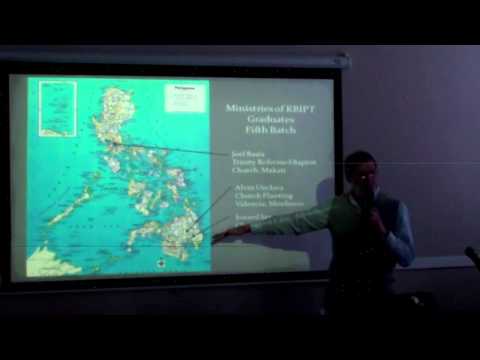
Free Grace Baptist Church - March 21 Missions Event
A Reformed Baptist missionary with thirty years of service in the Philippines presents an overview of the work in Metro Manila and beyond: church planting, a three-year pastoral training institute covering biblical languages and systematic theology, and itinerant teaching among pastors in remote provinces. The presentation is grounded in Revelation 5 and Romans 10 — Christ has purchased a people from every tribe, tongue, and nation, and messengers must be sent to gather them. The evening closes with prayer requests for the elders of Moonwalk Community Bible Church, the graduates scattered across the Philippine islands, and the ongoing effort to bring the gospel to Roman Catholics, Muslims, and those ensnared in health-and-wealth Christianity.