
Theological term
Christian Sabbath
21 sermons · All terms

2LCF Chapter 22 - Of Religious Worship and the Sabbath Day, Part 2

The perpetual moral obligation of the Christian Sabbath is grounded not in Sinai alone but in the creation ordinance of Genesis 2, where God blessed and sanctified the seventh day as a reflection of his own divine perfections. The 1689 London Baptist Confession of Faith chapter 22, paragraphs 7 and 8, frames the Sabbath as a positive-moral commandment — moral in its trans-covenantal, creation-rooted character, and positive in its covenantal form, shifting from seventh-day to first-day observance upon the resurrection of Christ as the inauguration of the new creation. The day belongs to God before it belongs to man: the governing question is not what may be avoided on the Lord's Day, but how near to God the worshipper may draw. Paragraph 8 calls for whole-souled preparation, rest from works, words, and thoughts entangled in worldly concerns, and the filling of the day with public and private worship, works of necessity, and works of mercy.

The Danger of Neglecting the Means of Grace

Hebrews 2:1–4 issues the first formal exhortation of the letter: pay much closer attention to what you have heard, lest you drift away from so great a salvation. The sermon traces the logic from Hebrews 1 — the Son of God is the final and supreme Word of God, surpassing angels, prophets, and every prior mediator — to the terribleness of neglecting that Word. Three causes of drift are identified: over-familiarity with the gospel, allowing lesser things to displace the greater, and the hardening of the heart through closed ears. The remedy is the faithful use of the means of grace — the gathered assembly, preaching, baptism, and the Lord's Supper — through which Christ continues to speak to his people.
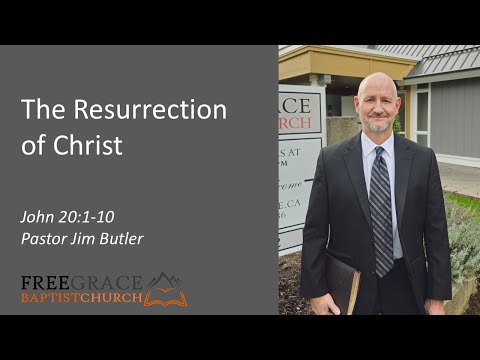
The Resurrection of Christ

The resurrection of Christ is the foundation of Christian hope, the confirmation of Old Testament prophecy, and the grounds of both justification and coming judgment. Working through John 20:1–10, this sermon examines the discovery and investigation of the empty tomb by Mary Magdalene, Peter, and the beloved disciple John, noting the eyewitness character of the narrative and the theological significance of the burial cloths. The shift from the seventh-day Sabbath to the first day of the week is grounded in Hebrews 4 and the pattern of new creation. The empty tomb preaches comfort to the believer and the certainty of judgment to the unbeliever, calling all to repent and believe on the risen Lord Jesus Christ.

The Christian Sabbath: Understanding Its Meaning Today
Hebrews 4:9 declares that a Sabbath rest remains for the people of God, and this sermon argues that the weekly Christian Sabbath retains its typological force in the new covenant because the consummmate eschatological rest it points toward has not yet arrived. Drawing on G.K. Beale and A.W. Pink, the exposition presses the logic that a sign pointing forward to a reality still future cannot have ceased to function. The hearer is called to receive Lord's Day worship as the market day of the soul and a forward-pointing sign of the eternal rest to come.
The Fourth Commandment, Part 3
Hebrews 4:9's use of the word 'Sabbatismos' — Sabbath-keeping as a practice to be observed — anchors the argument that a weekly Sabbath rest remains binding on the New Covenant people of God. The sermon traces the theological rationale for the day-change from Saturday to Sunday through the resurrection of Christ, arguing that the Son's rest from the work of new creation mirrors the Father's rest from the work of creation. Three alleged anti-Sabbatarian texts — Romans 14, Galatians 4, and Colossians 2 — are examined in turn and shown to address Jewish ceremonial calendar observances, not the moral fourth commandment. The burden of proof, the speaker argues, lies with those who would remove one commandment from the Decalogue, not with those who keep all ten intact.

The Fourth Commandment, Part 2
What does Jesus's ministry teach about the continuing obligation of the Sabbath commandment, and how does the resurrection determine which day Christians must observe? This study works through the Fourth Commandment (Deuteronomy 5:12–15) in its New Covenant application, examining Christ's relation to the law in Matthew 5:17–20, his correction of Pharisaic Sabbath-keeping in Matthew 12, and the testimony of all four Gospel accounts that the resurrection occurred on the first day of the week. The moral principle of one day in seven devoted to God is shown to be trans-covenantal and perpetual, while the positive-law element — which day — shifts from Saturday to Sunday with the resurrection of Christ, establishing what the 1689 London Baptist Confession calls the Christian Sabbath.

Ask FGBC - July 2024 Podcast with Pastors Butler and Kirkpatrick
Two pastors work through a wide-ranging set of questions submitted by listeners, covering the Reformed doctrine of the will, repentance and faith, holy days, Christian political engagement, believers' baptism, the New Covenant, forgiveness of unrepentant offenders, ongoing confession of sin, witnessing to homosexual neighbors, the Sabbath shift from Saturday to Sunday, the day of the Lord, the beatific vision, common grace, saving versus temporary faith, and the holy walk. Throughout, the answers are grounded in the 1689 London Baptist Confession and exposit the relevant biblical texts, consistently distinguishing the Reformed Baptist position from Arminian, dispensationalist, and paedobaptist alternatives. The session serves as accessible catechetical instruction for believers at all stages while modeling how confessional Reformed Baptist theology addresses both doctrinal and practical questions.

Ask FGBC #18: Should churches observe holy days?
The regulative principle of worship governs which days the church is obligated to observe, and the only holy day Scripture commands is the Lord's Day — the Christian Sabbath. Drawing on 1689 LBCF chapters 21 and 22, this Q&A explains why Reformed Baptist churches do not hold services on Good Friday, Christmas, or other traditional holy days: God has not commanded them, and imposing them binds consciences in ways Scripture does not authorize. The Lord's Supper, not Good Friday, is the appointed means of remembering Christ's death; every Lord's Day is already a resurrection celebration.

2LCF Chapter 22 - Of Religious Worship and the Sabbath Day
The 1689 London Baptist Confession chapter 22 grounds all religious worship in the regulative principle: God alone determines the acceptable manner of his own worship, and nothing not warranted by Scripture may be introduced. This session surveys the chapter's four movements — the regulative principle (paragraphs 1–2), the specific elements of worship (paragraphs 3–5), the appropriate location for worship (paragraph 6), and the Christian Sabbath as the appointed day (paragraphs 7–8). General revelation establishes the duty to worship; special revelation alone prescribes the way. The practical application is that Christians are bound neither to ecclesiastical tyranny (Rome, Anglicanism, independent pastoralism) nor to the inventions of men in God's house, but only to what God has commanded in his Word.
Wednesday Night Bible Study (Feb 23, 2022) - 4th Commandment, Part V
This concluding session on the Fourth Commandment (Exodus 20:8-11) surveys the entire biblical-theological arc from creation through the new covenant, demonstrating that the weekly sabbath is a perpetual moral obligation rooted in creation and redemption, not a ceremonial shadow abolished at the cross. The lecture reviews the progression from Genesis 2, Exodus 16, and Sinai through the prophets, the ministry of Christ, apostolic practice, and Hebrews 4, before working through the 1689 LBCF chapter 22, paragraphs 7 and 8, on the Christian sabbath. Application addresses the threefold use of the law with respect to sabbath, answers objections from alleged anti-sabbatarian texts in Romans 14, Galatians 4, and Colossians 2, and closes by grounding sabbath keeping in the active obedience of Christ imputed to believers.

The 4th Commandment (Part 3)
The Christian Sabbath is grounded in both creation and redemption, and the New Testament establishes Sunday — the Lord's Day — as the day of corporate worship by precedent and pattern rather than by bare precept. This third installment in a study of the Fourth Commandment examines three apostolic texts (Acts 20:7, 1 Corinthians 16:1–2, Revelation 1:10) that demonstrate the early church's practice of gathering on the first day of the week, then turns to two alleged anti-Sabbatarian passages (Romans 14 and Galatians 5) to show that neither addresses the weekly Sabbath but rather deals with Jewish calendar observances and the question of justification by works. The moral principle of one day in seven set apart for God remains binding on New Covenant believers, while the positive law has lawfully shifted the day from Saturday to Sunday in light of Christ's resurrection.

The Christian Sabbath, Part 2
The Christian Sabbath, grounded in both creation and redemption, does not cease in the New Covenant but is transformed by the resurrection of Christ from the seventh day to the first day of the week. Working through the ministry of Christ in Matthew 5 and 12, the resurrection accounts across all four Gospels, and the apostolic teaching in Hebrews 4, Acts 20, 1 Corinthians 16, and Revelation 1, this exposition argues that the moral obligation of one day in seven for the worship of God remains perpetually binding on the church. The shift from Saturday to Sunday Sabbath is grounded in Christ's completed redemptive work, which mirrors the Father's rest at the close of creation, establishing the Lord's Day as the Christian Sabbath. Believers are called to receive this day not as a legal burden but as a gracious gift from God, a weekly foretaste of the consummate rest that awaits the people of God.

The Christian Sabbath, Part 1
The Fourth Commandment's call to Sabbath observance is grounded not in Mosaic legislation alone but in the created order itself, the pattern of divine rest in Genesis 2, and the logic of redemption running through both Testaments. This sermon, the first in a series on the Christian Sabbath, expounds Deuteronomy 5:12–15 alongside key Old Covenant passages — Genesis 2, Exodus 16, Isaiah 56 and 58, and Jeremiah 31 — to argue that Sabbatarianism is a moral, perpetual, and trans-covenantal obligation rooted in creation and confirmed by covenant. The confession of the Second London Baptist Confession chapter 22 frames the doctrinal parameters, and the sermon closes with a call to receive the Sabbath not as a burden but as a blessed provision of God for his creatures.

The Third Missionary Journey, Part 4
Acts 20:1–16 narrates Paul's closing movements on his third missionary journey — through Macedonia and Greece, into Troas where Eutychus falls to his death and is raised, and then south toward Jerusalem. The passage is used to argue that the early church's pattern of worship is not merely descriptive but carries prescriptive force: the Lord's Day (the first day of the week), corporate assembly, the Lord's Supper, and the preaching of God's Word are the God-ordained elements of Christian worship, regulated by Scripture alone. Cessationist and confessional commitments frame the reading throughout, and the sermon closes with a direct call to sinners to trust in Christ's imputed righteousness and atoning blood as the only ground of salvation.

The Fourth Commandment, Part 3
Romans 14, Galatians 4, and Colossians 2 are frequently cited as evidence that no special day of worship remains for the people of God, but a careful exegesis of each passage shows they address Jewish ceremonial observances and food laws — not the moral, Decalogical Sabbath. The argument of Romans 14 concerns Christian liberty in matters of diet and ethnic calendar practices, not the abrogation of the Lord's Day; Galatians 4 condemns the Judaizing of salvation by attaching religious merit to ceremonial observances; and Colossians 2:16-17 targets the 'sabbaths' that functioned as shadows alongside new moons and festivals — a grouping the Old Testament itself consistently distinguishes from the weekly Sabbath. The Christian Sabbath, grounded in creation, codified at Sinai, prophesied for the new covenant era, and transposed by Christ's resurrection to the first day of the week, remains binding on the people of God — kept not as a means of justification but as a fruit of it.

The Fourth Commandment
The Fourth Commandment's call to observe the Sabbath is not a Mosaic innovation for Israel alone but a creation ordinance rooted in God's own rest and ratified across redemptive history. This sermon surveys Old Testament Sabbath theology — from Genesis 2 through the prophets Isaiah and Jeremiah — arguing that the Ten Commandments carry trans-covenantal moral force and that the Sabbath commandment retains binding validity for New Covenant Christians. Christ's defense of Sabbath in Mark 2 is shown to confirm rather than abolish the commandment, clearing away Pharisaic distortion while pointing back to the creational gift given for man as man, not Jew as Jew. Hearers are called to call the Sabbath a delight, to work diligently the six days, and to gather with the covenant community on the Lord's Day in holy worship.

Of Religious Worship and the Sabath Day (Part 3) (2LCF 22)
Romans 14, Galatians 4, and Colossians 2 are frequently cited to argue that the New Testament abolishes the Christian Sabbath, but each passage, read in context, is addressing something else entirely. Romans 14 concerns Christian liberty and mutual forbearance between stronger and weaker brethren over food and culturally retained Jewish observances; Galatians 4 condemns the Judaizers' insistence that legal observances can supplement faith and commend a sinner to God; and Colossians 2 targets the ceremonial, typological Sabbaths of Israel's calendar — festivals, new moons, and occasional sabbaths — not the weekly moral Sabbath rooted in creation and carried forward into the Lord's Day. The fourth commandment's moral obligation to set apart one day in seven for worship is a positive, perpetual, and binding ordinance, and Sabbath-keeping is the fruit of justification by grace through faith in Christ, not a means of obtaining it.
2LCF Chapter 22 - Of Religious Worship and the Sabbath Day
The Regulative Principle of Worship, grounded in the Second Commandment and confessed in Chapter 22 of the 1689 London Baptist Confession of Faith, holds that God alone determines the acceptable way in which He is to be worshipped — nothing more, nothing less, and nothing else than what He has commanded in Scripture. Working through paragraphs 1 and 2 of the confession, this session distinguishes the first commandment (who is to be worshipped) from the second (how God is to be worshipped), showing from Romans 1, Deuteronomy 12, 1 Timothy 3, Hebrews 12, and the narrative of Saul that innovation in worship — however well-intentioned — constitutes a form of idolatry. The practical application is that the elements of corporate worship must be drawn from Scripture alone: prayer, the reading and preaching of the Word, singing, and the sacraments — with no addition, subtraction, or substitution from the imaginations and devices of men.
The Confession of Thomas
John 20:24–31 presents Thomas's movement from emphatic unbelief to the confession 'My Lord and my God' — the confession that frames the entire fourth gospel, answering John 1:1 at its close. Thomas's refusal to believe is shown to be not mere doubt but a willful rejection of Old Testament testimony, the word and works of Christ, and apostolic witness — making Christ's gracious condescension to meet him all the more striking. The sermon expounds John's stated purpose in verses 30–31: that the gospel was written to produce saving faith, defined in the confession's terms as accepting, receiving, and resting upon Christ alone for justification, sanctification, and eternal life. Hearers are called to forsake the folly of placing conditions upon God and to confess with Thomas, 'My Lord and my God.'
Matthew 12:1-14
Jesus' conflicts with the Pharisees over Sabbath observance in Matthew 12:1–14 are not evidence that he abolished the fourth commandment, but that he cleared away the Pharisaic misinterpretation encrusting it. This Bible study is the second half of a biblical theology of the Sabbath, tracing the commandment through Christ's own teaching on the law (Matthew 5:17–20), the resurrection, the apostolic practice of first-day worship (Acts 20, 1 Corinthians 16, Revelation 1:10), and the eschatological Sabbath rest of Hebrews 4. The argument throughout is that the Decalogue is trans-covenantal, that Christ fulfilled rather than abrogated the fourth commandment, and that the shift from the seventh day to the first day reflects the same creational-redemptive logic — now centred on the risen Christ as head of the new creation.
The Resurrection of the Bridegroom
The resurrection of Jesus Christ from the dead is not a peripheral doctrine but the very ground of Christian hope, justification, and assurance. Working through John 20:1–23, this sermon examines three successive narratives — the empty tomb, the appearance to Mary Magdalene, and the appearance to the disciples — demonstrating through eyewitness detail, fulfilled Old Testament prophecy, and apostolic interpretation that the risen Lord is none other than the crucified sacrifice. The resurrection vindicates Christ's atoning work, secures the believer's justification, and commissions the church to proclaim the forgiveness of sins as its primary and irreplaceable task.