
Theological term
Book of Life
4 sermons · All terms
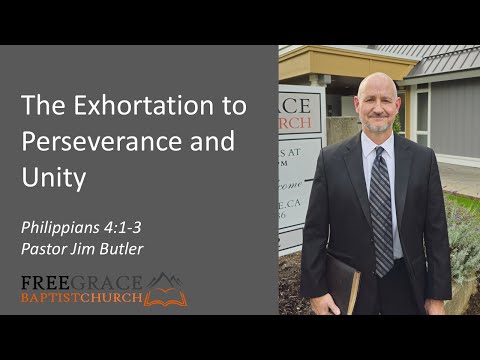
The Exhortation to Perseverance and Unity

Philippians 4:1–3 sets before the church two inseparable obligations: standing fast in the Lord and pursuing unity among the saints. Working through the apostle's affection for the Philippians, his call to perseverance, and the concrete dispute between Euodia and Syntyche, this sermon shows that the absence of unity both destroys the church and renders perseverance a near-impossible task. The biblical remedy for conflict — private confrontation, appeal to witnesses, and involvement of the church — is traced from Proverbs 18 and Matthew 18:15–20, with a complementarian reading of 1 Timothy 2 clarifying the nature of Euodia and Syntyche's gospel labor. Hearers are called to fasten their grips on Christ, his doctrines, and one another for the long haul of the Christian life.
The Idolatry of Israel, Part III
Exodus 32:30–35 presents Moses interceding for Israel after the golden calf debacle, confessing their great sin and offering himself to be blotted out of God's book on their behalf. The sermon works through Moses's rebuke, his request, and God's response, giving particular attention to the theological question of whether God blots names from the Book of Life — resolving the tension by distinguishing the conditional Old Covenant (a covenant of works securing physical blessings) from the unconditional New Covenant, in which the elect are eternally secure in Christ. The Mosaic intercession is read typologically as pointing to Christ, who was, in effect, blotted out on behalf of his people. The sermon closes with application to the gravity of idolatry drawn from Romans 1 and a quote from John Stott.
The Church at Sardis
The letter to the church at Sardis (Revelation 3:1–6) exposes the most insidious form of ecclesiastical decline: a church that maintains outward profession and institutional form while possessing no inward spiritual life. Christ's self-description as the one who holds the seven spirits of God reveals that He comes not merely to condemn but to supply the very life the dead church lacks — the life-giving power of the Holy Spirit working through the preached Word. The sermon traces Christ's indictment, His call to watchfulness and repentance, His encouragement of the faithful remnant within Sardis, and His promise to overcomers, applying the warning that decay and decline — not rank heresy — is the characteristic besetting sin of Reformed churches.
The Basis of Christian Joy
Jesus' command in Luke 10:20 — 'rejoice because your names are written in heaven' — reveals that the proper basis of Christian joy is not ministerial performance but sovereign grace in salvation. The sermon works through four reasons why performance-based joy is defective (it breeds pride, is no certain indicator of grace, does not abide, and fails in the valleys) and five reasons why salvation-based joy is superior (it belongs equally to all the saints, centers on Christ rather than self, flows from God's sovereign election, can be cultivated through the Word, and abides in all circumstances). The practical summons is to ground joy not in what one has done for God, but in what the triune God has done in electing, redeeming, and keeping His people.