
Theological term
Blood Atonement
43 sermons · All terms

The Glory of Christ's Departure, Part 2

John 16:29–33 closes the Upper Room Discourse with two movements: the disciples' partial yet progressing confession of Christ's omniscience, authority, and divine origin, and Christ's triumphant declaration that he has overcome the world. The disciples' imperfect understanding — soon to be perfected on the day of Pentecost through the Spirit's coming — is met not with rebuke but with Christ's desire for their peace, even as he foreknows their abandonment of him at the cross. The sermon grounds Christian courage in the face of tribulation not in human resolve but in the objective, accomplished victory of the enthroned Christ, whose current session at the Father's right hand is the only sufficient foundation for the church's advance through suffering.
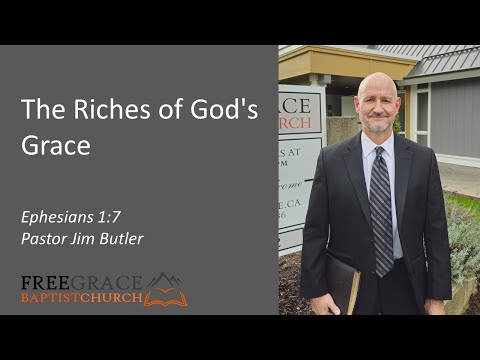
The Riches of God's Grace
Ephesians 1:7 declares that believers possess redemption through Christ's blood and the forgiveness of sins according to the riches of God's grace. This sermon works through the triune shape of salvation in Ephesians 1:3–14, arguing that the redeemed are not a class of morally capable people who needed modest assistance, but guilty sinners who required blood atonement, divine election, and the sealing of the Holy Spirit. The cross is shown to satisfy divine justice as well as display divine love — God is both just and the justifier of the one who has faith in Jesus, as Paul argues in Romans 3:21–26. The sermon closes with a direct application to baptism, presenting the ordinance as an outward declaration of the inward forgiveness and righteousness received through union with Christ.
Of the Duties of the Priests and Levites
Numbers 18–19 belongs to a literary unit stretching from chapters 16 through 19, all of which works to vindicate Aaron's God-ordained priesthood in the aftermath of Korah's rebellion. Chapter 18 defines the distinct duties and the provision of both priests and Levites, while chapter 19 supplies the purification rites that answer Israel's terrified cry in chapter 17 — 'shall we all utterly die?' — by providing a lawful way of drawing near to a holy God. The regulative principle of worship stands at the centre of these chapters: God alone determines who may approach Him, by what means, and under what conditions, and the death penalties attached to violations are not capricious but reflect the consuming holiness of the Lord. These Old Covenant arrangements point forward to the Lord Jesus Christ, the great High Priest who is also the Lamb, the one who both provides atonement and promotes and protects true worship under the New Covenant.

The Righteousness of David
David's declaration in 2 Samuel 22:21 — 'The Lord rewarded me according to my righteousness' — presents an apparent contradiction for anyone who knows his history of adultery, murder, and failure of justice in his own household. This sermon works through that tension by examining the theology underlying David's claim: his righteousness is not a personal moral achievement but the imputed righteousness of Christ received by faith alone, the same doctrine Paul draws from David's own Psalm 32 when arguing for justification in Romans 4. The sermon concludes with a call to imitate David not merely in doctrine but in appetite — in his fierce love for public worship, the means of grace, and the presence of God.

Live Stream - January 14, 2024
Exodus 12 sets forth the institution of the Passover as a type pointing forward to the atoning work of Christ, the true Lamb of God. The sermon works through the preparation for the Passover (vv. 1–11) and its twofold significance in judgment and mercy (vv. 12–13), before drawing out the antitypical fulfillment: the identification, nature, appropriation, and particular benefits of Christ's sacrifice. A closing illustration from D. A. Carson presses the pastoral application that the ground of the believer's assurance before God is not the strength or quality of faith but the blood of the Lamb alone.

Wednesday Night Bible Study - Leviticus 1-16
Leviticus 16, the Day of Atonement, stands at the theological center of both the book and the Pentateuch, answering the question Exodus leaves unresolved: how may sinful man enter the presence of a holy God. This session reviews the whole of Leviticus 1–16, tracing the book's structure from the sacrificial system and the institution of the priesthood through the laws of cleanness, showing that every element of the ceremonial apparatus — offering, priest, atonement — was divinely instituted, not humanly devised. The Nadab and Abihu incident demonstrates that unauthorized worship is mortal transgression, while the two-goat ritual of chapter 16 pictures both propitiation and expiation, all pointing forward to the once-for-all sacrifice of the Lord Jesus Christ.

The Installation of the Priesthood
Leviticus 8–10 records the ordination, ministry, and judgment of Israel's priesthood, tracing the way sinful man may approach a thrice-holy God through divinely prescribed sacrifice. The death of Nadab and Abihu for offering that which the Lord had not commanded warns that worship is regulated by God alone, not by the worshiper's innovation. Christ fulfills every type embedded in this system — as the holy, harmless, and undefiled High Priest who satisfies divine justice once for all. The sermon calls new-covenant worshipers to approach the Lord's Supper with the same reverence and eager joy that the priestly fire of Leviticus 9 ought to have kindled.

The Other Offerings
Leviticus 2–7 presents the grain, peace, sin, guilt, and trespass offerings alongside the burnt offering already treated in chapter 1, and the cumulative weight of this sacrificial legislation presses the reader toward two convictions: the absolute holiness of God and the radical sinfulness of man. Each offering — the substitutionary death of an unblemished animal, the sprinkling of blood, the atonement language repeated in nearly every pericope — functions as typology pointing forward to the one Lamb of God who would fulfill all that the system signified. The final summary verse of chapter 7 frames the entire system as divine law, not human suggestion, which carries direct implications for how the church must approach God in the new covenant era under the regulative principle of worship.
The Tabernacle Erected, and the Glory of God
Exodus 35–40 records the construction, assembly, and divine consecration of the Israelite tabernacle, culminating in the glory cloud filling the completed dwelling place. This session surveys those chapters as the climax of the book of Exodus, tracing the biblical-theological theme of God's dwelling with his people from Eden through the tabernacle, the Solomonic temple, and forward to the incarnate Word who tabernacled among us. A sustained exegetical focus falls on the tension in Exodus 40:35 — Moses unable to enter the glory-filled tabernacle — and its resolution in Leviticus 9, where blood atonement transforms God's dwelling place into a meeting place. The session closes by drawing out the regulative principle of worship, the typological significance of the tabernacle as a shadow of Christ, and the necessity of blood atonement for sinful creatures to approach a holy God.
The Idolatry of Israel, Part III
Exodus 32:30–35 presents Moses interceding for Israel after the golden calf debacle, confessing their great sin and offering himself to be blotted out of God's book on their behalf. The sermon works through Moses's rebuke, his request, and God's response, giving particular attention to the theological question of whether God blots names from the Book of Life — resolving the tension by distinguishing the conditional Old Covenant (a covenant of works securing physical blessings) from the unconditional New Covenant, in which the elect are eternally secure in Christ. The Mosaic intercession is read typologically as pointing to Christ, who was, in effect, blotted out on behalf of his people. The sermon closes with application to the gravity of idolatry drawn from Romans 1 and a quote from John Stott.

The Idolatry of Israel, Part 1
Exodus 32:1–14 records the catastrophic breach of Israel's covenant oath, sworn only weeks earlier in Exodus 24, as the people demand a visible god and Aaron fashions the golden calf. The passage exposes the persistent human tendency toward idolatry — rooted in total depravity and inflamed by impatience, carnality, and the craving for a manageable deity — and demonstrates that their sin was not a denial of Yahweh but a second-commandment violation: representing the true God by a forbidden image. The sermon then turns to Moses' masterful intercession, grounded in appeals to God's power, his glory before the nations, and his covenant oath to the patriarchs, and concludes with extended treatment of divine immutability and anthropopathism to explain why Exodus 32:14 ('the Lord relented') cannot be made to teach flux or change in God.

The Gentiles and the Covenant of Grace, Part 1
Ephesians 2:11–13 presents the former covenantal destitution of Gentile believers and the transforming power of Christ's blood that brought them near to God. The passage shows that Gentiles suffered two compounding liabilities: individual deadness in sin and corporate exclusion from the commonwealth of Israel and the covenants of promise. Against this bleak background, the apostle's 'but now' in verse 13 declares that union with Christ — secured through his atoning blood — has abolished the alienation and incorporated believing Gentiles into the one new humanity. The sermon argues that this covenantal reversal should evoke perpetual humility and gratitude in every believer, and calls the unbeliever to come to the Father through the Son in the Spirit.

The Depravity of Man
Romans 1:18–32 presents the universal human condition as one of willful suppression of God's self-disclosure in creation, resulting in inexcusability before a holy God. The sermon traces three movements in the passage: the revelation of divine wrath, the reason for that wrath in humanity's idolatrous exchange of the Creator for the creature, and the nature of God's judgment as a punitive giving-over of sinners to the very sins they pursued. The sermon argues that the preaching of the law — including the full weight of human depravity — is indispensable to the proclamation of the gospel, because sinners must understand their ruin before they will look to the remedy of blood atonement in Christ alone.
The Prayer of the Persecuted Church
When the early church faced arrest and official prohibition of gospel preaching, its first instinct was corporate prayer — not political agitation or fearful compliance. This exposition of Acts 4:23–31 traces the structure of that prayer: an invocation of God as sovereign Creator, an exposition of Psalm 2 applied to the conspiracy against Christ and his people, and a pointed supplication not for safety or comfort but for boldness to declare the word. The sermon calls the contemporary church to the same God-centred prayer, understanding persecution as something always beneath the sovereign hand of God, and faithfulness in proclamation as the unchanging vocation of every Christian steward.

Exodus 18 - Jethro
Exodus 18 presents two interconnected events: the conversion of Jethro, priest of Midian, and his practical counsel to Moses on delegating judicial authority. The conversion of Jethro follows the pattern of one called out of polytheistic darkness into the knowledge of the true and living God — marked by joy, praise, confession of Yahweh's supremacy, and worship through sacrifice. The passage further grounds civil government in the fear of God and the rule of law, teaching that qualified civil rulers must be able, God-fearing, truthful, and free from covetousness — qualities that remain the standard for righteous governance in any age.

The Testimony Concerning the Bridegroom
John 3:22–30 presents the final recorded testimony of John the Baptist in the Fourth Gospel, in which John responds to his disciples' anxious complaint that all are coming to Jesus rather than to him. John's response is structured around four declarations: the sovereignty of God governs the origin and success of every ministry; his own role was never to be the Christ but the forerunner sent before him; his joy is that of the friend of the bridegroom who delights simply to stand in the presence of the bridegroom and hear his voice; and therefore Christ must increase while he must decrease. The sermon draws out both the Christological weight of the bridegroom image — rooted in the Old Testament covenant between God and Israel and fulfilled in Christ and his church — and its practical implications for how ministers and all God's people resist pride by being increasingly occupied with Christ rather than with themselves.

Exodus 15 - Song of Moses
Exodus 15 records the Song of Moses, a celebration of divine redemption and righteous judgment sung by Israel after the destruction of Pharaoh's army in the Red Sea. The sermon expounds the threefold structure of the song — the triumph of the Lord, the defeat of the Egyptians, and the majesty and incomparability of God — before tracing its prophetic reach into the nations' fear of Yahweh and the ultimate goal of covenant dwelling. The bitter waters of Marah complete the chapter, exposing Israel's reflexive grumbling as a failure to trust the God who had already done the greater work of redemption. Hearers are called to praise God for both his saving mercy and his just judgment, and to pass that doxological heritage to the next generation.

Exodus 12 - Part 1
Exodus 12 presents the institution of the Passover and the Feast of Unleavened Bread as a blood ritual pointing forward to Christ, the anti-type of the Passover lamb. The chapter is expounded in three movements: the specific blood-ritual instructions God gives to Moses and Aaron (vv. 1–13), the regulations for the memorial Feast of Unleavened Bread (vv. 14–20), and Moses's transmission of those instructions to the elders of Israel (vv. 21–28). The blood on the doorposts was not a sign for an omniscient God who needed locating data, but an outward expression of the faith of those who believed Yahweh's word — a pattern fulfilled when Christ, the blemish-free Lamb, shed his blood so that the wrath of God passes over all who trust in him. The study closes by drawing out the catechetical purpose embedded in the Passover ordinance: that each generation would rehearse the redemptive acts of God and understand that without the shedding of blood there is no remission.

The Elements of Family Worship
Deuteronomy 6:6–7 commands parents to teach God's word diligently to their children in every season of daily life, and this sermon traces that mandate across both Testaments — from Abraham's household religion in Genesis 18, through the Psalms and Proverbs, to Paul's charge in Ephesians 6:4 and the example of Timothy's mother and grandmother. The preacher argues that family worship is a clear biblical obligation whose specific form is left to the conscience, and that failure to instruct children in the fear of God — illustrated negatively by Eli and Samuel's sons — leaves them unguarded against a culture actively hostile to Christ. Fathers and mothers are exhorted to commit first to public Lord's Day worship, to honour the sanctification of the Sabbath, and then to establish a family altar consisting of Scripture reading, prayer, and singing — scaled appropriately for their household — as the primary means of passing covenant knowledge to the next generation.

The Good Soldier of Jesus Christ
The qualifications and character of faithful gospel ministry are examined through 2 Timothy 2:1–7, where Paul gives Timothy three interlocking commands: be strong in the grace of Christ, commit sound doctrine to faithful men who can teach others, and endure hardship as a soldier of Jesus Christ. Three metaphors — the devoted soldier, the disciplined athlete, and the diligent farmer — together with the dedication of the disciple, frame what faithfulness in pastoral ministry demands. The sermon presses both pastors and congregations to resist the pressure of cultural and governmental opposition, to identify and train men for ministry, and to understand that the dignity of gospel preaching warrants the highest standards of devotion, discipline, and endurance.

The Defense in Jerusalem
Acts 22 records Paul's defense before the Jerusalem mob and his invocation of Roman citizenship before the commander, and this exposition traces both movements as a pattern for how believers engage hostile civil and religious authorities. Paul's account of his conversion — his Jewish upbringing under Gamaliel, his confrontation with the risen Christ on the Damascus road, his instruction through Ananias, and his temple vision — demonstrates that he is not an enemy of Israel but rather the fulfillment of what a faithful reading of the Old Testament demands. The crowd's fury erupts not over Paul's biography but over Christ's commission to the Gentiles, exposing their rejection of covenant promises made to Abraham and repeated through the Psalms and prophets. The sermon closes by pressing Paul's gospel — blood atonement, imputed righteousness, and salvation by grace through faith — upon every hearer, including the worst of sinners.

The Darkness of Depression
Proverbs 15:13 declares that sorrow of heart breaks the spirit, and Scripture is neither silent nor superficial on the darkness of depression. This sermon surveys the presence of depression among the people of God across the canon — from Elijah under the broom tree, to David's lament in the Psalms, to the Man of Sorrows himself — establishing that the condition is real, that it afflicts genuine believers, and that in itself it is not sinful. Practical counsel drawn from both special and general revelation is offered: the physical ABCs of rest, diet, and exercise; the spiritual ABCs of prayer, Scripture, and corporate worship; and careful instruction for those seeking to help the suffering, closing with the reminder that the ground of hope is not gladness of feeling but the imputed righteousness of Christ received by faith alone.

The Ministry of Philip in Samaria
Acts 8:5–8 records Philip's preaching ministry in Samaria — a region despised by Israel as racially and religiously impure — and presents it as the deliberate fulfillment of Christ's commission in Acts 1:8 to carry the gospel to Jerusalem, Judea, Samaria, and the uttermost parts of the earth. The sermon traces the historical background of Samaritan alienation from Israel, the fourfold summary of Philip's ministry (his preaching, the response of the crowds, the authenticating miracles, and the resulting joy), and the theological significance of the Spirit's confirmation through Peter and John. Against contemporary debates over racial justice, the sermon argues that the cross of Christ — preached faithfully in his offices as prophet, priest, and king — is the only power that reconciles divided peoples and extends the kingdom of God across ethnic boundaries.

Stephen's Defense, Part 7
The tabernacle and temple of Israel were not ends in themselves but types pointing forward to the Lord Jesus Christ as the true dwelling place of God with his people. Expounding Acts 7:44–45, this sermon traces Stephen's defense against the charge of being anti-Temple by surveying the tabernacle in the wilderness (Exodus 25–40), the Levitical sacrificial system as the God-ordained means of approaching a holy God, and the conquest of Canaan under Joshua as the triumph of Yahweh's strength over Israel's enemies. The central application is that sinful men may dwell with God only through the blood of Jesus Christ — the substance to which every tabernacle, temple, sacrifice, and conquest pointed — and that the same sovereign God who drove out the Canaanites is the God who mortifies sin in his people by his Spirit.

The Consequences of the Fall
Genesis 3:14–24 records the divine sentences upon the serpent, the woman, and the man after the fall, but within those judgments God announces the first gospel promise. The Proto-Evangelion of verse 15 — that the seed of the woman will crush the head of the serpent — is the programmatic nucleus of all subsequent redemptive history, finding its fulfilment in the death and resurrection of the Lord Jesus Christ. Headship and labor, often misread as punishments of the fall, are shown to be pre-fall ordinances whose distortion, not existence, is the consequence of sin. The sermon closes with the coats of skin as an enacted prophecy of blood atonement and the expulsion from Eden as a mercy that preserves fallen man until the Second Adam secures permanent access to the tree of life.

Genesis 3:17-24
Genesis 3:17–24 confronts the reader with the full weight of the curse upon Adam and the ground, but the passage is finally a text of hope. The consequences imposed upon Adam — the ground cursed, toil unrelenting, and death certain — do not obliterate God's redemptive purpose announced in verse 15; they preserve the race through which the promised seed will come. Adam's faith-filled naming of Eve, God's provision of animal-skin tunics foreshadowing blood atonement, and the merciful expulsion from the tree of life are all acts of divine grace that anticipate the whole subsequent history of redemption, culminating in the Lord Jesus Christ's decisive conquest of the devil.

The Ascension of Christ
The ascension of Christ in Acts 1:9–11 is no mere epilogue to the resurrection but a theologically freighted event with direct consequences for how believers understand Christ's present reign, the Lord's Supper, intercession, and final glorification. Working through the passage, the sermon establishes that the ascension was visible, local, bodily, and glorious — witnessed by the apostles and interpreted by angelic messengers who announce Christ's return in like manner. The ascension completes Christ's earthly mediatorial work, secures the gift of the Spirit, and grounds the believer's assurance in a high priest who always lives to make intercession — the pledge that those whom He justified He will also glorify.

The Hope of OT Believers
What did Old Testament believers actually know about the coming Redeemer? This sermon works through six lines of biblical evidence — from the protoevangelium of Genesis 3:15 through the prophets and Psalms — to demonstrate that the messianic hope of Israel was not vague or mystical but concrete, objective, and increasingly specific across the covenant history of redemption. Old Testament saints knew that the Deliverer would be a man born of a woman, would accomplish victory through substitutionary death, would be of Davidic lineage, would be both God and man, and that faith in him was the appointed way of salvation. The sermon closes at the Lord's Supper, grounding the ordinance in the fulfillment of all these promises in the person and work of Christ.
Genesis 3:15
Genesis 3:15, the protevangelium, announces a Redeemer who would be born of a woman, accomplish victory through suffering and death, and crush the serpent's head — not a vague, undefined figure but a precisely identified Messiah. This Bible study traces the progressive covenantal narrowing of that promise from the seed of the woman (Genesis 3) through the Abrahamic, Mosaic, and Davidic covenants, the Psalms, and the prophets, demonstrating that Old Testament believers possessed substantial, detailed knowledge of the coming Christ. The study draws on Paul, John Owen, and the 1689 London Baptist Confession to show that salvation has always been by grace alone, through faith alone, in Christ alone, with no separate Old Testament economy of law-keeping. The closing application presses hearers toward Simeon-like doxology in response to the Christ who fulfills every promise of the Old Testament.

The Most Important Question for Young People
Psalm 119:9 poses what the sermon calls the most important question for young people: 'How can a young man cleanse his way?' Before answering, the text forces an honest reckoning with the doctrine of total depravity and total inability — the way stands in need of cleansing precisely because every faculty of human nature is corrupted by the fall in Adam, and no sinner can commend himself to God apart from sovereign grace. The answer the psalmist gives, 'by taking heed according to Your Word,' encompasses both initial justification by grace through faith in Christ and ongoing sanctification by the same Word and Spirit. Parents and young people alike are exhorted to engage Scripture with the whole heart — obeying, memorizing, meditating, declaring, and delighting in it — as the only path to a cleansed way.