
Theological term
Barakah
6 sermons · All terms
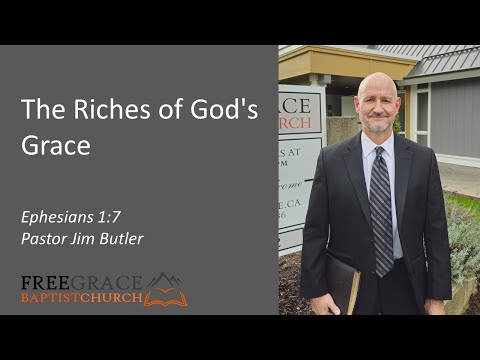
The Riches of God's Grace

Ephesians 1:7 declares that believers possess redemption through Christ's blood and the forgiveness of sins according to the riches of God's grace. This sermon works through the triune shape of salvation in Ephesians 1:3–14, arguing that the redeemed are not a class of morally capable people who needed modest assistance, but guilty sinners who required blood atonement, divine election, and the sealing of the Holy Spirit. The cross is shown to satisfy divine justice as well as display divine love — God is both just and the justifier of the one who has faith in Jesus, as Paul argues in Romans 3:21–26. The sermon closes with a direct application to baptism, presenting the ordinance as an outward declaration of the inward forgiveness and righteousness received through union with Christ.

The Gracious Purpose of the Father
Ephesians 1:3–6 opens with what the Apostle Paul calls a 'barakah' — a formal blessing of God followed by specific reasons for that praise. This sermon expounds the Father's role in the covenant of redemption: His sovereign, unconditional election of sinners in Christ before the foundation of the world, and His predestinating purpose that those chosen would be made holy and blameless. Election is the cause, not the consequence, of faith and repentance — sinners dead in trespasses and sins are chosen not because of foreseen merit but according to the good pleasure of God's will alone. The sermon calls believers to respond to the doctrine of election not with defensive polemic but with the doxological posture Paul himself models: praise, blessing, and adoration to God Most High.

The Introduction to Ephesians
Ephesians 1:1–2 introduces one of the richest doctrinal letters in the New Testament canon, and this sermon surveys the authorship, historical context, and theological purpose of the epistle before examining Paul's greeting to the saints. The apostle's self-identification as one sent by Christ 'by the will of God' grounds his authority not in self-appointment but in sovereign divine commission, while his description of the recipients as 'saints' and 'faithful in Christ Jesus' defines sainthood in purely biblical terms — all who are justified by grace alone through faith alone in Christ alone. The sermon traces Paul's founding ministry in Ephesus through Acts 18–19, showing how the gospel's triumph over witchcraft, idolatry, and the cult of Diana provides the backdrop for the letter's emphasis on Christ's supremacy over all powers. The epistle is previewed as a two-part structure — doctrinal foundation (chapters 1–3) followed by practical application (chapters 4–6) — aimed at grounding believers in both the indicatives and imperatives of redemption.

The Testimony of John the Baptist, Part 1
John 1:19–28 records the official interrogation of John the Baptist by a delegation sent from Jerusalem to establish his identity and authority. The Baptist's threefold denial — he is not the Christ, not Elijah bodily returned, not the prophet of Deuteronomy 18 — is matched by his positive confession as the voice of Isaiah 40, the forerunner who prepares the way of Yahweh and thereby implicitly confesses the deity of Jesus. The sermon traces the Baptist's testimony through Luke 1's prophecy of Zacharias, the Transfiguration account in Matthew 17, and the prologue of John 1, showing that the Baptist preached not only repentance but the remission of sins through the coming Messiah — that is, justification by faith alone. The governing application is that Christ's people exist to proclaim His preeminence, following the Baptist's model of humble, courageous, light-and-heat ministry that makes nothing of self and everything of Jesus.
1 Kings 8 Part 1
Solomon's prayer at the dedication of the temple in 1 Kings 8 presents some of the richest theology in all of Scripture. The prayer's foundation is theology proper — God's incomparability, faithfulness, transcendence, and imminence — before moving to seven petitions that range from civil justice to Gentile inclusion to the prospect of exile and restoration. The sermon draws direct lines between Solomon's theology of prayer and the structure of the Lord's Prayer, and calls believers to cultivate daily communion with God as the indispensable ground of genuine holiness.
Thanksgiving for the Mercy of God
Psalm 103 calls every redeemed soul to deliberate, whole-hearted praise — not as a passive emotion but as a disciplined act of self-address rooted in theological memory. The sermon works through three movements: the reminder to bless God (vv. 1–2), the reasons to bless God both individually and corporately (vv. 3–18), and the universal summons extending that call to angels and all creation (vv. 19–22). Forgiveness of all iniquities stands at the head of the list of benefits, and every temporal and spiritual blessing flows from a God whose mercy is not transient like the grass of the field but everlasting to everlasting. The psalm, rightly applied in the new-covenant believer's life, keeps one near the cross, corrects the tendency toward practical atheism, and transforms ingratitude into genuine thanksgiving.