
Theological term
Antitype
16 sermons · All terms

The Appearance of Christ to Mary

John 20:11–18 records the appearance of the risen Christ to Mary Magdalene at the empty tomb — the first resurrection appearance in John's Gospel. The sermon expounds three movements: Mary's examination of the tomb, the presence of the Lord, and the word of the Lord. The positioning of the two angels at the head and feet of where Christ lay is argued to be a deliberate theological echo of the cherubim over the mercy seat on the Ark of the Covenant, signifying that the tomb itself is the antitype of the place of propitiation — the locus of atonement accomplished by Christ's death, burial, and resurrection. The sermon closes with exhortations to believe in Christ as the sole mercy seat for sinners, to seek Him through His Word and ordinances when His presence seems distant, and to rest in Him as the elder brother who intercedes at the right hand of the Father by the Spirit.
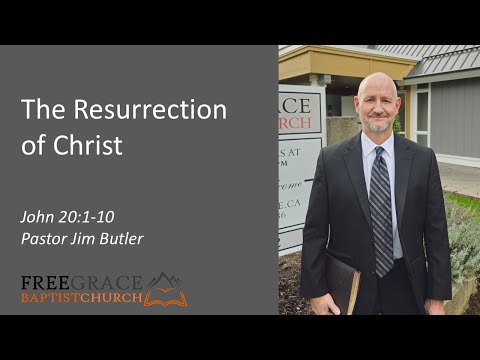
The Resurrection of Christ
The resurrection of Christ is the foundation of Christian hope, the confirmation of Old Testament prophecy, and the grounds of both justification and coming judgment. Working through John 20:1–10, this sermon examines the discovery and investigation of the empty tomb by Mary Magdalene, Peter, and the beloved disciple John, noting the eyewitness character of the narrative and the theological significance of the burial cloths. The shift from the seventh-day Sabbath to the first day of the week is grounded in Hebrews 4 and the pattern of new creation. The empty tomb preaches comfort to the believer and the certainty of judgment to the unbeliever, calling all to repent and believe on the risen Lord Jesus Christ.

The True Vine
When Jesus declares 'I am the true vine' in John 15:1, he is not merely offering a pastoral metaphor — he is making a claim that draws together the entire sweep of Old Testament revelation. This sermon traces the two categories of 'I am' statements in John's Gospel, first the absolute 'I am' without a predicate (rooted in Exodus 3:14 and the Isaianic Yahweh-speeches), and then the seven predicative 'I am' statements, culminating in the vine. The second half sets that declaration in its biblical-theological frame: Old Covenant Israel was named God's firstborn son (Exodus 4:22), and Matthew's Gospel deliberately patterns the opening of Jesus' ministry — the flight to Egypt, the passage through water, the wilderness temptation — on Israel's national history, identifying Jesus as the true and obedient Israel who succeeds where Adam and Israel failed. The sermon calls hearers to believe on the one who says 'if you do not believe that I am, you will die in your sins,' and to worship him as the fulfillment of every covenant promise.

CTF 2024 Session 6: Further Explorations in Scripture Interpretation

Christ is the scope of the whole of Scripture — this is the claim Peter makes in Acts 3 and unpacks theologically in 1 Peter 1:10–12, and it is the claim this session presses upon interpreters of the Bible today. Beginning with Peter's sermon in Acts 3 and moving to his mature reflection in 1 Peter 1, the lecture traces how God spoke through the writing prophets from Moses onward concerning the sufferings and glory of Christ, how those prophets studied one another's writings in search of a fuller understanding, and how the coming of Christ together with the New Testament's explanatory revelation made explicit what was implicit in the Old Testament all along. The session closes with several hermeneutical implications: the analogy of Scripture is not a Reformation invention but a prophetic practice; the Old Testament contains a surplus of divinely embedded meaning that awaits later revelation to unveil; and subsequent revelation does not reinterpret the Old Testament but fulfils and illuminates the meaning that was always there.

Live Stream - January 14, 2024
Exodus 12 sets forth the institution of the Passover as a type pointing forward to the atoning work of Christ, the true Lamb of God. The sermon works through the preparation for the Passover (vv. 1–11) and its twofold significance in judgment and mercy (vv. 12–13), before drawing out the antitypical fulfillment: the identification, nature, appropriation, and particular benefits of Christ's sacrifice. A closing illustration from D. A. Carson presses the pastoral application that the ground of the believer's assurance before God is not the strength or quality of faith but the blood of the Lamb alone.

Restrictions on Levitical Priesthood
Leviticus 21–22 sets out restrictions governing the Levitical priesthood: whom priests may mourn, whom they may marry, what physical conditions disqualify them from service, who may eat from their food, and what animals are acceptable for sacrifice. The underlying logic in every category is the same — the holy God who dwells among his people demands a priesthood, a sacrifice, and a manner of worship that reflect his holiness and are not corrupted by defilement or defect. These chapters point typologically beyond themselves to the Lord Jesus Christ, who alone fulfils what the Levitical order only approximated: the perfect high priest who is holy, harmless, and undefiled, and the perfect sacrifice offered once for all. The superiority of the new covenant is seen precisely here — the exclusions of the old order (eunuchs, the maimed, the lame) give way to the great invitation of Christ to the broken and outcast to come to the wedding feast.

The Ratification of the Covenant, Part I
Exodus 24:1–8 records the formal ratification of the old covenant at Sinai, and this expository study examines three elements the text presents: God's instructions structuring nearness and distance on the mountain, Moses' compliance in writing the covenant words and erecting the altar and twelve pillars, and the blood-sprinkling ceremony that sealed the covenant between Yahweh and Israel. The sermon argues that the old covenant, far from being a mere administration of the covenant of grace, is a republication of the covenant of works — a position the 1689 LBCF reflects in distinction from the Westminster Confession. The blood of the ratification ceremony finds its antitype in the blood of Christ, whose once-for-all sacrifice inaugurates the new covenant in which believers stand accepted not by their own obedience but by that of their covenant head.

The Antitype of the Temple
John 2:18–25 presents Jesus as the antitype of the Old Testament temple — the reality to which the type pointed and in which it finds its fulfillment and realization. The Jews' demand for a sign of his authority after the temple cleansing is answered by the one definitive sign: the death and resurrection of Christ, which the apostle John interprets for the reader in verses 21–22. The sermon also treats the omniscience of Christ as evidence of his divinity, demonstrated in his refusal to entrust himself to those whose belief was superficial and temporary. Hearers are called to flee to Christ in genuine faith and repentance, receiving both forgiveness of sin and the imputed righteousness of Christ that avails before the Father.

The Earthly Temple in Stephen's Defense
Stephen's defense before the Sanhedrin in Acts 7:44–50 is not an attack on the temple but a demonstration that the Sanhedrin itself has misunderstood it. Working through the tabernacle, David's desire, Solomon's building, and Isaiah's oracle, Stephen shows that Israel's entire sacrificial and dwelling-place theology was typological — pointing forward to the Lord Jesus Christ as the true temple in whom God dwells with his people. The sermon argues that the dispensational expectation of a rebuilt physical temple in Jerusalem represents a retreat from fulfilled typology, and calls hearers to receive Christ as the antitype of all that the earthly sanctuary signified.

Introduction to the Book of Exodus
The book of Exodus, whose Hebrew title derives from its opening words ('these are the names'), sets forth the foundational redemptive act of the Old Testament — God's deliverance of Israel from Egyptian bondage in fulfillment of the Abrahamic covenant promise of Genesis 15. This session surveys the book's structure, authorship, and theological themes, including the threefold division of the law (moral, judicial, and ceremonial), the typological relationship between Moses and Christ, and the Baptist confessional distinction that identifies the Mosaic covenant as a covenant of works rather than an administration of the covenant of grace. The study closes by tracing how Exodus functions as a foundational template for redemptive history across both Testaments, climaxing in the antitypical work of the Lord Jesus Christ as the true Passover lamb and covenant mediator.
Stephen's Defense, Part 8
Stephen's defense before the Sanhedrin turns on a single argument: the tabernacle and temple were never ends in themselves but types pointing forward to Jesus Christ, so the Sanhedrin's attachment to the temple above the one the temple signified exposes them as the true anti-temple party. Working through Acts 7:46–50 against the background of the Davidic Covenant in 2 Samuel 7, the sermon traces how David's desire to build a house for God is fulfilled typically in Solomon and ultimately in the Lord Jesus Christ, who as the Son of God builds the church as the true dwelling place of God Most High. The testimony of Isaiah 66:1–2 then seals the point: God who fills heaven and earth cannot be confined to any man-made structure, yet this same transcendent God condescends to dwell with the poor and contrite in spirit — a reality now fully realized in new covenant worship through Christ.

2 Kings 4:38-44
Two miracles in 2 Kings 4:38–44 — the purification of a deadly stew and the multiplication of bread for one hundred men during a famine — reveal a God who governs both the rise and fall of nations and the smallest necessities of ordinary life. The famine itself is a covenant curse (Leviticus 26; Deuteronomy 28), yet within that judgment God provides for his remnant with conspicuous abundance, feeding the prophets and leaving surplus. Elisha functions throughout as a type of Christ, whose own feeding miracles echo and surpass this episode. The passage calls believers to resist carnal anxiety and fear by resting on God's demonstrated sovereignty in everyday, earthy circumstances.
The Olivet Discourse, Part 4
Matthew 24:14 declares that 'this gospel of the kingdom will be preached in all the world as a witness to all the nations, and then the end will come.' Preaching from a preterist perspective, this exposition argues that the gospel proclamation described in verse 14 was fulfilled in the first century prior to the destruction of Jerusalem in A.D. 70, and that 'the end' in view is not the final judgment but the termination of the old covenant dispensation and the Jewish temple. The sermon develops a biblical-theological account of the temple — from Eden through the Mosaic tabernacle, Solomon's temple, and into Christ as the antitype who fulfills and renders obsolete the entire sacrificial system — drawing especially on Hebrews 8. The practical conclusion is an unqualified call for the church to maintain its unchanged mission of gospel proclamation regardless of external persecution, internal apostasy, or cultural pressure.
Deuteronomy 18
Deuteronomy 18 addresses two offices of spiritual leadership in Israel — the priests and the prophets — and sets them against the backdrop of the occultic practices of the Canaanites. The provision for Levites and priests (vv. 1–8) establishes that God, through the faithfulness of his covenant people, is the material sustainer of those devoted to sacred service. The prohibition against divination, sorcery, and necromancy (vv. 9–14) makes plain that Israel was to seek God's word through appointed means, not pagan dark arts. The chapter reaches its pinnacle in the promise of a prophet like Moses (vv. 15–22), which finds its ultimate antitype in the Lord Jesus Christ as prophet to the church.
Christ As Our Great High Priest

Hebrews 5:1–10 and 7 present Jesus Christ as the fulfillment and surpassing of the entire Old Testament priestly order — both Levitical and Melchizedekian. The sermon traces how the book of Hebrews develops a two-strand typology: Christ fulfills what the Levitical priests anticipated (solidarity with the people, divine appointment, sacrifice for sin), while simultaneously transcending them by coming from an entirely different and superior order, the eternal priesthood of Melchizedek. Because Christ's priesthood is indestructible and his sacrifice once-for-all, he is able to save completely and intercede permanently — a Redeemer whose priestly work is final, all-sufficient, and the only ground of forgiveness before a holy God.
The Testing of Abraham
Genesis 22 presents one of the most demanding tests of faith in the Old Testament — God commanding Abraham to sacrifice Isaac, his only son, on Mount Moriah. This exposition works through three movements in the narrative: the presentation of the test, Abraham's obedience, and God's approval, before turning to the rich typology the passage contains. Abraham typifies God the Father who spares nothing in giving his Son; Isaac typifies the willing, obedient Son of God; and the ram caught in the thicket typifies the substitutionary sacrifice of Christ at Calvary, where no angel intervened and the knife of divine justice fell on the Son of God's love. Read your Old Testament as a believer in Christ — Genesis 22 is about Jesus.