
Theological term
Anointing
4 sermons · All terms
Redemption, Restoration, and Righteousness

Isaiah 61 presents the anointed Messiah declaring his own mission of redemption, restoration, and righteousness for his people. The sermon works through all eleven verses, arguing that Christ alone — anointed by the Spirit without measure as prophet, priest, and king — fulfils the role foreshadowed by every Old Covenant anointing and reverses the covenantal curses of Deuteronomy 28. His saving work springs up the church, the true Zion, from the ruins of Old Covenant desolation, and clothes her not in her own merit but in the imputed righteousness of the Mediator. The sermon closes with the church's response of rejoicing and a call to the unbeliever to believe on Christ and receive everlasting life.

The Anointing at Bethany

John 12:1–11 presents the anointing at Bethany as a window into the worthiness of Christ on the eve of His passion. Mary's extravagant gift of costly spikenard — lavished on the feet of Jesus six days before the Passover — is set in deliberate contrast with the sanctimonious theft of Judas Iscariot and the misguided indignation of the disciples. Christ receives the anointing, defends Mary from her critics, and interprets the act as preparation for His burial, underscoring that the one going to the cross is altogether lovely and chief among ten thousand. The sermon calls believers to a devotion that spares no expense in worship while also commending practical service to the poor — not as competing priorities, but as the inseparable fruit of a life oriented toward Christ.
Warning of Antichrist

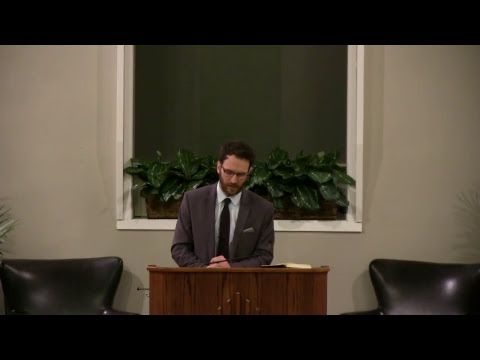
What does the term 'antichrist' in 1 John 2:18–23 actually mean, and why is the popular question 'Who is the Antichrist?' the wrong question to ask? This exposition argues that John is not pointing to a single future eschatological figure but to a multitude of false teachers who deny that Jesus is the Christ and that He came in the flesh — teachers who have already appeared in every generation of the last hour, the entire era between Christ's two Advents. The remedy against antichrist is not prophetic speculation but deep, Spirit-illumined knowledge of the true Christ: His identity as the eternal Son, His unity with the Father, and the Trinitarian relations that ground saving faith. The sermon closes with a direct call to confess Christ, study His person rigorously, and stand ready for His return.
1 Samuel 17, Part 1
1 Samuel 17 is not a self-help narrative about overcoming personal giants; it is a theological vindication of the glory, sovereignty, and honor of the living God of Israel. Goliath's meticulously described size, armor, and defiance serve to magnify the God who defeats him through an unlikely shepherd boy operating in faith rather than military strength. The chapter sets fear and faith in sharp contrast: Saul and the armies of Israel are dismayed and flee, while David — anointed by the Spirit and proven in the wilderness — brings a theocentric worldview that transforms the entire situation. The central lesson is that God is glorified through the faithfulness of ordinary men and women in ordinary callings, and that faith in the present is nurtured by remembering God's deliverances in the past.