
Speaker
Unknown
216 sermons · All speakers

Free Grace Baptist Church - March 3, 2019 PM
Ephesians 2:1–10 expounds the salvation of individual sinners by tracing its origin in the triune God's eternal counsel, its objects in spiritually dead and demonic-oriented rebels, and its execution by divine love, resurrection power, and sovereign grace. Salvation is received through faith as an instrument, never as a human contribution, because dead sinners possess nothing to bring to God. The sermon corrects both Roman Catholic and Federal Vision distortions by insisting that justification rests solely on the active and passive obedience of Christ, while affirming that genuine saving faith is necessarily accompanied by sanctification and good works.

Free Grace Baptist Church - March 3, 2019 AM
Stephen's defense before the Sanhedrin in Acts 7:17–29 turns on a single argument: Israel's own history condemns the council, not Stephen. Working through the birth, protection, and first visitation of Moses, the sermon traces how God's sovereign Providence preserved his appointed deliverer at the precise moment when every circumstance appeared most hostile to that possibility. The parallel is explicit — just as Israel rejected Moses the deliverer, the Sanhedrin is rejecting Jesus, the one Moses wrote about. The congregation is called to patience in God's timetable, trust in his Providence, and above all to receive rather than reject the salvation offered in Christ.
Free Grace Baptist Church - February 24, 2019 PM
Proverbs 18:17 and its companion verse 13 provide the biblical foundation for two bedrock principles of due process: the requirement of cross-examination and the presumption of innocence. The sermon moves from Solomon's wisdom to the Mosaic law of witnesses in Deuteronomy 19 and the regulation of corporal punishment in Deuteronomy 25, arguing that Western juridical civilization is built on these scriptural foundations. The congregation is exhorted to resist the rush to judgment — whether in civil society or within the church — and to recognize that Christ alone perfectly fulfills the integrity demanded by Psalm 15, so that believers stand before God on the basis of his righteousness, not their own.

Free Grace Baptist Church - February 17, 2019 PM
Proverbs 6:20–35 presents a father's urgent warning to his son against the sin of adultery, grounding the exhortation in the law of God as a lamp, a guide, and a restraint. The sermon works through two movements: the necessity of internalising God's Word as a preventive against sexual sin, and the inevitable consequences — social ruin, the fury of an offended husband, and the judgment of God — that attend the adulterer. The application is direct: parents must instruct their children in sexual purity, married persons must cultivate faithfulness, and all who have fallen must look to Christ, in whose name fornicators and adulterers have been washed, sanctified, and justified.
Livestream - Baptism: Carrie Lawson, Catharine Shook
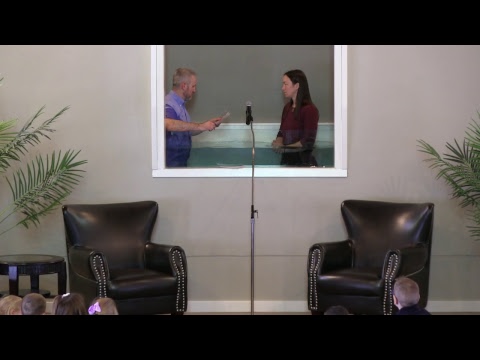
The Great Commission of Matthew 28:18–20 defines the church's narrow, ordered mission: make disciples, baptize those disciples, and teach them to observe all Christ has commanded. This expository treatment of the Commission frames a baptism service for two women who profess saving faith in Christ, arguing that believer's baptism by immersion is the proper New Testament pattern — the sign of a new covenant already sealed by sovereign grace, not a sacrament of hopeful inclusion. The sermon draws on the doctrine of divine simplicity, the Trinity, and the covenant promises to Abraham to show that baptism is administered into the one name of Father, Son, and Holy Spirit, and that this triune God is himself the substance of eternal life.

Free Grace Baptist Church - January 27, 2019 AM
Capital punishment is not a contradiction of the sanctity of life but a divine mandate grounded in the image of God. Working through Genesis 9:6, the Mosaic economy, and Romans 13, this sermon argues that God instituted the sword of civil government precisely because the murder of an image-bearer is an assault on the divine majesty — and that the penalty of death reflects the justice and holy character of God. Common objections, both biblical and pragmatic, are examined and answered, and unbelievers are confronted with what the gravity of God's justice against sin reveals about their need for the gospel of Jesus Christ.

Free Grace Baptist Church - January 6, 2019 AM
Acts 6:1–7 confronts the Jerusalem church's first internal crisis: the Hellenistic widows were being overlooked in the daily distribution, threatening to pull the apostles away from prayer and the Ministry of the Word. The sermon expounds the apostles' response as a model of church government — the division of labor between those called to preach and those appointed to serve — demonstrating that the two offices of elder and deacon are the Spirit's provision for a church that will inevitably face persecution, corruption, and distraction. The passage closes with a progress report showing that when the Word is freed to go forth, disciples multiply and even inveterate enemies of the gospel are brought to saving faith by efficacious grace. The central application is a call to pray for biblically qualified, praying and preaching men in every congregation.

Free Grace Baptist Church - December 16, 2018 PM
John 18:28–40 presents the trial of Jesus before Pontius Pilate as the occasion for Christ's most direct declaration of his royal identity and the nature of his kingdom. Working through the hypocrisy of the Jewish leaders, the bewilderment of Pilate, and Christ's own two-fold answer in verses 36–37, this exposition argues that Christ's kingdom does not originate from this world but nevertheless encompasses it, advancing not by military force but by the sword of truth. The sermon draws Isaiah 9:6–7 and Daniel 2 into the Advent season to show that the child born in the manger was born precisely to reign, and calls hearers to receive and treasure the truth by which that kingdom is extended.
Free Grace Baptist Church - December 9, 2018 AM
Acts 5:27–32 presents the apostles before the Sanhedrin for the second time, charged with filling Jerusalem with their doctrine and implicating the council in the death of Jesus. This sermon exposits their defense as both a declaration of unwavering allegiance — 'we ought to obey God rather than men' — and a proclamation of the gospel: that the God of their fathers raised up, exalted, and appointed Jesus as Prince and Savior to give the gifts of repentance and forgiveness. Because repentance and faith are divine gifts sovereignly bestowed, not human achievements, the proper response to persecution and opposition is not silence but bold, faithful proclamation of Christ crucified and exalted.

Free Grace Baptist Church - November 18, 2018 PM
The crucifixion account in Luke 23:26-43 sets the stage for an examination of Christ's words to the dying thief — 'assuredly I say to you, today you will be with me in paradise' — as a declaration rich with covenant theology and gospel certainty. The sermon traces Christ's kingship both by his eternal deity and by his mediatorial office, showing that the inscription he bore on the cross corresponds to the handwriting of requirements he cancelled for sinners (Colossians 2:13-14). The assurance spoken to the thief rests on three grounds: the immutable divine promise of the new covenant, the inviolable grip of God's electing love, and the perfection of Christ's blood and righteousness — all of which belong equally to every believer.

Free Grace Baptist Church - November 11, 2018 PM
What is the most important question ever asked, and what hangs on the answer? This sermon expounds Matthew 16:13–20 as a launching point for a seven-point study in the importance of the knowledge of Christ — Christology as the highest of all sciences. Christ is shown to be the scope of all Scripture, the one on whom eternal life hinges, the substance of the gospel, the only way of salvation, the location of every redemptive benefit, the ground of the church's commission, and the present and future hope of every believer. The practical import moves hearers toward Christ-informed worship, humility, beneficence, and steadfast confession.
Free Grace Baptist Church - November 4, 2018 AM
Acts 5:17–26 records the arrest, miraculous release, and re-arrest of the apostles by the Sanhedrin — a body conspicuously heavy with Sadducees who denied the existence of angels, yet found their prisoners freed by an angel of the Lord. The sermon argues that the opposition of governing powers, religious authorities, and persecutors throughout history has never been able to suppress the advance of the gospel, because Christ himself is building his church. Hearers are called to remember the globally persecuted church, to preach the 'words of this life' with apostolic boldness, and to trust that the same gospel that turned the ancient world upside down is still the power of God unto salvation.

Free Grace Baptist Church - October 21, 2018 PM
What does faithful service to God look like when the visible results are devastating and the prophet prays for death? Expounding 1 Kings 19, this sermon argues that Elijah's flight to Horeb and his prayer to die are not evidences of a crisis of faith, self-pity, or ego-driven collapse, but the legitimate grief of a man consumed with jealousy for the glory of Yahweh in a nation that refused to repent even after the most spectacular display of divine power. God's response — rest, food, a theophany, a covenant lawsuit, and the disclosure of seven thousand who had not bowed to Baal — reveals that the backdrop of a servant's depression becomes the showcase for the mercy, sovereignty, and persevering grace of God.

Free Grace Baptist Church - October 14, 2018 PM
Depression — what Scripture calls a broken spirit or heavy heart — is a real affliction that has touched the lives of Elijah, Jeremiah, the Apostle Paul, and the Lord Jesus himself. Drawing from repeated passages in the book of Proverbs, alongside First Kings 19, Psalm 88, and Psalm 102, this exposition surveys both the presence of melancholy among the people of God and a range of strategies — physical, psychological, and spiritual — for those who suffer and for those who walk alongside them. The central application is that the sorrowful saint must not abandon the corporate means of grace — the Word, prayer, and the gathered church — which are God's appointed instruments for sustaining the broken spirit.

Free Grace Baptist Church - October 7, 2018 AM
The corporate prayer of Acts 4 reveals the theological convictions and missional priorities of the early church under threat. Working through the structure of invocation, exposition, and supplication, this sermon argues that the church's primary calling is the bold proclamation of God's Word — not social programming, entertainment, or the removal of opposition. The apostolic church did not pray for safety or the destruction of enemies but for courage to preach in the midst of hostility, a pattern that exposes and corrects the consumer-driven drift of contemporary evangelicalism.

Free Grace Baptist Church - October 7, 2018 AM
Acts 4:23–31 records the prayer of the apostolic church immediately after Peter and John were threatened by the Sanhedrin and commanded to stop preaching in the name of Jesus Christ. The sermon examines the structure of that prayer — its invocation of God as sovereign Creator, its exposition of Psalm 2 as prophetic warrant for the opposition Christ and his people face, and its petition for boldness in proclamation — showing how the church's confidence rested not on political calculation but on the certainty that God's decree governs even the rage of rulers against his anointed. The congregation is called to pray Scripture back to God, to find stability in the doctrines of creation and divine sovereignty, and to expect and endure opposition to the gospel without retreating from the duty of proclamation.

Free Grace Baptist Church - September 30, 2018 PM
Psalm 143 confronts the fundamental problem of human unrighteousness: in God's sight no one living is righteous, and David's only refuge is not his own covenant faithfulness but God's righteousness, faithfulness, and hesed. The sermon traces David's two movements — his appeal to God's righteousness in the face of a crushed soul (vv. 1–6) and his petitions for God's guidance as a troubled servant (vv. 7–12) — showing that both sections keep the focus relentlessly on who God is rather than on the psalmist's circumstances. Luther's description of Psalm 143 as a Pauline psalm is vindicated by Paul's verbal allusion in Romans 3:20, where the same confession that no flesh is justified by works of the law becomes the pivot to the righteousness of God through faith in Jesus Christ. The sermon calls believers to let their prayers be preoccupied with God's character and Christ's imputed righteousness rather than their own merit, and invites the unbeliever to look to Christ for a righteousness entirely outside themselves.

Free Grace Baptist Church - September 19, 2018 Bible Study
Genesis 6:8–22 presents the flood narrative not primarily as natural history but as a theological tableau of human depravity, divine justice, and sovereign grace. The passage establishes a foundational biblical pattern: grace precedes and produces righteous conduct, so that Noah is not found righteous because he earned grace, but rather found blameless because God first granted him grace. The sermon traces the stark literary contrast between Noah, a man made just by divine mercy, and an earth filled with corruption and violence ripe for God's wrathful judgment, while drawing typological connections between Noah as a second Adam and the Ark as a figure of Christ, the shelter from divine wrath. Hearers are called to recognise that the same grace operative in Noah is the only distinction between the redeemed and the condemned, and to remain faithful in a faithless generation by looking beyond present trials to the God who sovereignly guides his people through judgment to life.
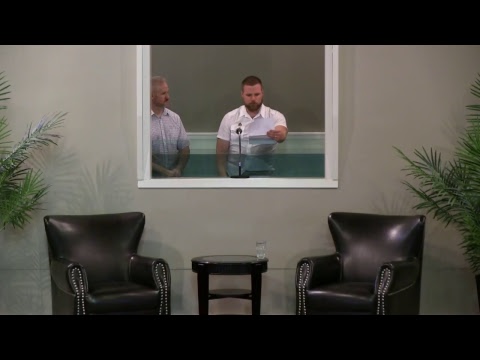
Livestream - Baptism: Wim Kerkhoff
Acts 8:26–40 records the conversion and baptism of the Ethiopian eunuch, and this exposition sets that account against its Old Testament backdrop in Isaiah 53 and Isaiah 56 to show that what is happening is not merely one man's conversion but the fulfillment of covenant promises: the inclusion of those doubly excluded from the assembly of Israel. The sermon works through three movements — the divine appointment of the contact, the gospel communication beginning from Isaiah 53, and the conversion issuing in immediate baptism upon confession of faith. The central application is that God is characteristically and eagerly a saving God, that believers' baptism follows faith as its ordained external sign, and that no sinner — whether powerful or poor, crisis-converted or quietly brought to faith — is beyond the reach of sovereign grace.

Free Grace Baptist Church - September 2, 2018 PM
The wisdom of God in the gospel is displayed not in the nobility, intelligence, or virtue of those he saves, but in his sovereign, gracious election of the weak, the base, and the despised — so that no flesh might glory in his presence. Expounding 1 Corinthians 1:26–31, this sermon identifies the three spiritual blessings Christ has become for his people — righteousness (justification by imputed obedience), sanctification, and redemption (glorification) — as the full ordo salutis secured in union with Christ. The ground of salvation is traced through Romans 5, Philippians 3, Zechariah 3, and Acts 13 to demonstrate that the entire plan of redemption flows from God's sovereign grace, not human merit. The inevitable and proper response of those who have received these blessings is to glory in the Lord alone, not in themselves.

Free Grace Baptist Church - August 19, 2018 AM
Acts 3:17–21 grounds the call to repentance in three realities: the culpable yet not innocent ignorance of those who crucified the Lord of glory, the sovereign plan of God who overruled their wickedness to fulfill all that the prophets foretold concerning a suffering Messiah, and the rich blessings promised to all who repent and turn to God — the blotting out of sins, times of refreshing from the presence of the Lord, and the ongoing presence of Christ with his church by Word and Spirit until the restoration of all things. The sermon presses the hearer, whether long-churched or unconverted, to cease the willful ignorance that resists the scriptural testimony to Jesus Christ and to come to him as the only one who gives rest to sin-burdened souls.

Free Grace Baptist Church - August 5, 2018 AM
Acts 3:1–26 presents the healing of the lame man at the Beautiful Gate as both a sovereign act of grace and a type of spiritual restoration — the same word that restored the man's limbs pierces the soul and raises the spiritually dead to everlasting life. The sermon works through three movements: the setting of the miracle (vv. 1–2), its execution (vv. 3–7), and the response it provoked (vv. 8–10), before drawing out Peter's sermon in the portico of Solomon. Central to the exposition is the claim that the church's primary calling is the proclamation of Christ crucified and risen, not the amelioration of temporal needs — silver and gold the apostles did not have, but what they had they gave. The congregation is exhorted to treasure the public means of grace, to repent and believe, and to expect that those truly conquered by grace will be worshippers, not merely debaters.

Free Grace Baptist Church - July 22, 2018 PM
A borrowed faith collapses when the godly influences that sustained it are removed, while a living faith — wrought by the Holy Spirit through regeneration — endures. Expositing 2 Chronicles 24, this sermon traces the rise and catastrophic fall of King Joash: zealous for temple restoration under the mentorship of the priest Jehoiada, yet an idol-worshipper immediately after Jehoiada's death. Three lessons emerge: the indispensable role of godly role models in the life of faith, the sobering possibility of sustaining an outwardly faithful life on nothing more than borrowed conviction, and the patient, pursuing grace of God who sends prophets to arrest the backslider before judgment falls. Hearers are urged to examine whether their faith is genuinely Spirit-given or merely the reflection of another's godliness, and to seek Christ now — with all their brokenness — before the godly influences in their lives are gone.

Free Grace Baptist Church - July 15, 2018 PM
Hebrews 12:1 calls the people of God to run with endurance the race that is set before them, laying aside every weight and entangling sin. This exposition of the verse's first incentive — the great cloud of witnesses from Hebrews 11 — argues that those Old Testament saints are not spectators watching believers run, but witnesses testifying to the faithfulness of God in every circumstance of trial, hardship, and suffering. The sermon moves through Abel, Enoch, Noah, Abraham, Sarah, Joseph, Moses, Rahab, David, the three Hebrew youths, Habakkuk, Job, and the martyrs to demonstrate that the consistent, unanimous testimony of the faithful is that Yahweh upholds those who persevere, whatever their lot. The exhortation is concrete: lay aside weights and sin, fix your gaze on Christ, listen to the testimony of the cloud of witnesses, and press on toward the finish with disciplined, unglamorous, daily faithfulness.

Free Grace Baptist Church - July 15, 2018 AM
Luke 7:36–50 presents three parties — a converted sinner, a self-righteous Pharisee, and the altogether lovely Savior — whose interaction illustrates the Reformation doctrine of justification by grace alone through faith alone. The woman's extravagant acts of worship are not the cause of her forgiveness but the consequence: she loves much because she has been forgiven much. Believers are summoned to examine whether their own devotion to Christ reflects the logic of the parable — that those freely forgiven of the greater debt respond with the greater love.

Free Grace Baptist Church - June 13, 2018 Bible Study
Genesis 3:1–13 records the temptation and fall of Adam and Eve, events that form the theological foundation for the whole of redemptive history. The sermon traces three movements: the serpent's subtle assault on the veracity, goodness, and security of God in verses 1–5; the fall itself and its immediate consequences in verses 6–7; and God's gracious interrogation of the guilty pair in verses 8–13. The anatomy of temptation displayed in Eden — doubt cast on God's word, denial of divine sanctions, and the lure of autonomous wisdom — is the same pattern by which sin operates in every generation, making a firm grip on Scripture the believer's only sufficient defense.

Free Grace Baptist Church - June 10, 2018 PM
Proverbs 3:5–6 sets before the believer a threefold structure: a command to trust in Yahweh with the whole heart, a prohibition against leaning on one's own understanding, and an exhortation to acknowledge God in every area of life. The sermon traces total depravity and remaining corruption as the root of self-reliance, exposes three concrete forms of that self-reliance — outright reliance on self, rejection of godly parental counsel, and reception of ungodly influence — and grounds the call to entire, exclusive, and exhaustive trust in the immutability, impassibility, and covenant faithfulness of God. The closing movement draws on Jeremiah 32 and the divine simplicity formulated in the 1689 confession to show that God's commitment to his people is itself entire, exclusive, and exhaustive — making the demands of Proverbs 3:5–6 not burdensome but reasonable in light of the gospel.
Free Grace Baptist Church - May 20, 2018 PM
First Kings 3 opens a new series through the book of Proverbs by establishing the credentials of Solomon as its primary teacher. The sermon examines Solomon's prayer for wisdom at Gibeon and its immediate proof in the judgment of the two harlots, showing that true wisdom is God-given, others-oriented, and marked by equity toward all people regardless of station. The generosity of God — who bids his people to ask boldly — is presented as the very foundation of prayer, and the sovereignty of God is answered as the reason to pray, not the reason to abstain from it. Hearers are urged to adopt Solomon's pattern of prayer, to seek wisdom for the benefit of others, and to enter the school of Proverbs expecting God to supply what is lacking in heart and mind.

Free Grace Baptist Church - May 13, 2018 PM
Philippians 1:27–30 calls the church to conduct worthy of the gospel and to receive suffering for Christ as a divine gift. Expounding these verses under two headings — worthy conduct and worthwhile suffering — the sermon argues that the local church, as a colony of heaven, is called to stand fast in unity against adversaries, and that both the initial grant of faith and the grant of suffering are gracious tokens of God's saving presence with his people. Persecution, far from being a mark of divine abandonment, is shown historically and biblically to be an assurance of salvation, a sign of perdition to those who oppose the gospel, and a means by which God strengthens his church.

Free Grace Baptist Church - May 13, 2018 AM
Psalm 8 is a hymn of praise situated amid the laments of Book One of the Psalter, offering a glimpse of hope by directing the worshiper to consider the majesty of God displayed in creation. The sermon works through three movements: the majestic name of the Lord proclaimed throughout the earth and demonstrated paradoxically through weakness; the condescension of God in being mindful of frail man within the created order; and the God-given dominion of man over creation, which finds its ultimate fulfillment in the Last Adam, the Lord Jesus Christ. Drawing on the New Testament quotations of the Psalm in Matthew 21 and Hebrews 2, the preacher shows that Psalm 8 is a 'two-Adams text' — the dominion forfeited by the first Adam is purchased and perfected by Christ through his incarnation, suffering, resurrection, and exaltation. The hearer is called to study the character of God, to offer praise that silences the adversary, and, if an unbeliever, to look in faith to the Christ who has conquered sin and secured the new creation for his people.