
Cited in sermons
Solomon
5 sermons · All people cited

The Characteristics of the New Man

Ephesians 4:17–24 sets before believers a stark contrast between the darkened, alienated mind of the spiritual Gentile and the renewed mind of the new man in Christ. The sermon argues that verses 22–24 are not imperatives commanding believers to transform themselves, but indicatives declaring what God has already accomplished in regeneration: the old man has been put off, the mind is being renewed, and the new man has been put on. These realities — rooted in the second Adam reversing what the first Adam forfeited — form the doctrinal foundation upon which the ethical commands of Ephesians 4:25–6:24 rest. Believers are therefore called to walk in a manner consistent with what they already are in Christ, using the ordained means of gospel preaching, Scripture, and prayer to pursue sanctification.

The Ministry of the Holy Spirit
What is the Holy Spirit's relationship to the Father and the Son, and why does it matter that Christians understand this precisely? Working through Ephesians 1:13–14 as the destination, this sermon first establishes the full personal divinity of the Holy Spirit by tracing his presence and activity across both Testaments — from creation in Genesis 1 through the baptism of Christ, Pentecost, and the apostolic letters — demonstrating that the Spirit is not a force or a lesser deity but the third person of the one undivided triune God. The sermon draws on the 1689 London Baptist Confession chapter 2 paragraph 3, the Nicene Creed, and a wide range of triadic New Testament texts to guard against the heresies of Sabellianism and Arianism. The congregation is called to pursue the knowledge of this triune God as the irreplaceable foundation of assurance, evangelism, and Christian perseverance.
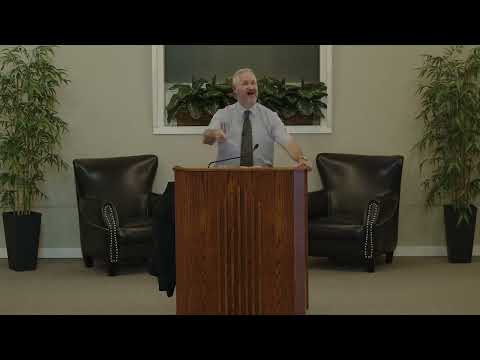
Clip: Theology is crucial for every church and believer
Theology proper — the knowledge of who God is as Father, Son, and Holy Spirit — is not an academic luxury but the essential foundation of Christian life, worship, and witness. This sermon clip from an exposition of Ephesians 1:3–14 argues that the church's tendency to rush past doxological passages to practical ethics has left believers spiritually thin, prone to a mercenary relationship with God rather than one grounded in the infinite riches of his grace. The preacher calls the congregation to disciplined study of the Trinity, warning that without it believers become vulnerable to ancient heresies and lose the impetus to proclaim Christ to a lost world.
Clip: How to Pray for Civil Government During Persecution
How should the church pray for civil government, especially under persecution? Drawing from Acts 4:29, 1 Timothy 2:1-7, Proverbs 21:1, Psalm 74:11, and 1 Corinthians 13, this sermon clip presents three biblically grounded petitions — redemption, restraint, and removal — as legitimate and distinct prayers the people of God may bring before the Lord concerning their civil rulers. The clip closes by returning to the early church's example in Acts 4, where the believers, rather than invoking judgment on the Sanhedrin, turned their petition inward, asking God to make them faithful witnesses in the midst of opposition.
Spiritual Poverty and Holy Mourning
The Beatitudes are not imperatives but indicative descriptions of those whom God has transformed by sovereign grace. This exposition of Matthew 5:3–4 argues that poverty of spirit—the recognition of one's utter bankruptcy before a holy God—and holy mourning over sin are not natural human tendencies but the direct fruit of divine grace working in the heart. Drawing on the parable of the Pharisee and the tax collector, the church at Laodicea, Isaiah 57 and 66, and the lament of Romans 7, the sermon demonstrates that pride is an offense to God while humility and contrition are the marks he blesses. The comfort promised to holy mourners is both present—through justification, the indwelling Spirit, and the Scriptures—and eschatological, when God himself will wipe away every tear in the new Jerusalem.