
Cited in sermons
Samuel Rutherford
11 sermons · All people cited

The Instructions of Calvary

Luke 23:32–43 presents, in twelve verses, a concentrated display of the doctrines that define the gospel: total depravity, effectual grace, justification by faith alone, the hypostatic union of Christ's two natures, assurance, and immediate conscious glory at death. The sermon traces seven theological loci arising from the conversion of the penitent thief, demonstrating that the entire redemptive narrative of Scripture converges at Calvary. The penitent thief is not an extreme case or a last-minute exception but a paradigm of every sinner who comes to Christ with nothing in hand and receives everything by sovereign, irresistible grace.
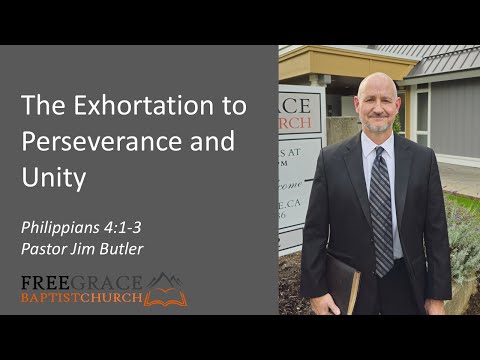
The Exhortation to Perseverance and Unity

Philippians 4:1–3 sets before the church two inseparable obligations: standing fast in the Lord and pursuing unity among the saints. Working through the apostle's affection for the Philippians, his call to perseverance, and the concrete dispute between Euodia and Syntyche, this sermon shows that the absence of unity both destroys the church and renders perseverance a near-impossible task. The biblical remedy for conflict — private confrontation, appeal to witnesses, and involvement of the church — is traced from Proverbs 18 and Matthew 18:15–20, with a complementarian reading of 1 Timothy 2 clarifying the nature of Euodia and Syntyche's gospel labor. Hearers are called to fasten their grips on Christ, his doctrines, and one another for the long haul of the Christian life.

The Conversion of Paul, Part 4
Philippians 3:10–11 presents sanctification and glorification as necessary and inseparable consequences of justification by faith alone (v.9). The knowledge of Christ described in verse 10 is experiential, practical, theologically correct, and constitutes the very essence of eternal life — but it includes not only the power of Christ's resurrection (newness of life, union with Christ, definitive breach with sin) but also the fellowship of His sufferings and conformity to His death, which are not redemptive but inevitable for all who side with a crucified Savior in a hostile world. Verse 11 then sets forth glorification — the resurrection of the righteous — as the confident hope that sustains perseverance through the difficulties of sanctification. The sermon draws on 1689 LBCF 11.2 and Westminster Larger Catechism 77 to show that faith which justifies is alone as an instrument, yet never alone in the person justified, being ever accompanied by all other saving graces.

Live Stream - September 10, 2023
First Corinthians 15 grounds the certainty of the resurrection in the testimony of the Old Testament scriptures, the evidence of eyewitnesses, and the grace of God attending gospel proclamation. The great hope of the gospel is established by Paul's chain of logical argumentation: if Christ is risen, then preaching is full, faith is complete, sin does not reign, and believers who have died have not perished. The sermon closes with the adamic theology of the gospel — the contrast between the first Adam, in whom all die, and the last Adam, Christ, in whom all shall be made alive — calling hearers to praise God for so great a salvation.
The New Heaven and New Earth
Revelation 21:1–8 presents the new heaven and new earth not as the annihilation and replacement of creation but as its renovation — the consummation of covenant blessing in which God dwells fully and finally with his redeemed people. Working through four elements of the vision (the new creation, the bride, the announcement of blessing, and the voice from the throne), this exposition situates John's language within the broader biblical storyline of paradise lost in Adam and paradise restored in Christ, and interprets the new Jerusalem as the church — the covenant community that has replaced apostate Israel as the bearer of God's covenant promises. The sermon closes with a meditation on individual eschatology, drawing on Job, the Psalms, and the Apostle Paul to comfort believers with the certainty that those who die in Christ pass immediately into his presence, and that the fullness of covenant blessing awaits them in the age to come.

The Second Missionary Journey, Part 1
Acts 15:36–16:5 records the opening of Paul's second missionary journey — beginning with a sharp contention between Paul and Barnabas over John Mark, continuing through Paul's recruitment and circumcision of Timothy in Lystra, and concluding with a summary report of churches strengthened and growing daily. The sermon argues that God's sovereign providence overruled the division between two godly men to send out two missionary teams, and that Timothy's circumcision was a strategic pastoral act entirely consistent with Paul's settled rejection of Judaizing. Throughout, the exposition presses the congregation toward a recovery of faithful, word-centered ministry as the only legitimate means of church growth and stability.

The Dying Thief and the Prince of Life
The crucifixion scene of Luke 23:38–43 presents three voices: the cursed robber who reviles Christ to his last breath, the dying thief who exercises remarkable faith in a bloodied and apparently defeated king, and the Prince of Life who responds with sovereign assurance. This sermon exposition focuses on Christ's words to the thief — 'Assuredly, I say to you, today you will be with me in paradise' — unpacking the divine promise, immutable love, and perfection of Christ's blood and righteousness that undergird that assurance. The confession of faith's teaching on the perseverance and assurance of the saints illuminates why the thief's salvation is certain, and the same certainty belongs to all who believe on the Lord Jesus Christ.
The Precious Blood of Christ
1 Peter 1:18–20 presents the redemption accomplished by Christ as grounded in the infinite value of his sinless sacrifice, the eternal decree of the triune God, and the certainty of its historical occurrence. This sermon expounds three dimensions of the 'precious blood of Christ': its surpassing worth measured against corruptible earthly things; its origin in the determined counsel of God before the foundation of the world; and its singular reality as a manifest historical event attested by eyewitnesses. The Lord's Supper, observed the same evening, provides the pastoral occasion for calling both believers to joyful reflection on the blood that cleanses from all iniquity and unbelievers to repentance and faith in the one Lamb without blemish and without spot.
The Crucifixion of Jesus, Part 5
Matthew 27:51–56 records a cluster of supernatural signs accompanying the death of Christ — the rending of the temple veil, the earthquake, the splitting of rocks, and the resurrection of saints — each of which publicly attests the efficacy of Christ's atoning work. The torn veil simultaneously signals the judgment of God upon apostate Israel and the opening of access to the Father through Christ's blood, marking the covenantal transition from the old order of sacrifice to the new covenant inaugurated at Calvary. The centurion's confession, 'Truly this was the Son of God,' demonstrates that the cross reaches sinners from every tribe and tongue, while the faithful women at a distance stand as witnesses to Christ's death, burial, and resurrection. The sermon calls every hearer to receive the torn veil as God's own invitation to draw near through the finished work of the Lord Jesus Christ.

The Sadducees and the Resurrection
Matthew 22:23–33 records the Sadducees' attempt to discredit the doctrine of the resurrection by posing an elaborate riddle drawn from the Mosaic Levirate law, only to be silenced by Christ's twofold demonstration that they were ignorant both of the Scriptures and of the power of God. Jesus first exposes the false premise of the riddle by revealing a genuine discontinuity between this age and the age to come — in the resurrection there is no marriage, no procreation, and believers will be like the angels in their service to God. He then validates the resurrection from the Sadducees' own canon, the Torah, showing from Exodus 3:6 that God's present-tense covenant relation with Abraham, Isaac, and Jacob proves they were still living. Hearers are called not merely to marvel at Christ's wisdom but to forsake every rationalised objection to Christianity and believe on the Lord Jesus, in whom the covenant of life stands too strong to be terminated by death.

The Hope and the Preaching
Titus 1:2–3 sets before believers a hope of eternal life that is neither wishful thinking nor earthly optimism, but a certain expectation grounded in the immutable character of God and the finished work of Christ. This sermon works through three headings: the believer's certain expectation of everlasting life as a goal of gospel ministry; the foundation of that hope in God's unchanging nature and eternal promises; and the ordained means by which those blessings are made known — namely, the preaching of the Word. The application is direct: believers are to rejoice daily in this sure hope, find comfort in God's immutability, and never despise the act of preaching; unbelievers are called to flee to Christ as the only ground of any lasting hope.