
Cited in sermons
Plummer
6 sermons · All people cited

The King's Exaltation and Future Triumph

Psalm 21 celebrates the exaltation of the true David, the Lord Jesus Christ, whose resurrection, ascension, and session at the right hand of the Father fulfill what the church prayed for in Psalm 20. The psalm moves from a declaration of the king's joy and the Father's bestowal of blessing, crown, and eternal reign upon the Son as mediator of the new covenant, to a prophetic anticipation of his final triumph over all remaining enemies at the second advent. What is true of the exalted head belongs to the body: the church's permanence, blessing, and ultimate glory are secured in Christ's own immovability and intercession. The sermon closes with a call for sinners to flee to the triumphant king and for the church to recover the militant confidence that comes from feasting on the Psalms of the true David.

The Lament of the Psalmist
Psalm 13 is a lament psalm of David that moves through raw grief — the perceived forgetfulness of God, the daily sorrow of the soul, and the threat of encroaching enemies — to a resolved trust in the covenant mercy of God. The sermon traces this trajectory through the true humanity of Christ, who himself prayed lamentingly in Gethsemane and on the cross, establishing lament as a legitimate and God-given vehicle of prayer for his people. Lament is distinguished sharply from whining: whining refuses to petition God and ends in despair, while biblical lament drives the soul toward God and terminates in doxology. The congregation is called to bring their distress boldly to the throne of grace, resting in the hesed of God covenanted to all who are found in Christ.

The Psalmist's Cry in an Age of Deceit
Psalm 12 presses the question Psalm 11 leaves open: not what becomes of the wicked in the end, but how the people of God survive and remain faithful in the present evil age. The sermon traces two movements in the psalm — the destruction of foundations (vv. 1–4), marked by idle speech, flattery, and the proud autonomy of godless men, and the preservation of the righteous (vv. 5–8), grounded in God's arising to deliver the oppressed and in the utter purity of his Word. David's prayer is read through a Christological lens: the psalm is supremely the prayer of Christ in his earthly ministry, opposed at every step, yet sustained by the Father's Word and promise. The congregation is urged to respond to cultural and ecclesiastical decay not by retreat or despair but by theology, prayer, and dependent trust in the pure and preserving Word of God.
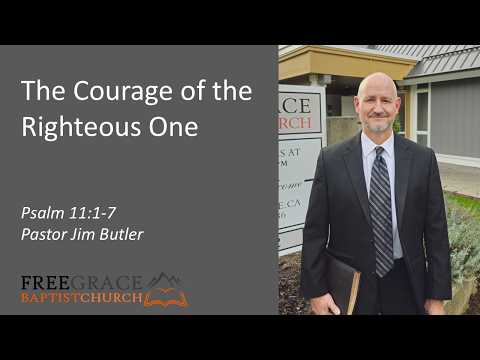
The Courage of the Righteous One
Psalm 11 presents the righteous man — supremely the Lord Jesus Christ — facing the temptation to abdicate his calling when wicked enemies ready their arrows and the foundations of moral order appear destroyed. The sermon expounds two movements: the temptation to flee (vv. 1–3) and the fortification found in contemplating God's sovereignty, omniscience, and justice (vv. 4–7). Because Christ steadfastly set his face toward Jerusalem and drank the cup of divine wrath to its dregs in the place of his people, believers have every reason to resist the same temptation to cowardice and unbelief, and to stand firm in the Lord.

The Justice and Mercy of the Lord
Psalm 9 presents the Lord as both righteous Judge of the wicked and secure refuge for the afflicted — realities that are inseparable and must be held together. Interpreted through a Christocentric lens consistent with Luke 24:44, the psalm is understood as the voice of the Lord Jesus Christ in his earthly ministry, with David functioning typologically to foreshadow the sufferings and vindication of the Son of Man. The first half of the sermon (vv. 1–12) expounds the psalmist's confidence in God: his declaration of whole-hearted praise, his affirmation that God judges the nations, and his assurance that God is an unfailing refuge for those who seek him — grounded ultimately in the doctrine of justification by faith alone. Hearers are called to seek their refuge in God rather than in circumstance, and to rejoice openly in the justice and mercy that belong inseparably to the character of the Most High.
True and False Religion: Almsgiving
Matthew 6:1–4 expounds the general principle governing all acts of Christian piety: deeds of righteousness are corrupted not by their practice but by the motive of seeking human approval. Christ assumes that His redeemed people will give alms, but He warns that charitable deeds performed to secure the praise of men constitute a completed transaction — the hypocrite receives his reward in full and forfeits the approval of God. The positive instruction calls for a secrecy so thorough that the believer guards against self-congratulation, resting in the promise that the Father who sees in secret will reward openly. The sermon grounds the call to cheerful, hidden generosity in the supreme act of almsgiving: Christ leaving the riches of heaven to become poor, that sinners through His poverty might become rich.