
Cited in sermons
Origen
11 sermons · All people cited

The Warning Against Adultery

Proverbs 6:20–35 presents a father's urgent warning against adultery, grounding it in the necessity and blessing of God's law as a constant guide and protector. The passage moves from the internal heart lust prohibited by the Tenth Commandment, through vivid analogies of fire and hot coals, to the devastating consequences adultery brings upon the adulterer, the violated party, and society. Solomon's contrast between the pitied thief who steals from hunger and the despised adulterer who steals from pure wickedness sharpens the moral weight of the Seventh Commandment. The sermon closes with three practical means of protection — remove, rejoice, remember — and with the gospel assurance that the blood of Christ cleanses even these sins upon repentance and faith.

The Psalmist's Prophetic Anticipation of the Apostolic Proclamation of Christ

Psalm 19 is read not merely as a declaration of general and special revelation but as a prophetic anticipation, interpreted by the Apostle Paul in Romans 10, of the apostolic proclamation of the gospel of Jesus Christ. Working through seven points across the psalm's three movements, the sermon traces the symbol, referent, and message of each image: heavens and firmament pointing to the apostles, the sun pointing to Christ the Bridegroom and Son of Righteousness, and the law, testimony, statutes, and judgments pointing to the gospel itself. The Word of God is shown to be perfect, sure, right, pure, clean, true, and righteous — qualities that belong to the gospel, not the Mosaic law — and its effects of conversion, wisdom, rejoicing, and enlightenment call both believer and unbeliever to rest in Christ, the Son of Righteousness, whose glory has gone out to the ends of the earth.
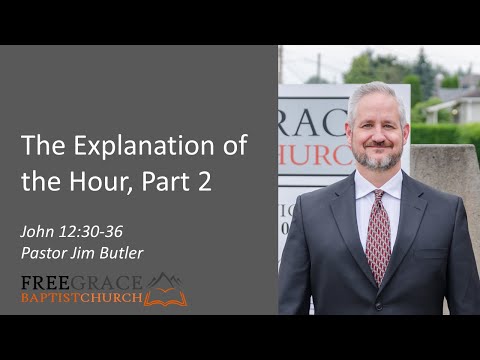
The Explanation of the Hour, Part 2
John 12:31–32 sets forth three consequences of Christ's lifting up on the cross: the judgment of the world, the triumph over the devil, and the salvation of sinners drawn to him by effectual calling. The cross is not one event among many but the focal point of all history — the hour in which the world is judged, Satan is cast out, and God sovereignly draws his elect from every nation to himself. The sermon closes with an urgent call to believe in Christ while the light remains, receiving by faith alone the forgiveness and alien righteousness his death and life secure.

The Tenth Commandment
The tenth commandment's prohibition of covetousness exposes the spirituality of God's law: external compliance is insufficient, for the law reaches the desires and affections of the heart. Covetousness is defined as inordinate desire for what belongs to a neighbor — whether his wife, his goods, or anything that is his — and its connection to the first commandment reveals that misplaced desire is a form of idolatry. The sermon traces covetousness through envy and discontentment, showing how inward sin often becomes the prelude to overt transgression. The positive counterpart calls believers to contentment grounded in God's sovereign ownership, his covenant promise of provision, the surpassing weight of eternal glory, and the cultivation of a genuinely charitable spirit toward others.

The Redemptive Work of the Son, Part 2
Ephesians 1:8–12 grounds the individual believer's redemption within a cosmic divine purpose: God's wisdom in the plan of salvation maintains all his holy perfections without compromise, the mystery of his will now openly revealed in the gospel calls sinners from every tribe and nation, and all things will be recapitulated — gathered up and set in order — under the lordship of Christ at his return. The inheritance of the elect is secured by predestination, not by human performance, so that the redeemed exist 'to the praise of his glory' — as a trophy case of grace before angels and the entire created order.

Exodus 20:14, the 7th Commandment, Part 2
Expounding the seventh commandment (Exodus 20:14), this study completes a survey of the sins the commandment prohibits — polygamy, prostitution, pornography, transvestitism, and transgenderism — before turning to the manner in which the commandment is violated: externally through the act, internally through lustful imagination, and verbally through corrupt speech. The Westminster Larger Catechism frames the duties required: chastity in body, mind, affections, words, and behavior. The threefold use of the law (civil, pedagogical, normative) is applied to contemporary sexual ethics, and 1 Corinthians 6:9-11 is held out as the ground of gospel hope: the same sinners who practiced these things were washed, sanctified, and justified in the name of the Lord Jesus.

The Prediction of Desertion and Denial
Matthew 26:31–35 records Jesus predicting both the desertion of all His disciples and the specific denial of Peter on the night of His arrest. The passage demonstrates that the salvation accomplished at the cross was entirely the work of Christ alone — His friends fled, leaving no horizontal assistance — and that Scripture, citing Zechariah 13:7, had appointed this scattering from eternity. The sermon draws out the persistent problem of remaining corruption in the regenerate: the pride, self-confidence, and lofty self-assessment that Peter epitomizes are not unique to him but are symptomatic of all God's people. The remedy is not stronger resolution but a biblical self-assessment that drives the believer away from confidence in the flesh and toward continual dependence on the grace and Spirit of God.

The Trial before Pontius Pilate, Part 2
Matthew 27:15–23 presents Pontius Pilate's attempt to grant amnesty to Jesus through the Passover custom of releasing a prisoner — an attempt that collapses under the pressure of crowd manipulation and Pilate's own moral cowardice. The passage exposes the envy driving the religious leaders, the warning of Pilate's wife confessing Christ's righteousness, and the moral depravity of a multitude persuaded to choose a violent insurrectionist over the sinless Son of God. The repeated declarations of Christ's innocence — by Judas, Pilate's wife, and Pilate himself — are Matthew's design: the just stands for the unjust, and every voice proclaiming 'he has done no evil' opens the door to the gospel of substitutionary atonement. Hearers are called to see their own capacity for the crowd's guilt, to recognize total depravity in themselves, and to flee to the holy, harmless, undefiled Christ for forgiveness and righteousness.

The Rebellion of Moab
Matthew 27:1–5 exposes two devastating portraits set in immediate sequence: the murderous resolution of the Sanhedrin and the miserable end of Judas Iscariot. The sermon presses a distinction the text itself demands — that remorse, however acute, is not repentance, because genuine repentance moves God-ward and Christ-ward, apprehending the mercy of God in Christ, whereas Judas's guilt drove him only to self-destruction. Listeners are urged to see in Judas the bitter end of undealt-with sin, and to flee instead to the one who is altogether lovely and chief among ten thousand, trusting that saving faith and repentance are themselves gifts granted by sovereign grace.

The Prediction of Desertion and Denial
Matthew 26:31–35 records three predictions Jesus makes on the night of His betrayal: that all the disciples will desert Him, that Peter in particular will deny Him three times before the rooster crows, and that He will be raised and go before them to Galilee. The passage demonstrates both the sovereignty of Christ, who is not caught unawares but walks toward the cross in accordance with Zechariah 13:7 and the eternal decree of the Father, and the weakness of even the most zealous believers, who prove incapable of standing in their own strength. Peter's brash self-confidence — his flat contradiction of Christ's word and his lofty assessment of himself above his fellow disciples — stands as a warning against pride and self-reliance. The sermon calls believers to kill pride, cultivate dependence upon God, embrace Scripture's honest assessment of indwelling corruption, and rest in the grace of a Savior who, despite foreknowing every act of betrayal, still promises to meet His scattered sheep.
The Instruction on Celibacy and Children
Matthew 19:10–15 presents two closely linked teachings: Christ's instruction on celibacy and His reception of little children. Against Rome's doctrine of clerical celibacy and any Protestant tendency to exalt singleness above marriage, the sermon argues that celibacy is a sovereign gift of God given to some, not a spiritual superior state to be mandated or celebrated above the married estate. The blessing of the children exposes the disciples' failure to understand that Christ receives the weak and dependent, and the passage calls fathers to the concrete duty of bringing their children to Christ through prayer, Scripture, and faithful church attendance.