
Cited in sermons
Michael Rydelnik
7 sermons · All people cited
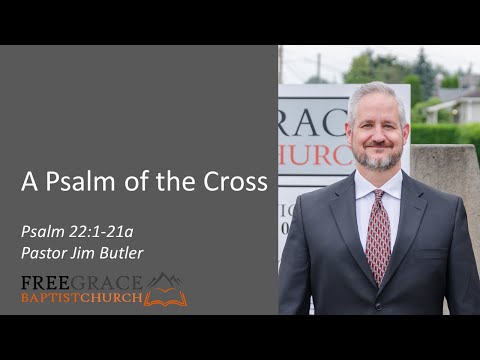
A Psalm of the Cross

Psalm 22 is a psalm of David written under prophetic inspiration, its true subject not David himself but his greater Son, the Lord Jesus Christ — who took its opening words upon his lips from the cross. The sermon works through verses 1–21a under three headings: the distress of the Messiah (the cry of dereliction rightly understood), the suffering of the Messiah at the hands of beastly men, and the confidence of the Messiah who never ceases to affirm the holiness, faithfulness, and presence of God even under the weight of divine wrath. The cry 'My God, my God, why have you forsaken me?' signifies not a rupture within the Trinity nor a dissolution of the hypostatic union, but the withdrawal of the Father's favor from the Son as our penal substitute — the Son receiving in himself the punishment due to sinners while continuing to petition the Father who heard him. Believers are exhorted to read the Old Testament through New Covenant eyes, singing the Psalms as words that belong to Christ and reveal dimensions of his suffering that even the Gospel narratives do not supply.
Chapter 7 - Of God's Covenant
1689 London Baptist Confession chapter 7 traces the biblical and theological architecture of God's covenant: from the necessity of divine condescension (paragraph 1), through the gracious character of the covenant of grace (paragraph 2), to the three theological covenants — grace, redemption, and works — and their progressive historical unfolding (paragraph 3). The session contrasts covenant theology with dispensationalism and New Covenant theology as competing hermeneutical frameworks, argues that the Old (Mosaic) Covenant functioned as a republication of the covenant of works rather than an administration of the covenant of grace, and demonstrates from Genesis 3:15 through Jeremiah 31 and Matthew 26 that all historical covenants advance a single promise of redemption finally and fully disclosed in the new covenant inaugurated by Christ. The practical payoff is a robustly confessional case for believers-only baptism: the new covenant community is defined by inward regeneration, universal knowledge of the Lord, and definitive forgiveness — marks that exclude the external-and-internal covenant structure required to justify paedobaptism.

The Crucifixion of Jesus, Part 1
Matthew 27:32–38 records the crucifixion of the Lord Jesus Christ with studied brevity, and this expository sermon works through each verse to show that every detail — from the place called Golgotha to the division of garments and the charge above his head — is the deliberate fulfillment of Old Testament Scripture, not an accident or afterthought in the plan of God. The sermon traces the thread from the proto-gospel of Genesis 3:15 through the typological head-wounds of Israel's enemies to Christ's death blow against the devil at the place of the skull. Three concluding applications draw out the pastoral weight: the unwitting testimony of Pilate, the triumph of the skull-crushing seed of the woman, and the immeasurable love of the Savior who was stripped naked, numbered with transgressors, and crucified so that his people might be clothed with his righteousness, received in glory, and given everlasting life.

A Psalm of the Cross
Psalm 22 is a prophetic psalm of David that transcends David's own experience to describe with precision the suffering, death, and exaltation of the Messiah. The sermon examines the cry of dereliction ('My God, my God, why have you forsaken me?') with theological care, rejecting the notion that the Father abandoned the Son in any way that ruptured the Trinity or dissolved the hypostatic union, and instead grounding the forsakenness in the Son's substitutionary bearing of the wrath due his people. Three features of Messianic confidence sustain Christ through his ordeal — the holiness of God, the past faithfulness of God, and the invoked presence of God — and the congregation is called to meet their own trials with the same theological ballast that sustained the Savior on the cross.

Genesis 3:14-24
Genesis 3:14–24 records the consequences of the fall, and the heart of this study is the protoevangelium of Genesis 3:15 — the first gospel promise in Scripture. God's curse upon the serpent contains within it an announcement of the Messiah: the seed of the woman who would crush the serpent's head, accomplishing total victory through suffering and death. The sermon traces this skull-crushing seed through the biblical narrative — from the typological head-wounds of Judges and David's defeat of Goliath, to New Testament fulfillment in Colossians, Hebrews, 1 John, and Revelation 12 — demonstrating that the cross of Christ is the decisive blow against the devil foreshadowed in Eden. The study closes by examining the consequences for the woman and the man in verses 16–19, situating the tensions of marriage and labor in a post-lapsarian world that Christ's redemptive work is already beginning to address.

The Hope of OT Believers
What did Old Testament believers actually know about the coming Redeemer? This sermon works through six lines of biblical evidence — from the protoevangelium of Genesis 3:15 through the prophets and Psalms — to demonstrate that the messianic hope of Israel was not vague or mystical but concrete, objective, and increasingly specific across the covenant history of redemption. Old Testament saints knew that the Deliverer would be a man born of a woman, would accomplish victory through substitutionary death, would be of Davidic lineage, would be both God and man, and that faith in him was the appointed way of salvation. The sermon closes at the Lord's Supper, grounding the ordinance in the fulfillment of all these promises in the person and work of Christ.

The Victory of David over Goliath, Part 2
David's declaration in 1 Samuel 17:45–47 is the theological center of the entire chapter: the defeat of Goliath is not primarily a lesson in personal courage but a proclamation that there is a God in Israel who does not save by sword and spear. The sermon traces David's preparation, his confrontation with Goliath, and his victory, reading the decapitation of Israel's enemies throughout redemptive history as typological of Genesis 3:15 — the skull-crushing seed of the woman who will finally destroy the serpent. The congregation is called to trust the means God has ordained — prayer and preaching — rather than the 'horses and chariots' of human ingenuity, and all hearers are urged to believe on the Lord Jesus Christ, in whom this protoevangelium finds its fulfilment.