
Cited in sermons
Matthew Henry
345 sermons · All people cited

The Righteousness of David

David's declaration in 2 Samuel 22:21–25 that God rewarded him according to his righteousness stands in apparent tension with his gross sins of adultery, murder, and failure to act in the rape of Tamar. This sermon resolves that tension through the theology of justification by faith alone, demonstrating from Romans 4 that David, like Abraham, was accepted by God not on the basis of personal moral achievement but through the imputed righteousness of Christ received by faith — the same way any sinner in any covenant has ever entered the presence of God. David's own writings, particularly Psalm 32 and Psalm 51, confirm that he understood his standing before God to rest on atonement, forgiveness, and the crediting of another's righteousness, not sinless perfection. The sermon closes with a call to treasure public worship as David did, and to bring great sin to the great Savior who justifies the ungodly.

The Vainglorious Quest, The Virtuous Path, and The Veracious Contemplation

Jeremiah 9:23–24 issues a threefold structure: a prohibitive warning against glorying in wisdom, might, or riches; a prescriptive call to glory in the understanding and knowledge of God; and a veracious contemplation of who God is and what He does. The sermon situates these commands within their covenantal context — the inevitable Babylonian judgment upon covenant-breaking Israel under the curses of Deuteronomy 28 — demonstrating that wisdom, strength, and riches will not avail in the face of irreversible divine justice. True glorying is exclusively God's due, and the knowledge of the one living and true God — Father, Son, and Holy Spirit — is the only wisdom, strength, and riches that profit eternally. Hearers are called to cast off vainglory, grow earnestly in the knowledge of God, and trust in Christ alone, in whom are found all true wisdom, strength, and riches.

The One Thing Needful
Luke 10:38–42 presents two sisters whose contrasting postures before Christ expose a perennial danger for the people of God: the distraction of much serving to the neglect of the one thing needful. The sermon works through Martha's fourfold complaint — impugning Christ's care, demanding he redirect Mary, mingling grumbling with service, and collapsing into self-pity — before turning to Christ's gentle double-named rebuke and his commendation of Mary's humble discipleship. The passage does not condemn service, family, work, or daily necessity, but it does condemn the disordering of priorities that allows lawful things to crowd out devotion to the word of Christ. The lasting and untakeable benefit Christ promises to those who sit at his feet is the governing application: seek first the kingdom, receive the word with a noble heart, and trust that all other things will be added.

The Triumph of Samson at Jawbone Height
Judges 15 presents Samson not as a man governed by lust but as a Spirit-empowered deliverer who typifies the Lord Jesus Christ. This exposition traces three movements: the betrayal by Samson's father-in-law, the treachery of the men of Judah who preferred Philistine subjection to covenantal freedom, and the triumph at Jawbone Height where the Spirit of the Lord shattered Samson's bonds and enabled him to slay a thousand men. The central application calls God's people away from the assimilation of godless culture toward uncompromising allegiance to the Word of God, grounded in dependence upon the God who furnishes His servants with every means of victory.

How the Gospel Brings Change

The short letter of Philemon presents the gospel's power not merely to declare sinners righteous but to produce visible, concrete change in behavior and in human relationships. Paul's appeal to Philemon on behalf of the runaway slave Onesimus illustrates how regeneration transforms a person — one who was once unprofitable becomes profitable — and how that same gospel demands a corresponding transformation in how believers treat one another. The sermon traces Paul's careful, love-driven appeal (vv. 8–11) and the theological grounding of his request for Onesimus' reception (vv. 12–16), showing that God's sovereign providence over Onesimus' flight to Rome underscores the principle of Genesis 50:20: what men mean for evil, God means for good. Hearers are called to extend the same patient, gracious forgiveness to others that God in Christ has extended to them.

The Resurrection and the Life, Part 4
The resurrection of Lazarus in John 11:38–46 sets before the reader the full display of Christ's two natures: the true humanity revealed in groaning, weeping, prayer, and command, and the true divinity revealed in the life-giving voice that draws a four-day-dead man from the tomb. The miracle is not a parlor trick but a deliberate act of the mediator, performed to glorify the Father and to call sinners to believe that Jesus is the Christ, the Son of God. The raised Lazarus is an analogy of the effectual call — the voice that issues the command carries with it the power to enable compliance — and a prefiguring of the general resurrection to come. The passage summons every hearer to confess with Martha, 'Thou art the Christ, the Son of God,' and to come forth from the grave clothes of sin into life in His name.

The Necessity of Christ's Passion
Matthew 16:21–23 presents the first formal announcement of what Christ himself calls a divine necessity: he must go to Jerusalem, suffer at the hands of the elders and chief priests, be killed, and be raised on the third day. The sermon traces this necessity through the covenant of redemption, the Old Testament prophetic witness — Psalms 22, 69, and 110, Isaiah 52–53, Daniel 9, Zechariah 9–14 — and a series of informal anticipations across Matthew's Gospel. Peter's sharp rebuke is examined as a representative failure to grasp the messianic agenda of a suffering Servant, and Christ's equally sharp response — 'Get behind me, Satan' — is shown to be the definitive affirmation that substitutionary curse-bearing is non-negotiable: error here is not a skin disease but a disease at the heart. The congregation is urged to hold fast to the doctrine of Christ crucified and risen as the only stable ground of perseverance in the Christian life.

The Righteous Reign of the Son of God
Psalm 2 presents the righteous reign of the Son of God against the backdrop of universal human rebellion. The nations rage, the kings conspire, and the political class unites in mutiny against Yahweh and His anointed — yet God laughs from the heavens, installs His Son on Zion, and promises Him the nations as His inheritance. The decree announced in verses 7–9 is rooted in the covenant of redemption: the Father gives a great multitude to the Son, who accomplishes their salvation through substitutionary obedience, death, and resurrection, and is then exalted to universal messianic kingship. The psalm closes with an evangelistic summons: be wise, serve the Lord with fear, and kiss the Son — for blessed are all those who put their trust in Him.

Live Stream - January 08, 2023
Ecclesiastes 8:10–17 confronts the believer with one of the sharpest enigmas of a fallen world: the wicked die unpunished, the righteous suffer unjustly, and God's judgment appears indefinitely delayed. The preacher argues that Solomon's response is not philosophical resignation but two concrete imperatives — fear God and enjoy what God gives — grounded in covenant trust rather than in sight. The sermon closes by pressing the theological significance of God's delayed judgment: without it there is no gospel, no day of grace, and no salvation for elect sinners who would otherwise have perished in their first sin.

The Future King of Zion
Micah 5:2–5a prophesies a coming king whose identity encompasses both true humanity and eternal divinity — a king born in the obscure village of Bethlehem, yet whose goings forth are 'from of old, from everlasting.' This sermon traces two movements in the passage: first, the identification of the king in verse 2, where the hypostatic union is set forth in prophetic form through the doctrines of incarnation and eternal generation; second, the mission of the king in verses 3–5a, where Christ is shown to be the Shepherd who feeds and protects his remnant people, and himself their peace. The congregation is pressed to nourish perseverance through the ordained means — reading Scripture, prayer, and corporate worship — trusting the covenant faithfulness of the God who announced his Son seven centuries before he arrived.

November 19, 2022 - Wedding Stream
A wedding homily grounding the institution of marriage in the creation account of Genesis 2 and the redemptive promise of Genesis 3:15. The sermon traces God's good gift of companionship in creation, the disruption of the fall, and the protoevangelium as the first announcement of the gospel — that Christ, born of a woman, would crush the serpent's head through substitutionary suffering and resurrection. The couple is charged to embody in their Christian marriage the relationship between Christ and his church as depicted in Ephesians 5, and all hearers are called to trust in Christ's righteousness received by faith alone.

The Martyrdom of Stephen
The martyrdom of Stephen in Acts 7:54–60 displays the triune God sustaining, comforting, and ultimately receiving His servant in the moment of violent death. The sermon works through three movements: the blessedness of Stephen as he receives a vision of the glorified Christ standing at the right hand of the Father; the murderous rage of the Sanhedrin who stone him outside the city in lawless contempt of Roman authority; and Stephen's dying words — echoing the Savior's own cross-utterances — as he commends his spirit to Christ and intercedes for his killers. The conversion of Saul of Tarsus is set before the congregation as the answer to that dying prayer, a monument to sovereign grace, and the entire passage is pressed home with the comfort of Heidelberg Catechism Question 1: Christ alone is the believer's comfort in life and in death.

2LCF Chapter 21 - Of Christian Liberty and Liberty of Conscience
This exposition of 2nd London Baptist Confession chapter 21 (Of Christian Liberty and Liberty of Conscience) examines what freedom Christ secures for his people and what that freedom does not permit. The sermon works through three liberties from sin's bondage — from its guilt, its power, and its punishment — before turning to freedom in worship and obedience, distinguishing what Old and New Testament believers share and what New Testament believers enjoy in greater measure: freedom from the ceremonial law, greater boldness of access to the throne of grace, and fuller communication of the Spirit. A substantial section treats liberty of conscience — freedom from ecclesiastical tyranny, civil totalitarianism, and moral impositions of men — and the sermon closes by warning against the perversion of Christian liberty into licentiousness.

What is Good for Man?
Ecclesiastes 7:1–14 poses the question raised in 6:12 — who knows what is good for man in this vain, shadow-like life? Working through the 'better than' sayings of the chapter, the sermon argues that what is genuinely good for man is often the very thing he instinctively avoids: sorrow, rebuke, and adversity. These are not ends in themselves but instruments by which God cultivates wisdom, exposes the emptiness of riches, and teaches his people their creaturely dependence, so that their hope is ultimately anchored not in temporal blessing but in the incorruptible inheritance secured by Christ.
The Laws Concerning Homicide and Bodily Injury, Part 3
Exodus 21:33–22:15 sets out Israel's case laws governing property damage, animal theft, and home defense — laws designed not as an exhaustive legal code but as representative principles equipping judges to adjudicate equitably. Three features of biblical law emerge with force: the pervasive principle of restitution (the offender must make the victim whole, not merely 'pay a debt to society'), the absence of a prison system in the Mosaic economy, and the explicit legitimacy of lethal self-defense when a thief breaks in under cover of darkness. The sermon calls hearers to appreciate the pro-victim orientation of God's law and to think biblically about criminal justice, property rights, and self-defense in the present civil order.

The Thief on the Cross
Luke 23:39–43 presents the conversion of the thief on the cross as a concentrated exhibition of sovereign, effectual grace applied to a notorious criminal and insurrectionist in his final hour. The sermon examines the evidences of genuine conversion in the believing thief — fear of God, concern for the honor of Christ, confession of personal guilt, and faith in the Savior's kingdom — then turns to the graciousness and power of Christ's response: 'Today you will be with me in paradise.' The central pastoral burden is twofold: no sinner is beyond the reach of sovereign grace, and no sinner should presume upon a deathbed opportunity for repentance that may never come.

2LCF Chapter 16 - Of Good Works, Part 2
The 1689 London Baptist Confession of Faith, chapter 16, teaches that good works neither merit pardon of sin nor eternal life, yet are genuinely accepted by God — not on the ground of their own quality, but solely through the believer's union with Christ the Mediator. This session completes the chapter by examining first why good works are accepted in Christ (the Mediator's priestly office presenting both persons and works acceptable to God), and then the sixfold purpose of good works: expressing gratitude, strengthening assurance, edifying the brethren, adorning the doctrine of Christ, stopping the mouths of adversaries, and glorifying the triune God. The controlling application is that a right understanding of good works drives the believer away from every meritorious scheme and toward Christ alone, in whom both persons and performances are accepted.

The Things God Hates
Proverbs 6:16–19 presents a numerical list of seven things God hates and finds abominable — a proud look, a lying tongue, hands that shed innocent blood, a heart that devises wicked plans, feet swift in running to evil, a false witness who speaks lies, and one who sows discord among brethren. This sermon works through each item in canonical order, grounding the list in its immediate context (the portrait of the son of Belial in vv. 12–15) and in the broader testimony of Proverbs, the Psalms, and the New Testament. The abominable members (pride, lying, murder, the cunning heart, swift feet) and the abominable actions (perjury and discord) are each exposed and applied. The sermon concludes by urging hearers to pursue the opposites of each vice — humility, truth-telling, protection of innocent life, guarding the heart, swift pursuit of good, faithful witness, and peacemaking — and to rest in Christ, whose perfect obedience is the righteousness that covers remaining corruption in the believer.

The Arrest of Peter and John
Acts 4:1–12 presents the arrest of Peter and John by the Sanhedrin and Peter's Spirit-filled defense before the council, in which he declares Jesus of Nazareth — crucified and risen — as the sole name under heaven by which men must be saved. The sermon traces two movements: the sovereign advance of God's word despite the imprisonment of its preachers (the number of believers growing to five thousand), and the christological and soteriological content of Peter's address, which grounds salvation exclusively in Christ's active obedience, atoning death, and resurrection. The stone rejected by the builders has become the chief cornerstone, and those who refuse him will ultimately be crushed by him. The sermon applies these realities to the perpetual persecution of the church, the exclusivity of the gospel, and the urgent call to believe on Christ alone for salvation.

The Faithful Christian Mother
Proverbs 31:28–30 presents the faithful Christian mother not merely as a moral exemplar but as a woman whose fear of the Lord is itself the fruit of sovereign grace — a grace Jeremiah 32 promises God will plant in the hearts of his covenant people. The sermon works through four aspects of the Christian mother's calling: her condition before God, her influence over her children, her God-given authority over them (rooted in the fifth commandment), and her fourfold responsibility to instruct, to set an example, to discipline, and to love. Mothers are urged to press law and gospel upon their children tirelessly, to embrace corporal and verbal discipline without apology, and to find their ultimate confidence not in their own faithfulness but in Christ, the stellar Savior, whose life, death, and resurrection is the only ground of acceptance before God.
The 7th Commandment, Part 1
The Seventh Commandment — 'You shall not commit adultery' (Exodus 20:14) — prohibits not only the specific act of adultery but subsumes all sexual sins under its scope, while positively requiring chastity and the promotion of righteous sexual ethics. This exposition establishes the basis of the commandment in the creational purpose of marriage (Genesis 2), the function of God's law as a revelation of his character, and the severe sanctions — capital punishment in Israel, present social consequences, and the final judgment of God — attached to its violation. The sermon then works through the prohibited acts: adultery, fornication, incest, rape (with careful exegesis of the contested cases in Deuteronomy 22), homosexuality, bestiality, unlawful divorce (tracing the lawful grounds of porneia and desertion through Deuteronomy 24, Matthew 19, and 1 Corinthians 7), and immodesty. Throughout, the law's severity is balanced by the gospel: 'such were some of you, but you were washed, but you were sanctified, but you were justified in the name of the Lord Jesus.'

The 6th Commandment
Exodus 20:13 — 'You shall not murder' — is one of the briefest commands in the Decalogue, yet it carries profound theological and legal weight. This expository Bible study examines the precise Hebrew terminology that distinguishes murder from other forms of killing, establishes the internal disposition (hatred, unrighteous anger, character assassination) as equally condemned by the sixth commandment alongside the external act, and then surveys three exceptions to the prohibition: capital punishment, just war, and self-defense. Each exception is grounded in both Old and New Testament texts, with sustained attention to the Noahic Covenant, Romans 13, and Exodus 22, demonstrating that the civil magistrate's sword is a God-ordained instrument of justice rather than a violation of the commandment.

The Denial of the Resurrection
Matthew 28:11–15 records the fabrication of the lie that Christ's disciples stole his body — the original counter-narrative to the resurrection. This sermon exposes the willful unbelief of the Jewish religious leaders, tracing their conspiracy as one episode in a sustained, devil-driven war against the truth of the gospel. The implausibility of the theft narrative is examined on apologetic grounds, and the sermon closes by contrasting the Counter Great Commission of bribe-funded deception with the Great Commission of Christ's abiding-presence-powered truth.

The Confidence of the Believer
Micah 7 opens with a prophet's anguished cry — 'Woe is me' — over the collapse of covenant faithfulness in Israel: corrupt leadership, broken families, and the absence of godly community. The sermon works through three movements in the chapter: Micah's lamentation over the state of the covenant people (vv. 1–6), his counsel to the faithful remnant to look to God and trust his promises (vv. 7–13), and his petitions and doxology to the God who pardons iniquity, subdues sin, and casts all transgressions into the depths of the sea (vv. 14–20). The central corrective the prophet offers is the same one the just have always lived by: not optimism, not realism, but faith in the sovereign God of the covenant, whose compassions are new each morning and whose purposes for his remnant cannot be frustrated.

The Empty Tomb and the Risen Lord
The resurrection of Jesus Christ is the crowning proof that the Father accepted the Son's atoning work as a full satisfaction for sin. Expounding Matthew 28:1–10, this sermon works through the discovery of the empty tomb — the arrival of the women, the descent of the angel, and the commission given to the first witnesses — and then the appearance of the risen Lord to those same women. The resurrection is not myth or fable but attested history, with details such as the folded burial cloth, the terrified guards, and the forthright identification of women as the primary witnesses all serving the integrity of the gospel record. The empty tomb grounds the Christian's confidence in the forgiveness of sins and the imputed righteousness of Christ, and it calls every hearer to seek the risen Lord without fear.

The Seventh Commandment
The seventh commandment, 'You shall not commit adultery' (Deuteronomy 5:18), governs not merely the act of adultery but the full range of sexual conduct God defines in Scripture. Preached against the backdrop of Canada's Bill C-4, this sermon grounds sexual ethics in the creation order of Genesis 2, expounds twelve prohibited acts — from adultery and fornication through homosexuality, transgenderism, and pornography — and confronts the state's attempt to criminalise biblical teaching on sexuality. The law is preached so that sinners will see their need for Christ, whose blood alone washes, sanctifies, and justifies those who come to Him in faith.

The Healing of Naaman
The healing of Naaman in 2 Kings 5 exposes a pagan military commander who possesses everything except the one thing he needs: cleansing from leprosy and reconciliation to the living God. The passage traces the providence of God in orchestrating Naaman's encounter with Elisha, Naaman's fury at the simplicity of the cure, his genuine conversion and humble confession of faith in Yahweh alone, and finally the greed of Gehazi, whose attempt to put a price on God's free grace earns him the very disease Naaman was healed of. The sermon presses toward these gospel applications: sovereign grace humbles its recipients rather than inflating them, salvation is by grace alone through faith alone with nothing added, and God's grace is not a commodity to be bought, manipulated, or supplemented with human achievement.
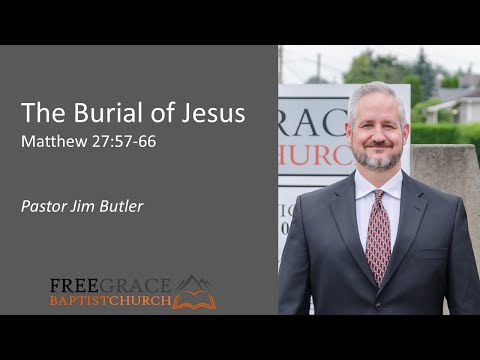
The Burial of Jesus
The burial of Jesus in Matthew 27:57–66 is examined across two movements: the burial proper (vv. 57–61) and the security measures taken at the tomb (vv. 62–66). Against both the swoon theory and ancient Jewish counter-testimony that the disciples stole the body, the sermon marshals the apologetic force of the sealed, guarded, newly-hewn tomb to demonstrate that the resurrection overcame every human precaution. The burial also carries weight in four theological categories: it confirms the reality of Christ's death, marks the final act of his humiliation as the last Adam, demonstrates his conquest of death, and strips the grave of its paralyzing power for all who belong to him.

The Preservation of the Kingdom
2 Kings 11 records the near-extinction and miraculous preservation of the Davidic royal line under the murderous usurpation of Athaliah — and its theological significance reaches from Genesis 3:15 to the throne of the ascended Christ. The chapter is read as a node in the unbroken typological-covenantal chain running from the proto-evangelium through the Davidic covenant, the incarnation, and the present reign of the Lord Jesus at the Father's right hand. The sermon argues that every assault on the messianic line, whether Athaliah's massacre, Herod's slaughter of the innocents, or the devil's wilderness temptation, is overruled by the sovereign providence of God, who protects his kingdom through unexpected instruments and will advance it until every enemy is made a footstool. The congregation is exhorted to draw courage from this narrative in the face of present opposition to Christ's church, resting in the certainty that the zeal of the Lord of hosts will perform his promise.

The Crucifixion of Jesus, Part 5
The death of Christ on the cross was not a bare historical event but a theologically charged act that immediately reshaped the covenant order between God and man. This sermon expounds Matthew 27:51–56, examining the three signs that followed the crucifixion — the torn temple veil, the earthquake and split rocks, and the resurrection of the saints — as divine testimony to the efficacy of Christ's atoning work and the inauguration of the New Covenant. The witnesses to that death, both the confessing Roman soldiers and the faithful women who had followed Jesus from Galilee, confirm that the one crucified is truly the Son of God. Believers are called to rest in Christ's completed atonement, which has opened access to the Holy of Holies for all who come through him, and to look forward to the bodily resurrection he has secured for his people.