
Cited in sermons
Joseph Hart
10 sermons · All people cited

The Conversion of Matthew

Matthew 9:9–13 records the sovereign call of a tax collector — among the most despised and morally compromised figures in first-century Jewish society — to follow Christ and ultimately to author the first Gospel. The sermon works through three movements: Christ's effectual call of Matthew to discipleship, the feast Matthew hosts to honour Christ and evangelize his associates, and the confrontation with the Pharisees in which Jesus declares the nature of his mission — not to call the self-righteous but sinners to repentance. The account is pressed into seven marks of genuine discipleship, closing with an appeal to the unconverted to look to Christ as the great physician of sin-sick souls.

The Sermon in Solomon's Porch, Part 1
Peter's sermon in Solomon's Porch (Acts 3:11–21) opens with a pointed denial: the healing of the congenitally lame man was not accomplished by apostolic power or godliness, but by the name of Jesus Christ, the glorified servant of Yahweh announced throughout the Old Testament prophets. The sermon works through three considerations in verses 11–16 — the God who glorified the servant, the sinners who rejected him, and the servant who healed the lame man — showing that Peter's staccato recitation of Jerusalem's guilt is not cruelty but evangelism: men must know the weight of their sin before the call to repent and be converted carries any urgency. The healing itself illustrates the completeness of Christ's saving work — perfect soundness, public and undeniable — and the authority he exercises from the right hand of the Father is the same authority by which sinners are saved today.

The Truth Concealed and Revealed
Matthew 11:25–30 presents three interlocking realities that together form the foundation of gospel rest: the sovereign will of the Father in concealing and revealing gospel truth, the exclusive mediatorial office of the Son as the only means of access to the Father, and the gracious invitation of Christ to sinners burdened by sin. The sermon argues that a right understanding of divine sovereignty — including both election and reprobation — should produce not polemical pride but the thankfulness and praise modeled by Christ himself in verse 25. Sinners are called to come to Christ by faith alone, receiving rest from the burden of sin, and to take up his yoke in discipleship, which the Savior himself declares easy and light.

The Faith of the Canaanite Woman
A Canaanite woman — an ancestral enemy of Israel — confronts Israel's Messiah in Gentile territory and refuses to accept silence, rebuff, or unfavorable parable as the final word. This exposition of Matthew 15:21–28 traces her persistent petitioning through two encounters with Christ, showing that great need demands great earnestness and that true faith worships even when heaven appears silent. The sermon draws out three lessons: the triumph of faith expressed through dependence, humility, and persistence in prayer; the Christological display of Christ's mercy and sovereign power over demons; and the benefit of affliction, which drove a pagan mother to the Son of David and teaches parents to pray without ceasing for children under the power of sin and Satan.
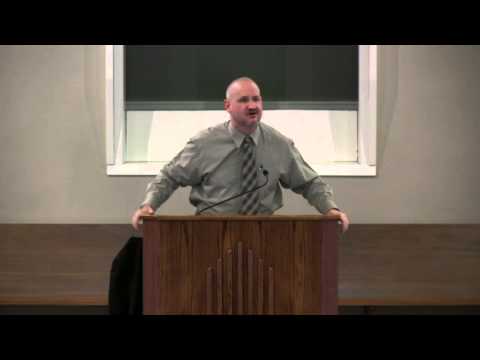
The Feeding of the Five Thousand
The feeding of the five thousand in Matthew 14:13–21 is not merely a record of physical provision but a visible parable designed to compel a verdict about the identity of Jesus Christ. His compassion toward an interrupting crowd, his sovereign command over the multitudes, and his multiplication of five barley loaves and two fish to satisfy more than five thousand people together demonstrate that he is the greater Moses and the greater Elisha — the Son of God in whom all sufficiency resides. The bread-of-life discourse of John 6 shows that those who received loaves and fish without receiving the Savior had missed the point entirely, and the sermon closes with Peter's confession as the model response: 'Lord, to whom shall we go? You have the words of eternal life.'
The Plan of Salvation
Two verses in 2 Timothy 1 contain a concentrated summary of the entire plan of salvation, and this sermon unpacks five observations from that text: God alone saves, the effectual call is the means employed, the basis is divine purpose and grace rather than human works, the plan originates before time began in the counsel of the triune God, and it is executed in history through the doing, dying, and rising of Jesus Christ. The sermon sets monergism against every form of synergism, argues that Athanasius's soteriological defense of Christ's deity depends on the incapacity of man to save himself, and traces the pactum salutis through John 17, Romans 16, and Ephesians 1. The hearer is pressed to rest all assurance on the finished work of Christ alone and to give God all praise for a salvation that is his from first to last.
A Leper Came to Him
Matthew 8:1–4 records a leper approaching Christ and receiving both cleansing and the declaration 'I am willing' — a text that serves as a lens through which to examine what it means to come to Christ in desperate need. The sermon establishes the theological purpose of Christ's miracles: not merely physical restoration, but the authentication of Jesus as Messiah and an illustration of man's spiritual condition as a sinner who is unclean, outcast, and incapable of self-cleansing. The law, like the Levitical regulations for lepers, can diagnose but cannot cure; only the great high priest, Christ Jesus, can accomplish what law, religion, and self-effort cannot. The central application is that sinners must come to Christ just as they are, resting on the warrant of the gospel — 'repent and believe' — assured that He is not only a powerful Savior but a willing one.
The Expectation of the Law
Galatians 3:10–14 presents a twofold appeal to Scripture — through Deuteronomy, Habakkuk, and Leviticus — that exposes the impossibility of self-justification and the necessity of redemption in Christ alone. The law demands entire, constant, and perfect obedience, a standard no fallen sinner can meet, placing all who rely on law-keeping under the curse of God. Christ, who knew no sin and violated no statute, became that curse in the place of his people, securing for them the blessing of Abraham and the promise of the Spirit through faith. The sermon calls every hearer to abandon any confidence in works or law-keeping and to look to Christ alone, in whom redemption is covenantal, instantaneous, complete, and powerful.
The Sovereignty of God in the Salvation of Sinners
Matthew 11:25–30 presents the sovereignty of God in salvation not as a theological puzzle to be argued but as a doxology to be prayed. Jesus praises the Father for hiding gospel truth from the self-sufficient wise and revealing it to those whom the Spirit reduces to babes — an act that is not injustice but divine judgment upon rebels who have no excuse. The passage then sets forth Christ's mediatorial authority as the sole ground upon which any sinner may know the Father, and issues three commands — come, take the yoke, learn — backed by the power of the one who commanded a dead man out of a tomb. The sermon calls hearers to abandon both hyper-Calvinist fatalism and Arminian manipulation, resting instead in the sovereign grace that humbles pride and fuels genuine gospel proclamation.
The Nature of Redemption
Galatians 3:10–14 presents redemption as covenantal, instantaneous, complete, and secure — four properties the apostle Paul grounds not in the believer's performance but in Christ's atoning work at Calvary. The sermon traces the Abrahamic promise through the whole Bible to show that Gentile believers are not a divine afterthought but the planned heirs of a covenant stretching from Genesis to the gift of the Spirit. Assurance of salvation belongs to justification, not sanctification, so that a believer's peace with God rests on Christ's cross-work rather than personal obedience. Three closing applications address the lawful use of the law for the believer, the biblical doctrine of cessationism, and the duty to preach the law faithfully to unconverted sinners.