
Cited in sermons
John MacArthur
74 sermons · All people cited
Ask FGBC 67: Are Piper and MacArthur Reformed Baptists?

What separates a confessional Reformed Baptist church from a Calvinistic Baptist church associated with figures like John Piper or John MacArthur? This conversation argues that Calvinism, properly understood, is not reducible to the five points of Dort but entails a whole confessional heritage — covenant theology (including the covenant of works), cessationism, the regulative principle of worship, and adherence to one of the great Protestant confessions. The Second London Baptist Confession of 1689 is presented as the most mature expression of that heritage, providing a theological anchor that protects congregations from pastoral personality-driven ministry and binds them to the cumulative wisdom Christ has given his church through the ages.
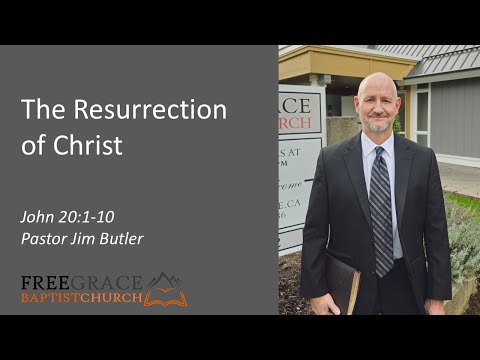
The Resurrection of Christ
The resurrection of Christ is the foundation of Christian hope, the confirmation of Old Testament prophecy, and the grounds of both justification and coming judgment. Working through John 20:1–10, this sermon examines the discovery and investigation of the empty tomb by Mary Magdalene, Peter, and the beloved disciple John, noting the eyewitness character of the narrative and the theological significance of the burial cloths. The shift from the seventh-day Sabbath to the first day of the week is grounded in Hebrews 4 and the pattern of new creation. The empty tomb preaches comfort to the believer and the certainty of judgment to the unbeliever, calling all to repent and believe on the risen Lord Jesus Christ.

2LCF Chapter 22 - Of Religious Worship and the Sabbath Day, Part 1
The abiding validity of the Fourth Commandment is defended through a biblical theology of the Sabbath that traces the institution from creation through the old covenant. The sermon argues that Sabbath rest is grounded not in the Mosaic economy alone but in the creation ordinance of Genesis 2 and the redemption of Exodus, making it binding upon all humanity — not Jews only — as Christ himself teaches in Mark 2:27. The positive and moral character of the commandment is distinguished from its ceremonial and positive elements, with the day change to the Lord's Day deferred to the following session. Hearers are called to receive the Sabbath as the gift it is declared to be in Isaiah 58, not as a Judaizing imposition.

The Arrest of Jesus
John 18:1–12 presents the arrest of Jesus not as a defeat but as a sovereign, voluntary act of the divine-human Mediator. The passage is expounded under three headings: the betrayal of Jesus by Judas and his coalition of enemies, the glory of Jesus manifested in his command of the situation and his 'I am' declaration that felled the arresting party to the ground, and the arrest proper in which Jesus rebukes Peter's sword and embraces the cup of the Father's wrath. The sermon closes by tracing three layers of antitypical significance — the greater-David typology of 2 Samuel 15, the binding of Isaac in Genesis 22, and the garden of Eden in Genesis 1–3 — to show that the arrest of Christ is the hinge on which God's eternal purpose to save his people from their sins turns.

The Promise of Blessings and Curses (Part 1)
Leviticus 26:1–13 opens with a promise of blessing conditioned on Israel's obedience — a structure that raises the question of how the Old Covenant relates to the New. This study expounds the covenantal framework underlying Leviticus 26, arguing that the Old Covenant operated as a covenant of works at the national level, distinct from the covenant of grace realized in Christ. The blessings of rain, peace, and God's presence promised to Israel find their fulfillment in the New Covenant, where the obedience that secures blessing is Christ's own, imputed to his people by faith alone.

The Promise of the Messiah
Genesis 3:14–24 contains the first announcement of the gospel — the proto-evangel — in which God promises that the seed of the woman will crush the head of the serpent, though at the cost of his own suffering and death. The sermon traces four observations from verse 15: the Redeemer would be a man born of a woman, would accomplish victory through suffering, through death, and in total victory over the devil. The latter half of the passage is then examined for the hope that extends beyond the fall: Adam's naming of Eve as 'mother of all living' as an act of faith in God's promise, and God's provision of tunics of skin as a typological foreshadowing of blood atonement. The hearer is urged to cast faith upon the seed of the woman — the Lord Jesus Christ — who has done what Adam and Eve, and what every sinner, could not do for themselves.

The Judicial Decision to Murder Jesus
The Sanhedrin's formal decree to execute Jesus, recorded in John 11:47–57, is the most extreme miscarriage of justice in human history — a body constituted to administer God's law plotting the murder of the only innocent man who ever lived. The sermon expounds the irony that Caiaphas, driven entirely by political self-preservation, nevertheless prophesied accurately: one man would die for the nation, and not for that nation only, but to gather the scattered children of God from every tribe, tongue, people, and nation. John's theological commentary on the high priest's words (vv. 51–52) unpacks the doctrinal heart of penal substitutionary atonement — the just for the unjust, the holy and harmless for the thoroughly defiled. The passage calls believers to stand in awe that Christ willingly walked into this kangaroo court, refused self-defense, and bore the wrath of godless men so that sinners might be freed from the wrath of God.

The Installation of the Priesthood
Leviticus 8–10 records the ordination, ministry, and judgment of Israel's priesthood, tracing the way sinful man may approach a thrice-holy God through divinely prescribed sacrifice. The death of Nadab and Abihu for offering that which the Lord had not commanded warns that worship is regulated by God alone, not by the worshiper's innovation. Christ fulfills every type embedded in this system — as the holy, harmless, and undefiled High Priest who satisfies divine justice once for all. The sermon calls new-covenant worshipers to approach the Lord's Supper with the same reverence and eager joy that the priestly fire of Leviticus 9 ought to have kindled.

The Identity of the Good Shepherd
John 10:22–30 records the climactic confrontation in Solomon's Porch during the Feast of Dedication, where Jesus answers the persistent demand to declare his identity plainly. He does so not with new information but by pressing what he has already said — through his works, his doctrine, and his relation to the Father — culminating in the declaration 'I and my Father are one,' a statement the unbelieving Jews rightly understood as a claim to full divine essence. The sermon traces five movements in verses 25–30: the declaration, confirmation, rejection, recognition, and affirmation that Jesus is the Christ, with extended treatment of the sovereignty of God in salvation, the security of the sheep grounded in both the Son and the Father, and the ontological unity of Father and Son against both Arian and Sabellian error. Believers are called to rest in the particular, efficacious, and irrevocable redemption accomplished by the Good Shepherd, and those outside Christ are called to hear his voice and believe.

The Children of the Devil, Part 4
John 8:48–53 records the Jews' escalating accusation that Jesus is a Samaritan and demon-possessed — the very imitation of their father the devil that Jesus exposed in verse 44. This sermon works through Jesus' threefold denial of the demon charge: he honors the Father, does not seek his own glory, and speaks the words of eternal life — each point being precisely what a demon-possessed man would never do. The expositor presses the doctrinal stakes of verse 51 — 'if anyone keeps my word, he shall never see death' — as a gracious promise held out even to those who would shortly take up stones, and calls hearers to come to Christ for justification before facing the eternal judgment from which no doubling-down on false religion can shield them.

2LCF Chapter 7 - Of God's Covenant, Part 2
1689 London Baptist Confession of Faith, Chapter 7, paragraph 3 sets out three theological covenants — the covenant of grace, the covenant of redemption (pactum salutis), and the covenant of works — as the structural architecture of all Scripture. This sermon expounds each in turn, demonstrating from texts in Genesis, Isaiah, Hosea, Galatians, and Romans that the covenant of grace is founded on an eternal transaction between the Father and the Son, and that it is God's provision for sinners rendered incapable of acceptance with God since Adam's fall. The covenant of works is shown to be indispensable to a right understanding of justification: without it, the imputed righteousness of Christ collapses into either moralism or antinomianism, and the distinction between forgiveness and imputation is lost. Covenant theology is pressed not as academic machinery but as the very ground of the believer's comfort, assurance, and stability before God.
Exhortations in Light of So Great a Salvation

Peter's exhortations in 1 Peter 1:13–16 are grounded in the prior theological indicatives of the epistle: the elect have been saved by the triune God, unto an incorruptible inheritance, and must now respond with corresponding imperatives. Two commands govern this passage — set your hope fully on the grace to be revealed at Christ's return, and live a holy life in all your conduct — each requiring mental intentionality, self-control, and an understanding of the regenerate nature as 'children of obedience.' The sermon argues that sanctification involves both mortification of former lusts and vivification of the new nature of obedience, while insisting that this holiness contributes nothing to justification, which rests wholly on Christ's perfect active obedience and atoning death.
The New Heaven and New Earth
Revelation 21:1–8 presents the new heaven and new earth not as the annihilation and replacement of creation but as its renovation — the consummation of covenant blessing in which God dwells fully and finally with his redeemed people. Working through four elements of the vision (the new creation, the bride, the announcement of blessing, and the voice from the throne), this exposition situates John's language within the broader biblical storyline of paradise lost in Adam and paradise restored in Christ, and interprets the new Jerusalem as the church — the covenant community that has replaced apostate Israel as the bearer of God's covenant promises. The sermon closes with a meditation on individual eschatology, drawing on Job, the Psalms, and the Apostle Paul to comfort believers with the certainty that those who die in Christ pass immediately into his presence, and that the fullness of covenant blessing awaits them in the age to come.

The Testimony of John the Baptist, Part 1
John 1:19–28 records the official interrogation of John the Baptist by a delegation sent from Jerusalem to establish his identity and authority. The Baptist's threefold denial — he is not the Christ, not Elijah bodily returned, not the prophet of Deuteronomy 18 — is matched by his positive confession as the voice of Isaiah 40, the forerunner who prepares the way of Yahweh and thereby implicitly confesses the deity of Jesus. The sermon traces the Baptist's testimony through Luke 1's prophecy of Zacharias, the Transfiguration account in Matthew 17, and the prologue of John 1, showing that the Baptist preached not only repentance but the remission of sins through the coming Messiah — that is, justification by faith alone. The governing application is that Christ's people exist to proclaim His preeminence, following the Baptist's model of humble, courageous, light-and-heat ministry that makes nothing of self and everything of Jesus.
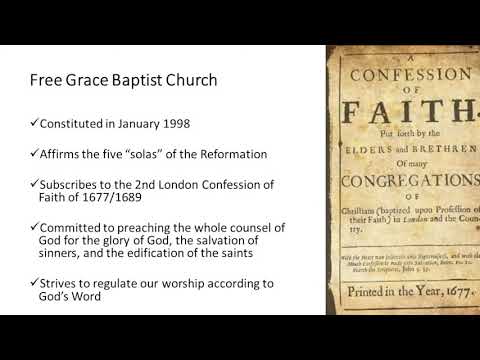
Introduction to the 1689 Second London Baptist Confession of Faith
Why should a church bind itself to a confession of faith? This introductory lesson on the Second London Baptist Confession of 1677/1689 grounds the answer exegetically in Ephesians 4 — where Christ gives gifted men to the church so that the body attains doctrinal unity and is no longer tossed about by every wind of teaching — and then traces the historical origins of the 1689 among the Particular Baptists, distinguishing them from Anabaptists, Presbyterians, and Congregationalists. Four functions of a confession are developed: defining, defending, discriminating, and disciplining with reference to the doctrine of the church. The lesson closes by distinguishing Reformed theology (Calvinism plus covenant theology plus the regulative principle) from mere five-point Calvinism, and by defending the confession's silence on matters of Christian liberty as a feature, not a defect.

The Lord's Betrayal in the Garden
Matthew 26:47–50, read alongside John 18:1–11, presents the betrayal of the Son of God in Gethsemane as the arrival of the cup of divine wrath — the hour for which he came. The sermon traces three aspects of the betrayal: its significance as the fulfillment of prophecy and the onset of Messianic suffering, the diabolical plan coordinated by Judas and the religious leaders, and the execution of that plan through a hypocritical kiss. The exposition then turns to John 18 to show that even as Christ surrendered, he revealed his divine identity by the words 'I Am,' causing the armed mob to draw back and fall to the ground — a display of the glory that will be fully manifested at his return. The central application is twofold: believers are called to stand in awe of the active obedience and voluntary self-surrender of Christ whose righteousness is imputed to them, and unbelievers are warned that the only preparation for facing that glory is faith in the Lord Jesus Christ.

The Lord's Prayer in Gethsemane
What does the agony of Christ in Gethsemane reveal about who He is and what He accomplishes? Expounding Matthew 26:36–46, this sermon traces the Savior's three prayers against the disciples' repeated failure to watch, showing that Christ's soul-sorrow is perfectly consistent with His true humanity, while His unwavering resolve to drink the cup of divine wrath flows from His eternal commitment as covenant mediator. The cup is not metaphor for mere suffering but the concentrated fury of God upon a sinless substitute — which explains both why martyrs die differently than Christ and why the imputation of His active obedience is as necessary as the forgiveness of sins. Believers are called to marvel at His sufficiency, to watch and pray with sobriety about their own weakness, and to rest entirely on the righteousness of Another.

The Victory of Samson at Jawbone Height
Judges 15 recounts Samson's victory over the Philistines at Jawbone Height, but the chapter's deepest scandal is not the enemy outside — it is the cowardice of the covenant tribe of Judah, who bind their own deliverer and surrender him to those he was sent to destroy. This sermon traces three movements in the text: the betrayal by Samson's father-in-law, the treachery of Judah's three thousand men, and the Spirit-empowered defeat of a thousand Philistines with a fresh jawbone. Throughout, Samson emerges as a type of Christ — delivered by his own people into enemy hands, yet vindicated by God — and the lesson pressed upon the hearer is that God's grace delivers a people who neither cry out for deliverance nor deserve it.

The Qualifications for Elders, Part 2
What does Scripture require of a man before a church installs him as an elder? Expounding 1 Timothy 3:1–7 alongside Titus 1:5–9, this sermon completes a two-part treatment of the biblical qualifications for elders, focusing on the elder's maturity in the faith, his good testimony before outsiders, and his indispensable ability to teach. The danger of rushing a novice into office is pressed from multiple angles — pride, the church's welfare, and the man's own protection — before the sermon closes with practical exhortations to the congregation on praying for, identifying, examining, and where necessary excluding candidates for eldership.
The Qualifications for Elders (Part 1)
What qualifies a man to serve as an elder in the church of Jesus Christ? Expounding 1 Timothy 3:1–7 as an excursus from a series through Acts, this sermon establishes that the New Testament uses 'elder,' 'overseer,' and 'pastor' as synonymous titles for one office, and then works through five of the six qualifications Paul sets out for that office: the man's desire, his personal holiness, and his domestic faithfulness. The sermon is equally concerned with what these qualifications are not — they are not a standard of sinless perfection, nor a popularity contest, nor a direct transfer of worldly competence — and applies the passage by urging the church to vet candidates by Scripture alone, not by affection or likability.

The Superiority of the New Covenant
Hebrews 8 presents Christ as the minister of the true heavenly tabernacle and the mediator of a new covenant that is categorically superior to the Mosaic economy. The old covenant was not defective in its essence but in its inability to justify and renew fallen humanity, and its breakability exposed the fatal flaw of any covenant whose continuance depended on human fidelity. The new covenant, announced in Jeremiah 31 and now realized in Christ, is unbreakable, writes God's law on the heart, grants saving knowledge of God to all its members, and secures the full remission of sins — four blessings that belong essentially, not accidentally, to every member of the covenant. Because membership in the new covenant is defined by these regenerate characteristics, believers' baptism by immersion is the only covenant sign consistent with new covenant theology.

The Baptisms of Jesus Christ
What is the theological basis for believers' baptism? This sermon argues that Christians are baptized because of the two baptisms of Jesus Christ: his water baptism in Matthew 3, which inaugurated his life of active obedience by fulfilling all righteousness on behalf of his people, and his metaphorical baptism of suffering in Matthew 20, which points to his passive obedience in drinking the cup of divine wrath on the cross. Sinners possess no righteousness of their own sufficient to stand before a holy God; they are clothed entirely in Christ's alien righteousness, imputed to them through faith. The practical exhortation to those who have believed is to follow Christ in believer's baptism as an act of public obedience, not as a means of salvation but as its public confession.

The Inclusion of Wretches in God's Covenant
Ephesians 2:1–10 presents the full arc of redemption — from the total deadness of sinners to their gracious vivification in Christ — and this exposition traces that arc through the origin, objects, and execution of salvation. The sermon grounds the covenant of grace in the prior covenant of redemption (Ephesians 1:3–14), showing that the Father's election, the Son's redemption, and the Spirit's sealing together exclude every contribution of the sinner. Salvation is by grace alone through faith alone, with faith itself a gift conveyed by God to the spiritually dead — not a human instrument brought to the table that God then rewards. The exposition closes by distinguishing justification from sanctification and warning against both Roman Catholic and Federal Vision distortions of grace, anchoring the believer's final acceptance before God solely in the active and passive obedience of Christ.

Genesis 6:1-8
Genesis 6:1–8 presents some of the most contested verses in the Pentateuch alongside some of the clearest. The identity of the 'sons of God' in verses 1–4 has generated three major interpretive traditions — angelic beings, tyrannical rulers, and the godly line of Seth intermarrying with the ungodly line of Cain — and the sermon surveys each view while favouring the Sethite interpretation without demanding confessional certainty on it. Verses 5–8 then deliver an unambiguous portrait of universal human depravity and the righteous judgment of God, interpreted through the theological categories of anthropomorphism and anthropopathism to guard the immutability and impassibility of God against misreading. The sermon closes by showing that grace precedes conduct in Noah's case, establishing the pattern that runs through all of Scripture: God's sovereign grace produces the righteousness it requires.

The Recovery of Wandering Brethren
James 5:19–20 closes the epistle not with a random aside but with a call to mutual accountability rooted in the high stakes of wandering from the truth. The sermon establishes two movements: the problem of professing believers who drift from the truth into the error of their way, and the encouragement given to every member of the local church who pursues their recovery. Drawing on Matthew 18, Galatians 6, Hebrews 2, and Psalm 119, the exposition argues that truth and conduct are inseparably connected, that instrumental means matter in God's sovereign purposes of salvation, and that the antidote to defection from God is a disciplined, resolute, corporate love for the truth.

The Ascension of Christ
The ascension of Christ in Acts 1:9–11 is no mere epilogue to the resurrection but a theologically freighted event with direct consequences for how believers understand Christ's present reign, the Lord's Supper, intercession, and final glorification. Working through the passage, the sermon establishes that the ascension was visible, local, bodily, and glorious — witnessed by the apostles and interpreted by angelic messengers who announce Christ's return in like manner. The ascension completes Christ's earthly mediatorial work, secures the gift of the Spirit, and grounds the believer's assurance in a high priest who always lives to make intercession — the pledge that those whom He justified He will also glorify.

The Call to Repentance
James 4:7–12 contains ten imperatives calling the people of God to repentance — first toward God and then toward one another. The sermon traces the gracious foundation of this call in verse 6 ('he gives more grace'), showing that compliance with these commands is possible only by divine provision, not by human self-improvement. Repentance toward God encompasses submission, resistance of the devil, drawing near to God, moral purity, mourning over sin, and humility; repentance toward one another requires laying aside evil speech, judgmentalism, and the arrogance of treating personal preferences as law. The conspicuous order — fix the vertical relationship first, then the horizontal — is shown to be the theological logic of both the Decalogue and James' own chiastic structure.

Of Religious Worship and the Sabbath Day (2LCF22)
The Sabbath commandment is a moral, positive, and perpetual law binding all men in all ages — not a distinctively Jewish institution abolished with the Mosaic economy, but a creation ordinance blessed and sanctified by God from the beginning and carried forward into the New Covenant era. Working through 2LCF chapter 22, paragraphs 7 and 8, this session traces a biblical theology of the Sabbath from Genesis 2 through Isaiah and Jeremiah, establishing both the moral principle (one day in seven) and its positive element (the particular day). The shift from Saturday to Sunday is grounded in creation and redemption as the twin rationales for the commandment, anticipating the resurrection of Christ as the basis for Lord's Day worship. Hearers are called to receive the Sabbath not as a burden but as a gift given by God for the good of His creatures.
The Lord's Betrayal in the Garden
Matthew 26:47–50 records the betrayal of Christ in Gethsemane, and this expository sermon works through three dimensions of that event: its significance as the arrival of the cup of God's wrath that Christ had prayed over, the plan behind the betrayal as Judas and the religious leaders converge under God's sovereignty, and the execution of the betrayal through a hypocritical kiss. Woven throughout is the parallel account in John 18, where Christ's absolute declaration of 'I Am' causes the arresting mob to draw back and fall to the ground — a manifestation of divine glory that underscores both his power to resist and his voluntary surrender to the Father's will. The sermon calls hearers to see in Christ's resolve the willingness of the Savior to save sinners, and to flee to him rather than trust in external proximity to Christ or religious position.
The Olivet Discourse, Part 10
Matthew 24:32–35 presents the parable of the fig tree and Christ's solemn declaration that 'this generation will by no means pass away till all these things take place.' This sermon argues the preterist interpretation: the parable is not a prophecy about the 1948 rebirth of Israel but a sign given to first-century disciples that the judgment on Jerusalem in AD 70 was near, confirming that Christ is presently enthroned at the Father's right hand. The phrase 'this generation' carries the same lexical and contextual meaning it holds throughout Matthew's Gospel — the contemporaries of Jesus — and Christ staked His prophetic integrity on the fulfilment of every detail within that generation. Hearers are urged to let the text drive their eschatology, and ultimately to flee not to the mountains of Judea but to Christ, the only refuge from divine judgment.