
Cited in sermons
F. F. Bruce
110 sermons · All people cited

The First Missionary Journey, Part 6

Paul's sermon in the synagogue at Pisidian Antioch reaches its practical climax in Acts 13:38–43, where he preaches forgiveness of sins and justification by faith alone — two distinct yet inseparable blessings secured by Christ's active and passive obedience. The law of Moses cannot justify; it can only expose the sinner's inability and drive him to Christ, in whom every believer is declared righteous by the imputation of Christ's righteousness received through faith alone. Paul's warning from Habakkuk 1:5 presses the point home: to despise this gospel is to invite a judgment more severe than the Babylonian captivity. The sermon closes by tracing the same doctrine of justification through the vision of Joshua the high priest in Zechariah 3, and exhorts believers to continue in the grace of God as the only ground of perseverance.

The Fourth Commandment, Part 2
The fourth commandment's perpetual moral obligation is examined through the lens of Christ's ministry, his resurrection, and apostolic teaching, demonstrating that the Saturday Sabbath of the old covenant has been transformed into the Lord's Day — Sunday — under the new covenant. Hebrews 4:9 is treated as the theological linchpin: 'there remains therefore a Sabbath rest for the people of God' is not an eschatological footnote but a present weekly obligation, with the change of day grounded in Christ's resurrection as the completion of new-creation work. The sermon distinguishes the positive-law element of the fourth commandment (which day) from its abiding moral-law element (one day in seven devoted to God), before closing with practical qualifications against both legalism and antinomianism in Sabbath observance.

Free Grace Baptist Church - September 22, 2019 AM
Acts 10:9–16 presents Peter's vision of the great sheet as more than a curiosity about dietary law — it is a decisive turning point in redemptive history, signaling the formal inclusion of the Gentiles in the covenant promises of God. The sermon works through three particulars of the vision: its occasion (Peter's noon prayer on the housetop), the vision proper (the sheet with clean and unclean animals), and God's explanation ('What God has cleansed you must not call common'), tracing the contrast with Ezekiel 4 to show that where Ezekiel's unclean diet symbolized Israel's defilement among the Gentiles, Peter's vision announces the Gentiles' purification alongside Israel. The exposition addresses the threefold division of the law — moral, ceremonial, and judicial — demonstrating that the food laws were ceremonial and always purposed by God to be abrogated by Christ's fulfillment, with implications for how new covenant Christians navigate Christian liberty, avoid judgmentalism toward one another, and proclaim a gospel that comes to helpless sinners without additions or conditions.

The First Post-Conversion Visit to Jerusalem by Paul
Paul's first post-conversion visit to Jerusalem (Acts 9:26–31) exposes three realities: the suspicious reception Saul faced from the Jerusalem disciples, the bold gospel ministry he conducted among the Hellenists despite two attempts on his life, and Luke's summary statement on the condition and growth of the churches in Judea, Galilee, and Samaria. The sermon argues that faithful churches grow not through gimmick or manipulation but through walking in the fear of the Lord and in the comfort of the Holy Spirit — conditions that produce peace, edification, and genuine multiplication. Along the way, the preacher presses the congregation to pray for bold preaching, to value the supporting roles of 'Ananias and Barnabas figures' in the church, and to pursue the unity of the Spirit in the bond of peace as an active, worked-for reality.

The Baptism of Saul of Tarsus
Acts 9:17–25 records the baptism and initial preaching of Saul of Tarsus following his encounter with the risen Christ on the Damascus road. Ananias addresses the former persecutor as 'brother Saul,' and Saul is immediately baptized — a pattern the sermon presses as normative: conversion precedes and grounds baptism, which is the public confession of a forgiven sinner, not a converting ordinance. The sermon then traces the character of Saul's early preaching: immediate, Christocentric, apologetic, and persuasive — proving from the Old Testament that Jesus is the Christ and the Son of God — while showing that the same mission statement of Acts 9:15–16 (preach and suffer) begins its fulfilment within hours of his conversion. Hearers are urged to confess Christ openly, to submit to baptism without delay, and to recover a persuasive, Scripture-grounded proclamation of the gospel rather than the entertainment-driven substitute that fills contemporary pulpits.

The Mission for Saul of Tarsus
Acts 9:10–16 records Christ's commission to Ananias concerning the newly converted Saul of Tarsus, and in it Jesus reveals a twofold purpose for his chosen vessel: to bear the name of Christ before Gentiles, kings, and the children of Israel, and to suffer greatly for that name. This sermon traces how that double calling — to preach and to suffer — was fulfilled across Paul's entire apostolic ministry, drawing on 2 Corinthians 11, Colossians 1, and 2 Timothy to show that affliction is not a contradiction of divine favor but an instrument of it. The sovereignty of Christ over conversion and calling stands as the controlling theme, pressing hearers to abandon every excuse for unbelief and to come to Israel's Messiah in faith.

The Apostle Peter and Simon Magus
Acts 8:18–25 presents one of Scripture's most debated conversion accounts: Simon Magus, a former sorcerer who professed faith and was baptized, then attempted to purchase apostolic power with money. This exposition traces Peter's sharp rebuke — 'your money perish with you' — through its Old Testament resonances in Deuteronomy 29 and Proverbs 5, while weighing the evidence on both sides of the question of Simon's genuine conversion. The sermon concludes that the deeper question Acts 8 presses is not Simon's eternal state but the hearer's own: whether they have come to know the Christ who forgives wickedness, grants repentance, and receives every sinner who comes to him.
The Samaritan Pentecost
Acts 8:14–17 records the coming of the Holy Spirit upon the Samaritan believers through the apostolic ministry of Peter and John — an event frequently misread as a proof text for Roman Catholic confirmation or Pentecostal second-blessing theology. This sermon argues that the Samaritan Pentecost is neither a repeatable pattern for individual Christian experience nor evidence of a subsequent work of the Spirit distinct from regeneration, but rather a unique, unrepeatable, redemptive-historical event marking the corporate inclusion of Samaritans into the one covenant people of God, in direct fulfillment of Acts 1:8. The three Pentecosts — Jerusalem (Acts 2), Samaria (Acts 8), and the Gentile household of Cornelius (Acts 10) — together attest Christ's messianic lordship from the Father's right hand and demonstrate the unity of His people across every ethnic division. Believers are called to receive the Word by faith, submit to baptism as its public sign, and embrace the corporate solidarity of the one new man in Christ.

The Martyrdom of Stephen
Acts 7:54–60 records the martyrdom of Stephen, the first Christian martyr, whose death exhibits divine sustaining grace amid murderous opposition. This exposition traces three movements in the passage: the blessedness of Stephen as the triune God fills, illumines, and comforts him; the murderous rage of the Sanhedrin, whose violent reaction to his vision of the exalted Christ exposes their guilt and apostasy; and the death of Stephen, whose dying prayers — for Christ to receive his spirit and to forgive his murderers — mirror the death of the Lord Jesus and further corroborate his entire defense. The sermon closes with the conversion of Saul of Tarsus in Acts 9 as God's answer to Stephen's intercessory prayer, and with a call to trust Christ as the one who hears prayer, forgives sin, and grants access to God.

Stephen's Defense, Part 6
Acts 7:37–43 records Stephen's appeal to the wilderness generation as the climax of his defense before the Sanhedrin, demonstrating that Israel's persistent idolatry — not Stephen's teaching — represents the true rejection of Moses and of God. Stephen cites Deuteronomy 18:15 to show that Moses himself predicted the coming of Christ, the prophet like Moses, so that the council's rejection of Jesus is simultaneously a rejection of Moses and of the living God who sent him. The sermon traces Israel's descent from refusing Moses' word, to fashioning the golden calf, to God judicially giving them over to worship the host of heaven, drawing a direct line from Exodus 32 through Amos 5 to the very council Stephen addresses. The practical summons is double: flee idolatry in all its forms, whether tangible or inward, and flee to the God who, even in righteous judgment, remains ready to pardon.

Stephen's Defense, Part 5
Stephen's defense before the Sanhedrin in Acts 7:30–36 draws on the call and rejection of Moses to demonstrate that the very history Israel appeals to condemns their rejection of Jesus. The sermon expounds six attributes of God revealed in the burning bush — God as revelatory, covenantal, holy, compassionate, delivering, and the self-existent I Am — showing that Moses received a theophany of the pre-incarnate Christ in Gentile territory, dismantling the council's temple-centered objections. Moses functions as a deliberate type of Christ: called by God, rejected by the people, and authenticated by signs and wonders. The sermon closes by applying the typology directly: as Moses was sent to deliver Israel from earthly bondage, Christ is sent to deliver sinners from the bondage of sin, and the call to come to him is extended to all who are weary and heavy laden.

Stephen's Defense, Part 4
Stephen's defense before the Sanhedrin in Acts 7:17–29 centers on the birth, education, and first visits of Moses to his enslaved brethren — a narrative Stephen deploys not to instruct the Council in history they already knew, but to indict them for repeating the same rejection of God's appointed deliverer. The sermon traces two structural pillars: God's sovereign faithfulness to Abrahamic covenant promises across four centuries of bondage, and Israel's willful incomprehension of Moses as the pattern for the Sanhedrin's rejection of Jesus. The typological connection is explicit — Moses as redeemer-reconciler rejected by those he came to save is the Old Testament shadow of Christ rejected by the very people who claimed allegiance to Moses. Hearers are called to resist the impulse to drive away the deliverer and instead flee to the Lord Christ, in whom all the promises of God find their yes and amen.

Gentile Inclusion in God's Covenant
Ephesians 2:11–22 presents Gentile inclusion in the covenant promises of God as a third demonstration of divine power, alongside the resurrection of Christ and the salvation of individual sinners. Gentile believers were once Christless, churchless, hopeless, godless, and homeless — aliens from the commonwealth of Israel and strangers to the covenants of promise — but now, through the blood of Christ, they have been brought near and made one new man together with believing Jews. The sermon refutes dispensationalism's two-peoples framework, explains the threefold division of the law (moral, judicial, ceremonial) to clarify what Christ abolished at the cross, and calls the church to a high corporate esteem of the household of God as the dwelling place of the Spirit.

The Decision of the Council
Acts 5:33–42 records the Sanhedrin's decision to beat the apostles and command them to cease preaching in the name of Jesus — and the apostles' rejoicing response. This exposition works through three movements: the council's murderous fury at Peter's gospel proclamation, the qualified wisdom of Gamaliel's historical and theological arguments for restraint, and the apostles' departure rejoicing that they were counted worthy to suffer shame for the name. The sermon calls the congregation to a readiness for persecution that mirrors the apostles', grounded not in stoic resolve but in the altogether loveliness of Christ who is chief among ten thousand.

The Continuing Growth of the Church
Acts 5:12–16 presents the continuing growth of the early church through signs and wonders performed by the apostles, the addition of believers to the Lord, and the healing of multitudes from Jerusalem and surrounding cities. The passage raises a sharp question about the nature and purpose of miraculous signs: were they a permanent feature of church life, or did they serve the specific redemptive-historical function of authenticating the apostolic word? This sermon argues that signs and wonders accompanied Moses, the prophets, Jesus, and the apostles precisely to confirm that God was speaking through them, and that the completed canon renders such confirming signs unnecessary — while the power of God continues in the gospel through the Spirit-wrought conversion of sinners. Believers are called to trust the sufficiency of Scripture, gather in unified worship, fear God genuinely, and rest their hope for salvation in faith in Christ alone.
The Judgment of God in the Early Church
Acts 5:1–11 records the deaths of Ananias and Sapphira, struck down by God for lying to the Holy Spirit. This sermon works through the passage under two headings: the deceitfulness of the couple (vv. 1–4) and the death they suffered by God's direct judgment (vv. 5–11). The preacher grounds the episode in a high doctrine of God — holy, just, and a consuming fire — and insists that the primary practical lesson is the fear of God, not merely ethical instruction about honesty. The sermon closes with the gospel: no one can stand before this holy Lord God except Christ alone, and all who are savingly united to Him by faith stand in Him.
Livestream - Baptism: Wim Kerkhoff
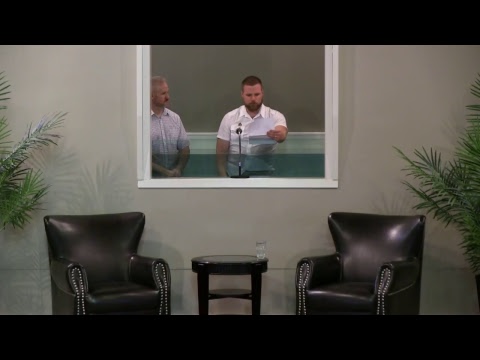
Acts 8:26–40 records the conversion and baptism of the Ethiopian eunuch, and this exposition sets that account against its Old Testament backdrop in Isaiah 53 and Isaiah 56 to show that what is happening is not merely one man's conversion but the fulfillment of covenant promises: the inclusion of those doubly excluded from the assembly of Israel. The sermon works through three movements — the divine appointment of the contact, the gospel communication beginning from Isaiah 53, and the conversion issuing in immediate baptism upon confession of faith. The central application is that God is characteristically and eagerly a saving God, that believers' baptism follows faith as its ordained external sign, and that no sinner — whether powerful or poor, crisis-converted or quietly brought to faith — is beyond the reach of sovereign grace.

The Sermon in Solomon's Porch, Part 1
Peter's sermon in Solomon's Porch (Acts 3:11–21) opens with a pointed denial: the healing of the congenitally lame man was not accomplished by apostolic power or godliness, but by the name of Jesus Christ, the glorified servant of Yahweh announced throughout the Old Testament prophets. The sermon works through three considerations in verses 11–16 — the God who glorified the servant, the sinners who rejected him, and the servant who healed the lame man — showing that Peter's staccato recitation of Jerusalem's guilt is not cruelty but evangelism: men must know the weight of their sin before the call to repent and be converted carries any urgency. The healing itself illustrates the completeness of Christ's saving work — perfect soundness, public and undeniable — and the authority he exercises from the right hand of the Father is the same authority by which sinners are saved today.

The Call to Repentance
Acts 2:37–40 records the crowd's response to Peter's Pentecost sermon and his command to repent and be baptized. This exposition examines the nature of genuine conviction of sin, the inseparable relationship between repentance and faith, the proper place of baptism as an outward sign of inward grace rather than a means of salvation, and the comprehensive scope of God's electing call that reaches Jerusalem sinners, their children, and Gentiles afar off. The sermon presses the hearer to embrace conviction of sin as a mercy, to understand that repentance and faith are two sides of the same coin, and to respond by believing the gospel and submitting to baptism without delay.

The Exaltation of Christ
Peter's Pentecost sermon in Acts 2:33–36 reaches its climax in the exaltation of Christ to the right hand of the Father. This exposition works through three movements: the supreme dignity conferred on Christ at his ascension, the fulfillment of Psalm 110:1 as ancient prophecy now openly vindicated, and the unavoidable implication for guilty hearers that this Jesus whom they crucified is both Lord and Christ. The current session of Christ — his ongoing reign, intercession, gathering of the church, and conquest of every enemy — is pressed as the ground of the believer's confidence and the urgent call for the unconverted to repent and call upon the name of the Lord.

The Problem of Sin and the Mercy of God
Proverbs 28:13 sets the problem of sin and the mercy of God in sharpest relief: the one who covers his sin will not prosper, while the one who confesses and forsakes it will have mercy. Working through biblical examples — Adam, Achan, Saul, David, Aaron, Ananias and Sapphira — the sermon exposes the instinctive human strategies for concealing sin: outright denial, minimizing its gravity, blame-shifting, religious compensation, and abandonment of moral categories altogether. The solution is not Roman Catholic penance but genuine confession that sides with God's indictment and genuine forsaking that constitutes the inseparable twin of saving faith — what Christian theologians call conversion — received only through Christ, the surety upon whose head the confessing sinner lays his hand by faith.

The Application of Psalm 16 to Jesus Christ
Peter's sermon at Pentecost in Acts 2:24–32 hinges on a single exegetical claim: Psalm 16 is not about David but about the Messiah, and the Messiah is Jesus of Nazareth. The sermon works through Peter's two-part argument — the declaration of the resurrection in verse 24 and the prophetic proof from Psalm 16 in verses 25–32 — showing that it was impossible for death to hold Christ because the Father had sworn otherwise in the Davidic covenant. Believers are urged to pray Psalm 16 as their own, trusting that the same God who raised Christ from the grave is their preserver, their joy, and their confident hope through death and into resurrection.

The Descent of the Spirit
Acts 2:1–13 records the descent of the Holy Spirit on the day of Pentecost, fulfilling Christ's promise and inaugurating the apostolic mission to Jerusalem, Judea, Samaria, and the ends of the earth. The sermon argues that the tongues given at Pentecost were intelligible human languages — not ecstatic or private utterances — serving as the revelatory and confirmatory word of God to diaspora Jews assembled from every nation, and simultaneously as a sign of judgment against unbelieving Jerusalem, echoing Deuteronomy 28 and Isaiah 28. The three instances of tongue-speaking in Acts (chapters 2, 8, and 10) correspond precisely to the mission parameters of Acts 1:8 and are unrepeatable redemptive-historical events, not a paradigm for individual Christian experience. Believers today possess the Holy Spirit through regenerating faith in Christ, and the filling of the Spirit is evidenced not by tongue-speaking but by love, submission, and corporate worship.

The Replacement for Judas
The replacement of Judas Iscariot in Acts 1:12–26 raises questions about the nature of apostolic authority, the sovereignty of God over human treachery, and the continuing rule of the risen Christ over his church. Peter's leadership in securing Matthias as the twelfth apostle demonstrates that the apostolic college was not dissolved by Judas's defection but reconstituted by Christ's own direction — through prayer, Scripture, and the casting of lots. The sharp contrast between Peter, restored by grace after his denial, and Judas, who went to his own place as a reprobate, anchors the sermon's gospel appeal: no sin is too great for the pardoning mercy of God in Christ, and sinners are urged to look to Christ and live.
Introduction to the Book of Acts
The book of Acts is not merely a record of human achievement but theological history — the continuing acts of the risen and ascended Christ, who builds his church by the Spirit through apostolic agency. This introductory sermon on Acts 1:1–3 examines the authorship, date, purpose, and major themes of Acts, defending the apostolicity of Luke as a non-apostle who nonetheless wrote under apostolic oversight and companionship with Paul. The sermon anchors the entire book in three great themes: the glory of the triune God, the normative practice of the early church, and the unstoppable spread of the gospel — all driven by the necessity of the Christian gospel for sinners under a holy God.

Of Religious Worship and the Sabbath Day, Part 2 (2LCF 22)
The Christian Sabbath is not a Puritan invention but a moral, perpetual commandment binding all men in all ages, now observed on the first day of the week in light of Christ's resurrection. This session of the 1689 London Baptist Confession study works through the ministry of Christ, the resurrection accounts, the apostolic pattern of first-day gathering, and the typology of Hebrews 4 to establish that a weekly Sabbath rest remains for the people of God in the new covenant era. The change of day from the seventh to the first reflects the inauguration of the new creation by the risen Christ, just as the Father rested on the seventh day of the old creation. Hearers are urged to receive the Lord's Day as a gracious gift — a weekly 'market day of the soul' pointing forward to the consummated rest that has not yet fully come.

Paul at the Areopagus

Paul's sermon at the Areopagus (Acts 17:22–34) is an unapologetic proclamation of the exclusive lordship, unbounded glory, and all-sufficient independence of the one living and true God over against the multiplicity of Athenian idols. The sermon traces Paul's argument through four movements — the prelude, the proclamation proper, the mercy extended, and the Athenian reception — grounding each in the prophetic witness of the Old Testament. The idols of Athens are shown to be dependent, spatially confined, and utterly without refuge, while Yahweh is immense, uncircumscribable, and the source of all life, breath, and existence. Hearers are pressed to abandon the folly of any idolatry, old or modern, and to believe on the risen Christ before whom all will be judged.
The Privilege of Adoption
Galatians 3:26–29 brings the history of redemption into focus on the individual believer's standing before God: all who are in Christ by faith are sons of God, adopted into the divine family through the finished work of the one who became a curse for them. The sermon expounds three features of the believer's new identity — filial adoption by faith, redemptive unity across every human distinction, and covenantal solidarity as the seed of Abraham — while insisting that redemptive unity does not collapse the role distinctions God ordained in creation and confirmed in the apostolic letters. Theological, ethical, doxological, and eschatological implications of adoption are drawn out in the conclusion, calling believers to gratitude, godly conduct, and eschatological hope as blood-bought children of God Most High.
The Works of the Flesh
Galatians 5:19–21 presents a vice list Paul calls 'the works of the flesh,' catalogued here under four headings: sins of the flesh (adultery, fornication, uncleanness, lewdness), sins of religious apostasy (idolatry, sorcery, heresy), sins against personal relationships (hatred, contentions, jealousy, outbursts of wrath, selfish ambitions, dissensions, envy, murder), and sins of intemperance (drunkenness, revelries). The sermon distinguishes between remaining corruption — the ongoing struggle common to every justified believer — and reigning corruption, the habitual, unrepentant practice that characterises the unregenerate and excludes from the kingdom of God. Drawing on the Westminster Larger Catechism, Calvin, and Perkins, the preacher grounds each vice in the moral law and closes with a double summons: believers who have fallen into these sins are to repent and seek forgiveness through the blood of Christ; unbelievers are to see in the law their need for the Saviour.

The Conversion of the Ethiopian Eunuch
Acts 8:26–40 records the Spirit-orchestrated conversion of an Ethiopian eunuch through Philip's proclamation of Christ from Isaiah 53. The passage is set within the fulfillment of Isaiah 56's promise that eunuchs and Gentiles would be brought near to God in the messianic age — a promise Luke deliberately highlights as the risen and exalted Christ builds his kingdom to the uttermost parts of the earth. The sermon expounds the substitutionary suffering of the servant of Yahweh as the content of Philip's evangelism, the great exchange of 2 Corinthians 5:21 as the ground of justification, and the proper order of faith then baptism as the pattern of apostolic practice. Hearers are pressed to ask whether they understand the gospel, to believe it without delay, and — if already believing — to submit to baptism as an act of obedience and a means of grace.