
Cited in sermons
D. L. Moody
6 sermons · All people cited
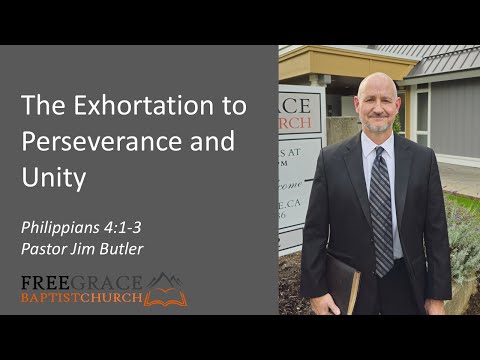
The Exhortation to Perseverance and Unity

Philippians 4:1–3 sets before the church two inseparable obligations: standing fast in the Lord and pursuing unity among the saints. Working through the apostle's affection for the Philippians, his call to perseverance, and the concrete dispute between Euodia and Syntyche, this sermon shows that the absence of unity both destroys the church and renders perseverance a near-impossible task. The biblical remedy for conflict — private confrontation, appeal to witnesses, and involvement of the church — is traced from Proverbs 18 and Matthew 18:15–20, with a complementarian reading of 1 Timothy 2 clarifying the nature of Euodia and Syntyche's gospel labor. Hearers are called to fasten their grips on Christ, his doctrines, and one another for the long haul of the Christian life.

Psalm 5
Psalm 5 is David's prayer tutorial, teaching the believer how to approach God in dangerous and difficult circumstances. The sermon works through four movements in the psalm: preparing prayer with ordered intentionality, grounding prayer in a precise knowledge of God's character, making requests on the basis of divine grace rather than personal merit, and declaring a confident assurance in Yahweh's protection of the righteous. Because God abhors not merely evil deeds but evildoers themselves outside of Christ, the believer can pray against oppression with holy boldness, resting in the promise that Yahweh's favor surrounds the righteous as an encompassing shield.

The Faithful Christian Mother
Proverbs 31:28–30 sets forth a vision of the faithful Christian mother whose defining characteristic is the fear of the Lord — a fear that is itself the fruit of sovereign, effectual grace. Drawing on Proverbs, Titus 2, Leviticus, the fifth commandment, and the testimony of C.H. Spurgeon, this sermon identifies four dimensions of biblical motherhood: her condition before God (saved by grace and walking with the Lord), her God-given influence over her children, her God-given authority over them, and her fourfold responsibility to instruct, example, discipline, and love. The closing application calls mothers to constant dependence on Word and prayer, theological literacy sufficient to catechize their children rightly, faithful perseverance in a demanding and underappreciated calling, and daily recourse to the gospel of Jesus Christ.
The Olivet Discourse, Part 12
Matthew 24:45–51 closes the first section of practical application in the Olivet Discourse with a parable of two servants: one faithful, one wicked. The parable's central question — 'Who then is a faithful and wise servant?' — is designed to arrest the conscience and promote eschatological self-examination. Watchfulness for Christ's return is not idle sky-gazing but active fidelity in one's God-appointed vocation, whether pastoral ministry or ordinary daily labor. The wicked servant's ruin flows directly from his denial of the master's return, a pattern the sermon presses against both unbelievers and professing Christians living as practical atheists.
The Usefulness of Scripture
Paul's claim in 2 Timothy 3:16–17 that all Scripture is God-breathed and profitable is examined across four categories of usefulness — doctrine, reproof, correction, and instruction in righteousness — before turning to Scripture's specific function in completing and thoroughly equipping the man of God for every good work. The sermon challenges the anti-doctrinal sentiment prevalent in contemporary evangelicalism, arguing that indifference to biblical doctrine is indifference to God himself. Ministers in particular are shown to be completed not by leadership models or charismatic gifts but by deep saturation in the word of God. The hearer is called to approach Scripture not as a duty to discharge but as a daily feast — mining its treasures with diligence and gratitude.
Women, the Word, and the Ministry
First Timothy 2:11–15 sets out Paul's prohibition against women teaching or exercising authority over men in the gathered church, grounding the rule not in first-century Ephesian culture but in the creation order of Genesis 2 and the fall of Genesis 3. The sermon works through three movements: Paul's exhortation that women receive the Word in submission, his double prohibition against women teaching men or holding authority over them, and his appeal to Adam's prior formation and Eve's deception as the theological rationale. Complementarian church governance is shown to be neither novel nor culturally conditioned but the normative, historically consistent pattern binding on every local church in every age. The closing treatment of verse 15 presents both the 'preservation in domestic faithfulness' reading and the 'messianic childbearing' interpretation, with the preacher siding with the latter.