
Cited in sermons
Clement of Alexandria
2 sermons · All people cited

2LCF Chapter 22 - Of Religious Worship and the Sabbath Day, Part 2

The perpetual moral obligation of the Christian Sabbath is grounded not in Sinai alone but in the creation ordinance of Genesis 2, where God blessed and sanctified the seventh day as a reflection of his own divine perfections. The 1689 London Baptist Confession of Faith chapter 22, paragraphs 7 and 8, frames the Sabbath as a positive-moral commandment — moral in its trans-covenantal, creation-rooted character, and positive in its covenantal form, shifting from seventh-day to first-day observance upon the resurrection of Christ as the inauguration of the new creation. The day belongs to God before it belongs to man: the governing question is not what may be avoided on the Lord's Day, but how near to God the worshipper may draw. Paragraph 8 calls for whole-souled preparation, rest from works, words, and thoughts entangled in worldly concerns, and the filling of the day with public and private worship, works of necessity, and works of mercy.
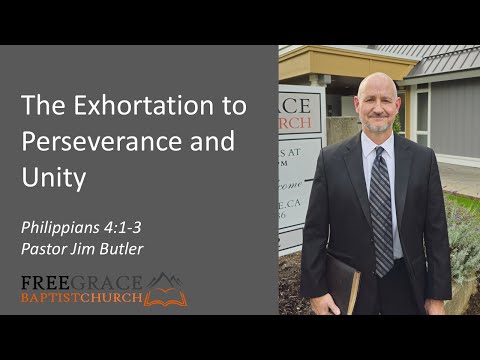
The Exhortation to Perseverance and Unity

Philippians 4:1–3 sets before the church two inseparable obligations: standing fast in the Lord and pursuing unity among the saints. Working through the apostle's affection for the Philippians, his call to perseverance, and the concrete dispute between Euodia and Syntyche, this sermon shows that the absence of unity both destroys the church and renders perseverance a near-impossible task. The biblical remedy for conflict — private confrontation, appeal to witnesses, and involvement of the church — is traced from Proverbs 18 and Matthew 18:15–20, with a complementarian reading of 1 Timothy 2 clarifying the nature of Euodia and Syntyche's gospel labor. Hearers are called to fasten their grips on Christ, his doctrines, and one another for the long haul of the Christian life.