
Cited in sermons
Charles Spurgeon
571 sermons · All people cited

The Crucifixion of Christ

How did it come to pass that the only holy, harmless, and undefiled man who ever lived was led out to be crucified between two criminals? John 19:16–24 answers on two levels: on the surface, the wickedness of men — Pilate's cowardice, the Sanhedrin's envy, the multitudes' manipulation — and beneath it, the sovereign, predetermined purpose of God who sent His Son to be the Lamb of God, the substitute for sinners. The sermon traces the location at Golgotha as the fulfillment of Genesis 3:15, the charge written by Pilate as an unwitting confession of Christ's kingship, and the conversion of the dying thief as the paradigm case of saving faith — seeing nothing but a bloodied, dying man on a cross and confessing Him as Lord of a kingdom.
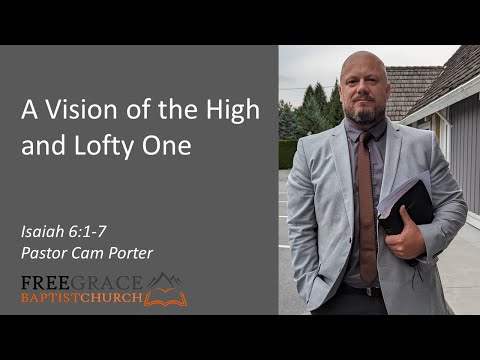
A Vision of the High and Lofty One

Isaiah 6:1–7 presents the prophet's visionary encounter with the enthroned Lord — holy, holy, holy — and his subsequent cleansing by a coal from the altar. This sermon works through five movements in the passage: the introductory contrast between dying earthly kings and the eternal High King of Heaven; the exemplary posture of the seraphim before the divine majesty; the superlative holiness, glorious titles, and unbounded presence of the Lord of hosts; Isaiah's fitting confession of his own uncleanness; and the gracious divine initiative in purification, which anticipates the definite atoning work of Christ. The congregation is called to approach the living God with the humility of Isaiah and the seraphim, confident that the same sovereign who commissioned his prophet will fill the whole earth with his glory through the proclamation of the gospel.

The Scourging and Mockery of Jesus
What was Pilate attempting when he ordered Jesus scourged and permitted the soldiers' mock enthronement? This exposition of John 19:1–4 argues that Pilate's scourging of Jesus was a failed act of crowd appeasement by a governor who knew he was condemning an innocent man, while the soldiers' mockery staged a deliberate parody of royal investiture against one they took for a pretender to Jewish kingship. The sermon draws Isaiah 50 and 53 and Psalm 109 into the foreground to show that these sufferings were neither accidental nor outside the decree of God — the Father delivered up the Son, the Servant of Yahweh gave his back to those who struck him, and the imprecatory prayer of Psalm 109 illuminates the inner life of Christ before his accusers. The application presses the congregation to feel the weight of substitutionary suffering, to resist a superficial Christianity untouched by the cost of redemption, and to confess Christ's lordship now rather than in the judgment.

The Fourth Commandment, Part 2
What does Jesus's ministry teach about the continuing obligation of the Sabbath commandment, and how does the resurrection determine which day Christians must observe? This study works through the Fourth Commandment (Deuteronomy 5:12–15) in its New Covenant application, examining Christ's relation to the law in Matthew 5:17–20, his correction of Pharisaic Sabbath-keeping in Matthew 12, and the testimony of all four Gospel accounts that the resurrection occurred on the first day of the week. The moral principle of one day in seven devoted to God is shown to be trans-covenantal and perpetual, while the positive-law element — which day — shifts from Saturday to Sunday with the resurrection of Christ, establishing what the 1689 London Baptist Confession calls the Christian Sabbath.

The Trial Before Pilate, Part 2
Standing before Pontius Pilate, Jesus affirms His kingship while making clear that His kingdom does not originate from this world and poses no military threat to Rome — it advances solely through the proclamation of truth. The sermon works through John 18:33–40 under two heads: Pilate's examination of Jesus (vv. 33–38) and Pilate's cowardly compromise (vv. 39–40), drawing in the parallel account in Luke 23 to trace Jesus' transfer to Herod and back. Pilate's threefold declaration of innocence, Herod's contemptuous mockery, and the crowd's demand for Barabbas together underscore the great exchange: the just for the unjust, the holy Lamb standing in the place of guilty, vile, helpless sinners.

The Believer in a Sinful Generation
Philippians 2:14–18 grounds the believer's daily conduct in a theology of sanctification and election: the command to do all things without complaining or disputing flows from the purpose of God to make his people blameless and harmless, validating their identity as children of God in a crooked and perverse generation. Drawing on the wilderness generation of Numbers and the Deuteronomy 32 backdrop Paul himself invokes, the sermon traces the catastrophic pattern of grumbling as a failure to submit to divine providence, and contrasts it with the church's calling to shine as lights and hold forth the word of life. The commendation of joy in verses 17–18 is grounded in Paul's readiness for martyrdom and his deep pastoral investment in the Philippians' growth, showing that the minister's eschatological joy is bound up with his people's faithful walk. The concrete application is simple: be blameless in yourself, peaceable toward the church, and a shining light in the world by faithful presence and gospel proclamation rather than withdrawal.

The Importance of Spiritual Exercise
Philippians 2:12–13 is not a self-salvation passage but a call to Spirit-enabled perseverance rooted in the sovereign grace of God. The sermon expounds the believer's responsibility to 'work out' a salvation already given — not to attain it, but to live in conscious, fear-driven obedience to the God who both justifies and sanctifies. Against hyper-Calvinist passivity on one side and Arminian self-effort on the other, the text holds together human duty and divine empowerment: God works in believers both to will and to do according to his good pleasure. The practical summons is to pursue sanctification — the whole of it, fear, trembling, cross-contemplation, and dependence on the Spirit — as those destined for glorification.
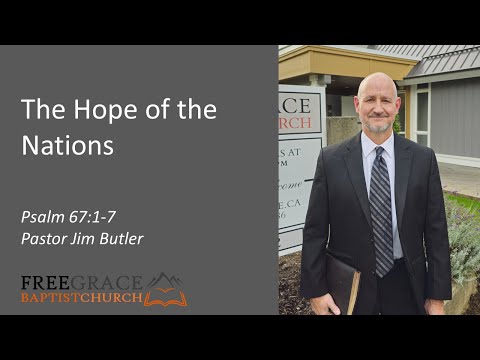
The Hope of the Nations
Psalm 67 is a missionary psalm in which the psalmist first petitions God on behalf of the church — for mercy, blessing, and the communion of God's presence — and then turns those blessings outward, praying that the nations would be saved, become worshipers of the true God, and come under His righteous rule. The Aaronic blessing of Numbers 6 stands behind verse 1, and the 'that' of verse 2 reveals the logic of all divine blessing: the church is enriched by God in order to become a conduit of His saving way to the ends of the earth. The sermon closes by calling the congregation to pray with the confident expectation of verses 6 and 7 — that God shall bless His people and all the ends of the earth shall fear Him — tying the psalm's vision directly to Christ's Great Commission.

The Faithful Christian Mother
Proverbs 31:28–30 grounds this sermon on the faithful Christian mother in four doctrinal categories: her condition before God, her influence over her children, her authority over her children, and her responsibility toward her children. The fear of the Lord that marks the virtuous woman is not a natural disposition but a new-covenant gift of sovereign grace, as Jeremiah 32:40 and Romans 3:18 together demonstrate. Because salvation is by grace alone through faith alone, the mother's instruction, example, discipline, and love flow from a regenerate heart rather than from moralism. Mothers are exhorted to maintain dependence on God, to ground child-rearing in Scripture rather than cultural trends, and to persevere in a calling that is high, demanding, and ultimately accountable to God.

Our Eternal Dwelling Place

Psalm 90, the only psalm of Moses in the Psalter, confronts the brevity and bitterness of human life and points the wandering soul to the only dwelling place that neither crumbles nor wears out — God himself. The sermon moves through four movements: God's eternal being as the refuge of his people, the astonishing shortness of every human life, the hard reality that death is not natural entropy but divine judgment upon sin, and finally the hopeful petitions with which the psalm closes. Every petition in the psalm's closing verses finds its definitive answer in the person of Christ, in whom God has once again opened heaven and called sinners to dwell with him in peace.
CTF 2025 - Session 7 - Pastoral Reflections on Classical Theism
The prologue of John's Gospel (1:1–18) discloses both the divine perfections and the eternal relations of the divine persons — the very realities that classical theism and the Second London Confession articulate in Chapter 2. This address draws that exegetical foundation into pastoral practice, arguing that a robust theology proper is not abstract speculation but the necessary ground for faithful ministerial function and focus. The preacher identifies six areas — the salvation of sinners, the catechesis of children, the perseverance of the saints, assurance of salvation, communion with God, worship, and the knowledge of God — each of which depends inextricably on a well-formed doctrine of God.

The Resurrection and Justification
Romans 4:25 binds the death and resurrection of Christ together as twin pillars of the doctrine of justification by faith alone. Christ was delivered up because of the offenses of his people — bearing the substitutionary curse that divine justice demanded — and was raised because of their justification, the resurrection serving as the Father's public testimony that satisfaction had been rendered and righteousness secured. The sermon works through four reasons why Paul links the resurrection to justification: the resurrection declared Christ to be the Son of God with power, testified that his sacrifice was accepted, confirmed that satisfaction was rendered, and marked the completion of redemption and the inauguration of Christ's present session. Believers are called to rest their entire confidence for standing before God on this finished work, and the unconverted are urged to confess and believe in the risen Lord Jesus.

The Example of the Savior, Part 3
Philippians 2:8 presents the humility of Christ not as incidental biography but as the doctrinal and ethical foundation for the church's conduct. This sermon examines first the declaration of Christ's humility — that he humbled himself voluntarily, according to his human nature as covenant mediator, in active obedience to every demand of God's law from his mother's womb — and then its demonstration in the extent of that humiliation: even the death of the cross, a death cursed by the law and laden with shame. The active and passive obedience of Christ, taken together, are the sole ground of justification by faith alone, which is why the Lord's Supper is received not as a reward for good conduct but as a proclamation of what the Savior accomplished on behalf of his people.

2LCF Chapter 1 - Of the Holy Scriptures (Paragraphs 1-3)
The 1689 London Baptist Confession of Faith opens with the doctrine of Holy Scripture because all subsequent confessional theology stands or falls on this foundation. This session works through paragraphs 1–3 of Chapter 1, establishing first the necessity of Scripture — grounded in the insufficiency of general revelation for saving knowledge and the cessation of direct prophetic revelation — and then the identity of Scripture, treating the question of canon (which books belong) and the exclusion of the Apocrypha. Three criteria for canonicity are examined: the providential exposure of books, the divine attributes Scripture bears, and apostolic origin broadly understood.

The High Priestly Prayer, Part 6
John 17:17–19 records Christ's priestly petition that the Father sanctify the apostles by the truth — consecrating them, as the Old Testament priests were consecrated, for the specific mission of preaching and writing to which He was sending them. The instrument of that sanctification is the truth: the incarnate Word who is truth, the Spirit of truth, and the written Word breathed out by that Spirit. Christ's own sanctification in verse 19 is not a prayer for personal holiness but His self-consecration as the high priest who offers Himself as sacrifice, and that priestly self-offering is the very foundation on which the apostles — and all believers — are set apart. The practical summons is plain: growth in grace and conformity to Christ come through the ordinary means of God's truth, not through experience, emotion, or entertainment, and the church's fidelity to that pattern depends on elders who are devoted to teaching it.

The Priority in the Believer's Life
Jesus commands his disciples not to worry about life, body, or tomorrow in Matthew 6:25–34, grounding the prohibition in three realities: God's providential care demonstrated in birds and lilies, the contrast between Gentile obsession and the believer's knowledge of a knowing Father, and the governing priority of verse 33 — seek first the kingdom of God and his righteousness. The sermon argues that carnal anxiety is theologically inconsistent for the Reformed believer: one who confesses God's comprehensive sovereignty in salvation yet surrenders to worry about temporal provision has applied Calvinism selectively. The antidote is not mere positive thinking but the cultivation of contentment rooted in the imputed righteousness of Christ, which grants entrance into the very kingdom we are commanded to seek first.
The Use of the 2nd London Confession
A confession of faith is not a human addition to Scripture but a tool the church uses to define, defend, discriminate, discipline, and delimit its doctrine. Drawing on passages from the Pastoral Epistles, Jude, and Ephesians 4, this Sunday School address argues that the Second London Baptist Confession of 1689 serves the local church in six concrete ways: it establishes doctrinal boundaries, equips members for apologetics, vets candidates for ministry, grounds church discipline, protects Christian liberty by identifying what lies outside its purview, and anchors the church in the catholicity of the Reformed tradition. The session closes with a call to reject autonomous biblicism in favour of confessional theology understood as the fruit of the Spirit's ongoing work in the teaching ministry of Christ's church.

2LCF Introduction and Preface to the 1689 Second London Baptist Confession
The Second London Baptist Confession of Faith (1689) did not arise in a vacuum — it was forged under persecution, shaped by theological antiquity, and published to correct misrepresentations of Particular Baptist doctrine. This study introduces the Confession through its original preface, examining the necessity and utility of creeds and confessions, the historical context of 17th-century England, and the specific additions, changes, and deletions the Particular Baptists made to the Westminster Confession and Savoy Declaration. The Confession stands as a faithful summary of biblical doctrine and a demonstration that Particular Baptists stood firmly within the stream of historic Protestant orthodoxy, differing from their Presbyterian and Congregationalist brethren only on baptism, church polity, and certain covenant theology distinctions.

Trinitarian Assurance

Ephesians 1:3–14 presents a Trinitarian doxology in which the Father's election and predestination, the Son's redemption through His blood, and the Spirit's sealing together constitute the full ground of the believer's assurance. The passage resists any reduction of the three persons to isolated roles, insisting on inseparable operations even as Paul shines distinct light on each person's work. The sermon argues that the Christian's assurance must be anchored not in self-examination of fruit-bearing but in the objective, Trinitarian work of God accomplished entirely outside of us in Christ.

The Joy of the Gospel
Ephesians 2:1–10 presents the whole arc of redemption in miniature: total depravity, sovereign grace, and the new life of sanctification. This sermon works through that arc by contrasting the bad news of verses 1–3 — that every human being is spiritually dead, enslaved to fleshly desires, complicit with satanic powers, and deserving of divine wrath — with the good news of verses 4–10, where God's rich mercy, unearned grace, and sovereign bestowal of faith rescue sinners who had nothing to offer Him. The central application is that the regenerate life is marked not by boasting but by the Spirit's fruit, and that the gathered church is itself a foretaste of the eternal communion for which God has prepared His people in Christ.

Spurgeon & Open Air Preaching
Drawing on Hebrews 13:7's command to remember and follow faithful ministers, this lecture examines the life, preaching, and open-air ministry of Charles Haddon Spurgeon as a model for gospel proclamation. The speaker presents material from his published doctoral dissertation on Spurgeon's open-air preaching, working through three open-air sermons and Spurgeon's own pedagogy for street evangelism. A recurring application presses the listener — whatever their theological sophistication — to proclaim the excellencies of Christ to all people, including the lowest and most despised.

The Dedication of the Temple
Solomon's prayer at the dedication of the temple in 1 Kings 8:22–53 is grounded not in Israel's merit but in the character of God — his incomparability, faithfulness, and transcendence held together with his immanence. The petitions that follow address every covenant curse Moses had warned of: civil injustice, military defeat, drought, famine, and exile, each met with Solomon's recurring plea that God hear from heaven and forgive. The prayer reaches beyond Israel to encompass the nations, anticipating the Gentile inclusion Paul expounds in Ephesians 3 and finding its ultimate fulfilment in the Lord Jesus Christ, the true Son of God who builds the eternal house of God. Believers are exhorted to imitate Solomon's theology-saturated prayer, to receive affliction as God's appointed means of conformity to Christ, and to rest in the faithfulness of a God who has always kept his covenant promises.

Ask FGBC - Dec 2024 Podcast with Pastors Butler and Porter, Batch 4
A panel of two pastors works through a batch of listener-submitted questions spanning baptism and the Lord's Supper, the eternity of hell, church membership, faith and fear, the unpardonable sin, images of Christ, dry preaching, and extra-biblical theological vocabulary. Across each topic the answers are grounded in Scripture and the 1689 London Baptist Confession, with particular attention to second-commandment concerns, the nature of saving faith, and the perseverance of the saints. Listeners are urged to anchor their assurance not in the strength of their own grip on Christ but in the immutable decree of election and the intercession of the Triune God.

The Suffering and Glory of Christ
Psalm 22 presents the suffering and glory of Christ with a precision and detail that exceeds even the Passion narratives of the four Gospels. The psalm's first half expounds the dereliction Christ endured on the cross — not as a breach of the Trinity or a dissolution of the hypostatic union, but as the penal withdrawal of the Father's sensible favor while the Son bore the curse due to his people's lawbreaking. The second half moves from that suffering to the exaltation of the Redeemer, the adoption of his brethren, the extension of his kingdom to all nations, and the generational advance of his church — all grounded in the finished work of the cross. The sermon calls believers to make much of the Psalms in both private devotion and corporate worship, hearing in them the very voice of Christ.

The Enthronement of the King-Priest
Psalm 110 is the most frequently quoted Old Testament text in the New Testament, and for good reason: it presents the Lord Jesus Christ in his twofold office as enthroned King and eternal Priest. This exposition works through all seven verses under three headings — the enthronement of Christ at the Father's right hand (vv. 1–3), the Melchizedekan priesthood sworn by God's oath (v. 4), and the triumph of Christ over all his enemies (vv. 5–7). The sermon calls believers entering a new year to fix their minds on the reigning King-Priest rather than on the hostility of the present evil age, and urges the unconverted to come to Christ in faith on the grounds that God's saving purpose is irreversible.
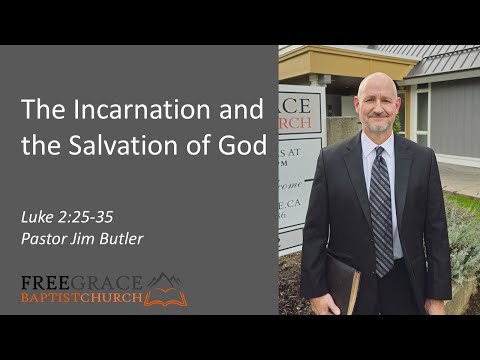
The Incarnation and the Salvation of God
Simeon's encounter with the infant Jesus in Luke 2:25–35 reveals the incarnation as the decisive fulfillment of every Old Testament promise — from Genesis 3:15 through the servant songs of Isaiah — and forces every hearer to declare whose side they stand on. The sermon expounds two movements in the passage: Simeon's confession that the child he holds is the salvation God prepared for all peoples, and Simeon's prophecy that this same child will cause the fall and rising of many, pierce Mary's soul, and expose the hidden allegiance of every heart. The call is direct: look to Christ by faith as Simeon did, die in peace as Simeon could, and do not be numbered among those who fell because they rejected the consolation of Israel.

CTF 2025 - Timeline of Classical Theism
This conference preview traces the historical continuity of classical theism and Trinitarian doctrine from the early church through the medieval theologians and the Reformed confessions, up to the present day. The Second London Baptist Confession's Chapter 2 — 'Of God and the Holy Trinity' — stands in full solidarity with the Westminster Confession, the Savoy Declaration, and the Belgic Confession on the doctrine of God, all of which drew on Nicaea and Chalcedon rather than doing original theological work. Significant departures from this received tradition emerged only in the twentieth century. The conference aims to demonstrate that historical solidarity and to reclaim a doctrine of God that has fallen on hard times in the modern era.

The Spirit's Ministry to the Apostles
John 16:12–15 presents the Spirit's ministry to the apostles as the continuation and completion of Christ's own self-disclosure to the disciples. The sermon expounds Jesus' promise that the Spirit of Truth will guide the apostles into all truth, situating that promise within the doctrine of the Trinity — specifically the eternal processions of the Son and Spirit and their corresponding temporal missions. The Spirit's 'not speaking on his own authority' is shown to mirror Christ's own language about receiving all things from the Father, testifying not to any inferiority of persons but to the consubstantiality of the three divine persons, each possessing the whole divine essence undivided. The congregation is called to pursue the knowledge of the triune God as the foundation for every other duty of the Christian life.

The Spirit's Conviction of the World
Jesus declares to his sorrowing disciples that his departure is to their advantage — not despite the coming persecution, but precisely because it secures the gift of the Holy Spirit. This sermon works through John 16:5–11 under two heads: the departure of Christ (vv. 5–7) and the conviction of the world (vv. 8–11), pausing to develop the first at length. The Trinitarian logic of the temporal missions — the Father sending the Son, the Father and Son sending the Spirit — is shown to be the very theology that sustained the apostles under hostility and that sustains the church today. The sermon closes with a call to rest in the Spirit's power rather than human eloquence or celebrity, because the Paraclete is the disciples' power, protection, and advantage.

The Gospel of Christ in the Valley of Elah
David's victory over Goliath in 1 Samuel 17 is not merely an episode in Israelite history but a Christological shadow pointing forward to the greater conquest of Christ over Satan at Golgotha. This sermon works through twelve points of typological correspondence between David and Christ — from Bethlehem's birthplace, to the shepherd-king, to vicarious representation, to the skull motif of Genesis 3:15 — demonstrating that the whole of Scripture is organically unified around the person and work of the Lord Jesus Christ. The exposition serves as a Lord's Supper meditation, calling believers to rejoice in their conquering substitute and urging the unconverted to flee to the champion who uses death itself to destroy death.