
Cited in sermons
Anselm of Canterbury
3 sermons · All people cited

The Psalmist's Description of Depravity

Psalm 14 furnishes a comprehensive doctrine of total depravity, showing that man's rejection of God is not merely intellectual but ethical — a practical atheism that issues in universal corruption and abominable works. The psalmist's two-part structure moves from the description of the ungodly (vv. 1–3) to the deliverance of the godly (vv. 4–7), with Paul amplifying the same argument in Romans 1–3 by citing and structurally imitating the psalm. The only remedy for the corruption of the heart is not behavioral modification but the righteousness of Christ received through faith — the salvation that comes out of Zion — which gives believers both ground for evangelism and comfort in a sin-cursed world.
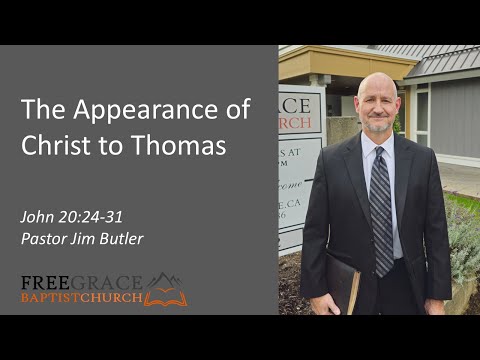
The Appearance of Christ to Thomas
John 20:24–31 presents Thomas not merely as a doubter but as an obstinate man who refuses to believe the resurrection unless his own conditions are met — rejecting the Old Testament prophets, the repeated predictions of Christ, and the apostolic testimony of ten eyewitnesses. Christ responds not with rebuke but with sovereign grace, appearing again on the Lord's Day and inviting Thomas to examine the wounds that sealed a finished atonement. The confession that follows — 'My Lord and my God' — is the theological and experiential crown of the fourth gospel, answering John's own stated purpose in verses 30–31: that through the written word, those who have not seen may nevertheless believe and have life in Christ's name.

The Testimony Concerning Christ
John 15:26–27 presents the Holy Spirit as both sent by the Son in a temporal mission and as one who eternally proceeds from the Father and the Son — the filioque. This sermon works through the distinction between God's eternal processions (theology proper) and his temporal missions (economy), arguing that the Western church's confession of the Spirit's double procession preserves both the consubstantiality and the personal distinction of the three persons of the Trinity. The apostolic witness of verse 27 is grounded in and empowered by that same Spirit, whose singular purpose in both the sending at Pentecost and the inscripturated Word is to testify of Christ — and that testimony calls sinners to receive eternal life by faith in him alone.